Ancient blue recreated by botanists in Portugal

folium medieval blue
Used in medieval art and illustrations, and in Dutch cheese. Botanists in Portugal have some fun by recreating ancient blue from foraged plants in a nearby village.

The mystery is such a mystery that even when botanists say they might have found clues, the secret, I suspect it will still be a mystery: the source of techelet, ancient blue used by Jews. The color blue was hard to come by in ancient times, and it was expensive, like the queen of all blues lapis lazuli, but like today it was revered especially in spiritual sources. The Jews used an ancient blue called techelet to dye their prayer garments, the four cornered clothing they wear to keep their minds and hearts on doing good deeds. The Bible explores how these strings on the prayer shawl should look, and that they should be dyed blue, it says.
Chrozophora-Tinctoria

But where does this blue come from? It’s important for religious Jews to be vigilant with biblical commandments, so to find the original source of blue is important to them. The Talmud names the source as a sea creature called the hillazon which many believe to be a sea snail known as the Murex trunculus.  But, while there is broad consensus for this identification, its acceptance in practice is not universal.

Europeans, also loved blue and artisans used it widely as a color in medieval times. One that came in favor was a blue called turnsole or folium, and as part of a research project researchers from Spain took ancient instructions on how to do it. They found the plant in a nearby village, collected the berries and went step by step to recreate it.

folium blue

The researchers from Portugal reported their findings which included analysing the structure of the dye using modern equipment. It’s probably more complicated to make than sourdough bread. But I wonder, is the ancient blue used back then in watercolor dye any clue to the ancient blue used by Jews?

Published in Science Advances, the group has identified the molecular structure of the dye by following ancient preparatory techniques.

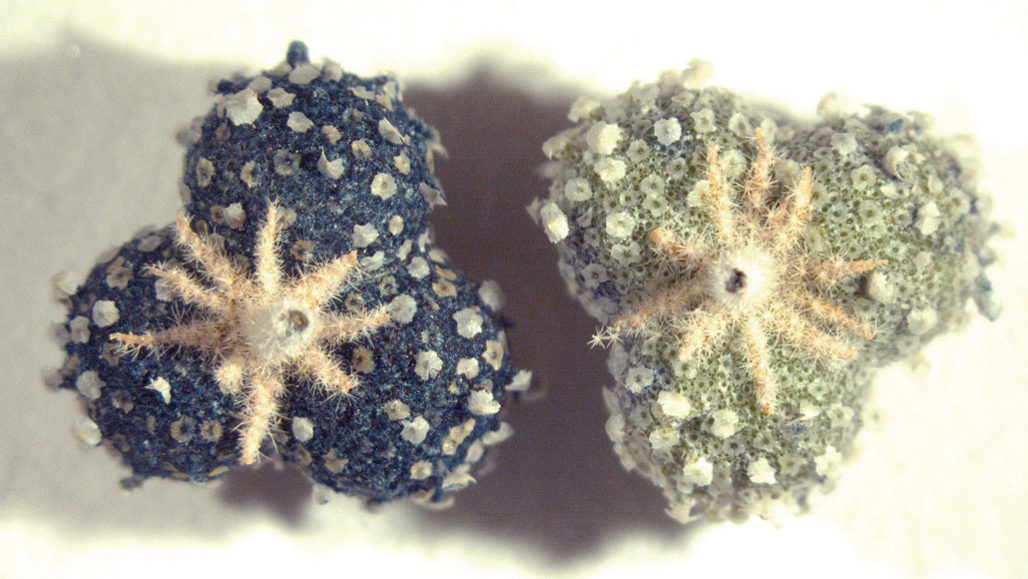
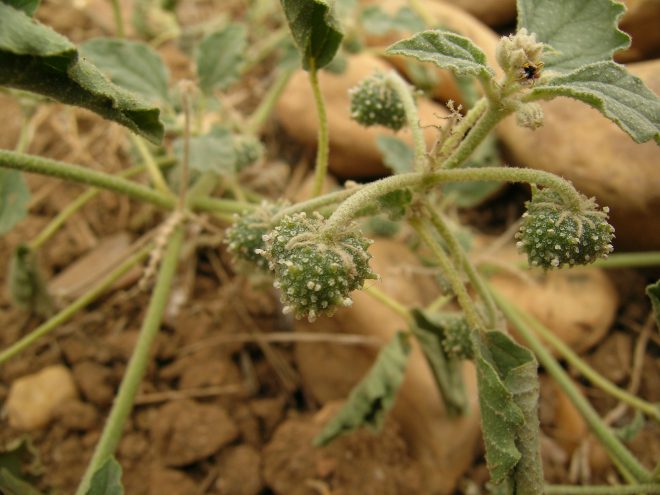
About 1000 years ago during Medieval times in Europe, a special blue was used called folium or turnsole to color paintings and illustrations. For a few hundred years, dye makers went into great detail to explain how this blue was made. The old books say the blue was made from the berries of the Chrozophora tinctorial plant—which is a small, grayish-green wild herb that grows in Europe.

Botanists on the team from Nova University scoured the countryside nearby and found the plant growing along the road in a town called Monsaraz in Portugal. The team then followed all the instructions from the ancient dye makers on how best to collect the berries and when.

They learned how to extract the pigment from the berries and then how to treat and purify it. They then soaked a small piece of cloth with the dye of the berries and when they needed to use the dye would take a small snip of the cloth, and added water to release the blue.

Folium ancient dye
Watercolors of folium preserved on fabric squares. Credit: Paula Nabais/NOVA University

They then applied modern testing techniques to identify what it was made from and found it came from a hermidin alkaloid which they named chrozophoridin. If they know more about this dye, the researchers say they can be better equipped to preserve medieval work that uses folium.

A perfect forgery?

And what about this dye being connected to the biblical blue?  I contacted Mois Navon from the Ptil Tekhelet, an organization that manufactures blue dye from the Murex trunculus to make the biblical fringes, and he explained that the Talmud actually discusses a perfect forgery dye made from a plant called “kela ilan”.  This plant is known by its latin name Indgoferra tinctorial. 

The Talmud goes on, Navon explains, to forbid any blue dye not sourced in the hillazon.  So while plants have been a wonderful source of blue in ancient times, they have never been accepted for ritual use.

Karin Kloosterman
Karin Kloostermanhttp://www.greenprophet.com
Karin Kloosterman is an award-winning journalist, innovation strategist, and founder of Green Prophet, one of the Middle East’s pioneering sustainability platforms. She has ranked in the Top 10 of Verizon innovation competitions, participated in NASA-linked challenges, and spoken worldwide on climate, food security, and future resilience. With an IoT technology patent, features in Canada’s National Post, and leadership inside teams building next-generation agricultural and planetary systems — including Mars-farming concepts — Karin operates at the intersection of storytelling, science, and systems change. She doesn’t report on the future – she helps design it. Reach out directly to [email protected]

Read More

TRENDING

The Air Tea Kettle creates a new way to meet plants and herbalism

Air Tea is a new technology. Instead of drinking tea, you inhale herbal vapor through warm air extraction. There is no water and no combustion. The warm air releases essential oils that are often lost in hot water and digestion.

A Brief History of Basil From India to Italy

Beloved, fortunate, sweet, and royal; an herb with a long and storied history in Asia and across the world. Called by many names, basil has featured in previous Green Prophet articles, so enjoy another serving, a brief history of basil.

Mediterranean Mega Fires Burn Record Land as Climate Change Fuels Extreme Heat and Drought

At the start of August, wildfires exploded across the...

Exploring Portugal’s Algarve coast sustainably on a walking holiday

A huge part of sustainable holidays is where you choose to spend your money. The local communities benefit from tourism, as long as it helps to grow their economy. On a walking holiday, you will typically be staying in small, independent hotels or B&Bs along your route, rather than those owned by global chains.

Apple “Jak” shoes are Portugal’s simple, slow fashion shoes selling at Selfridges in London

JAK is a Lisbon-based footwear brand redefining premium sneakers through high-quality craftsmanship, sustainable sourcing, and timeless design. Designed in Portugal and crafted in family-owned factories, JAK shoes embody a commitment to style, comfort, and ethical production.

Yerukim Forms a New Green Economy Where the Money is Really Green

The Yerukim members who pick up the recyclables get to keep the monetary reward, the public earns "green" bills that can be used in shops, and business owners get to be associated with environmentalism.

Choosing Riyadh over Dubai? What Investors Should Know

Saudi Arabia is deploying capital at unmatched scale to catalyze tourism and advanced industry while rewiring its power-and-water backbone. The investable frontier is widening—especially in renewables, grid storage, water efficiency/desal retrofits, and hospitality operating platforms. Prudent investors will insist on phased delivery, enforceable KPIs (energy, water, biodiversity), and RHQ/zone compliance—while pricing political-economy and reputational risks alongside growth upside.

Sell your cooking oil for biodiesel money

Want to make money on old french fry oil? Sell it.

Qatar Alternative Energy Summit Pairs Investors And Innovators

Alternative energy investors and innovators can meet n' greet in Doha, Qatar March 16 and 17.

Here’s How To Implement The Four Pillars Of Employee Engagement

If you throw a party for your work team and they are vegans, don't make it a barbecue. Know the sustainability values of your team to boost moral and retain good people.

Locals From Rishon Fight IKEA

Big Box stores are a pretty new concept in Israel, and thank God that not every Israeli city wants them in their backyard. A word from someone who has see the beautiful farmland around her hometown Newmarket, Ontario stripped and converted into vulgar strip malls of big box shops: they have no place in a healthy and sustainable town or city.

The Jewish National Fund Meets An Inconvenient Truth

According to the JNF, it has transformed thousands of acres of barren land into green forests in Israel. They state that each person emits about 23 tons of carbon per year, estimating that each tree planted can absorb one ton of carbon in its lifetime. That's a whole lot of trees you'd need to be planting. Could so many fit in Israel?

How to quiet noise from construction in your office

Streets need to be resurfaced in New York but the humming and grinding noise is unsettling. Noise is environmental pollution. 

Popular Categories