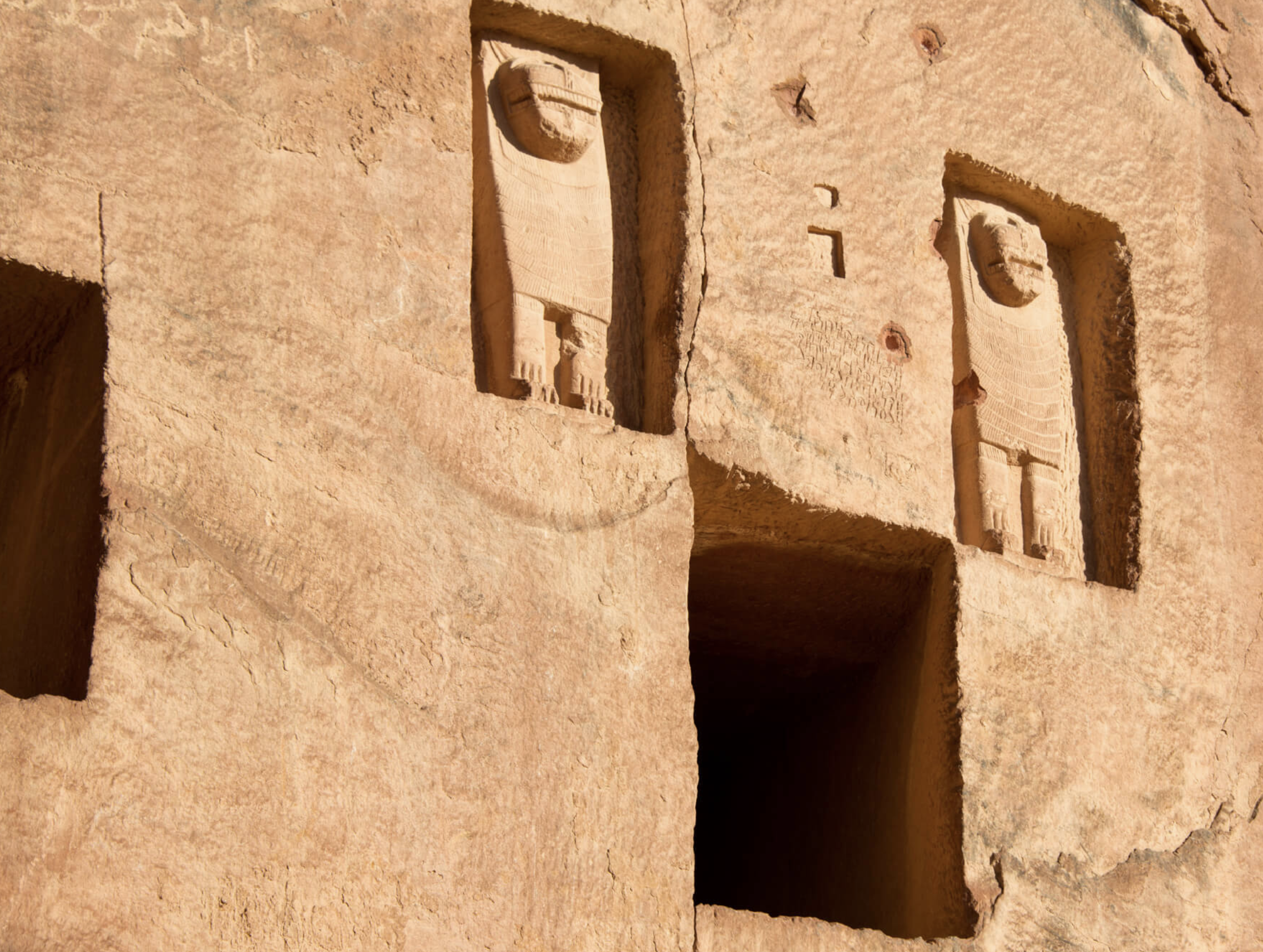
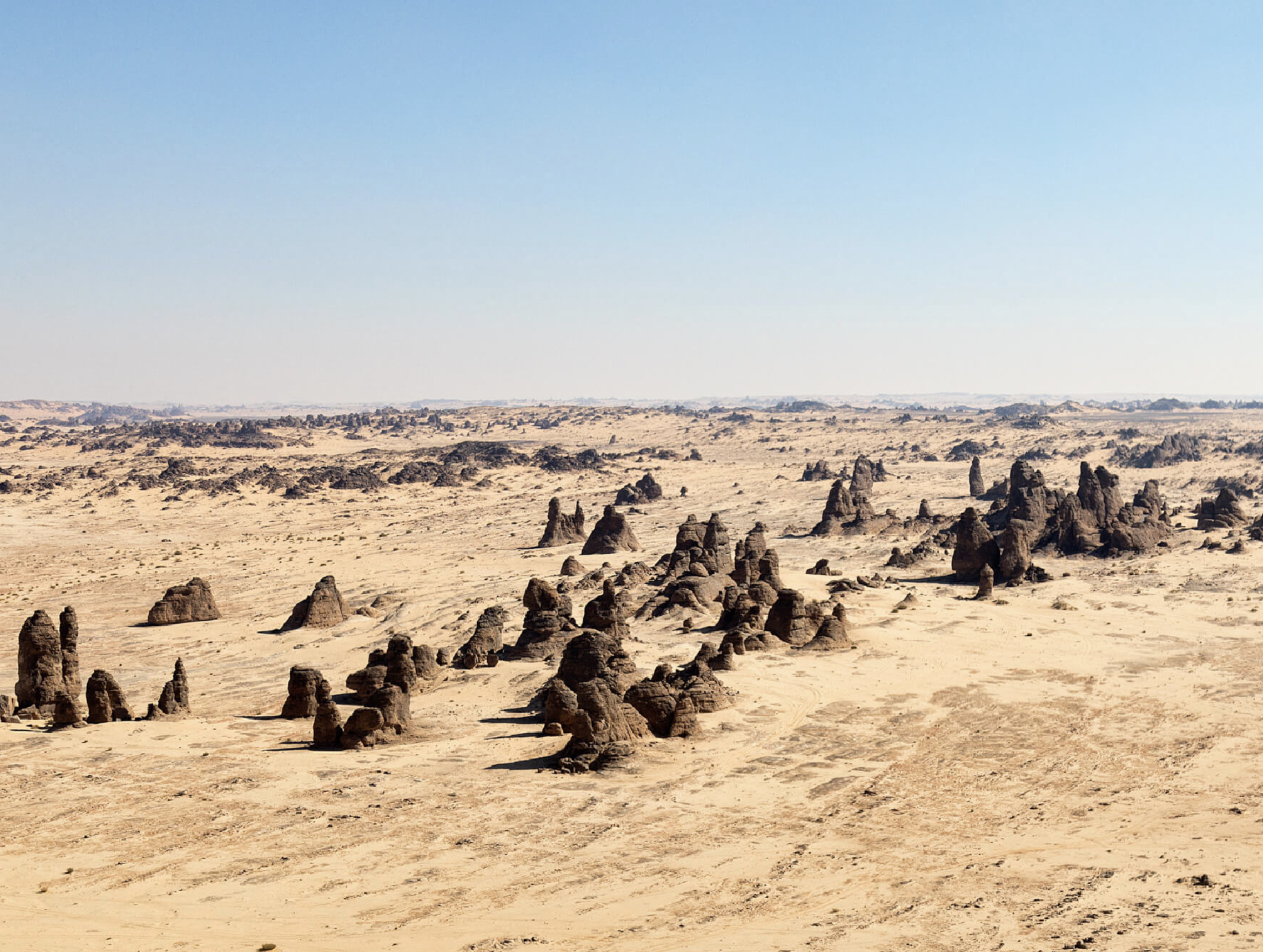
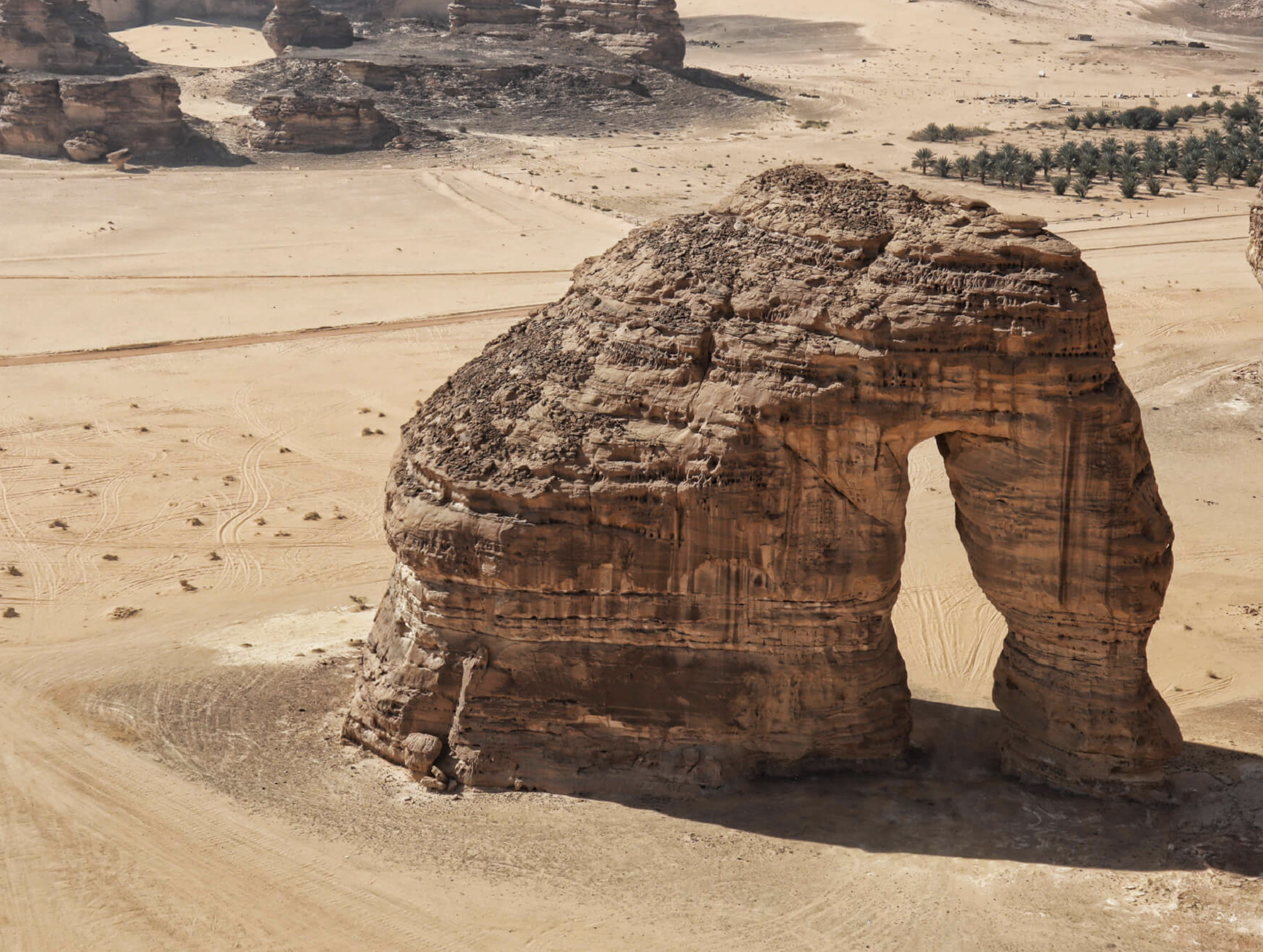
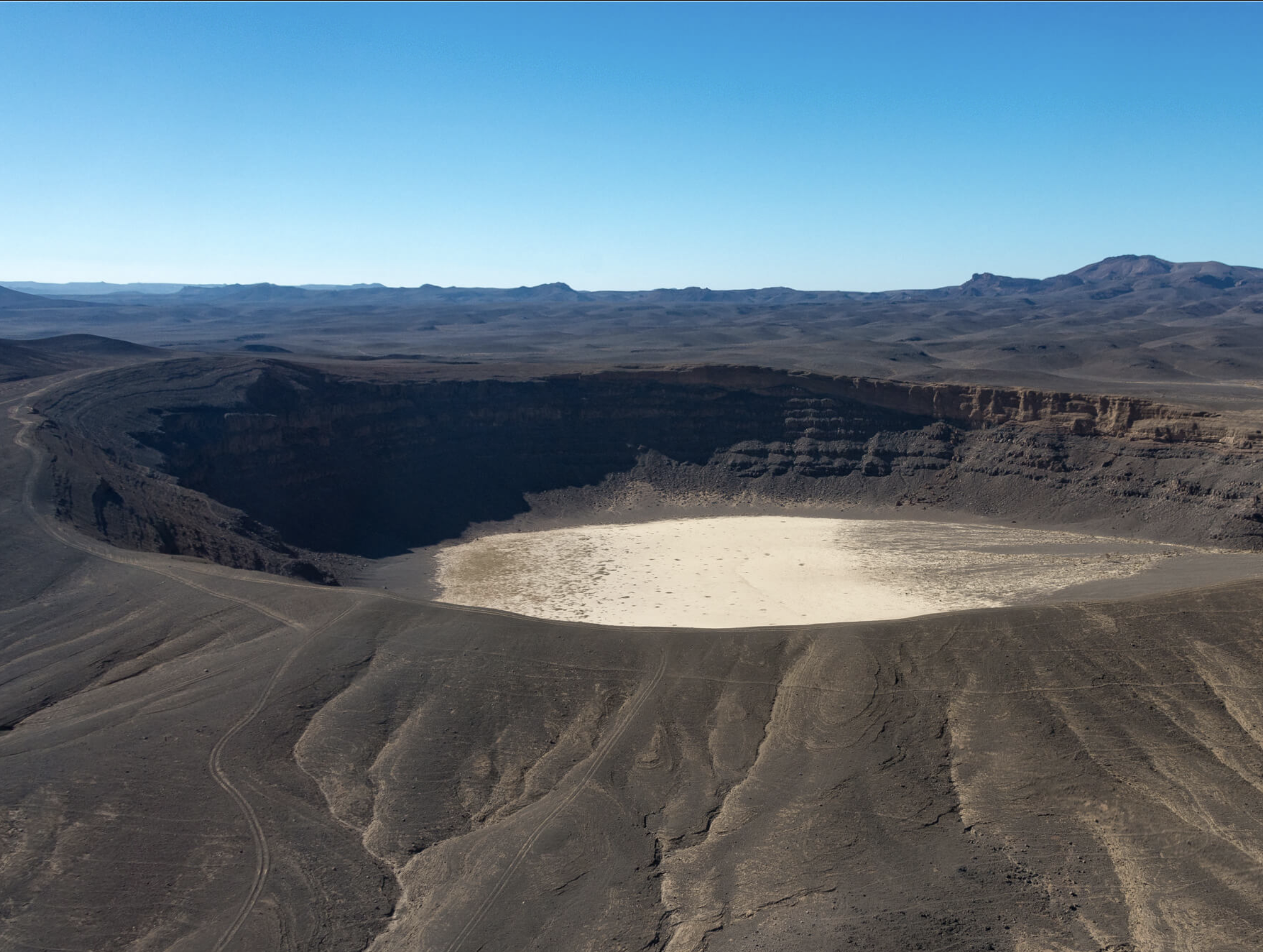
When the region settles after the American war with Iran, and it will, American and European travelers will come back. Not just for spectacle or headline projects, but for places that feel real. Places that haven’t been engineered to impress and which get into your soul.
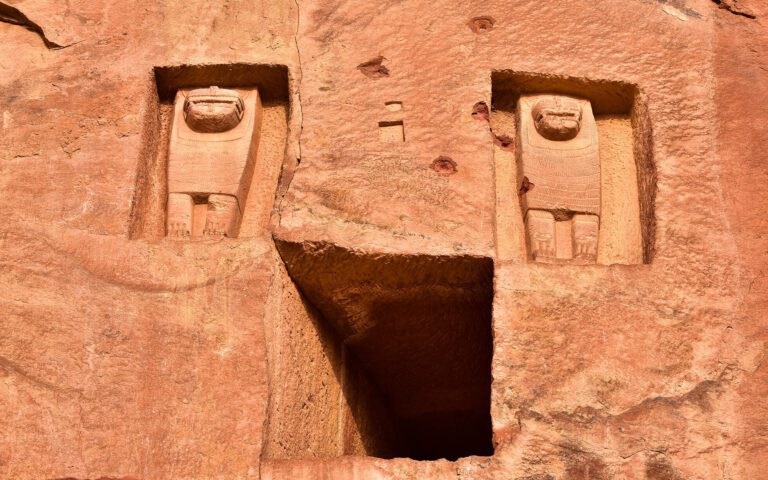
We predict that visitors to Saudi Arabia will want to see places like Rijal Alma.When the region settles after the American war with Iran, and it will, American and European travelers will come back. Not just for spectacle or headline projects, but for places that feel real. Places that haven’t been engineered to impress and which get into your soul.
We predict that visitors to Saudi Arabia will want to see places like Rijal Alma.
“Forever chemicals” like the ones ejected by Lulelemon yoga pants into strategic areas don’t go away. They don’t break down in nature, and once they’re in water, soil, or our bodies, they tend to stick around. But scientists at Florida International University think they’ve found a smarter way to deal with them, and it uses something as simple as pH.
Koh Phangan may be known for yoga, detox retreats, and full moon parties, but beyond the curated paradise lies a different reality—one of injured stray animals and the quiet work of rescue. This story explores PACS (Phangan Animal Care for Strays), a grassroots animal shelter tackling overpopulation, disease, and neglect on the island. Through firsthand experience with teens, it reveals how meaningful travel, volunteerism, and compassion offer a deeper kind of healing—far from the Instagram version of paradise.
The earliest stages of life, from infancy through childhood, form the foundation for lifelong health and development. During these years, the brain develops rapidly, children learn social and emotional skills, and the body undergoes significant physical growth.
Back in late 2025, Green Prophet began asking uncomfortable questions about what’s really inside your yoga pants, from transparency failures (yes, those infamous see-through leggings) to the less visible and scarier issue: Your sweat is unlocking microplastics and chemical coatings sitting in the most absorbent parts of the human body.
When the region settles after the American war with Iran, and it will, American and European travelers will come back. Not just for spectacle or headline projects, but for places that feel real. Places that haven’t been engineered to impress and which get into your soul.
We predict that visitors to Saudi Arabia will want to see places like Rijal Alma.When the region settles after the American war with Iran, and it will, American and European travelers will come back. Not just for spectacle or headline projects, but for places that feel real. Places that haven’t been engineered to impress and which get into your soul.
We predict that visitors to Saudi Arabia will want to see places like Rijal Alma.
“Forever chemicals” like the ones ejected by Lulelemon yoga pants into strategic areas don’t go away. They don’t break down in nature, and once they’re in water, soil, or our bodies, they tend to stick around. But scientists at Florida International University think they’ve found a smarter way to deal with them, and it uses something as simple as pH.
Koh Phangan may be known for yoga, detox retreats, and full moon parties, but beyond the curated paradise lies a different reality—one of injured stray animals and the quiet work of rescue. This story explores PACS (Phangan Animal Care for Strays), a grassroots animal shelter tackling overpopulation, disease, and neglect on the island. Through firsthand experience with teens, it reveals how meaningful travel, volunteerism, and compassion offer a deeper kind of healing—far from the Instagram version of paradise.
The earliest stages of life, from infancy through childhood, form the foundation for lifelong health and development. During these years, the brain develops rapidly, children learn social and emotional skills, and the body undergoes significant physical growth.
Back in late 2025, Green Prophet began asking uncomfortable questions about what’s really inside your yoga pants, from transparency failures (yes, those infamous see-through leggings) to the less visible and scarier issue: Your sweat is unlocking microplastics and chemical coatings sitting in the most absorbent parts of the human body.
When the region settles after the American war with Iran, and it will, American and European travelers will come back. Not just for spectacle or headline projects, but for places that feel real. Places that haven’t been engineered to impress and which get into your soul.
We predict that visitors to Saudi Arabia will want to see places like Rijal Alma.When the region settles after the American war with Iran, and it will, American and European travelers will come back. Not just for spectacle or headline projects, but for places that feel real. Places that haven’t been engineered to impress and which get into your soul.
We predict that visitors to Saudi Arabia will want to see places like Rijal Alma.
“Forever chemicals” like the ones ejected by Lulelemon yoga pants into strategic areas don’t go away. They don’t break down in nature, and once they’re in water, soil, or our bodies, they tend to stick around. But scientists at Florida International University think they’ve found a smarter way to deal with them, and it uses something as simple as pH.
Koh Phangan may be known for yoga, detox retreats, and full moon parties, but beyond the curated paradise lies a different reality—one of injured stray animals and the quiet work of rescue. This story explores PACS (Phangan Animal Care for Strays), a grassroots animal shelter tackling overpopulation, disease, and neglect on the island. Through firsthand experience with teens, it reveals how meaningful travel, volunteerism, and compassion offer a deeper kind of healing—far from the Instagram version of paradise.
The earliest stages of life, from infancy through childhood, form the foundation for lifelong health and development. During these years, the brain develops rapidly, children learn social and emotional skills, and the body undergoes significant physical growth.
Back in late 2025, Green Prophet began asking uncomfortable questions about what’s really inside your yoga pants, from transparency failures (yes, those infamous see-through leggings) to the less visible and scarier issue: Your sweat is unlocking microplastics and chemical coatings sitting in the most absorbent parts of the human body.
When the region settles after the American war with Iran, and it will, American and European travelers will come back. Not just for spectacle or headline projects, but for places that feel real. Places that haven’t been engineered to impress and which get into your soul.
We predict that visitors to Saudi Arabia will want to see places like Rijal Alma.When the region settles after the American war with Iran, and it will, American and European travelers will come back. Not just for spectacle or headline projects, but for places that feel real. Places that haven’t been engineered to impress and which get into your soul.
We predict that visitors to Saudi Arabia will want to see places like Rijal Alma.
“Forever chemicals” like the ones ejected by Lulelemon yoga pants into strategic areas don’t go away. They don’t break down in nature, and once they’re in water, soil, or our bodies, they tend to stick around. But scientists at Florida International University think they’ve found a smarter way to deal with them, and it uses something as simple as pH.
Koh Phangan may be known for yoga, detox retreats, and full moon parties, but beyond the curated paradise lies a different reality—one of injured stray animals and the quiet work of rescue. This story explores PACS (Phangan Animal Care for Strays), a grassroots animal shelter tackling overpopulation, disease, and neglect on the island. Through firsthand experience with teens, it reveals how meaningful travel, volunteerism, and compassion offer a deeper kind of healing—far from the Instagram version of paradise.
The earliest stages of life, from infancy through childhood, form the foundation for lifelong health and development. During these years, the brain develops rapidly, children learn social and emotional skills, and the body undergoes significant physical growth.
Back in late 2025, Green Prophet began asking uncomfortable questions about what’s really inside your yoga pants, from transparency failures (yes, those infamous see-through leggings) to the less visible and scarier issue: Your sweat is unlocking microplastics and chemical coatings sitting in the most absorbent parts of the human body.
When the region settles after the American war with Iran, and it will, American and European travelers will come back. Not just for spectacle or headline projects, but for places that feel real. Places that haven’t been engineered to impress and which get into your soul.
We predict that visitors to Saudi Arabia will want to see places like Rijal Alma.When the region settles after the American war with Iran, and it will, American and European travelers will come back. Not just for spectacle or headline projects, but for places that feel real. Places that haven’t been engineered to impress and which get into your soul.
We predict that visitors to Saudi Arabia will want to see places like Rijal Alma.
“Forever chemicals” like the ones ejected by Lulelemon yoga pants into strategic areas don’t go away. They don’t break down in nature, and once they’re in water, soil, or our bodies, they tend to stick around. But scientists at Florida International University think they’ve found a smarter way to deal with them, and it uses something as simple as pH.
Koh Phangan may be known for yoga, detox retreats, and full moon parties, but beyond the curated paradise lies a different reality—one of injured stray animals and the quiet work of rescue. This story explores PACS (Phangan Animal Care for Strays), a grassroots animal shelter tackling overpopulation, disease, and neglect on the island. Through firsthand experience with teens, it reveals how meaningful travel, volunteerism, and compassion offer a deeper kind of healing—far from the Instagram version of paradise.
The earliest stages of life, from infancy through childhood, form the foundation for lifelong health and development. During these years, the brain develops rapidly, children learn social and emotional skills, and the body undergoes significant physical growth.
Back in late 2025, Green Prophet began asking uncomfortable questions about what’s really inside your yoga pants, from transparency failures (yes, those infamous see-through leggings) to the less visible and scarier issue: Your sweat is unlocking microplastics and chemical coatings sitting in the most absorbent parts of the human body.
When the region settles after the American war with Iran, and it will, American and European travelers will come back. Not just for spectacle or headline projects, but for places that feel real. Places that haven’t been engineered to impress and which get into your soul.
We predict that visitors to Saudi Arabia will want to see places like Rijal Alma.When the region settles after the American war with Iran, and it will, American and European travelers will come back. Not just for spectacle or headline projects, but for places that feel real. Places that haven’t been engineered to impress and which get into your soul.
We predict that visitors to Saudi Arabia will want to see places like Rijal Alma.
“Forever chemicals” like the ones ejected by Lulelemon yoga pants into strategic areas don’t go away. They don’t break down in nature, and once they’re in water, soil, or our bodies, they tend to stick around. But scientists at Florida International University think they’ve found a smarter way to deal with them, and it uses something as simple as pH.
Koh Phangan may be known for yoga, detox retreats, and full moon parties, but beyond the curated paradise lies a different reality—one of injured stray animals and the quiet work of rescue. This story explores PACS (Phangan Animal Care for Strays), a grassroots animal shelter tackling overpopulation, disease, and neglect on the island. Through firsthand experience with teens, it reveals how meaningful travel, volunteerism, and compassion offer a deeper kind of healing—far from the Instagram version of paradise.
The earliest stages of life, from infancy through childhood, form the foundation for lifelong health and development. During these years, the brain develops rapidly, children learn social and emotional skills, and the body undergoes significant physical growth.
Back in late 2025, Green Prophet began asking uncomfortable questions about what’s really inside your yoga pants, from transparency failures (yes, those infamous see-through leggings) to the less visible and scarier issue: Your sweat is unlocking microplastics and chemical coatings sitting in the most absorbent parts of the human body.
When the region settles after the American war with Iran, and it will, American and European travelers will come back. Not just for spectacle or headline projects, but for places that feel real. Places that haven’t been engineered to impress and which get into your soul.
We predict that visitors to Saudi Arabia will want to see places like Rijal Alma.When the region settles after the American war with Iran, and it will, American and European travelers will come back. Not just for spectacle or headline projects, but for places that feel real. Places that haven’t been engineered to impress and which get into your soul.
We predict that visitors to Saudi Arabia will want to see places like Rijal Alma.
“Forever chemicals” like the ones ejected by Lulelemon yoga pants into strategic areas don’t go away. They don’t break down in nature, and once they’re in water, soil, or our bodies, they tend to stick around. But scientists at Florida International University think they’ve found a smarter way to deal with them, and it uses something as simple as pH.
Koh Phangan may be known for yoga, detox retreats, and full moon parties, but beyond the curated paradise lies a different reality—one of injured stray animals and the quiet work of rescue. This story explores PACS (Phangan Animal Care for Strays), a grassroots animal shelter tackling overpopulation, disease, and neglect on the island. Through firsthand experience with teens, it reveals how meaningful travel, volunteerism, and compassion offer a deeper kind of healing—far from the Instagram version of paradise.
The earliest stages of life, from infancy through childhood, form the foundation for lifelong health and development. During these years, the brain develops rapidly, children learn social and emotional skills, and the body undergoes significant physical growth.
Back in late 2025, Green Prophet began asking uncomfortable questions about what’s really inside your yoga pants, from transparency failures (yes, those infamous see-through leggings) to the less visible and scarier issue: Your sweat is unlocking microplastics and chemical coatings sitting in the most absorbent parts of the human body.
When the region settles after the American war with Iran, and it will, American and European travelers will come back. Not just for spectacle or headline projects, but for places that feel real. Places that haven’t been engineered to impress and which get into your soul.
We predict that visitors to Saudi Arabia will want to see places like Rijal Alma.When the region settles after the American war with Iran, and it will, American and European travelers will come back. Not just for spectacle or headline projects, but for places that feel real. Places that haven’t been engineered to impress and which get into your soul.
We predict that visitors to Saudi Arabia will want to see places like Rijal Alma.
“Forever chemicals” like the ones ejected by Lulelemon yoga pants into strategic areas don’t go away. They don’t break down in nature, and once they’re in water, soil, or our bodies, they tend to stick around. But scientists at Florida International University think they’ve found a smarter way to deal with them, and it uses something as simple as pH.
Koh Phangan may be known for yoga, detox retreats, and full moon parties, but beyond the curated paradise lies a different reality—one of injured stray animals and the quiet work of rescue. This story explores PACS (Phangan Animal Care for Strays), a grassroots animal shelter tackling overpopulation, disease, and neglect on the island. Through firsthand experience with teens, it reveals how meaningful travel, volunteerism, and compassion offer a deeper kind of healing—far from the Instagram version of paradise.
The earliest stages of life, from infancy through childhood, form the foundation for lifelong health and development. During these years, the brain develops rapidly, children learn social and emotional skills, and the body undergoes significant physical growth.
Back in late 2025, Green Prophet began asking uncomfortable questions about what’s really inside your yoga pants, from transparency failures (yes, those infamous see-through leggings) to the less visible and scarier issue: Your sweat is unlocking microplastics and chemical coatings sitting in the most absorbent parts of the human body.
Farmed Here builds high-tech hydroponic farms run by software. Digital sustainability helps make food, fuel and the home more sustainable
Digital sustainability refers to the use of digital technologies that can have a positive impact on the environment. While most startup founders just want to cut a fast back, like those in advertising, the trend has just started with the success rate for digital sustainability initiatives sitting at only 4%.
The number is expected to grow to 35% in the next few years. This is because millennials and a global interest in digital sustainability is growing: environmental concerns and impact now drive many consumers’ buying decisions.
One study in the US found that 70% of US consumers consider sustainability when making a purchasing decision. And about 88% would be more loyal to a brand that implements sustainable practices.
The GreenTech Meta Trend
Digital sustainability is part of the GreenTech meta trend IoT, driven by AI, machine learning and cloud computing driving this growth. GreenTech can include smart agriculture such as hydroponic farms, fleet monitoring apps to cut down on corporate fuel or new advances in hydrogen. Greentech can also be solutions that consumers can buy like solar panels to programmable smart thermostats like Nest. Software and a digital interface is typically needed for all new devices and advances.
The Nest smart thermostat, owned by Google
The primary goal of greentech is to reduce the negative impacts humans impose upon the planet, like plastic pollution in the ocean, fossil fuel use (greenhouse gas emissions) and deforestation.
This market is wide and encompasses many industries and is expected to grow at a CAGR of 27.2% through 2028. According to the research firm McKinsey, AI is “green” and can be used to reduce food waste globally, saving organizations $123B a year by 2030.
Some links in this article may point to affiliate links to earn revenue to run this site. These are products we have chosen and endorse.
Aerobics can shrink cancer tumors. Lets get physical?
Running, jogging, fast walking. Tennis. Aikido, Judo or basketball: A new study found that aerobic exercise can reduce the risk of metastatic cancer by 72%. According to the researchers at Tel Aviv University, intensity aerobic exercise increases the sugar consumption of internal organs, thereby reducing the availability of energy to the tumor.
Juice and fasting offer similar strategies to this approach:
The study was led by two researchers from TAU’s Sackler Faculty of Medicine: Prof. Carmit Levy from the Department of Human Genetics and Biochemistry and Dr. Yftach Gepner from the School of Public Health and the Sylvan Adams Sports Institute. Prof. Levy emphasizes that by combining scientific knowhow from different schools at TAU, the new study has led to a very important discovery which may help prevent metastatic cancer – the leading cause of death in Israel. The paper was published in the prestigious journal Cancer Research and chosen for the cover of the November 2022 issue.
“Studies have demonstrated that physical exercise reduces the risk for some types of cancer by up to 35%. This positive effect is similar to the impact of exercise on other conditions, such as heart disease and diabetes. In this study we added new insight, showing that high-intensity aerobic exercise, which derives its energy from sugar, can reduce the risk of metastatic cancer by as much as 72%. If so far the general message to the public has been ‘be active, be healthy’, now we can explain how aerobic activity can maximize the prevention of the most aggressive and metastatic types of cancer,” the researchers report.
The study combined an animal model in which mice were trained under a strict exercise regimen, with data from healthy human volunteers examined before and after running. The human data, obtained from an epidemiological study that monitored 3,000 individuals for about 20 years, indicated 72% less metastatic cancer in participants who reported regular aerobic activity at high intensity, compared to those who did not engage in physical exercise.
The animal model exhibited a similar outcome, also enabling the researchers to identify its underlying mechanism. Sampling the internal organs of the physically fit animals, before and after physical exercise, and also following the injection of cancer, they found that aerobic activity significantly reduced the development of metastatic tumors in the lymph nodes, lungs, and liver. The researchers hypothesized that in both humans and model animals, this favorable outcome is related to the enhanced rate of glucose consumption induced by exercise.
Prof. Levy: “Our study is the first to investigate the impact of exercise on the internal organs in which metastases usually develop, like the lungs, liver, and lymph nodes. Examining the cells of these organs we found a rise in the number of glucose receptors during high-intensity aerobic activity – increasing glucose intake and turning the organs into effective energy-consumption machines, very much like the muscles. We assume that this happens because the organs must compete for sugar resources with the muscles, known to burn large quantities of glucose during physical exercise.
Include intensive exercises for health
“Consequently, if cancer develops, the fierce competition over glucose reduces the availability of energy that is critical to metastasis. Moreover, when a person exercises regularly, this condition becomes permanent: the tissues of internal organs change and become similar to muscle tissue. We all know that sports and physical exercise are good for our health. Our study, examining the internal organs, discovered that exercise changes the whole body, so that the cancer cannot spread, and the primary tumor also shrinks in size.”
Dr. Gepner adds: “Our results indicate that unlike fat-burning exercise, which is relatively moderate, it is a high-intensity aerobic activity that helps in cancer prevention. If the optimal intensity range for burning fat is 65-70% of the maximum pulse rate, sugar burning requires 80-85% – even if only for brief intervals. For example: a one-minute sprint followed by walking, then another sprint. In the past, such intervals were mostly typical of athletes’ training regimens, but today we also see them in other exercise routines, such as heart and lung rehabilitation.
“Our results suggest that healthy individuals should also include high-intensity components in their fitness programs. We believe that future studies will enable personalized medicine for preventing specific cancers, with physicians reviewing family histories to recommend the right kind of physical activity. It must be emphasized that physical exercise, with its unique metabolic and physiological effects, exhibits a higher level of cancer prevention than any medication or medical intervention to date.”
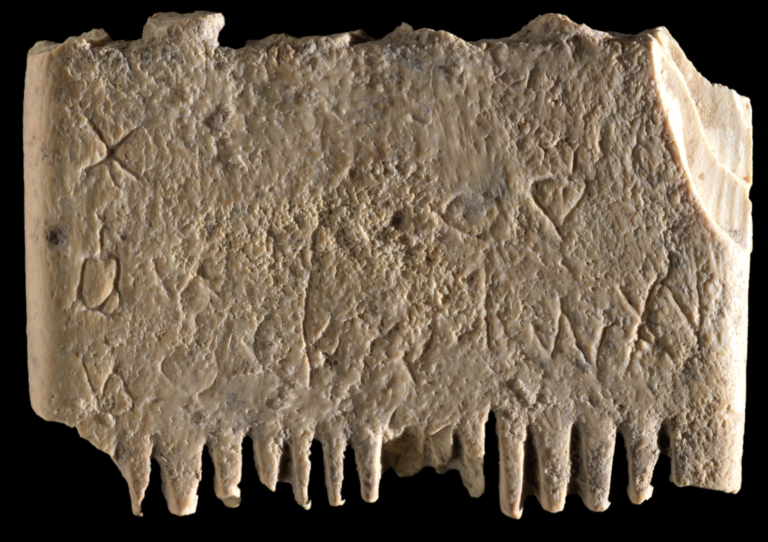
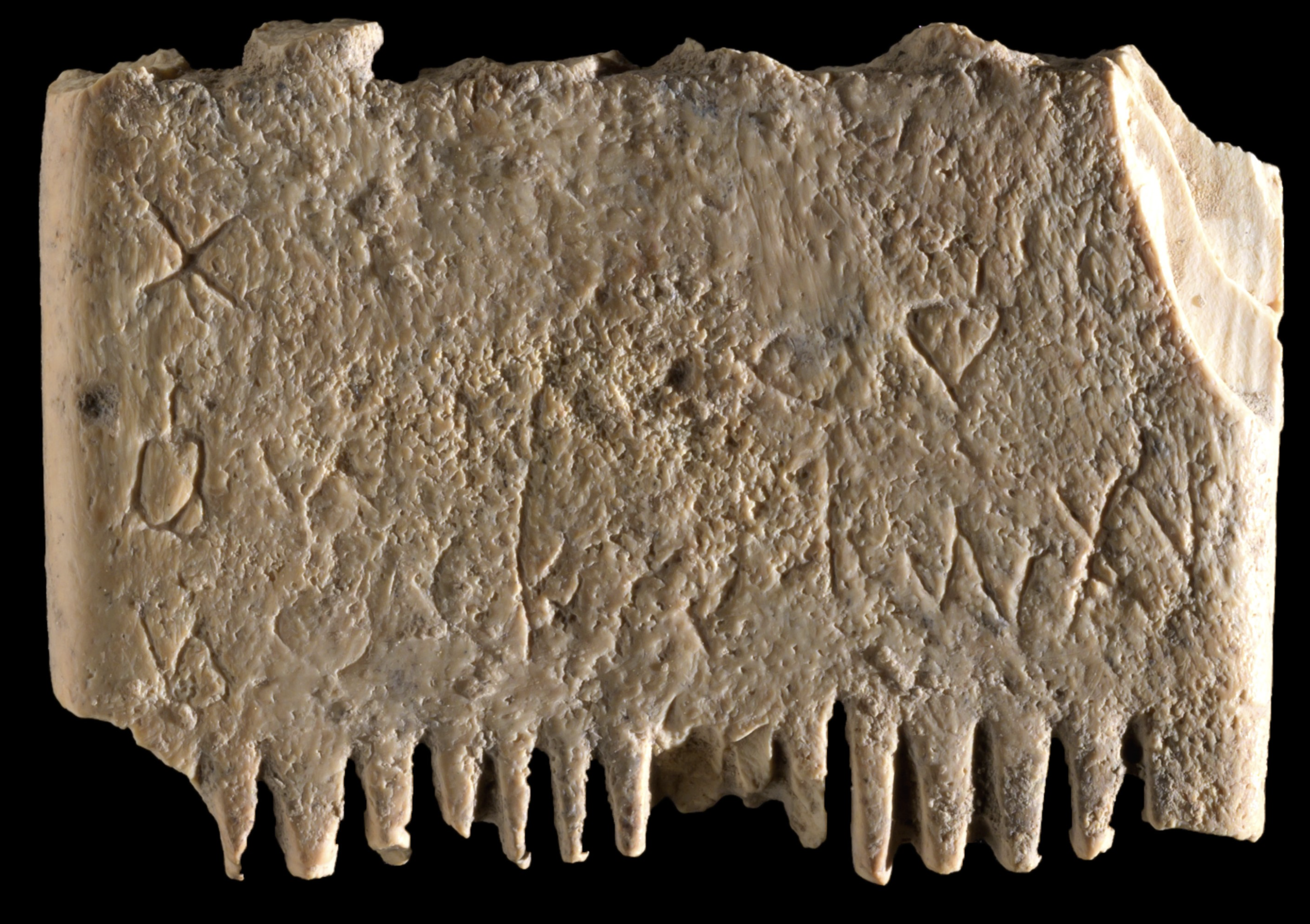
“May this tusk root out the lice of the hair and the beard.”
Visit the Holy Land today be warned: you might come home with a case of the lice. Warm weather and large families, sometimes 4 kids to a room, make for the perfect conditions for head lice. The problems of today aren’t much different from the past it seems. An ancient comb, bearing the oldest Canaanite sentence, was found in an ancient archeological site in Israel in 2017 and now we know what the inscription means: “May this tusk root out the lice of the hair and the beard.”
The letters of the inscription were engraved in a very shallow manner on ivory. In 2022 Madeleine Mumcuoglu noticed that there was an inscription on the comb. And it was Canaanite.
The alphabet, we known today, was invented around 1800 BCE and was used by the Canaanites in what is modern day Israel, and later by most other languages in the world. Until recently, no meaningful Canaanite inscriptions had been discovered in the Land of Israel, save only two or three words here and there. Now an amazing discovery presents an entire sentence in Canaanite, dating to about 1700 BCE.
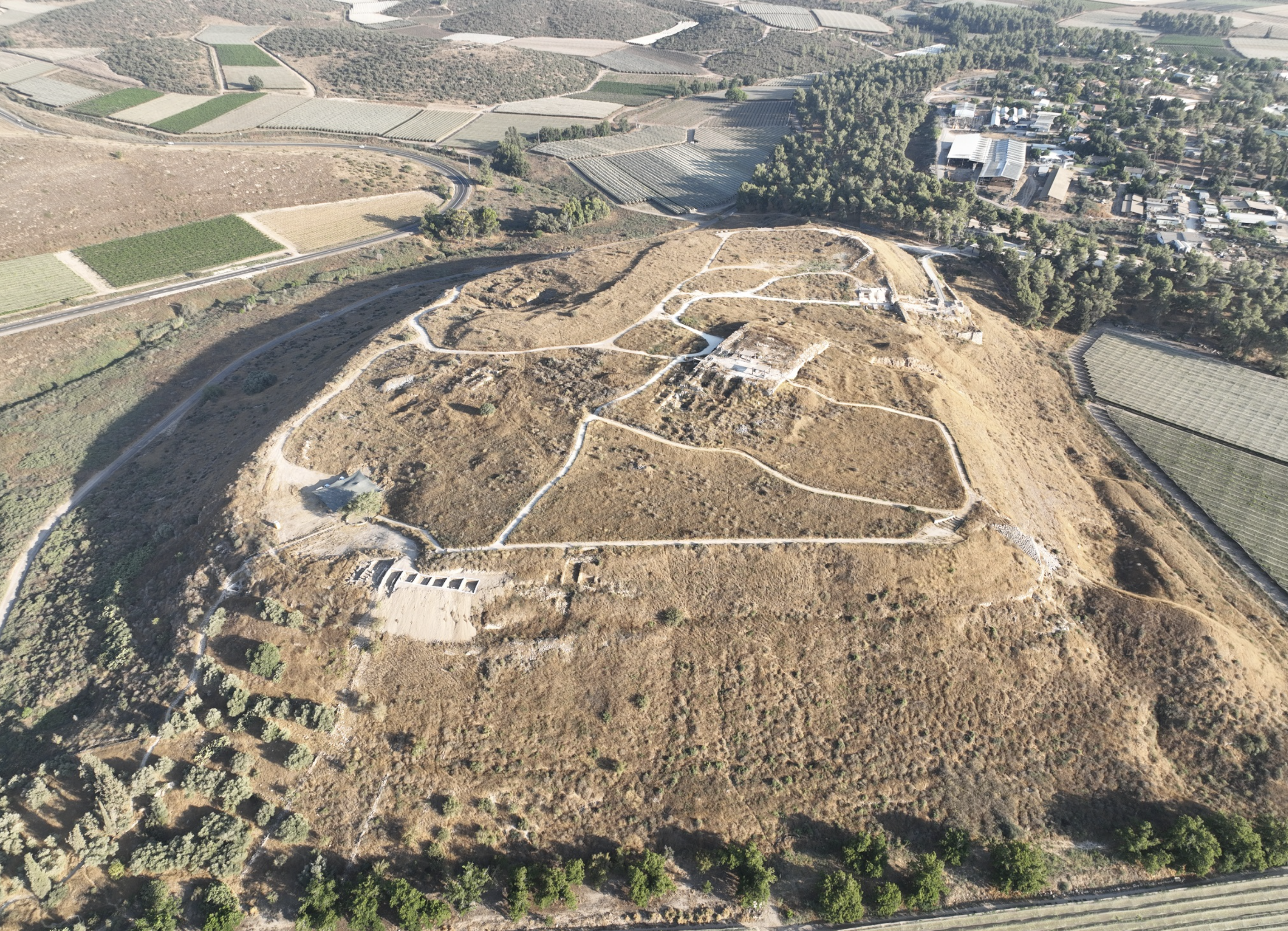
The comb was unearthed at Tel Lachish in Israel by a team from the Hebrew University of Jerusalem and Southern Adventist University in the United States, under the direction of Professors Yosef Garfinkel, Michael Hasel and Martin Klingbeil.
Their findings were published in Jerusalem Journal of Archaeology.
The ivory comb is small, measuring roughly 3.5 by 2.5 cm. The comb has teeth on both sides. Although their bases are still visible, the comb teeth themselves were broken in antiquity. The central part of the comb is somewhat eroded, possibly by the pressure of fingers holding the comb during haircare or removal of lice from the head or beard.
The side of the comb with six thick teeth was used to untangle knots in the hair, while the other side, with 14 fine teeth, was used to remove lice and their eggs, much like the current-day two-sided lice combs sold in stores.
Lice loved the affluent too
There are 17 Canaanite letters on the comb. They are archaic in form—from the first stage of the invention of the alphabet script. They form seven words in Canaanite, reading: “May this tusk root out the lice of the hair and the beard.”
Ancient combs were made from wood, bone, or ivory. Ivory was a very expensive material and likely an imported luxury object. As there were no elephants in Canaan during that time period, the comb likely came from nearby Egypt—factors indicating that even people of high social status suffered from lice.
Remains of ancient lice
The research team analyzed the comb itself for the presence of lice under a microscope and photographs were taken of both sides. Remains of head lice, 0.5 to 0.6 mm in size, were found on the second tooth. The climatic conditions of Lachish, however, did not allow preservation of whole head lice but only those of the outer chitin membrane of the nymph stage head louse.
Despite its small size, the inscription on the comb from Lachish has very special features, some of which are unique and fill in gaps and lacunas in our knowledge of many aspects of the culture of Canaan in the Bronze Age. For the first time, we have an entire verbal sentence written in the dialect spoken by the Canaanite inhabitants of Lachish, enabling us to compare this language in all its aspects with the other sources for it. Second, the inscription on the comb sheds light on some aspects of the everyday life of the time, haircare and dealing with lice.
Third, this is the first discovery in the region of an inscription referring to the purpose of the object on which it was written, as opposed to dedicatory or ownership inscriptions on objects. Further, the engraver’s skill in successfully executing such tiny letters (1 to 3 mm wide) is a fact that from now on should be taken into account in any attempt to summarize and draw conclusions on literacy in Canaan in the Bronze Age.
Tel Lachish, Israel
Lachish was a major Canaanite city state in the second millennium BCE and the second most important city in the Biblical Kingdom of Judah. To date, 10 Canaanite inscriptions have been found in Lachish, more than at any other site in Israel.
The city was the major center for the use and preservation of the alphabet during some 600 years, from 1800-1150 BCE. The site of Tel Lachish is under the protection of the Israel Nature and Parks Authority.
Before your corporate fleet turns electric, turn to these tips to help your team get better efficiency and cut costs
What are your options if you run a business and want to be a better corporate environmental steward? Yes, you can do business with companies that share your commitment to environmental best practices. And you can, among other things, use LED bulbs for greater energy efficiency in your office space. Every little bit helps, after all.
But what can you do if you own a fleet of vehicles? Check out these five ways your business can reduce fuel expenses when prices are still sky-high.
Buy Fuel Efficient Cars
One way to reduce your vehicle expenses is by carefully choosing your cars. Do you really need a truck or an SUV? If you do go that route, you’ll pay more for gas than if you go with a smaller vehicle. Once you figure out what you need, try to buy cars that sip rather than drink fuel. Purchasing fuel-efficient vehicles will help you lower your business’ carbon footprint.
Ensure Tires Are Properly Inflated
Another way you can save money and use less fuel is by properly inflating the tires on your fleet vehicles. According to the National Highway Traffic Safety Administration, you can enhance fuel efficiency by an average of 0.6% if the tires are appropriately inflated.
That might not sound like much. But it will add up over time. When checking tire pressure, do so when the tires are cold. That means first thing in the morning or a couple hours after driving the vehicle.
Use Fleet Management Software
Yet another way to cut down on fuel costs is by investing in fleet management software. It’ll give you a real-time view of how the vehicles are being used. If workers are driving too fast, braking too harshly, idling too much, or taking longer-than-required routes, one of the end results will be higher fuel consumption. Depending on how many cars you have and how often your vehicles are out on the road, fuel expenses could add up to a small fortune.
Fleet management software will allow your company to gain insights into driver behavior. You’ll then be able to print reports, speak with drivers who need to adopt better habits behind the wheel, and take proactive measures to ensure fuel is being used more responsibly.
Stay on Top of Maintenance and Repairs
Regular maintenance and timely repairs will ensure your vehicles function more efficiently. If your cars are not in good shape, and you aren’t using fleet management software, they could use more fuel than they would otherwise. It’s bad enough if you have a personal vehicle that is not cared for properly. But the costs will be even higher if you have a fleet of cars and aren’t keeping up with regular care.
Use Smooth Roads Wherever Possible
Tell your staff to choose smooth roads: It’s also a good idea to choose smooth roads wherever possible. You may not have thought of it before, but you’ll consume less fuel driving on smooth roads than on bumpy roads. While there will be times when the only options will be bumpy roads, try to plan routes to avoid such road conditions as much as possible.
And while you’re at it, do your best to avoid congested roadways since heavy stop-and-go traffic will affect your vehicles’ fuel economy. In fact, it can slash fuel economy by up to 40%. Sometimes it’s better to pay for tolls rather having your staff burning fuel and time on the freeway.
If your goal is to be a better corporate environmental steward, the five tips mentioned above will help. Many businesses require vehicles to deliver products and pick up materials. But that doesn’t mean there aren’t things you can do to do so in a more environmentally responsible way.
Quorn and companies around the world united by mushrooms, and Mush
Mush Foods, an Israeli foodtech startup which pioneered a way to cultivate mycelium mushrooms, a sustainable protein for food, has teamed up with several fungi fermentation companies from abroad to form a new international trade association: The Fungi Protein Association (FPA).
The FPA will represent the interests of its member companies, including advocating for fungi protein in public policy in the US, Israel and the world, conducting consumer research, and more.
Mushroom cravings might mean your body wants Vitamin D.
While mushrooms have been used for centuries as meat replacements and natural medicine, various methods of fungi fermentation are creating a new crop of high-protein, high-fiber, meat alternatives. As such, fermented fungi are taking the alternative protein market by storm. Alongside plant and cell-based protein, it now represents one of the three mainstays of the burgeoning meat alternative sector.
Founded in 2021, the Israeli startup joins this brand-new collaboration alongside major British, American, and European companies including ENOUGH, Quorn, Nature’s Fynd, Bosque Foods, The Better Meat Co., The Protein Brewery, Prime Roots, Mycotechnology, Aqua Cultured Foods, and Mycorena, plus NGOs ProVeg and The Good Food Institute.
A 2022 study in Nature found that replacing just 20 percent of beef with microbial protein – the products FPA members are pioneering – could cut global deforestation by a whopping 50 percent.
“Israel is on the cutting edge, innovating foodtech solutions addressing major global challenges including the climate crisis, food security, and nutrition.The ‘Startup Nation’ is also situated in a region considered particularly vulnerable to climate change, with the Middle East heating up twice as fast as the global average,” noted Shalom Daniel, co-founder and CEO of Mush Foods.
Co-founded by Professors Dan Levanon and Dr. Idan Pereman of the Migal Galilee Research Institute, Mush Foods grows mycelium, the delicate and highly nutritious underground network of threads which constitutes more than 90 percent of the fungi’s biomass.
Fungi for protein!
Mush Foods piloted in Manhattan last week, reflecting consumer demand for this kind of protein alternative. Twenty percent of 6000 employees at major financial institutions in New York chose to purchase Mush Foods’ 50CUT hybrid beef and mycelium burger over some 10 other main dish options.
Mush foods makes meat for mushroom burgers
The Global Alternative Protein Market is expected to reach $36.61 billion by 2029, growing at a CAGR of 12.4 percent during the forecast period of 2022 to 2029, according to Research & Markets. A recent Good Food Institute Israel report found that by the end of June, Israeli alternative protein startups and companies this year raised $320 million, placing the tiny Middle Eastern state second only to the United States ($857 million) terms of alternative protein investments.
A Mush Foods mushroom based burger served to New Yorkers, to their delight
“The world needs more protein, and fungi fermentation offers a delicious, sustainable way to do just that,” said Marco Bertacca of Quorn Foods, the British company which took the lead on the new international initiative. “We’re excited to partner with our fellow fungi enthusiasts to raise awareness and appreciation of the wonderful ways fungi can improve human health and the health of our planet.”
In May 2022, Dutch mycoprotein company ENOUGH also announced its partnership with Peace of Meat, the Belgian subsidiary of Israeli cultured meat start-up MeaTech, to combine cultivated fat biomass and fermented fungi mycoprotein to add a meaty mouthfeel to ENOUGH’s mushroom-based products. That’s a lot of mushroom business going around.
The Islamic regime in Iran has lost its head and control over women who refuse to wear the Islamic state’s stringent dress codes, and the hijab. The latest casualty is a young woman who faces persecution from her country. Her crime? Not wearing a head covering when competing at an international skating event.
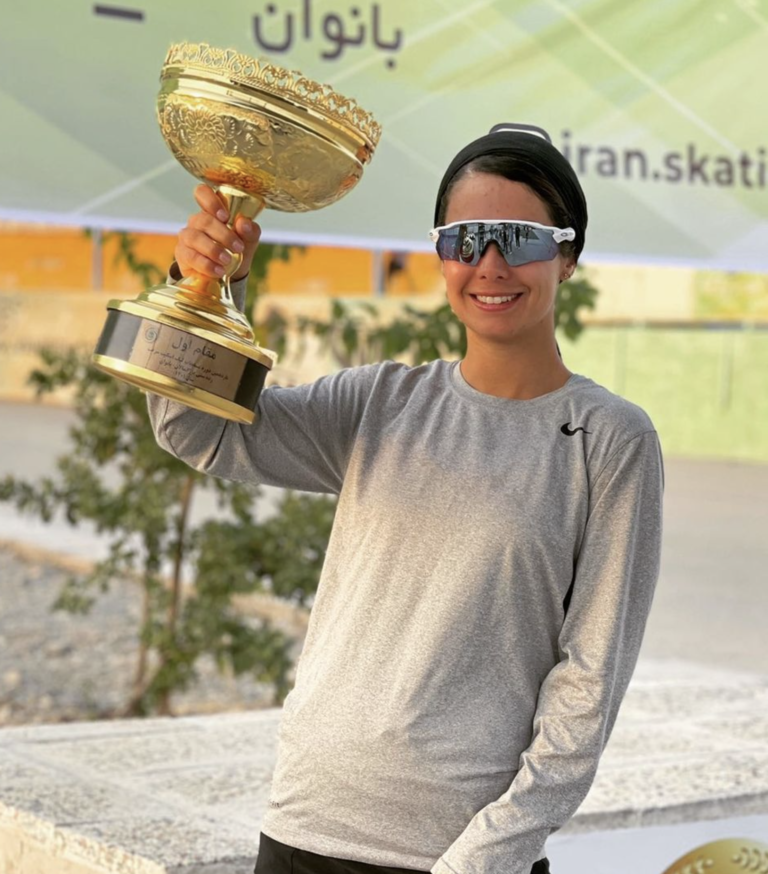
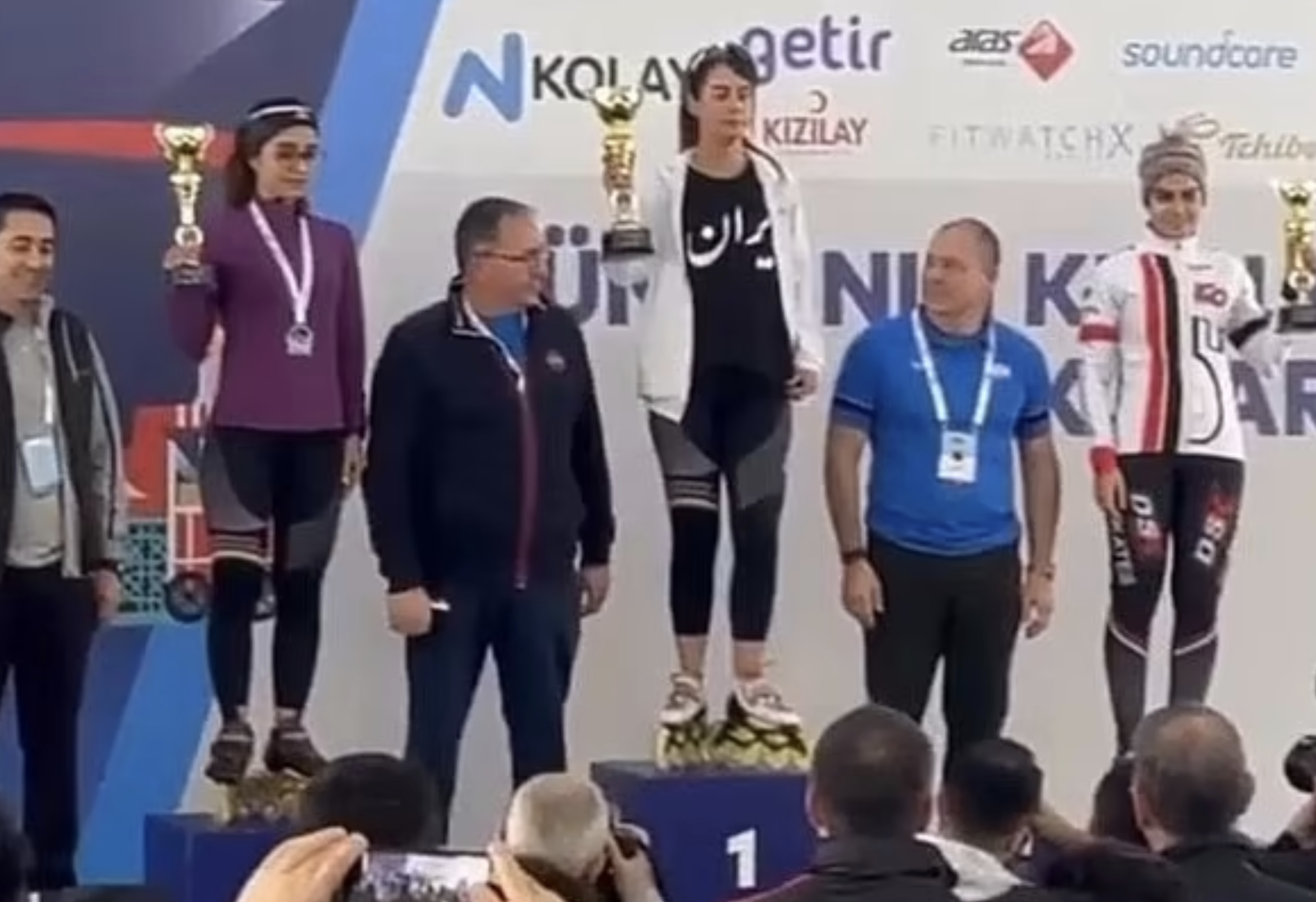
Niloufar Mardani, a member of the national Iranian speed skating team for years, stepped on a podium in Turkey this month to receive her first-place award. She was not wearing a headscarf, which is compulsory if representing Iran outside the country. But she also said she was competing as an individual not as a member of the Iran team.
There was a picture of Mardani on social media on the same podium in Istanbul wearing a black T-shirt with the word Iran on it.
Iran’s sports ministry issued a short statement emphasizing that athletes require “maintaining Islamic values in sports competitions” and added that Mardani, pictured below, had not competed in clothing approved by the state.
Niloufar Mardani, a world leading athlete and veterinarian. Images from her social media feed.
“This athlete has not been a member of the Iranian national team since last month and attended this competition as part of a personal trip without obtaining necessary permits,” the statement said. The Iranian team had not participated in the tournament.
Last month rock climber Elnaz Rekabi represented the Iranian national team in South Korea while not wearing a headscarf. This drew headlines around the world.
A crowd had gathered around Rekabi to welcome her when her flight arrived in Tehran because some supporters believed she did it as an act against the regime. Later Rekabi apologised and said that she didn’t have time to put on her hijab before the competition.
Ongoing protests consume the Iranian public. New energy against the regime has been stirred up since a young women died while in custody of the modesty police in Iran.
Since Saudi Arabia’s prince and prime minister decided to expand Saudi Arabia’s tourism to include westerners, desert and historical tourism was top of the list. One of the main attractions of Saudi Arabia, to rival Jordan’s Petra, will be Alula, Al-Ula, or confusingly spelt in English as AlUla. The Saudi ruler, crown prince and prime minister Mohammed bin Salman wants Saudi Arabia to diversify and to be liked by the West. Part of the plan for this Vision 2030 is to increase heritage tourism.
AlUla is the place and a special commission has been set up to make that happen. Some new research includes findings on desert kites and pendant shaped funerary highways. For archeologists, getting a gig in Saudi Arabia could be the hottest ticket in town.
Archeologists are being flown in, hotels are being built, and historical tourism sites are being promoted and made accessible to westerners. Historically the only tourism that came to Saudi Arabia were business travellers or people coming in to offer English as a second language ESL classes. The times have changed. Although we like what’s happening at AlUla and would like to visit one day, we are less impressed by Neom projects that radically change the landscape (ski on fake snow?) and expel people already living there, like at The Line.
Where is Alula?
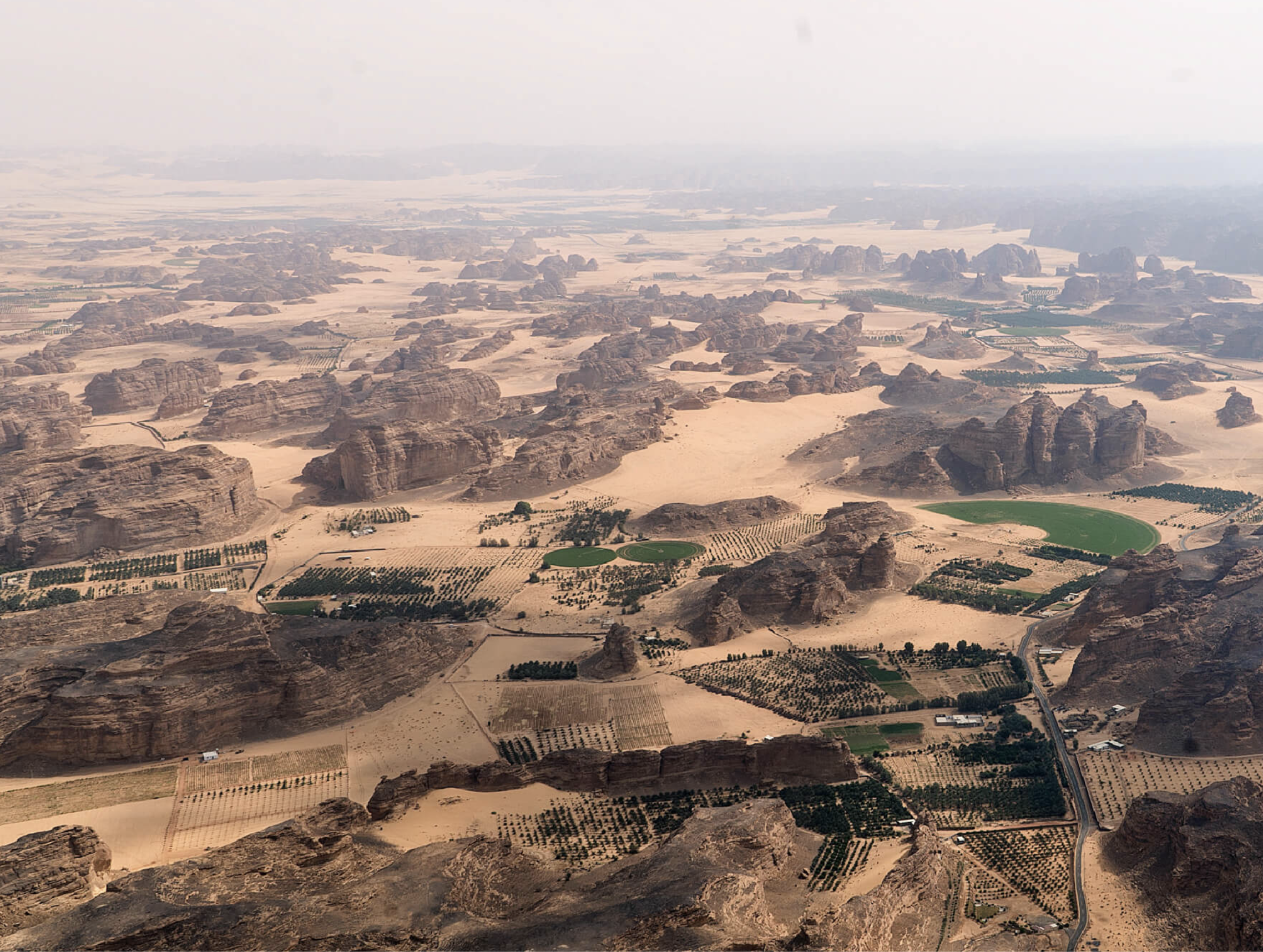
Located 1,100km from Riyadh in north-west Saudi Arabia, AlUla is a place of extraordinary natural and human heritage. The vast area, covering 22,561km², includes a lush oasis valley, towering sandstone mountains and ancient cultural heritage sites dating back thousands of years.
Hegra, an Ancient City in Saudi Arabia Untouched for Millennia, Makes Its Public Debut
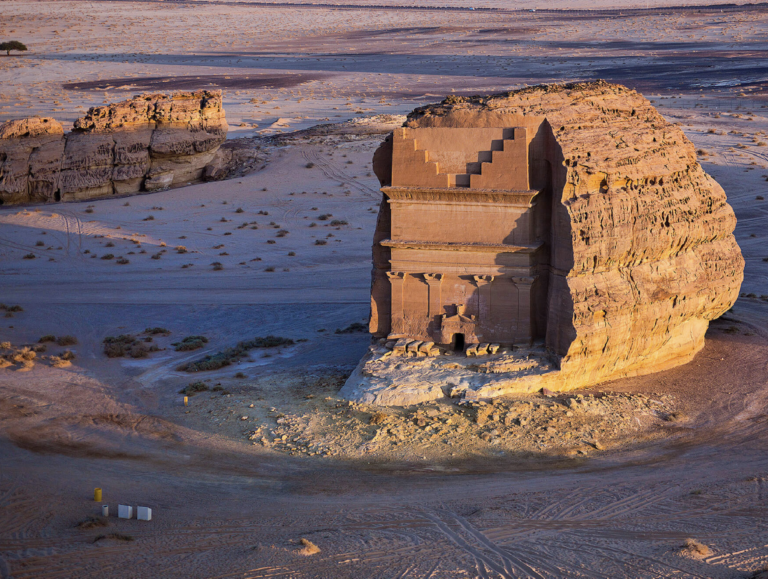
The most well-known and recognised site in AlUla is Hegra, Saudi Arabia’s first UNESCO World Heritage Site. A 52-hectare ancient city, Hegra (Mada’in Salih) was the principal southern city of the Nabataean Kingdom and is comprised of nearly 100 well-preserved tombs with elaborate facades cut into sandstone outcrops. The people of Petra were also Nabateans, teaching the world many a useful thing like desert irrigation for crops.
Current research suggests Hegra was the most southern outpost of the Romans after conquering the Nabataeans in 106 CE.
In addition to Hegra, AlUla is home to a series of fascinating historical and archaeological sites such as: an Old Town surrounded by an ancient oasis, Dadan, the capital of the Dadan and Lihyan Kingdoms, which is considered one of the most developed 1st-millennium BCE cities of the Arabian Peninsula; thousands of ancient rock art sites and inscriptions in Jabal Ikmah; and Hijaz Railway stations.
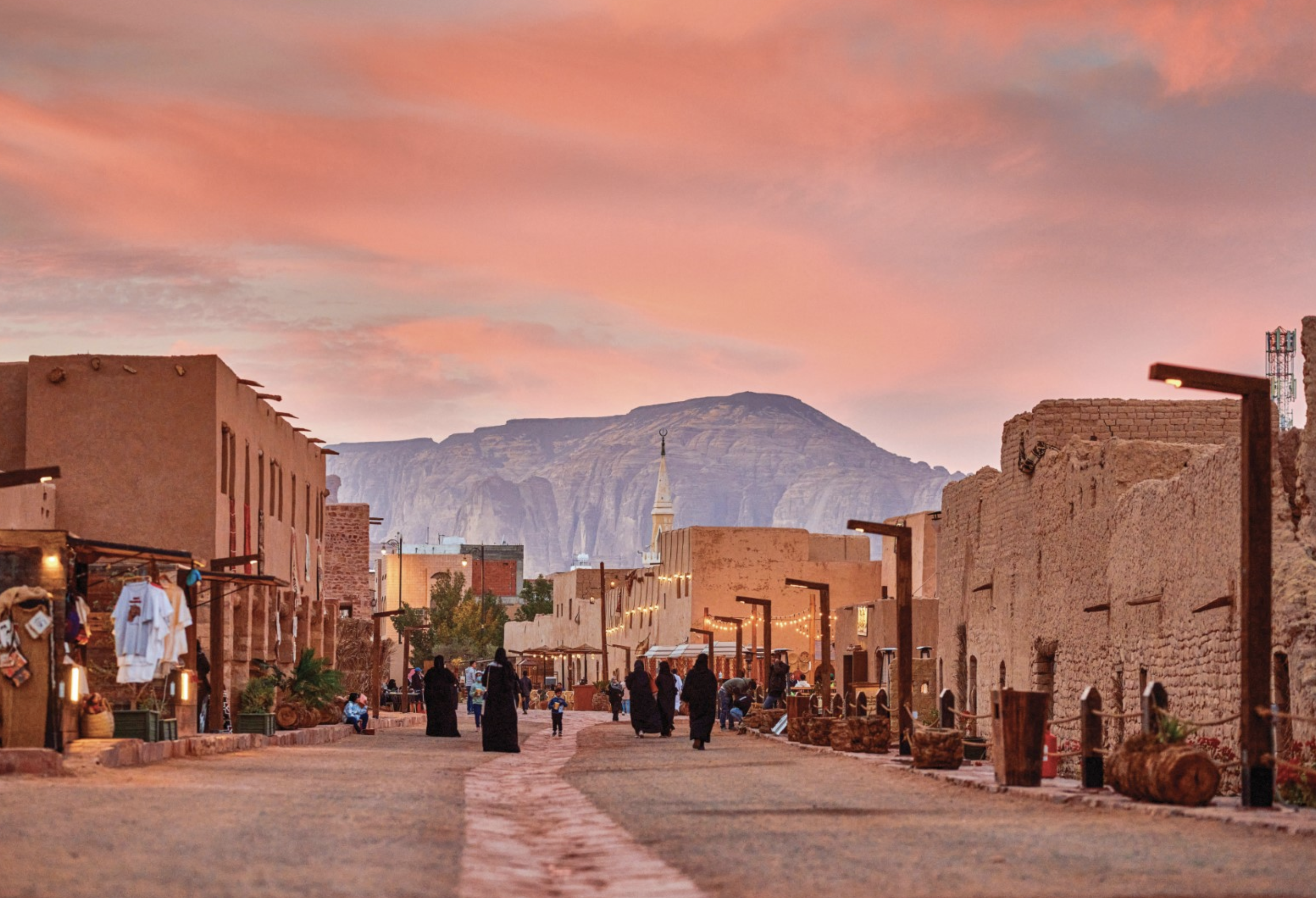
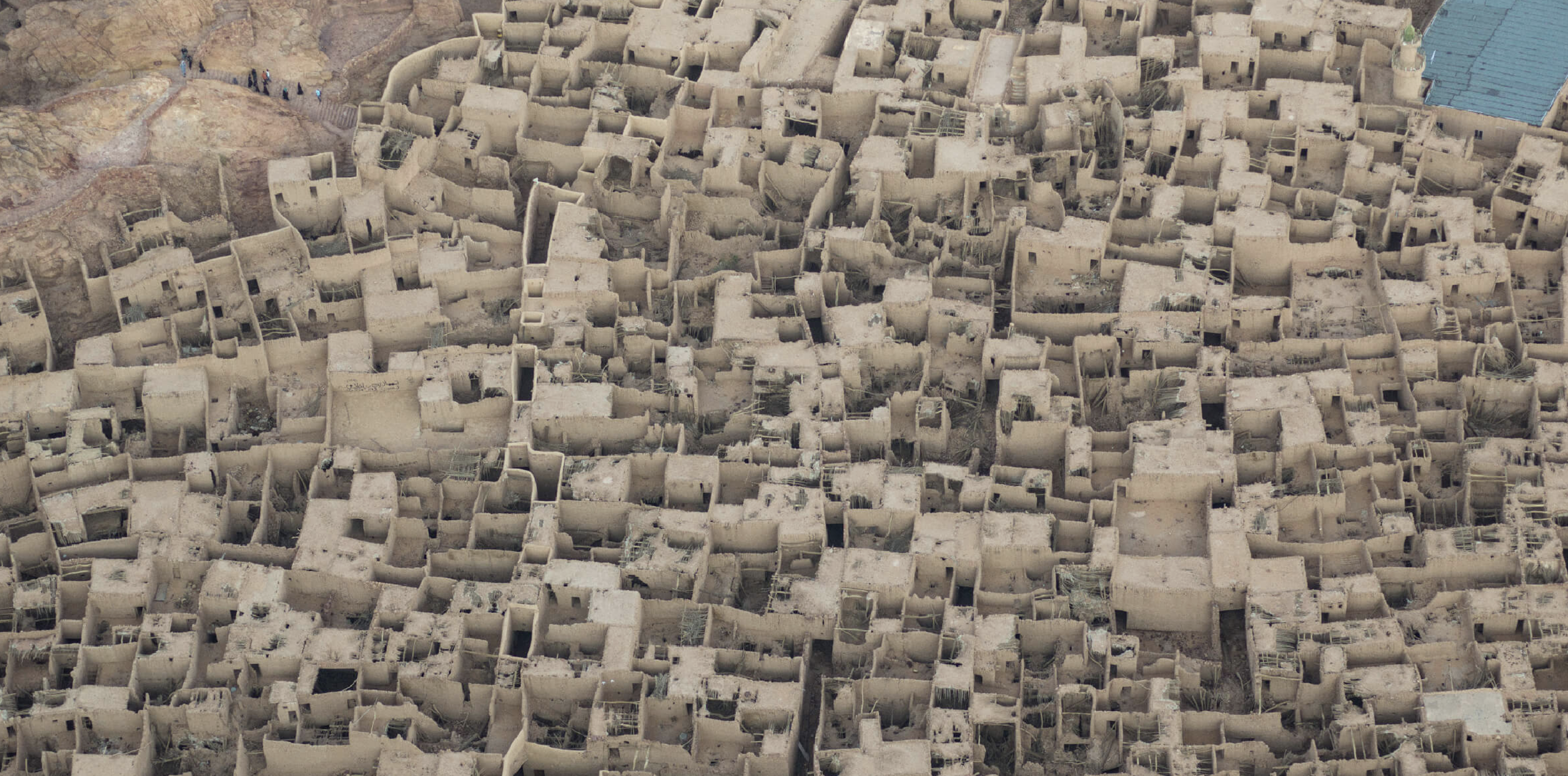
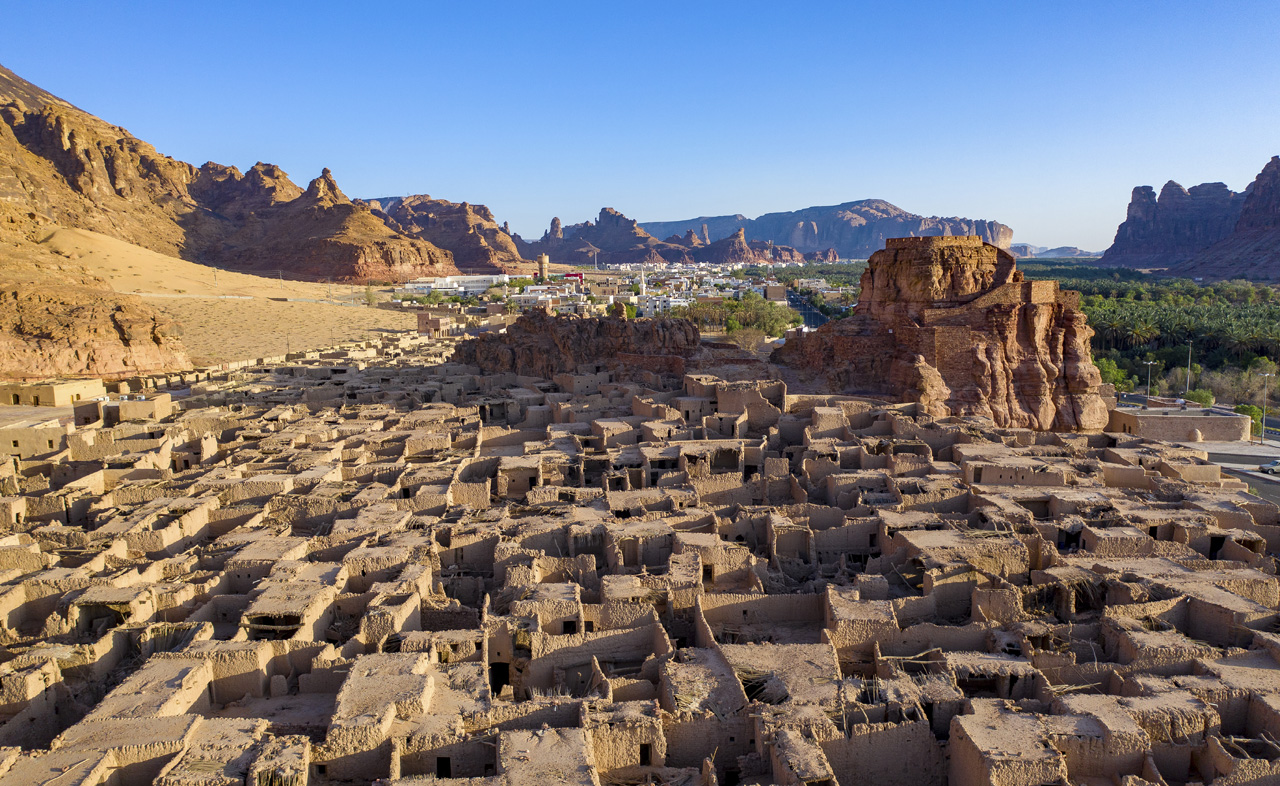
Al-Ula, Old Town
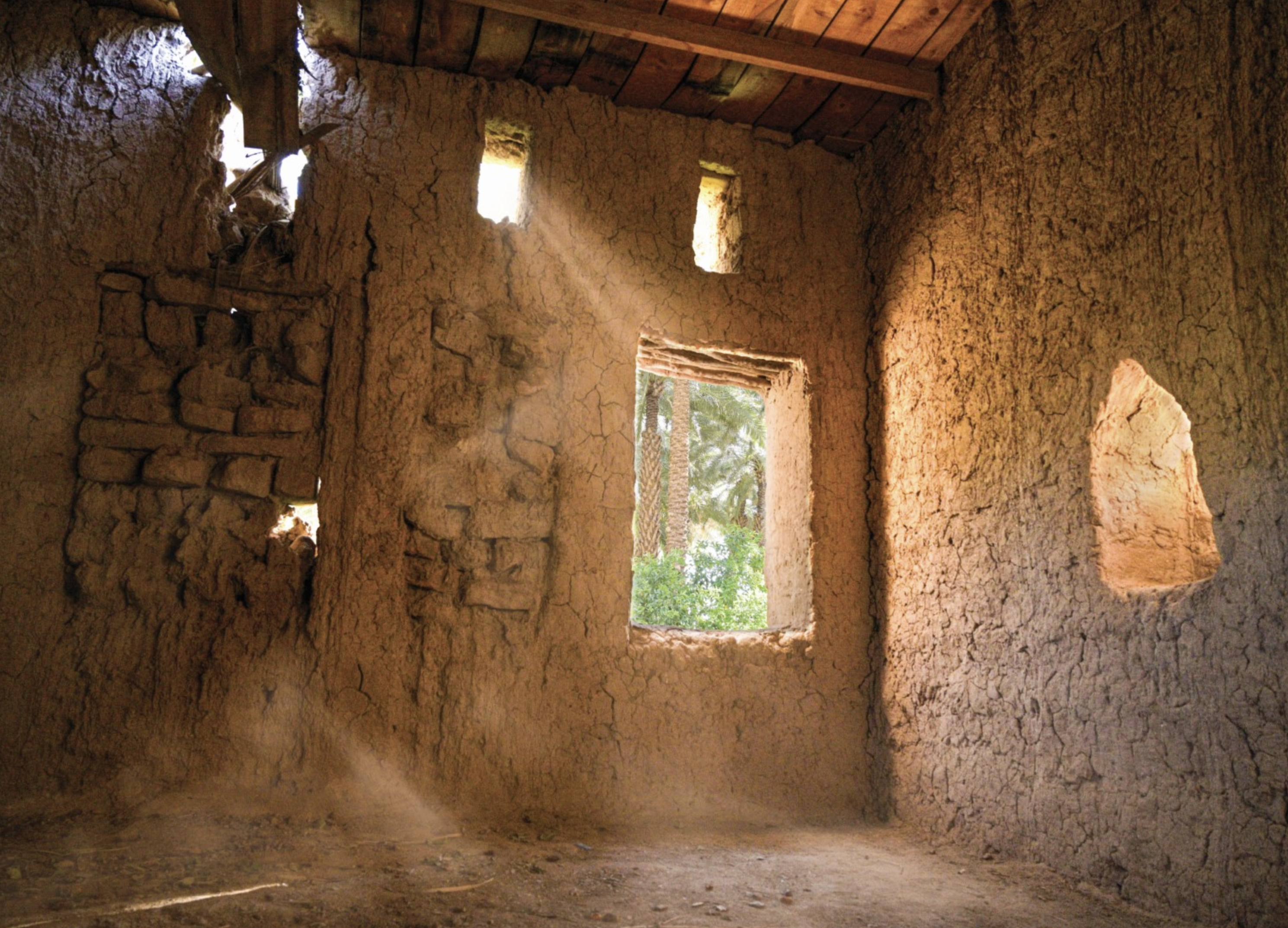
The region is home to vernacular architecture as well, with mud buildings in disrepair. And Maraya, a mirrored music hall is a stand out feature to this ancient desert setting.
Electric airplane stocks should be going up with this news: Eviation Aircraft, an Israeli-American venture of for an all-electric aircraft, announced this week that it has surpassed $2 billion USD in orders for its 9-seater all-electric Alice airplane.
The all-electric airplane is intended for commuter distances of no more than 3 hours of flight. But you have to start somewhere. Safer than a helicopter, and emitting zero emissions (if electrified by solar power or wind energy), Alice will go in history books like the Wright brothers.
The project started with a small team of Israeli founders, who managed the project, including investments and prototyping close to their market in the US. Israel tried to scale an all-electric car company in the past Better Place but it was too early for the Israeli consumer. Prior to that, decades before, Israel ventured to create an international car brand called Susita. The problem was that the fiberglass body was liable to be eaten by wild camels. It was a smart move for the Israelis to move to America to launch their brand, a typical move for most Israeli startup companies.
The troubled history of the Susita, the short-lived Israeli-made car reflects the conflict between Israel’s attraction to Western technology and the Middle-Eastern corruption that often hobbles advances in the region.
The Eviation Alice (we wrote about it here), is an all electric passenger airplane completed its first flight on September 27, in Washington. It was the first all-electric commuter airplane to pass this test.
“Our order book passing the US$ 2 billion mark is a significant commercial milestone,” said Gregory Davis, President and CEO of Eviation. “This success demonstrates that the Alice is leading the industry and meeting the market demand for zero-carbon flight.
“We are already seeing a growing clamour from passengers for sustainable aviation, matched by an increasingly robust attitude from regulators. By ordering the Alice, our forward-thinking customers are positioning themselves wisely for the future.”
World’s first green passenger plane
The Alice, built from a clean-sheet design around all-electric propulsion, produces no carbon emissions and costs significantly less to operate per flight hour compared to light jets or high-end turboprops. The aircraft is also quieter than combustion engine aircraft, allowing more flights into cities and communities where noise is a factor. You can read more about the partners in the project here. Like the cellcom industry, EVs in cars, and yes electric planes, take a village of multinational corporations to build.
Together, these developments promise to usher in a new era of low-cost point-to-point travel, reshaping the commuter and regional air market. Alice is powered by two magni650 electric propulsion units developed by magniX.
“With almost 300 aircraft now on order, the Alice is receiving strong customer endorsement. The aircraft is capturing the hearts and minds of the marketplace with its beautiful design, low operating costs and carbon zero footprint,” said Eddie Jaisaree, Vice President, Commercial Sales at Eviation.
“The Alice will not just protect the planet but also create a more enjoyable flight experience for passengers. Considering the environmental and fuel cost challenges facing conventional airlines, incorporating the Alice into our customers’ fleets will give them a significant competitive advantage.”
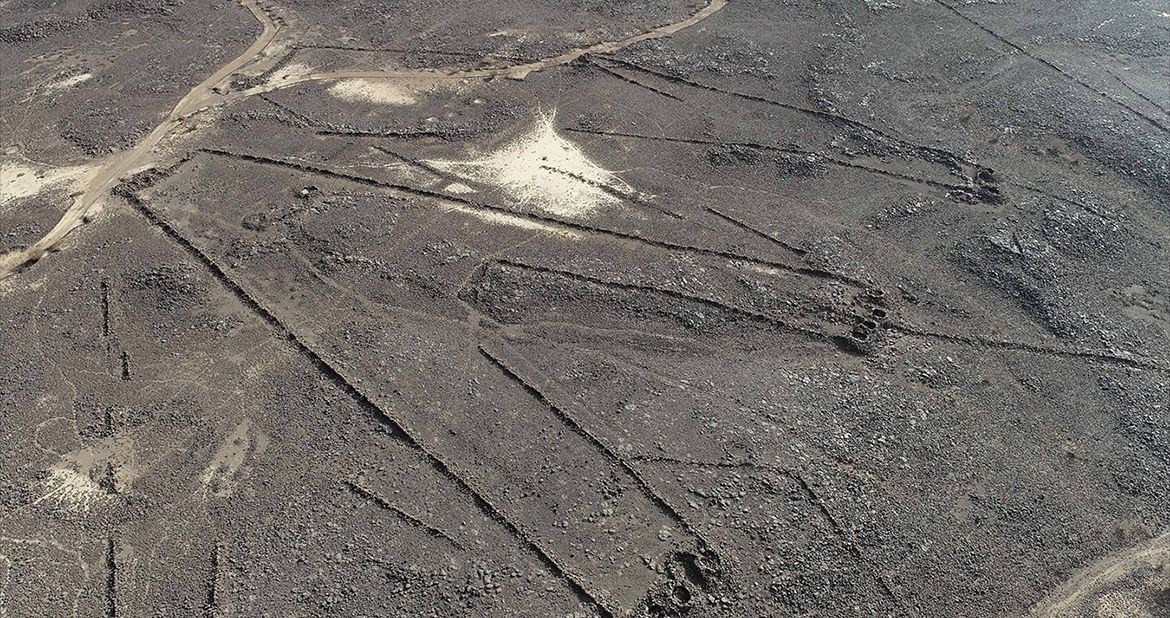
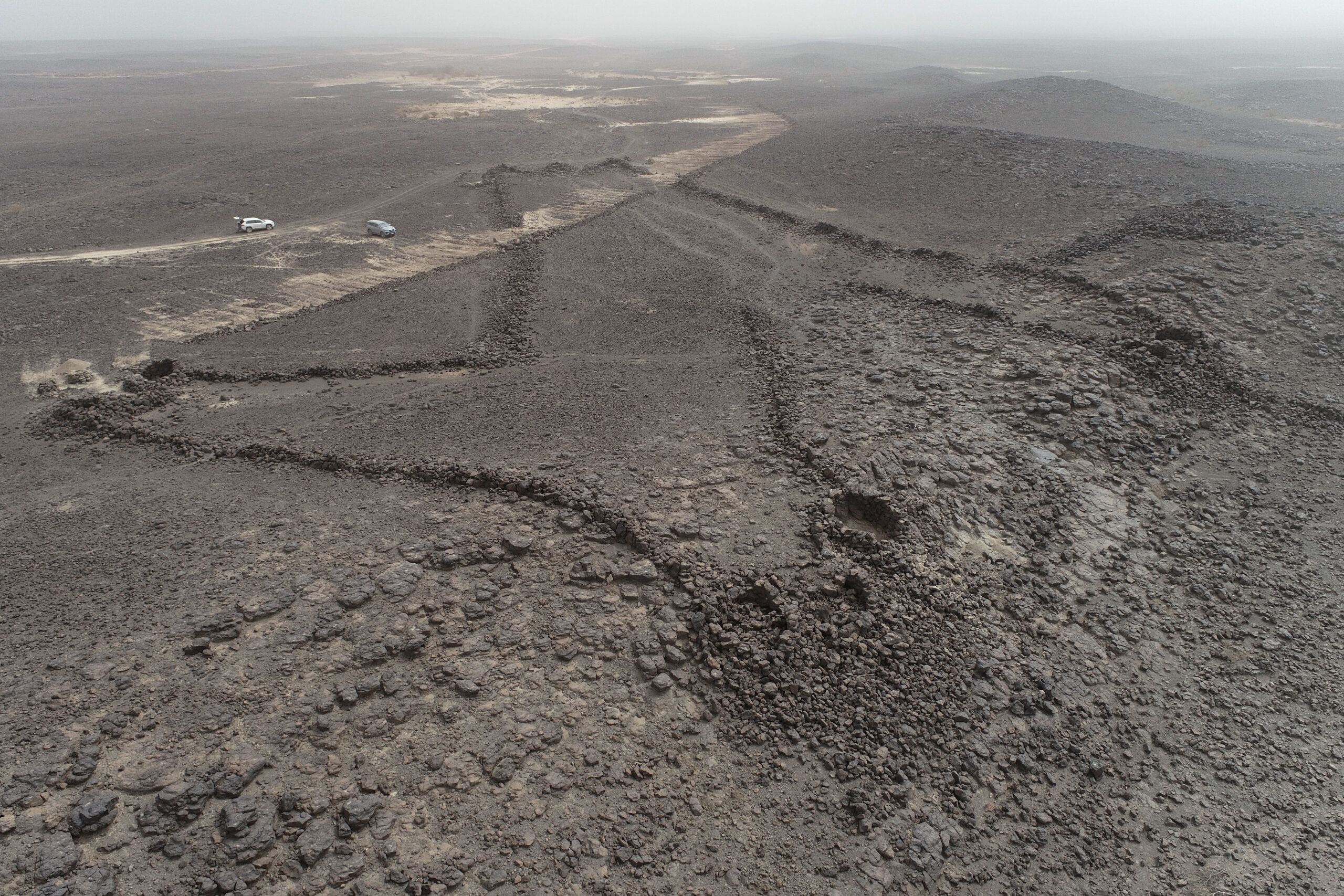
Ancient man built elaborate hunting traps, and worked collaboratively. These are desert kites found in Jordan, in the Middle East.
Hunting season is in November in Canada and those looking to trap or entice a deer onto their property might get a kick out of knowing how the ancients did it. They used desert kites, or a sort of mega-trap to catch their prey. The structures seen from up high in the sky were named ‘kites’ by aviators in the 1920s because they looked like old-fashioned children’s kites with streamers. Until now, the origins and function of Saudi Arabia’s desert kites, monumental structures (like the pendant burial graves) had been a matter of debate.
But new research from French archaeologists reveal that Middle East desert kites were hunting traps, and not enclosures for domesticating animals as proposed earlier.
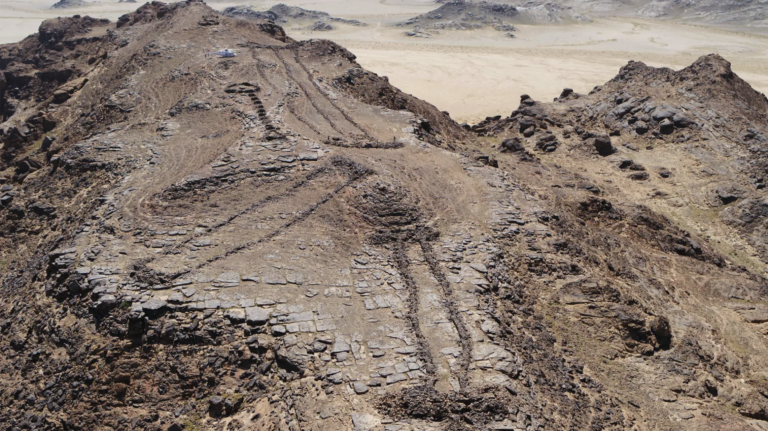
Aerial view of a kite in the Khaybar area of north-west Saudi Arabia. These ancient hunting structures were named ‘kites’ by aviators in the 1920s because, observed from above, their form is reminiscent of old-fashioned child’s kites with streamers. (Diaa Albukaai and Kévin Guadagnini, Khaybar Longue Durée Archaeological Project, RCU-Afalula-CNRS)
Remy Crassard, a leading expert on desert kites, notes that they are some of the largest ancient structures of their era from about 7000 BCE, that is 5000 years older than Stonehenge. But not as old as the Göbekli Tepe complex in southeastern Anatolia, Turkey which is dated to 11,500 years old.
The oldest kites, found in southern Jordan, have been dated to 7000 BCE. The age of newly found kites in north-west Arabia is still being determined but appears to straddle the transition from the Late Neolithic to the Bronze Age which is about 5000 to 2000 BCE.
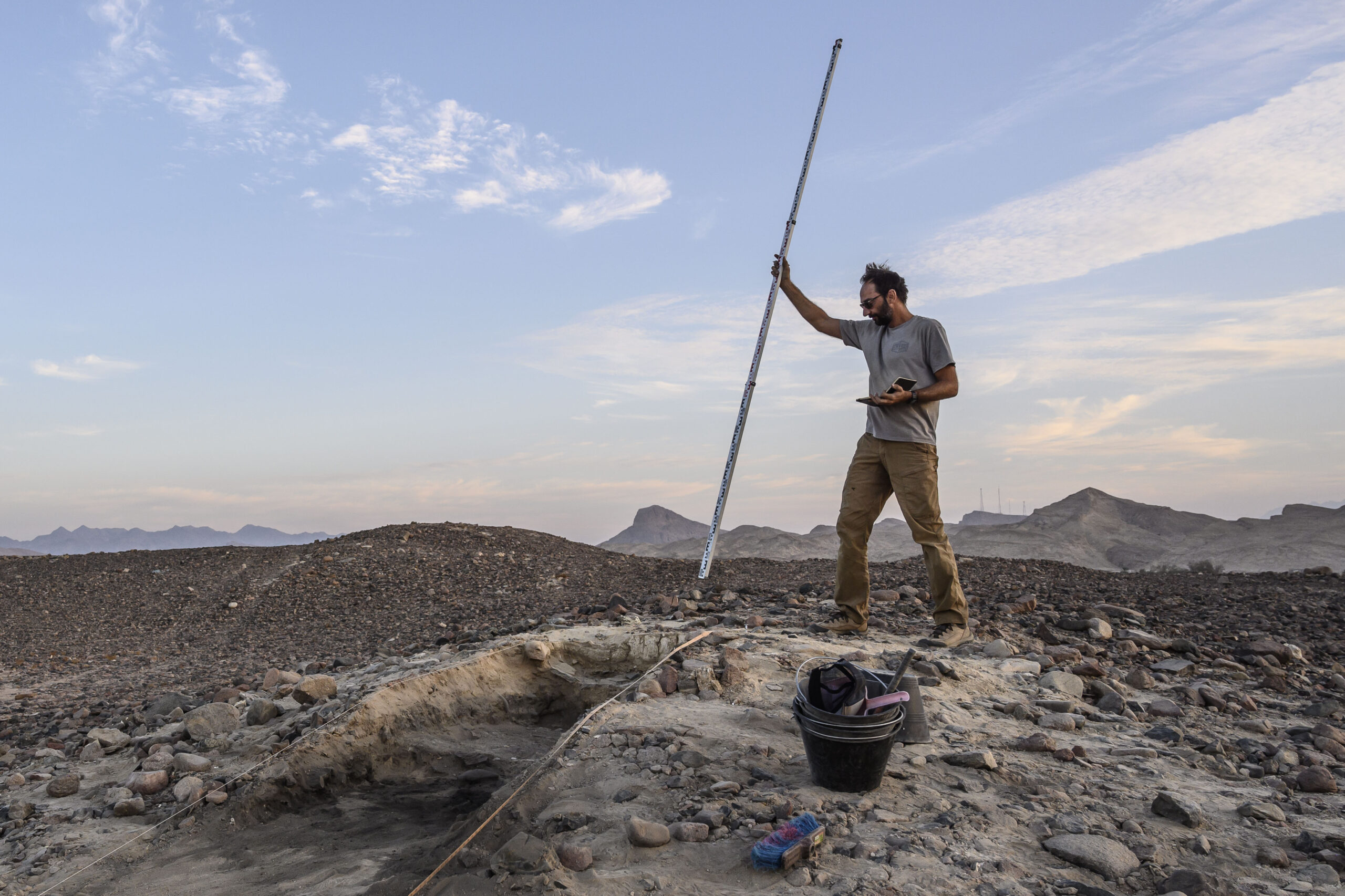
Al-Bad, Saudi Arabia. Remy Crassard is measuring altitudes at pre-historic sites.
Crassard, affiliated with France’s National Centre for Scientific Research is a co-director of the Khaybar Longue Durée Archaeological Project, estimates that 700 to 800 kites were known 20 years ago compared to about 6,500 now, with the number still growing.
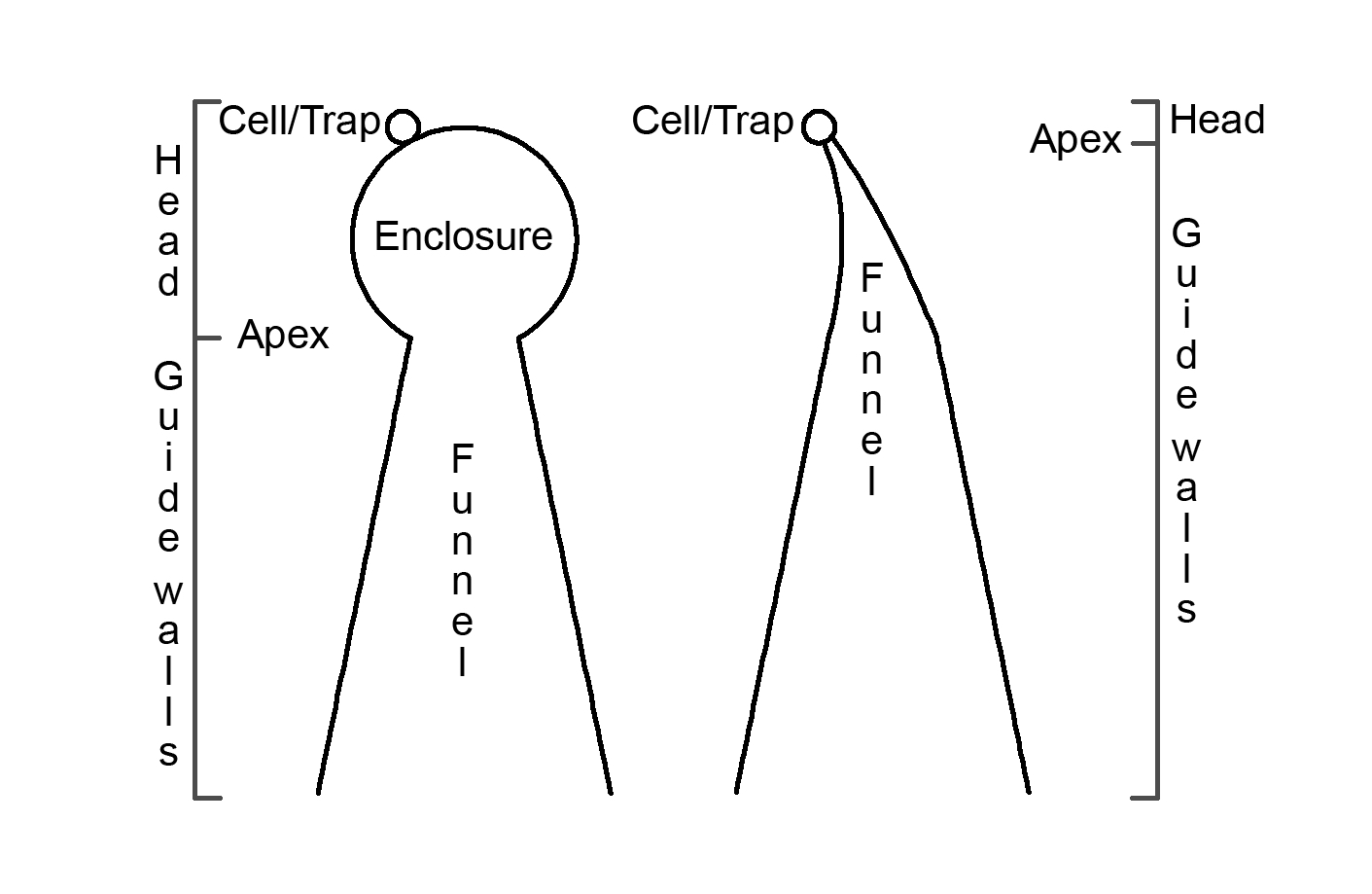
Stylised diagram of kites shows their key components. (Drawn by Rebecca Repper)
Based on recent research conducted in Saudi Arabia, Jordan, Armenia and Kazakhstan, Crassard’s team affirms that kites were used for hunting and not for domestication, that they “mark a profound change in human strategies for trapping animals”, and that “the development of these mega-traps made a spectacular human impact on the landscape”.
In Saudi Arabia, research led by Rebecca Repper of the University of Western Australia, concentrated on the Harrat ‘Uwayrid, an upland area with an extinct volcano. The team found that a distinct type of V-shaped kit was the dominant form in their study area, in contrast to kites found elsewhere in the region.
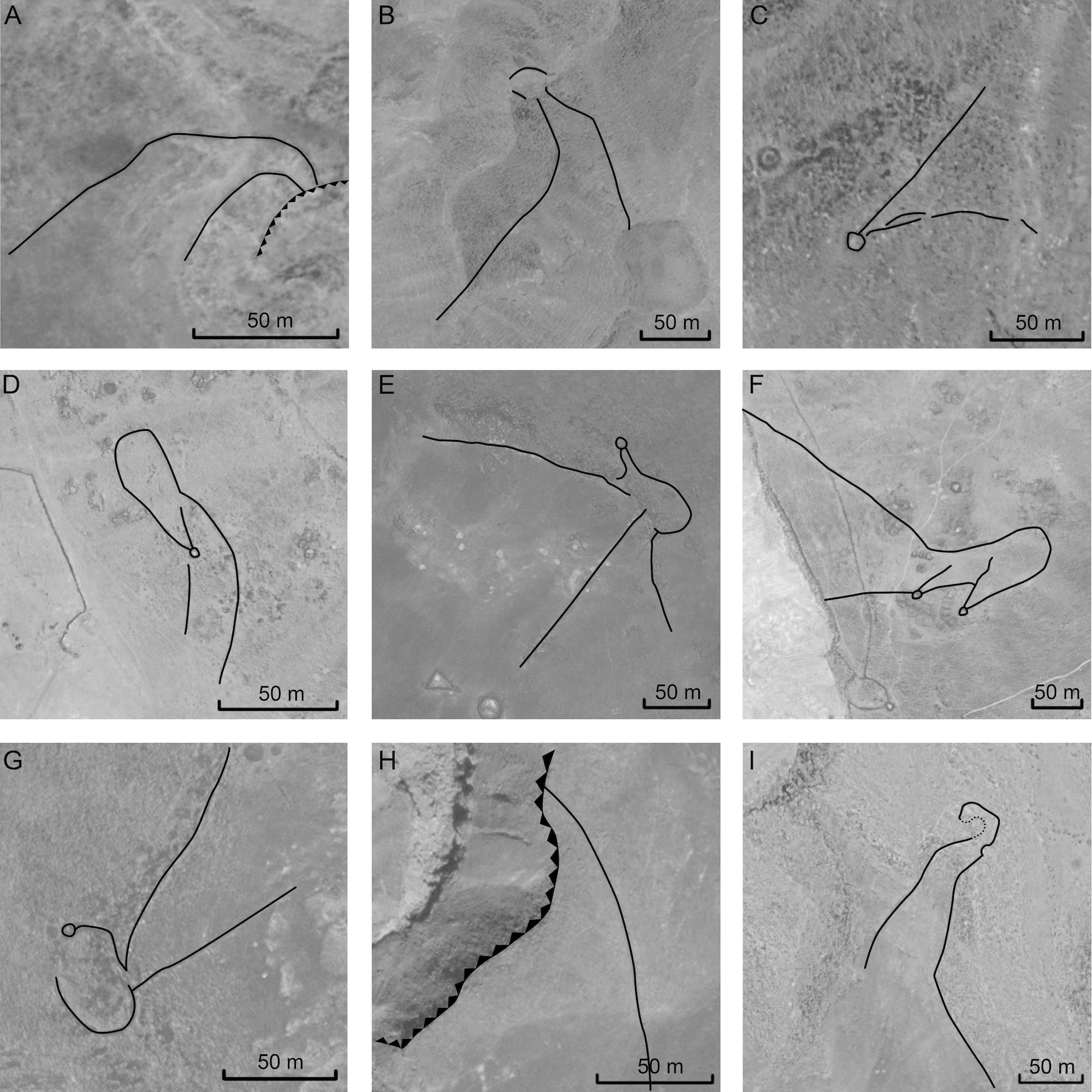
Kites have been described in a variety of shapes, including V, ‘sock’, ‘hatchet’ and W-shaped.
The variety of kite forms recorded on the Ḥarrat’Uwayriḍ: (a–c) are simple V-shaped kites, where two converging walls end in a trap formed by a precipice (indicated by crenulated line) and/or a cell. The funnel can be curved (a, b) or straight (c); (d–f) are ‘hatchet’ kites, so named for the lopsided enclosure and the position of the trap/s proximal to the apex of the guiding walls; (g) is a ‘rounded’ kite, a type that displays a rounded enclosure, usually with attached cell(s); (h) is a single-walled kite where the topography (here a precipice, indicated by crenulated line) acts as a second barrier; (i) is a possible ‘sock’ kite, where the walls converge to an extended curved funnel before ending in a small, enclosed area. (Drawn by Rebecca Repper, background imagery Google Earth)
Kites may have led to hunting well beyond subsistence levels, related to “an increase in symbolic behaviour related to food production and social organisation”. Some wild species such as gazelles might have altered their migratory routes as a result, and other species might have been hunted to extinction.
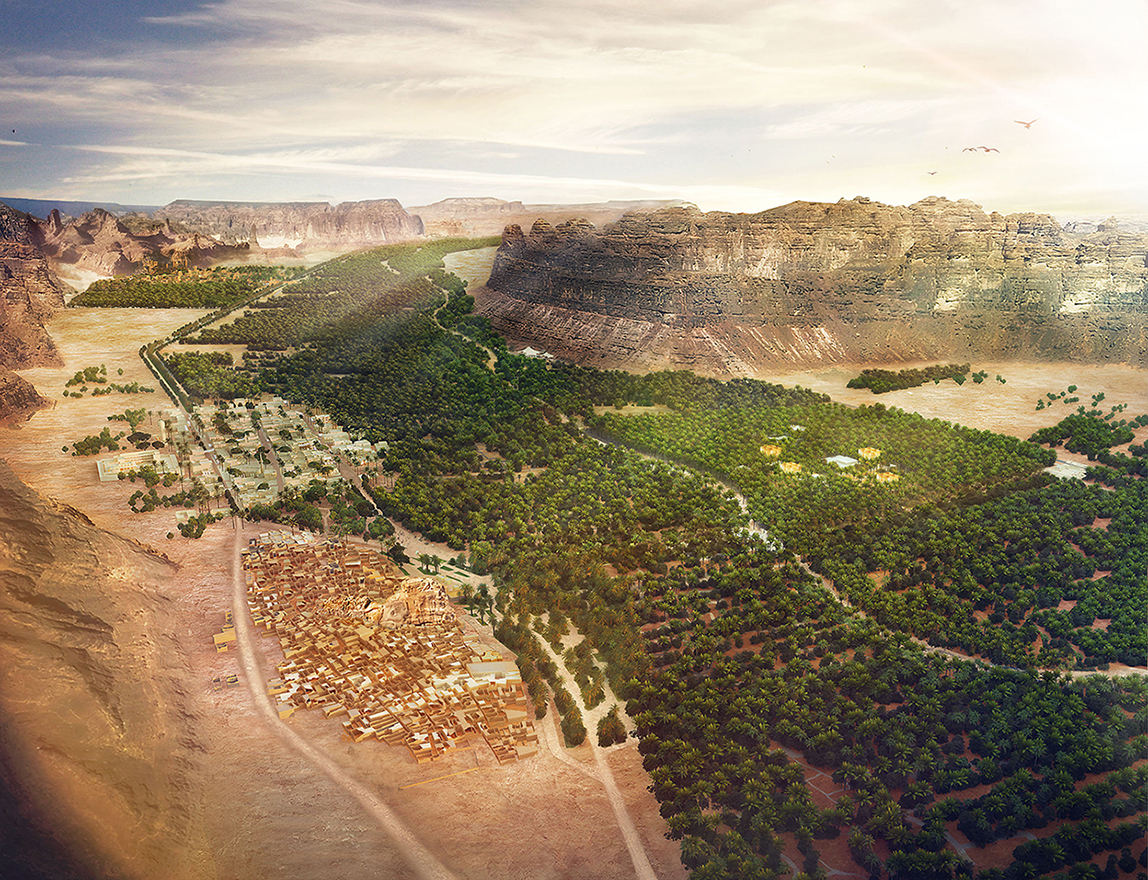
The Royal Commission of Saudi Arabia is regenerating AlUla as a leading global destination for cultural and natural heritage. One of the centrepieces by 2035 will be the Cultural Oasis, as shown above. From this spot tourists will visit desert kites.
How to build a desert kite
Regardless of form, all kites in the region have driving lines of low stone walls that converge to funnel animals towards a trap such as a pit or precipice. On average, the driving lines of the AlUla kites, in Saudi Arabia, are about 200 yards long. Elsewhere they can stretch for miles.
Repper says the shorter length shows the local knowledge of the hunters, who placed the traps in areas where existing landscapes naturally restricted animal movements. Kite placement also suggests that the hunters had an intimate knowledge of prey movements.
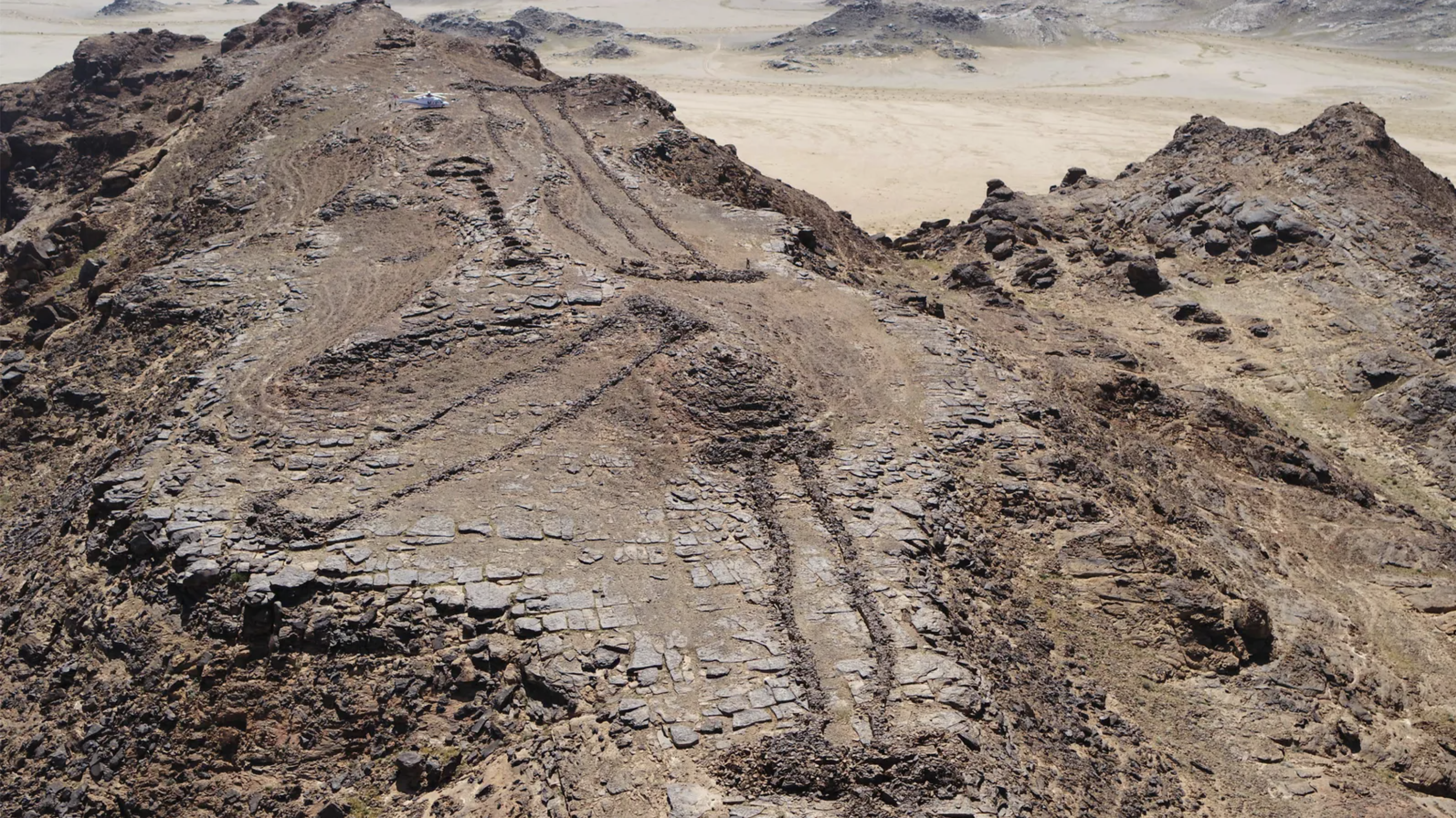
Aerial view of a kite in the Khaybar area of north-west Saudi Arabia. New archaeological findings on ‘kites’ show the ingenuity and perhaps collaborative nature of the region’s peoples in the past. (Diaa Albukaai and Kévin Guadagnini, Khaybar Longue Durée Archaeological Project, RCU-Afalula- CNRS)
While kites recorded in the AlUla region of Saudi Arabia tended to funnel prey towards a sudden precipice, kites elsewhere often end in concealed pits, in which hundreds of animals could be killed during a single hunt. This difference could be an adaptation to the local geography or an evolution of trap hunting.
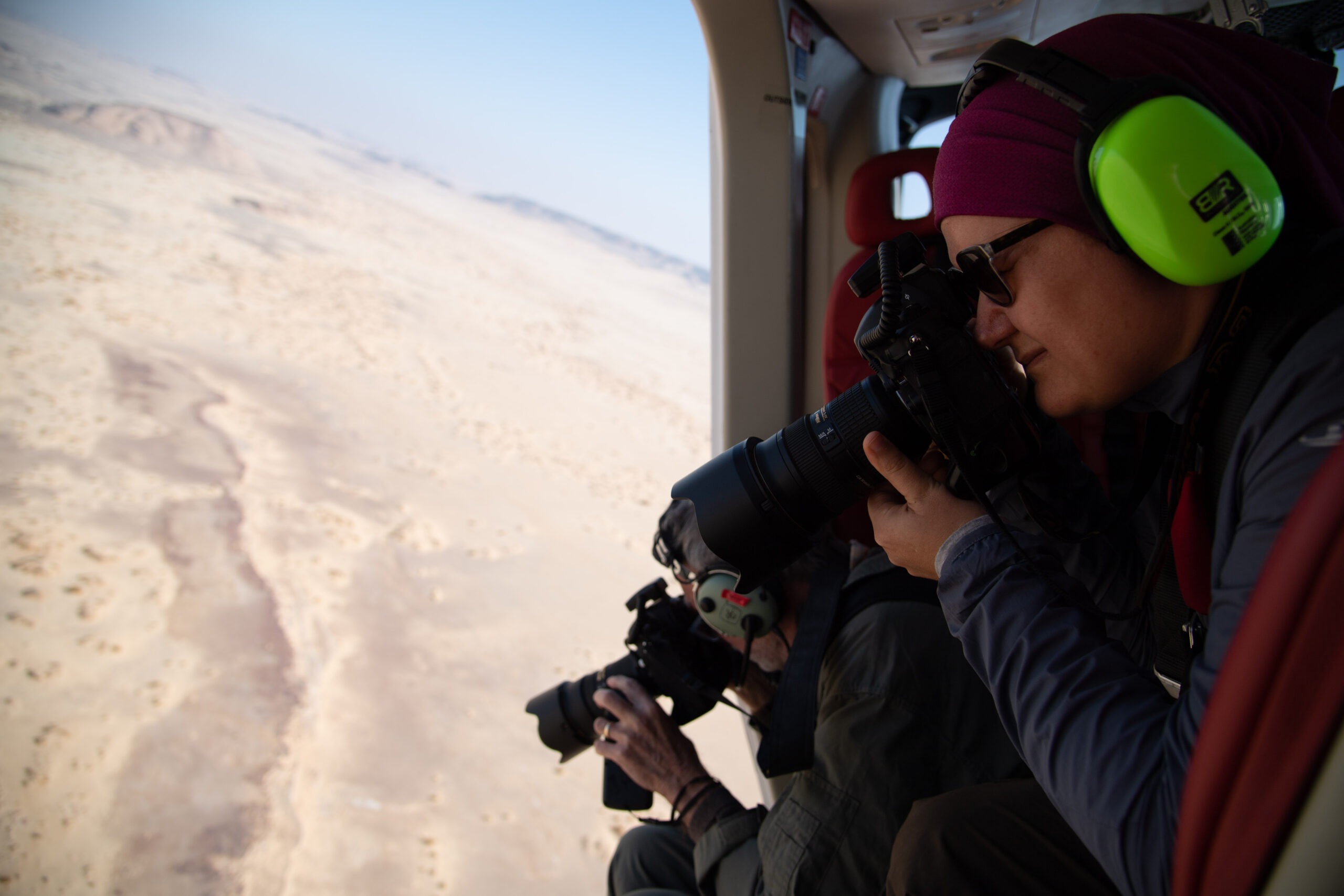
Photographing desert kites
In Khaybar, two types of kites have been distinguished: traditionally defined desert kites and rudimentary proto-kites, which do not have a well-defined enclosure surrounded by traps or pits. The team suggests that the proto-kites might have been a precursor to desert kites. The more complex kites may reflect less opportunistic and more formalized hunting techniques.
The recent studies expand on earlier discoveries of the Neolithic period in the region, including the construction of large-scale ritual structures known as mustatils.
What are mustatils?
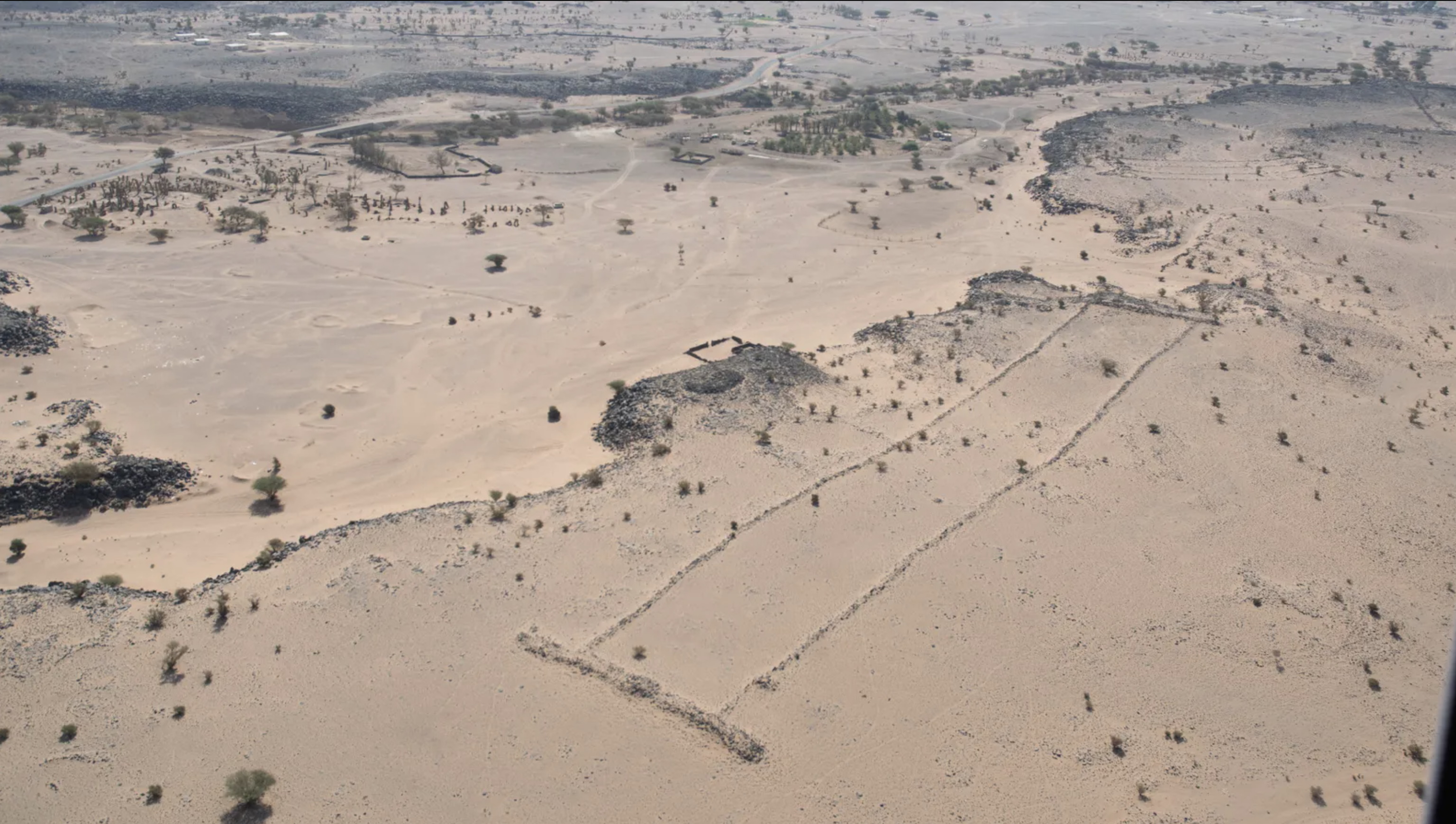
Mustatils are organized stone formations, spread over Saudi Arabia in an area as big as Poland.
Mustatils are newly found rock buildings in northwest of Saudi Arabia believed to be among earliest stone monuments in history. Mustatils is a plural form of the Arabic term for rectangles and these structures consist of two thick-walled ends, connected by two or more long walls to create a series of giant rectangle courtyards, ranging in length from about 20 yards to half a mile.
As part of the large mustatils, several mysterious “gates” were analyzed are believed to have been elements of procession for ritual sacrifices, as remains of animals including cattle, sheep and gazelle were found. No human remains or elements from domestic life were discovered in the excavation process, but further digging will take place.
‘The Use of Desert Kites as Hunting Mega Traps: Functional Evidence and Potential Impacts on Socioeconomic and Ecological Spheres’ by Rémy Crassard, et al, published in Journal of World Prehistory. Project sponsored by CNRS and French National Research Agency.
‘Kites of AlUla County and the Ḥarrat ‘Uwayriḍ, Saudi Arabia‘ by Rebecca Repper, et al, published in Arabian Archaeology and Epigraphy. Project sponsored by RCU.
‘New Arabian desert kites and potential proto-kites extend the global distribution of hunting mega-traps’ by Olivier Barge, et al, published in Journal of Archaeological Science: Reports. Khaybar data in this article results from the Khaybar Longue Durée Archaeological Project.
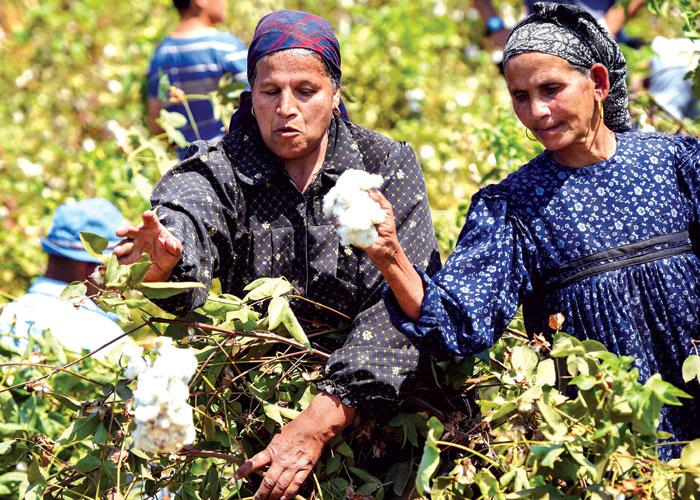
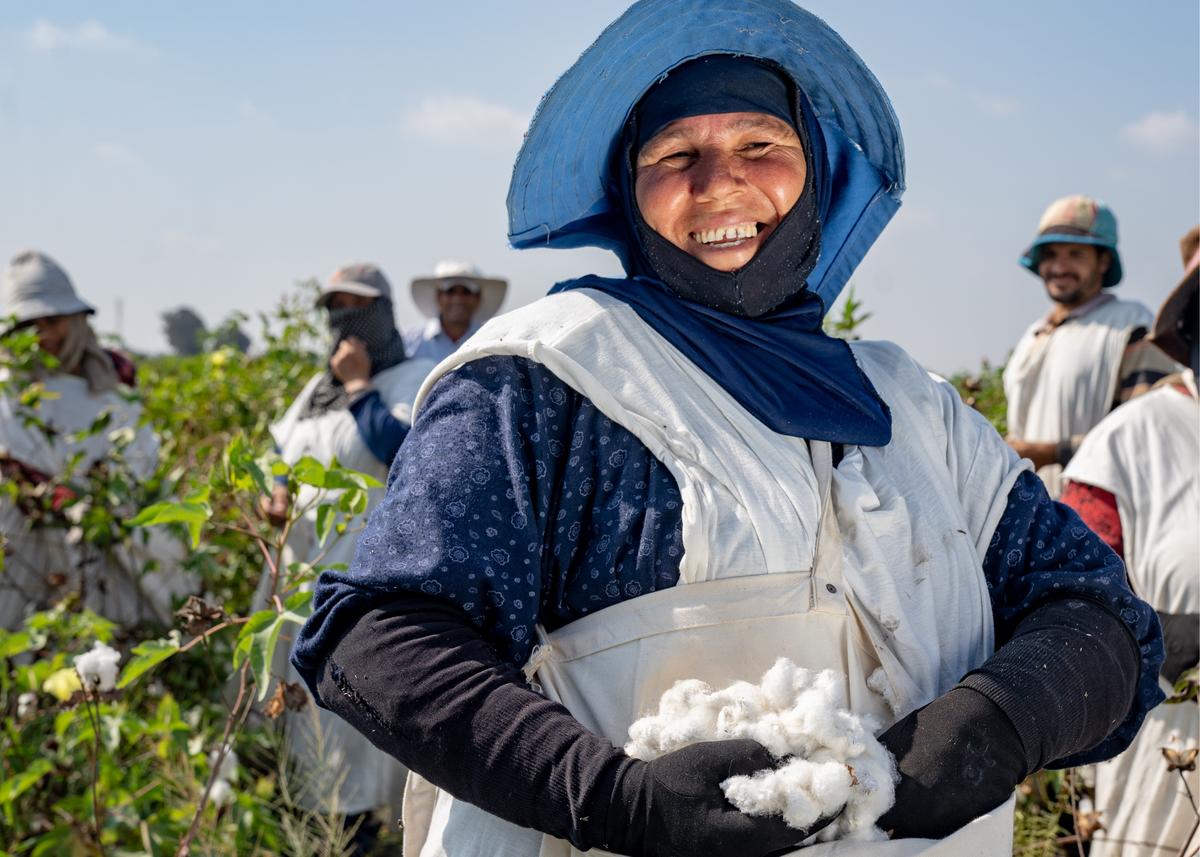
At one point, Egypt supplied nearly one-tenth of the world’s cotton exports, but today, less than 0.5 percent of the world’s cotton is produced in Egypt. Climate change is impacting their harvest. Magued Makram/UNIDO Egypt, Kafr ElSheikh, Egypt 2019
The world’s leading sustainability initiative for cotton, Better Cotton, whose members include international fashion and textile brands, has issued a stark warning to leaders during COP27: global leaders must not only strengthen their commitment but turn talk into action. They must ensure a just transition for everyone and prioritise climate justice for the world’s farmers and agricultural workforce.
Better Cotton is asking for greater collaboration across the fashion sector and its textile value chains to drive greater transparency, advocacy, and action to support smallholder farming communities around the globe. The sector’s key players, including alliances, trade associations, brands, retailers, and governments, must continue o advance the goals of the Paris Agreement to avoid catastrophic climate and environmental tipping points. Better Cotton believes that climate mitigation and adaptation as well as a just transition are only possible if there is sustained investment in regenerative agriculture and sustainable farming.
“We know that climate change poses a great risk to cotton farmers – with rising temperatures and more extreme weather events like flooding and unpredictable rains. We will help on the ground by incentivising farmers to embrace both climate-smart and regenerative agricultural practices, in turn helping cotton communities survive and thrive,” says Alan McClay, CEO, Better Cotton.
Farmers celebrate their hard work during the cotton harvest, Magued Makram/UNIDO Egypt. Kafr ElSheikh, Egypt, 2019
Leaders must strengthen and accelerate climate interventions that support the world’s smallholder agricultural producers before further catastrophic climate change events change the course of many peoples’ lives.
Changes in temperature and rainfall patterns linked to climate change are likely to make cotton more challenging to grow in many regions. Expected increases in temperatures and the difference in their seasonal patterns could lead to a decrease in the agricultural productivity of some crops. Lower yields will therefore impact the lives of already vulnerable communities.
The recent tragic floods in Pakistan illustrate how the cotton sector can be impacted overnight by extremes in weather patterns and affect the livelihoods of millions of people. According to McKinsey, the fashion sector must align with the 1.5-degree pathway over the next eight years and intensify its efforts to make agricultural practices more sustainable. If the textile industry does not address this, the 2030 emissions reduction targets will be missed.
Sustainable solutions for cotton farmers
Solutions already exist. Egyptian cotton farmers have been embracing and implementing the Better Cotton Standard as a tool to set metrics and establish more sustainable production practices in recent years. Since 2020, Better Cotton has been working closely with on-the-ground partners – the Cotton Research Institute and the United Nations Industrial Development Organisation (UNIDO). They help to ensure that Egyptian farmers gain access to the knowledge and tools they need to adopt more sustainable practices and improve their livelihoods.
Some 2,000 smallholder cotton farmers in the Kafr El Sheikh and Damietta Governorates of Egypt participate in the Better Cotton programme.
As part of Better Cotton’s bold strategy designed to deliver substantial environmental, social and economic impact across the cotton industry by 2030, it launched its climate change mitigation target in 2021. The target was set to reduce overall greenhouse gas emissions per tonne of Better Cotton produced by 50% by 2030 (from a 2017 baseline).
Four additional targets covering soil health, pesticide use, smallholder livelihoods and women’s empowerment are expected to be announced in early 2023 with impact indicators providing robust metrics for tracking and evaluating against the baseline.
Since its formation in 2009 Better Cotton has had a significant impact on the sustainability of the world’s cotton production. For example, on average Better Cotton production had a 19% lower GHG emissions intensity per tonne of lint than comparison production across China, India, Pakistan, Tajikistan and Turkey, a recent study analysing data from three seasons (2015-16 to 2017-18) showed.
Better Cotton is taking the lead in developing solutions for physical traceability enabling retailers and brands to make stronger sustainability claims related to the cotton content and provenance of their products, as well as a mechanism for farmers to be remunerated for their more sustainable practices.
Ahmad Abu Marhia was beheaded just two months before he was due to start a new life in Canada. His body was dumped outside his parents house in the West Bank.
A gay Palestinian man, Ahmad Abu Marhia, only 25, was found beheaded in the West Bank, Palestinian Authority on October 5. He had been living in Israel on asylum, fearful he would be killed if his Palestinian community found him close to home.
A video of the murder of Abu Marhia was circulating on social media and the motive for the murder is not known. But what is gleaned from the LGBTIQA+ community in Israel is that Abu Marhia had spent two years in Israel waiting on an asylum claim. He had death threats against him and was waiting to get the go-ahead to move to Canada. He was supposed to be moving there next month.
In the Israeli media it is reported that he was kidnapped from Israel to the West Bank where he wasn’t protected. His family, disagreed, said he came to Hebron to work.
Ahmad’s photo in rememberance.
The Associated Press reported his decapitated head and body were left near his family’s home late at night October 5. The video and photos of the incident went viral on social media late October 6: “I was shocked because of the way they killed him, and the way they decided to post and share it online,” says Tomer Aldubi, 29, a gay Israeli Jewish activist and artist who has worked with LGBTQ Palestinians for many years and knew Marakhia who spoke with the Bay Area Reporter in the US.
Homosexuality is rejected by conservative Muslims in Israel, and the Palestinian Authority, but in Israel you can live your life freely and openly if you are gay, especially in Tel Aviv. (Tel Aviv’s LGBTQ community also works to make their annual gay parade more ecological). Abu Marhia was hoping to go to Canada, where the country openly accepts refugees from the Palestinian Authority, Afghanistan and Syria.
Activist Natali Farah told Israel’s Haaretz newspaper that Ahmad Abu Marhia was well known. “Everyone is scared,” she said. Palestinians also expressed revulsion at the beheading. There are about 90 Palestinians who identify as LGBT who currently live as asylum seekers in Israel.
If you are gay and an Arab and seek protection in the Palestinian Authority or Israel contact the Different House.
The organization works in the following fields:
Legal and welfare assistance to the Arab LGBT people
Strengthening the community bond by encouraging volunteering within the Arab LGBT community
Creating social events designated for the Arab LGBT community
Making, translating and publishing info material regarding the Arab LGBT community in Arabic
Creating network of collaborations with relevant organizations in Palestine, Israel and other countries
We reported that Saudi Arabia is invested in electric cars with Lucid Motors. And a manufacturing plant is being set up for Saudi Arabia. But the US-Chinese-Saudi-invested venture is not enough. The prince of Saudi Arabia wants his very own car company and just announced Ceer, the country’s first electric vehicle company, which should attract over $150M foreign direct investment and is expected to be available by 2025.
Mohammad bin Salman bin Abdulaziz, Prime Minister of Saudi Arabia and Chairman of its Public Investment Fund (PIF) announced that Ceer will be the first Saudi electric vehicle brand that will contribute to Saudi Arabia’s automotive manufacturing sector. Even though Lucid did announce it will open a plant in Saudi Arabia.
The launch of Ceer comes in line with the ruler’s strategy to help his country outgrow oil, to diversify the economy, and to help achieve the objectives of his Vision 2030. In addition, the company will contribute to Saudi Arabia’s efforts towards carbon emissions reduction and driving sustainability to address the impact of climate change.
“Saudi Arabia is not just building a new automotive brand,” he says. “We are igniting a new industry and an ecosystem that attracts international and local investments, creates job opportunities for local talent, enables the private sector, and contributes to increasing Saudi Arabia’s GDP over the next decade, as part of PIF’s strategy to drive the economic growth in line with Vision 2030.”
Ceer is the first Saudi automotive brand to produce electric vehicles in Saudi Arabia, and will design, manufacture and sell a range of vehicles for consumers in Saudi Arabia and the Middle East North Africa region, including sedans and sports utility vehicles.
A part of PIF’s strategy to diversify Saudi Arabia’s GDP growth by investing in promising growth industries, Ceer will attract over US$150 million of foreign direct investment, and create up to 30,000 direct and indirect jobs. Ceer is projected to directly contribute US$8 billion to Saudi Arabia’s GDP by 2034.
The company, which is a joint venture between PIF and China’s Hon Hai Precision Industry Co. (“Foxconn”), will license component technology from BMW for use in the vehicle development process. Foxconn will develop the electrical architecture of the vehicles, resulting in a portfolio of products that will lead in the areas of infotainment, connectivity and autonomous driving technologies.
Will they be driverless?
Each vehicle will be designed and manufactured in Saudi Arabia, and tested to the highest global automotive quality control and safety standards. Ceer vehicles are scheduled to be available in 2025.
Chairman of Hon Hai Technology Group, Young Liu, said: “Foxconn is excited about our partnership with PIF to create a new automotive company that will focus on designing and manufacturing electric vehicles in and for Saudi Arabia.
“We will leverage Foxconn’s technological expertise to support Ceer’s vision of creating a range of iconic electric vehicles that are built around the themes of connectivity, infotainment and autonomy. We want to make electric vehicles mainstream, and that is what Ceer is going to achieve in Saudi Arabia and the wider region.”
Artificial city lights are a “turn off” to crickets who sing love songs to their mates. A new study from the University of Haifa in Israel has found that even low levels of artificial lighting at night cause an interruption in the biological clock of male crickets. This may lead to extinction of the species, the researchers speculate.
Artificial lighting at night (ALAN) has become a factor that negatively influences our ecological environment, especially the one close to the cities.
“The damage to the gene expression of the biological clock as a result of artificial lighting greatly disrupts the timing of vocal communication habits of the cricket, which are essential for establishing contact with the female and could endanger the existence of the cricket population,” said Prof. Eran Tauber, from the University of Haifa.
According to estimates, about a tenth of the Earth’s land surfaces are illuminated by artificial lighting, and this estimate increases to 23% if you regard the glow of the sky as part of the light pollution created by this lighting at night. According to Prof. Tauber, many animals use the timing of natural light to synchronize their behavior and the course of their lives.
For example, migratory birds use light to schedule their time of flight, and artificial light of a certain intensity may disrupt this. Another example is the animals that have different interactions with other organisms – In the case of pollinating flowers for example, insects need to “know” when to visit the plant during the day, and the plant needs to “know” when to bloom.
Any disruption of the timing of pollination that is caused by artificial lighting upsets all interactions among organisms.
When city light is brighter than 2 moons
In the current study, which was published in the International Journal of Molecular Sciences, showed that even at the lowest intensities of artificial lighting – at the level of 2 lux (1 lux is the power of a full moon) – significant changes in the expressions of genes related to male crickets’ biological clock were found.
The most significant changes were identified in eye tissues compared to tissues in other areas.
“The male crickets chirp love songs to the females when they are standing still, and this is the chirp we hear at night. The females choose the cricket they liked the most and agree to mate with him. This phenomenon has a certain timing during the 24-hour day; as soon as they are exposed to artificial light, it disrupts their biological clock and any timing of these behaviors go awry, so the crickets out of sync with their environment.
“In extreme cases, this could endanger the cricket population and even lead to the insect’s extinction,” Prof. Tauber added.
How we can help save crickets
When we install artificial lighting on roads and in parks and gardens, we need to consider the damage that could be caused to animals and plants. A study conducted in Germany estimated that street lighting caused the death of some 60 billion insects all over the world in just one summer. So turn off your lights at night.
The results of the current study and the growing awareness of the damage of artificial lighting should be translated into public policy and intelligent urban planning to reduce the damage to the environment. The use of focused lighting at low intensities and wavelengths that do not affect the biological clock will create a safe urban environment alongside nature that thrives.
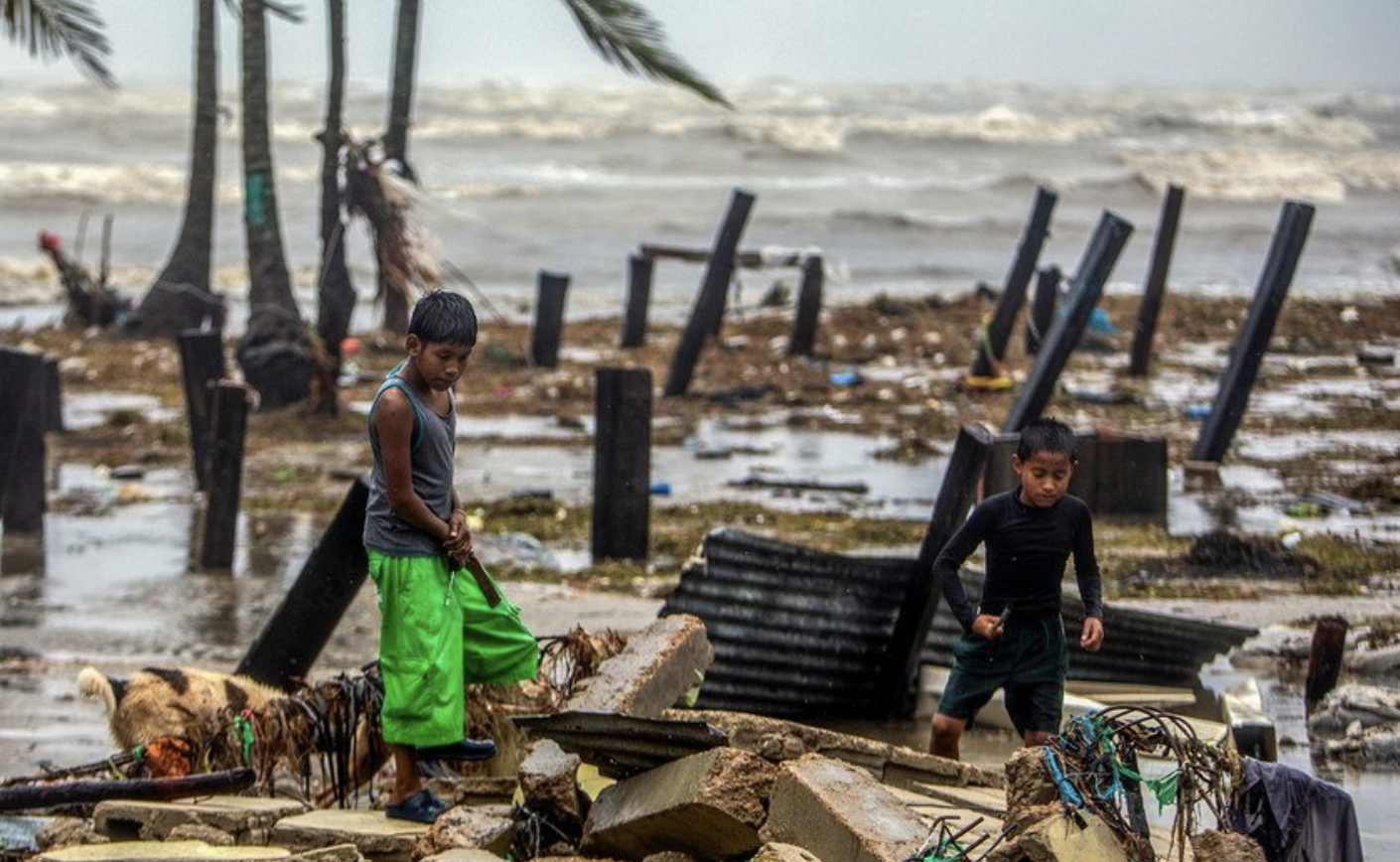
Children search for scraps of wood to help their parents rebuild their house after it was destroyed by the strong winds of Hurricane Iota in Nicaragua. UNICEF
So the world’s largest climate event, COP27, now happening in Egypt meets the usual challenges. But a few key points stick out over all the media covered and dozens of press releases I’ve received:
Policies and promises for carbon targets are not lining up. Not enough action towards climate change is happening fast enough. This is old news. We hear it every year.
Egypt is criticised for its double-faced stance as “wanting” to be progressive yet it holds free-media activists in prison. This news is rising above the smog. Free media means that people can start reporting factually and accurately against the world’s leading greenwashers like Saudi Aramco. Saudi Aramco is responsible for 4% of all global carbon emissions. If you don’t care about climate change, just go skiing on one of their fake ski hills. Or go live on The Line.
Egypt, and dozens of other poorer nations, in development, meanwhile, are asking the richer carbon hungry nations to pony up and pay for the effects of climate change. Also old news. But it’s fair.
Greta Thunberg is not bothering to go to the event this year which once crowned her as the unlikely princess against climate change (that was COP24). This year? COP27? It’s “greenwashing” she told the media.
The tomato soup can incident, sadly, seemed to be the year’s biggest media stunt against climate change. Kids being washed away in floods? These images no longer affect us. We need soup streaming down things we care about, and find holy.
So what’s COP27, if you are asking?
Some 200 nations from around the world are meeting this week in Sharm el-Sheikh, a beach and diving town in Sinai, Egypt, to discuss climate change problems and solutions. The United Nation’s climate event, COP takes place every year. Every time a new one is held, since the first, they add a number. So this year we are at COP27. And this year businesses, governments, activists and companies are meeting from November 6 to 18 to discuss, solve and deal with the pressing problem of our generation.
Also every year the messages become more urgent, yet key activists known for making statements at the annual UN event, like Greta Thunberg, aren’t even attending this year.
She’s skipping the “greenwashing” event, as she calls it, because the UN’s climate conference will be “used as an opportunity for leaders and people in power to get attention”.
At last years’ COP26, the wealthier nations of the world agreed to pay $40 billion per year by 2025 to help developing nations build defenses against floods. An UN report says that this sum is about 1/5 of what these countries need to hold back the effects of extreme weather effects.
The effects on poor nations, is a dominant theme in this year’s UN COP27 event
“Countries must urgently ramp up action to adapt to the current and future impacts of climate change, as efforts now are too little and too slow,” the UN Environment Programme (UNEP) said in its latest report, published on Thursday.
Climate data from UN reports
UNEP also publishes an annual data report. This might be helpful for students, businesses and governments lobbying and pressing for change. Climate change is a global problem and we must act locally with our own actions, but also we must influence stakeholders.
A recap from UNEP: “To limit global temperature rise to below 2°C aiming for 1.5°C, as promised in the Paris Agreement, countries must cut 30 gigatonnes of GHG emissions annually by 2030. The necessary solutions exist yet currently more emissions are entering the atmosphere making it harder to keep the planet safe.”
UNEP adds: The world’s wealthiest 1 per cent emit more than twice the emissions of the poorest half combined. That is why developed nations must step up to make rapid and large-scale emission reduction and support developing countries as they build low-carbon economies and make adequate climate adaptation.”
Hassan Fathy’s off-grid living and architecture inspired generations of architects in the Middle East and beyond. This is the Akil Sami House in Dahshur, Egypt
To end this climate brief in a way that makes sense for today and Egypt, read a little more about Hassan Fathy. He had a dream for the people of Egypt, and an appreciation for vernacular architecture. Living, building and thriving closer to the land and our planet may cut out the need for capitalism that makes us ever so hungry for more.
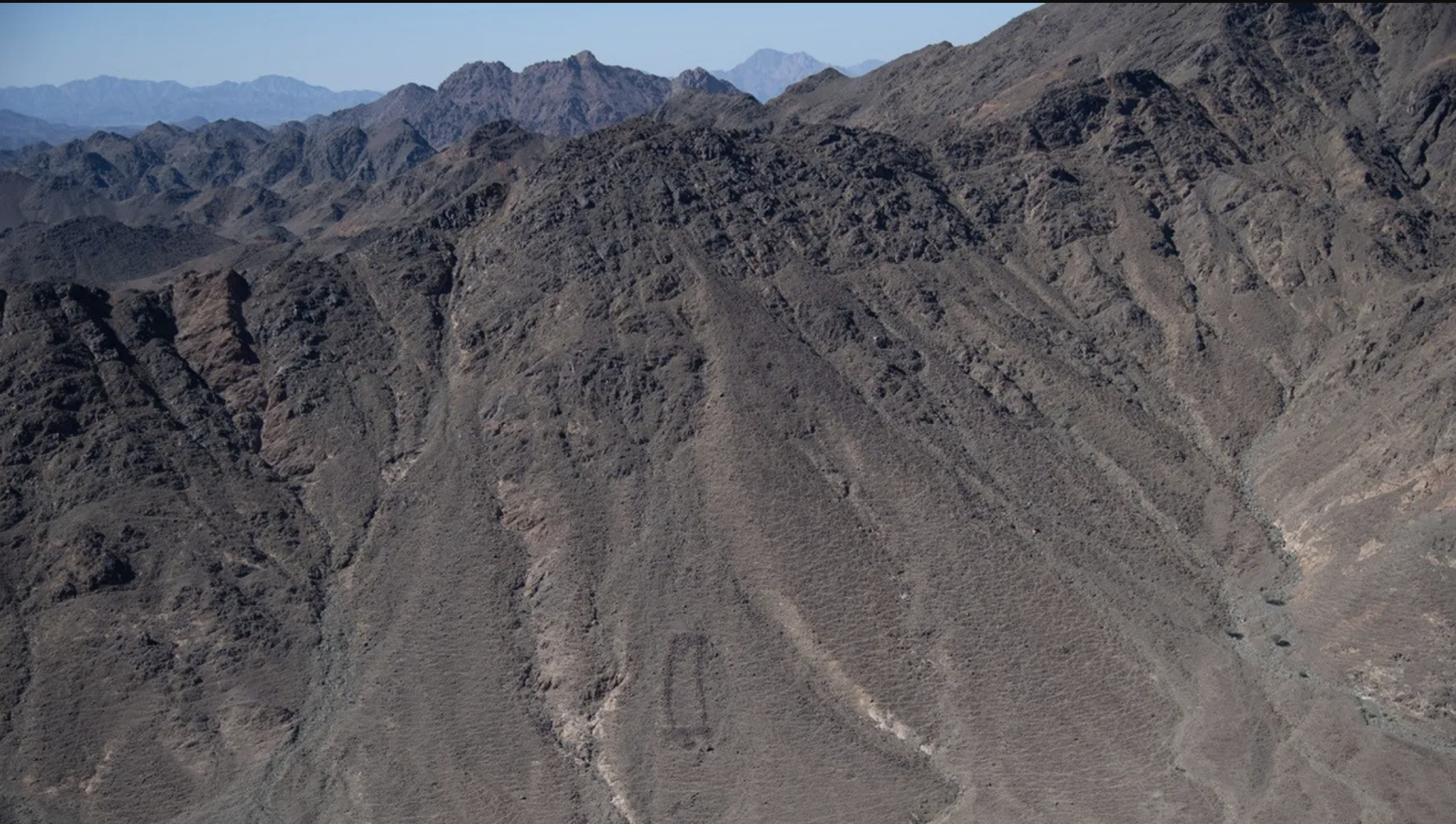
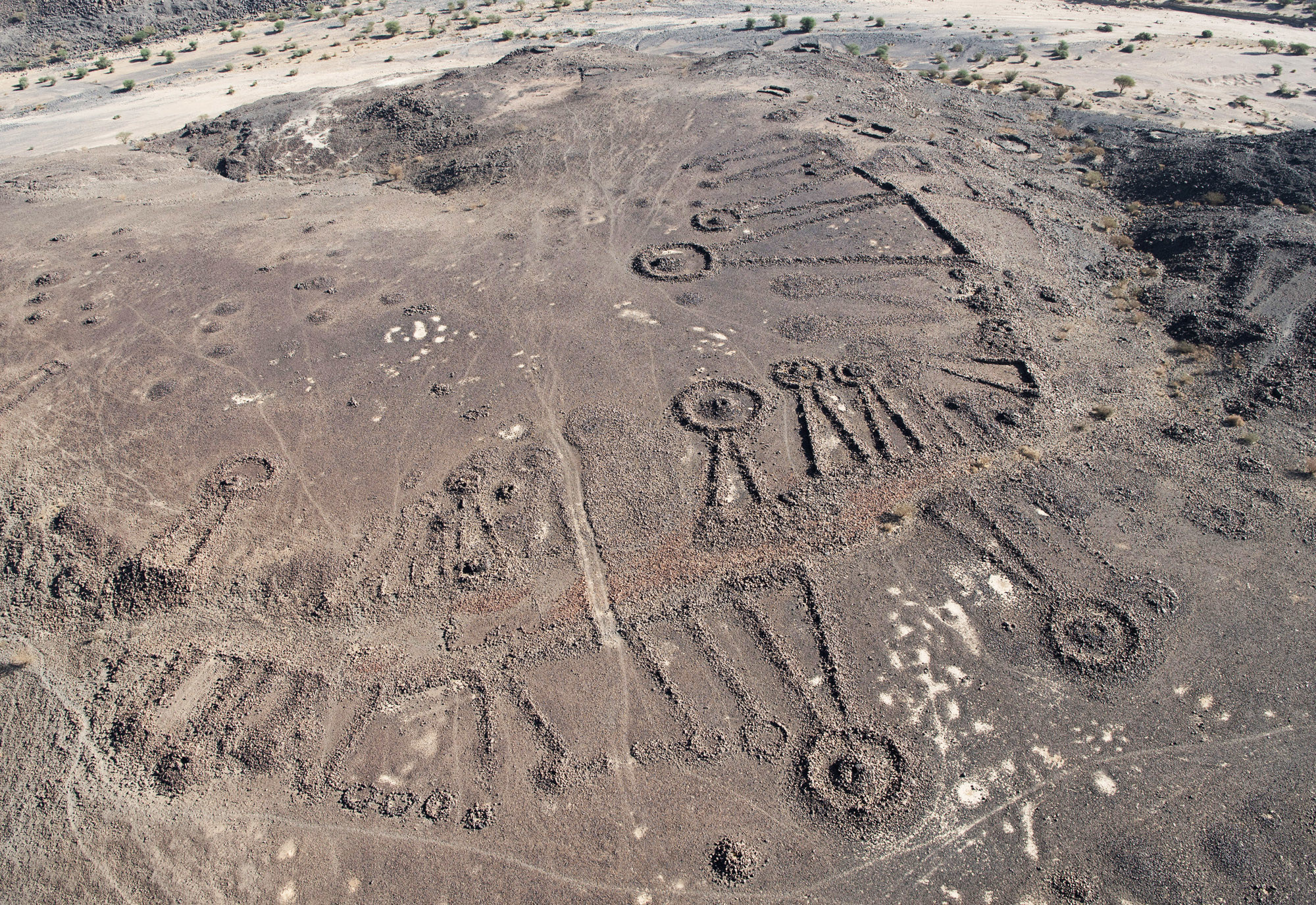
A dense ‘funerary avenue’ flanked by Bronze Age tombs, leading out of al Wadi Oasis near Khaybar in north-west Saudi Arabia.
As the Saudi Arabian regime opens its doors to the west more progress can be made on understanding ancient archeology in the Arabian areas. A recent finding this year is a deeper understanding into the strange burial highways, a series of pendant tomb graves along travelling routes, called funerary avenues. They are located in the same area as Saudi Arabian’s giant mirrored music hall called Maraya.
Why did the ancients, our ancient ancestors mark major byways with thousands of burial monuments? Why are they shaped like pendants and what stories do they tell?
Archaeologists from the University of Western Australia (UWA) working in Saudi Arabia under the Royal Commission for AlUla (RCU) have determined that the people who lived in ancient north-west Arabia (and not aliens!) built these long-distance ‘funerary avenues’.
These routes are major pathways flanked by thousands of burial monuments that linked oases and pastures, reflecting a high degree of social and economic connection between the region’s populations in the 3rd millennium BCE.
A dense ‘funerary avenue’ flanked by Bronze Age tombs, leading out of al ‘Ayn Oasis near Khaybar in north-west Saudi Arabia.
Publication of the findings appear in the journal The Holocene sheds light on the lives of the ancient inhabitants of Arabia.
What do these strange pendant tombs mean?
The existence of the funerary avenues suggests that complex social horizons existed 4,500 years ago across a huge swathe of the Arabian Peninsula, the researchers report. They also document that there are big hidden stories to be uncovered about the ancient kingdoms and earlier societies of north Arabia.
In the recent study, the team used satellite imagery analysis, aerial photography, ground survey and excavation to locate and analyse funerary avenues over an area of at least 160,000 square km in north-west Arabia. They recorded more than 17,800 ‘pendant’ tombs in their primary study areas of AlUla and Khaybar counties, of which around 11,000 formed part of funerary avenues.
A 3rd millennium BCE infilled ringed cairn from the Khaybar Oasis in north-west Saudi Arabia.
Whether on basalt plains or mountain passes, the densest concentrations of funerary structures on these avenues are located near permanent water sources. The direction of the avenues suggests that many were used to travel between major oases, including those of Khaybar, AlUla and Tayma. Other avenues fade into the landscapes surrounding oases, suggesting they were used to move herds of domestic animals into nearby pastures during periods of rain.
The Australian team’s work is part of collective that includes 13 archaeological and conservation project teams from around the world collaborating with Saudi experts in AlUla and neighbouring Khaybar counties in Saudi Arabia.
“The more we learn about the ancient inhabitants of north-west Arabia, the more we are inspired by the way our mission reflects their mindset: they lived in harmony with nature, honoured their predecessors, and reached out to the wider world,” says Amr AlMadani, the CEO of RCU.
A 3rd millennium BC pendant burial on the southern edge of the Khaybar Oasis in north-west Saudi Arabia.
In other ancient news from Saudi Arabia:
In August in the journal Arabian Archaeology and Epigraphy the team dated the pendant-shaped tombs of the Khaybar Oasis to the 3rd millennium BCE – the first published radiocarbon evidence dating the tombs. Archaeological exploration of the mysteries of Khaybar is still in its infancy.
The monumental structures known as mustatils are much older than previously believed, dating as far back as 5,200 BCE, and appear to have had a ritual function. What that is, time will tell.
The Australian team discovered the remains of the oldest known domesticated dog in Arabia.
The Royal Commission for AlUla (RCU) was established by royal decree in July 2017 to preserve and develop AlUla, a region of outstanding natural and cultural significance in north-west Saudi Arabia. RCU’s long-term plan outlines a responsible, sustainable, and sensitive approach to urban and economic development, that preserves the area’s natural and historic heritage, while establishing AlUla as a desirable location to live, work, and visit. This encompasses a broad range of initiatives across archaeology, tourism, culture, education, and the arts, reflecting a commitment to meeting the economic diversification, local community empowerment, and heritage preservation priorities of the Kingdom of Saudi Arabia’s Vision 2030 programme.














 Since Saudi Arabia’s prince and prime minister decided to expand Saudi Arabia’s tourism to include westerners, desert and historical tourism was top of the list. One of the main attractions of Saudi Arabia, to rival Jordan’s Petra, will be