Health Canada approves lab grown milk

Health Canada approved Remilk’s precision-fermented milk protein in 2024, but the story is becoming newly relevant as products move toward commercial shelves in Canada and beyond.

For decades, the future of food has been sold to us in science fiction terms: meat grown in tanks, milk without cows, eggs without chickens. Tomatoes and potatoes growing in a geodesic dome on Mars. In Canada, that future quietly moved one step closer when Health Canada approved the use of animal-free dairy proteins produced through precision fermentation, giving foodtech company Remilk the green light to enter the Canadian market. I’ve drank Remilk and for the most part it goes down a lot smoother than soy milk, which I dislike, and all the other watery “milks” from almonds and oats. 
Israel alt meat industry, Israel cultured meat approval, Aleph Farms lab-grown beef Israel, Israel cultivated meat startups, lab-grown kosher meat debate, lab meat carbon footprint Israel, Imagindairy alt dairy Israel, Yofix plant-based yogurt Israel, Israeli vegan dairy startup, chickpea milk Israel vegan innovation
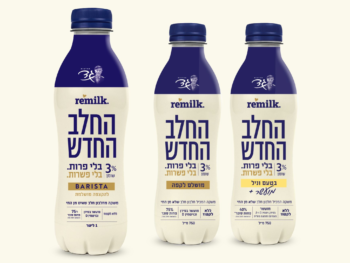
Remilk, an animal-free cloned milk, hits the market in Israel

Remilk bakes and mixes like real milk, but it’s vegan, and for those observing dietary laws – it can be used in meat meals. 

The approval may sound technical, but its implications are enormous. For the first time, dairy proteins identical to those found in cow’s milk can be produced by microorganisms instead of livestock. Imagine all the cow farts we’ve saved. The resulting proteins can be used in everything from milk and yogurt to cheese, ice cream and nutritional products. Health Canada concluded that the protein poses no greater risk than conventional whey protein used by biohackers and bodybuilders and approved its use in a wide range of foods.

Remilk’s technology doesn’t rely on cows. Instead, genetically engineered yeast are programmed to produce beta-lactoglobulin, one of the key proteins found in dairy. The process resembles brewing beer more than operating a dairy farm. Once harvested and purified, the protein is molecularly identical to the one found in conventional milk.

For environmentalists, the attraction is obvious. Dairy production requires land, water, feed crops and millions of methane-producing cattle. Precision fermentation promises to deliver dairy proteins without many of the environmental costs associated with livestock agriculture. Companies in the sector also point to the absence of lactose, hormones and animal welfare concerns.

Having fun in the supermarket. Courtesy of Remilk.

But consumers may still struggle with the concept. My son says he’s not drinking “lab milk: and refuses to drink Remilk if I bring it in the house. Plus it has an overtaste of coconut cream, one of the fats they use to fill out the protein.

The words “lab-grown” trigger immediate skepticism. Opponents argue that ultra-engineered foods move us further from nature at a time when many consumers are seeking simpler diets and locally produced ingredients. The debate mirrors earlier controversies surrounding genetically modified crops, plant-based meat and cultivated meat. It also reminds me of the time my friends suggest we get a goat to have a constant supply of milk. 

Canada’s approval signals that regulators are willing to evaluate alternative proteins on scientific grounds rather than dismiss them outright. It also places the country among a growing list of jurisdictions exploring cellular agriculture and fermentation-derived foods.

For Green Prophet readers, the development is part of a broader transformation we’ve been tracking for years.

We have covered a new generation of alternative-protein companies seeking to reduce agriculture’s environmental footprint. Israeli companies such as Aleph Farms invested in by Lenoardo DiCaprio, and Future Meat pioneered cultivated meat. Innovators including Imagindairy and Remilk focused on precision-fermented dairy proteins. Across the globe, startups are producing animal-free egg proteins, seafood alternatives and even laboratory-grown whole milk products designed to replicate the complete nutritional profile of dairy. New entrants such as Brown Foods claim they can now recreate the proteins, fats and carbohydrates found in cow’s milk using mammalian cell culture rather than fermentation.

Whether consumers embrace these products remains an open question. Plant-based milks succeeded because they created something different. Oat milk and almond milk never pretended to be dairy. Precision-fermented milk is pursuing a more ambitious goal: becoming dairy without the cow. Know that “milks” like almond milk are not without harm. They contain pesticides and belong to the problems with drought in California. Read almond milk and the destruction of bees here on Green Prophet.

Where to buy Remilk in Canada

Our sources tell us that consumers cannot buy Remilk currently at supermarkets. Health Canada has approved the sale for B2B sales only so it can be used in vegan food products such as protein bars. Fun fact: our Canadian friend Cathy Richards created the Simplii Bar, made for vegans and people with Crohn’s and colitis. She sold the business to Atkins in the US for an undisclosed sum. 

Karin Kloosterman
Karin Kloostermanhttp://www.greenprophet.com
Karin Kloosterman is an award-winning journalist, innovation strategist, and founder of Green Prophet, one of the Middle East’s pioneering sustainability platforms. She has ranked in the Top 10 of Verizon innovation competitions, participated in NASA-linked challenges, and spoken worldwide on climate, food security, and future resilience. With an IoT technology patent, features in Canada’s National Post, and leadership inside teams building next-generation agricultural and planetary systems — including Mars-farming concepts — Karin operates at the intersection of storytelling, science, and systems change. She doesn’t report on the future – she helps design it. Reach out directly to [email protected]

Read More

TRENDING

Remilk makes cloned milk so cows don’t need to suffer and it’s hormone-free

This week, Israel’s precision-fermentation milk from Remilk is finally appearing on supermarket shelves. Staff members have been posting photos in Hebrew, smiling, tasting, and clearly enjoying the moment — not because it’s science fiction, but because it tastes like the real thing.

Canada gives green light to Remilk’s cloned milk

For now, the symbolic impact is huge. “Reinventing dairy by removing cows from the equation” was once a science-fiction idea. With Canada’s green light, it’s officially a market reality — and the race to define the future of milk has entered a new phase.

AI Tool Reduces Greenhouse Gas Emissions Associated with Livestock Farming and Land Use

Beyond farm-level tools, the research team has harnessed artificial intelligence to develop a user-friendly, web-based platform – referred to as a 'digital twin' – to provide detailed insights into how different types of land use affect methane emissions across the UK.

This bug bacon is saving the lemurs

With minimal investment and resources needed, Sakondry farming creates income opportunities, especially for rural women, who are taking the lead in managing production. The ambition is that in the future, Sakondry farming can be expanded, and the insects could be sold nearby, therefore providing additional income to families.

Here’s How To Implement The Four Pillars Of Employee Engagement

If you throw a party for your work team and they are vegans, don't make it a barbecue. Know the sustainability values of your team to boost moral and retain good people.

Locals From Rishon Fight IKEA

Big Box stores are a pretty new concept in Israel, and thank God that not every Israeli city wants them in their backyard. A word from someone who has see the beautiful farmland around her hometown Newmarket, Ontario stripped and converted into vulgar strip malls of big box shops: they have no place in a healthy and sustainable town or city.

The Jewish National Fund Meets An Inconvenient Truth

According to the JNF, it has transformed thousands of acres of barren land into green forests in Israel. They state that each person emits about 23 tons of carbon per year, estimating that each tree planted can absorb one ton of carbon in its lifetime. That's a whole lot of trees you'd need to be planting. Could so many fit in Israel?

How to quiet noise from construction in your office

Streets need to be resurfaced in New York but the humming and grinding noise is unsettling. Noise is environmental pollution. 

EarthX and a blueprint for sustainable investing

Trammell S. Crow, a Dallas-based businessman and father of four, is focusing his efforts on impact investing, and media that focuses on saving the planet through EarthX.

Mining Afghanistan’s Mineral Discoveries Similar to Avatar

Now that American forces in Afghanistan are commemorating the longest period of any war that America has been involved in, including the 1965-73 Vietnam War, the recent discoveries of large and extremely valuable mineral and metal deposits may finally bring to light a reason to continue the presence of US fighting forces in this war torn and backward country.

From Pilot Plant to Global Stage: How Aduro Clean Technologies’ 2026 Expansion Signals a Turning Point for Chemical Recycling Investors Like Yazan Al Homsi

The company's Next Generation Process (NGP) Pilot Plant in London, Ontario, has officially moved into initial operating campaigns, generating the kind of structured, repeatable data that separates laboratory promise from commercial viability.

Nobul’s Regan McGee on Shareholder Value: “Complacency Is the Silent Killer” 

Why the governance framework designed to protect shareholders so...

Popular Categories