
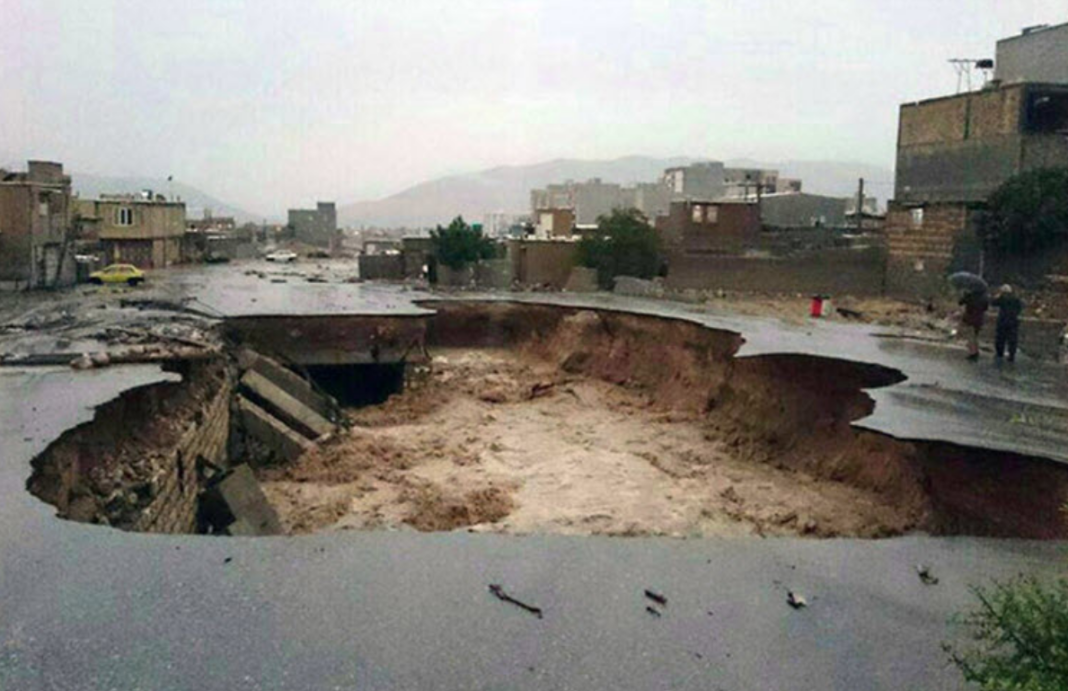
Iran’s capital city being swallowed by sinkholes


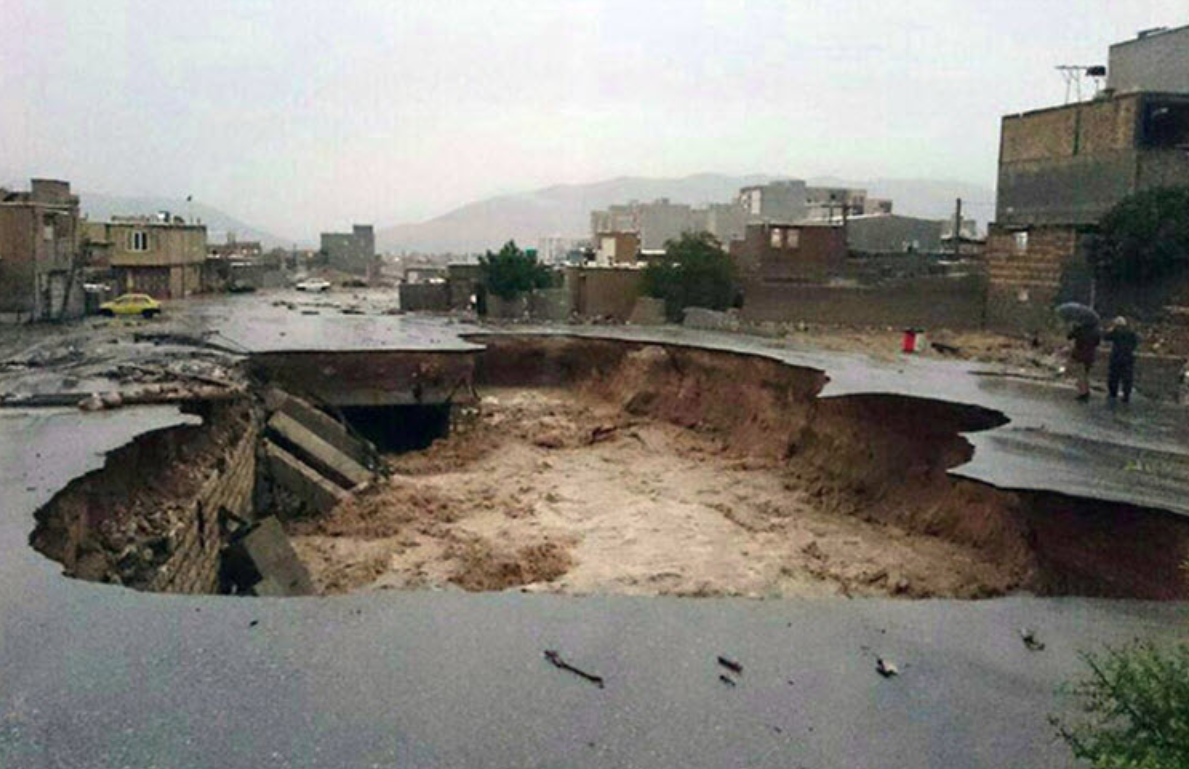
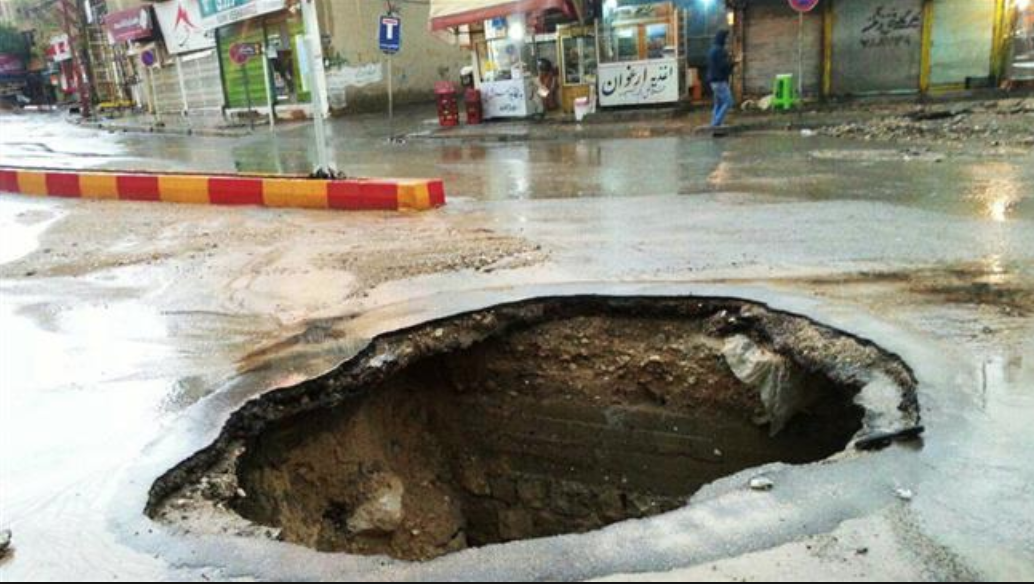
Thanks to drought and over-pumping underground water reserves in the western region of Tehran, Iran’s capital city, fissures also known as sinkholes are opening up, causing Iran’s major city and capital city to sink.

The sinkholes threaten people’s homes and the local infrastructure.

While some Middle Eastern countries like Israel are seeing record rain, Tehran is feeling the effects of a three-decades long drought. Ongoing desertification and over-use of water from a growing population is the major cause to these dangerous sinkholes that can open anywhere, anytime.
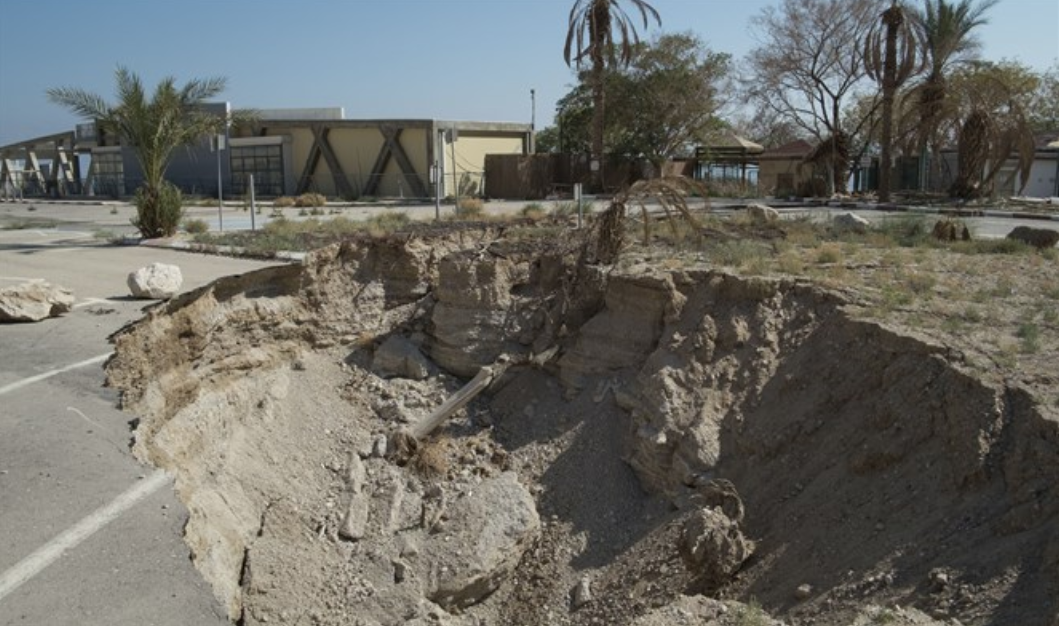
The Dead Sea regions of Israel and Jordan have also seen a growing number of sinkholes as the large body of inland water recedes more and more every year. See below.
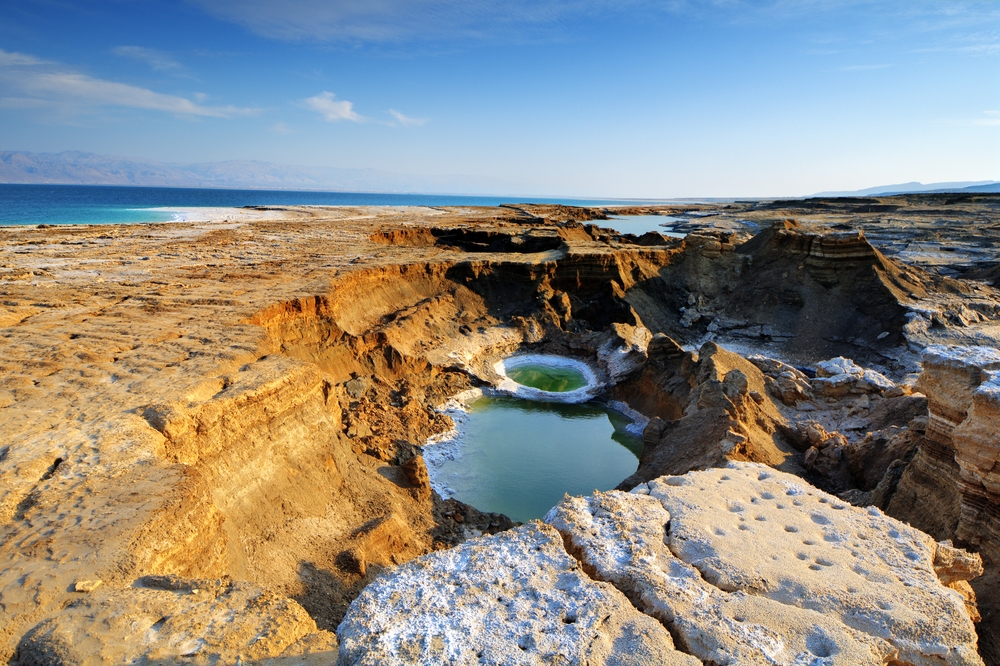
Dead Sea sinkhole Israel

Tehran is growing to a record 8.5 million people, and underground aquifers now over-pumped get saltier and saltier every year. Instead of going straight to the taps, a large amount of water goes to growing food in a very inefficient way.

The Tehran region is known as one of the 10 driest places on earth and the sinkholes are now causing the area 3,900 feet (1,200 meters) above sea level, to shrink 8.6 inches (22 centimeters) per year, according to the Iranian government.
What happens when your city is sinking? Cracked water pipes, gaping holes in the sidewalks, and miles long fissures that can swallow anything in its path threatening the airport, oil refinery operations, railroads and highways.

International sanctions against Iran have hurt it. But these have been going on since the 1979 revolution. Iran has sought to produce enough food locally to feed all of its people but in term has caused permanent damage to its local geography.

A recent study found that even if there is more rainfall the local terrain seems to have lost the ability to hold water.

Bhok Thompson
Bhok Thompsonhttp://www.greenprophet.com
Bhok Thompson is an “eco-tinkerer” who thrives at the intersection of sustainability, business, and cutting-edge technology. With a background in mechanical engineering and a deep fascination with renewable energy, Bhok has dedicated his career to developing innovative solutions that bridge environmental consciousness with profitability. A frequent contributor to Green Prophet, Bhok writes about futuristic green tech, urban sustainability, and the latest trends in eco-friendly startups. His passion for engineering meets his love for business as he mentors young entrepreneurs looking to create scalable, impact-driven companies. Beyond his work, Bhok is an avid collector of vintage mechanical watches, believing they represent an era of precision and craftsmanship that modern technology often overlooks. Reach out: [email protected]

Read More

TRENDING

Earth building with Dead Sea salt bricks

Researchers develop a brick made largely from recycled Dead Sea salt—offering a potential alternative to carbon-intensive cement.

Sink holes from over-watering farmers’ fields

Sinkholes are rapidly appearing in Turkey’s central Anatolian farming region, particularly around Konya and Karapınar. These giant gaping holes in the ground in areas of farmland, known locally as obruk, are not random geological events. They are linked to prolonged drought, climate-driven heat stress, and heavy groundwater extraction for agriculture in one of the country’s most important breadbaskets.

Who Narrates the Narrative at TEDx? Greenwashing in Iranian Architecture’s Spotlight

The TEDxOmid Architecture event in Tehran promised sustainability and social justice but revealed deep contradictions between its rhetoric and reality. This in-depth report exposes how Iran’s star architects—linked to commercial tower projects and weak environmental accountability—reflect a pattern of architectural greenwashing under the guise of “responsive design.”

Sinkholes and Shrinking Shores: The Race to Rescue the Dead Sea

On August 5th, 2025, environmental experts from Israel, Jordan,...

She makes Dead Sea Diamonds and farms crystals for ion powers

Michal Rothschild creates Dead Sea Diamonds, jewelry from crystals she finds and harvests at the Dead Sea.

How to quiet noise from construction in your office

Streets need to be resurfaced in New York but the humming and grinding noise is unsettling. Noise is environmental pollution. 

EarthX and a blueprint for sustainable investing

Trammell S. Crow, a Dallas-based businessman and father of four, is focusing his efforts on impact investing, and media that focuses on saving the planet through EarthX.

Mining Afghanistan’s Mineral Discoveries Similar to Avatar

Now that American forces in Afghanistan are commemorating the longest period of any war that America has been involved in, including the 1965-73 Vietnam War, the recent discoveries of large and extremely valuable mineral and metal deposits may finally bring to light a reason to continue the presence of US fighting forces in this war torn and backward country.

From Pilot Plant to Global Stage: How Aduro Clean Technologies’ 2026 Expansion Signals a Turning Point for Chemical Recycling Investors Like Yazan Al Homsi

The company's Next Generation Process (NGP) Pilot Plant in London, Ontario, has officially moved into initial operating campaigns, generating the kind of structured, repeatable data that separates laboratory promise from commercial viability.

Nobul’s Regan McGee on Shareholder Value: “Complacency Is the Silent Killer” 

Why the governance framework designed to protect shareholders so...

Should You Invest in the Private Market?

startustartup Unlike public stock exchanges, which offer daily trading, strict...

How to build a 100-year-company

Kongō Gumi is a Japanese construction company, purportedly founded in 578 A.D., making it the world's oldest documented company. What can we learn about building sustainable businesses from them?

How AI Helps SaaS Companies Reduce Repetitive Customer Support Work

SaaS products are designed for large numbers of users with different levels of experience, and also in renewable energy.

Popular Categories