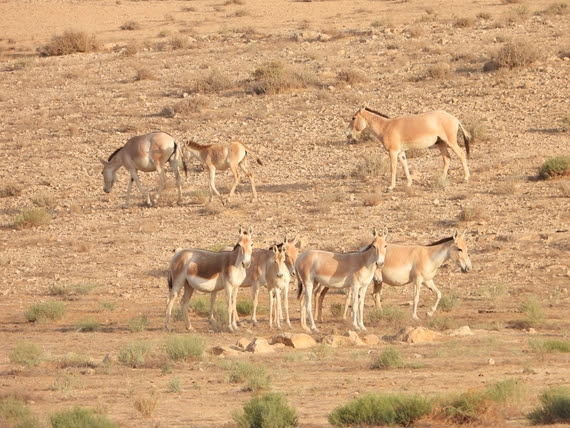
Sometimes conservation doesn’t begin with moving animals around in cages or intervening in their genes. Sometimes it begins with something quieter and easier: where you place water, how you let a landscape develop, how you choose to share its resources. And in this research project, it’s a first for me: the first one that I have seen that is funded between the UAE, and Israel. Peace happens when partners have a common interest
A research team from Ben-Gurion University of the Negev is suggesting that small, thoughtful shifts in habitat management can ripple outward into the genetic future of a species.
In a paper published this month in Ecological Applications, Dr. Shirli Bar-David, Prof. Amos Bouskila, and PhD researcher Noa Yaffa Kan-Lingwood explore how the simple redistribution of essential resources can reshape mating systems, reproductive success, and ultimately genetic diversity in wild populations.
Their case study takes us into the Negev Desert, where the Asiatic wild ass (Equus hemionus) still moves across a harsh and beautiful terrain. Here, survival (and love!) revolves around water.
Related: see how watering holes are helping animals in the jungle
These animals follow a mating system known as resource-defense polygyny: males establish territories near scarce water sources, and in doing so, gain access to females. Control the water, and you shape the social order, hypothesized the researchers.
So they something deceptively simple: they increased the number of water points from one to three. The result wasn’t just ecological, it was social, and political.
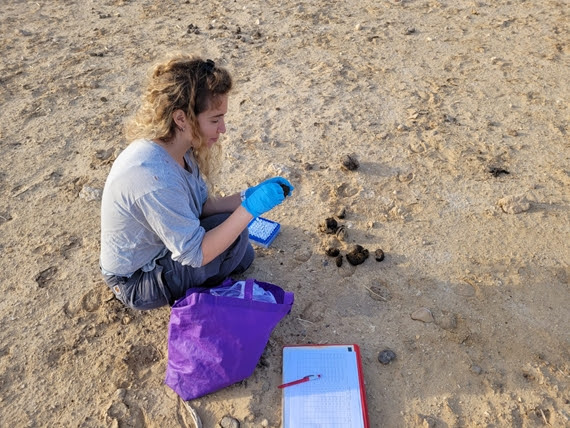
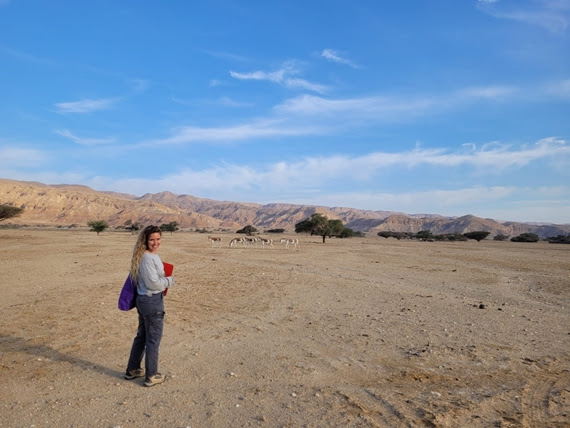
Before the intervention, only about 16% to 18% of males held territories and reproduced. Afterward, that number rose sharply to 42%to 48% because more males had a chance. And in terms of science, more makle voices entered the genetic conversation.
And with that, genetic diversity increased as well, from 34.9 to 38.4.
“We saw new reproducing males establishing themselves בעיקר near the new water sources,” says Kan-Lingwood, pointing to how quickly landscapes can reorganize social hierarchies when resources shift.
The new males didn’t come from nowhere. They emerged at the edges, near the newly available water, claiming space that didn’t exist before. A quiet redistribution of opportunity.
Bar-David notes that the implications stretch far beyond the Negev: species under pressure — especially those clustered around limited resources in deserts may benefit from this kind of low-intervention thinking. In a warming world, where habitats are shrinking and fragmenting, the idea that we can support genetic resilience without capture, relocation, or heavy-handed management is more than useful.
Additional contributors to the study include Dr. Liran Sagi, Prof. Alan R. Templeton, Naama Shahar, Ariel Altman, Nurit Gordon, Prof. Daniel I. Rubenstein, and Prof. Amos Bouskila.
The research was supported by the United States-Israel Binational Science Foundation and the Mohamed bin Zayed Species Conservation Fund. In the end, it’s a reminder: sometimes the most powerful conservation tool isn’t intervention. It’s placement.