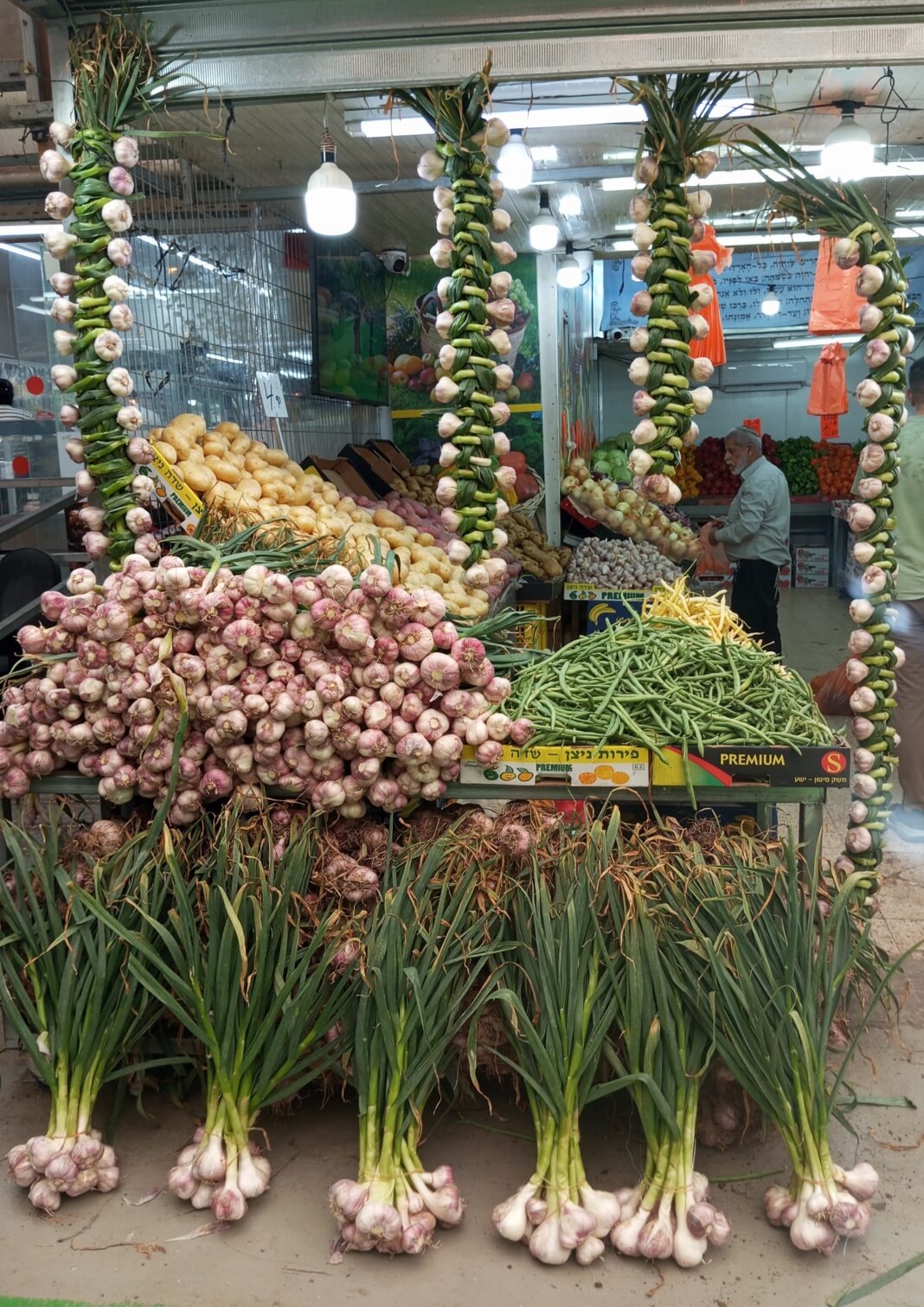

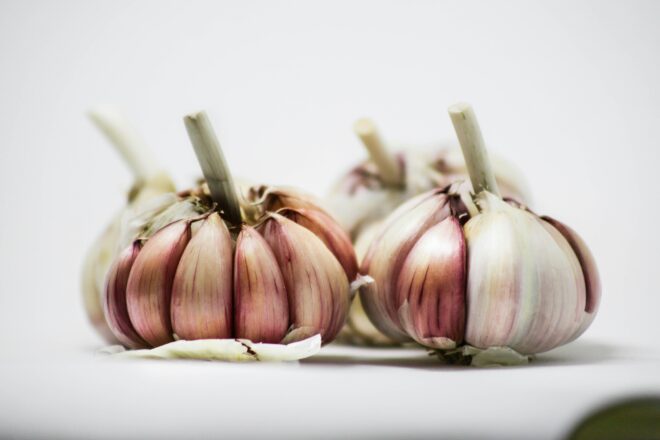
April is National Garlic Month! We’re close to the end of April, but fear not: the North American garlic harvest lasts through July, and you can pick up the bulbs until Fall. Even after the green stalks wither and the bulbs are drier, your garlic will remain pungent for any months if you store it well.
The trick is to keep the fresh garlic in a well-ventilated, shady place away from steam and heat. Not by the stove, in other words. I place a tension pole in a shady spot in the laundry room, not close to the washer/dryer, and hang my year’s harvest from it by the stalks. I’ve also cut the stalks off and stored the garlic heads in wicker baskets, on a well-ventilated shelf.
Buy plump, firm bulbs wearing their sheath of papery outer skin. If it’s soft or shriveled, or feels light in the hand relative to its size, it’s not worth buying.
The little bulblets inside the stalks may be worth the trouble of extracting. Press the stalk and judge if the bulblet is big enough to bother with. Sometimes they are.
Now for peeling the cloves. One way is to crush a clove with the flat side of a knife. Just place the knife over the clove and bang your fist down on the knife, taking care to avoid the knife edge. This loosens the garlic skin and makes it easy to pull off. If you prefer to peel the cloves whole, pour hot water over them for a few seconds. The peels will come off with a little help from a paring knife.
A tip for crushing garlic: throw away the metal garlic crusher. You can reduce garlic to a paste on your chopping block in seconds by chopping the cloves coarsely, then scraping the bits with the edge of your knife. One less gadget to wash, and no time spent digging garlic out, blunting your knife in the process.
Where does American garlic come from?
Approximately 80% of the garlic consumed in the United States is imported from China. Prices have gone up with the current tariff war, but some pre-tariff produce may still be found. It won’t be fresh, though. You may find garlic imported from Spain, Argentina, Egypt, India, or Mexico in your grocery store.
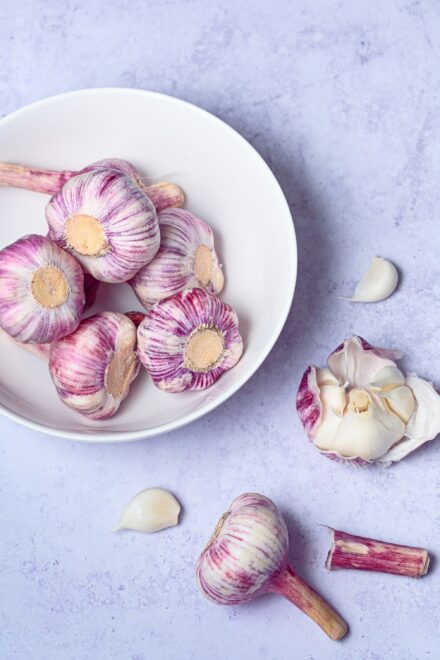
California produces about 90% of American-grown garlic. Local garlic very much fresher and tastier than garlic imported from China, and here’s why you should prefer it.
A commenter on Reddit who goes by hamdunkcontest manages the garlic category for a fairly large industrial food ingredients company. These are his insights regarding what American garlic consumers can expect in 2027:
“Assuming the tariffs hold, for this year specifically, some amount of the demand will still be covered by Chinese garlic that was already imported into the US. The balance will likely be covered by Indian garlic.
“The US can’t feasibly cover their current demand with US-origin product. Even if we wanted to increase production, the land we’d use to increase acreage will also need to be considered for other crops that are also impacted by the tariffs.
“What we’ll instead likely see is a modest increase in US production for next year, with the balance of the gap being covered by: 1) Indian or other small tertiary sources, 2) demand being reduced by companies reformulating garlic out of recipes, and 3) Chinese garlic that is illegally dodging the tariffs, though things like falsifying the country of origin.”
It’s enough to make you uproot your lawn and plant garlic, isn’t it? Many in the US and Canada do.
Green Prophet’s editor, Karin Kloosterman, says that in her native Ontario, the local CSA brings the garlic harvest down to one July weekend when they announce that the garlic’s ready to pull. The news spreads around the community by word of mouth and that’s how home gardeners known when to start digging.
Here I go to the local open-air market and revel in the garlic abundance.
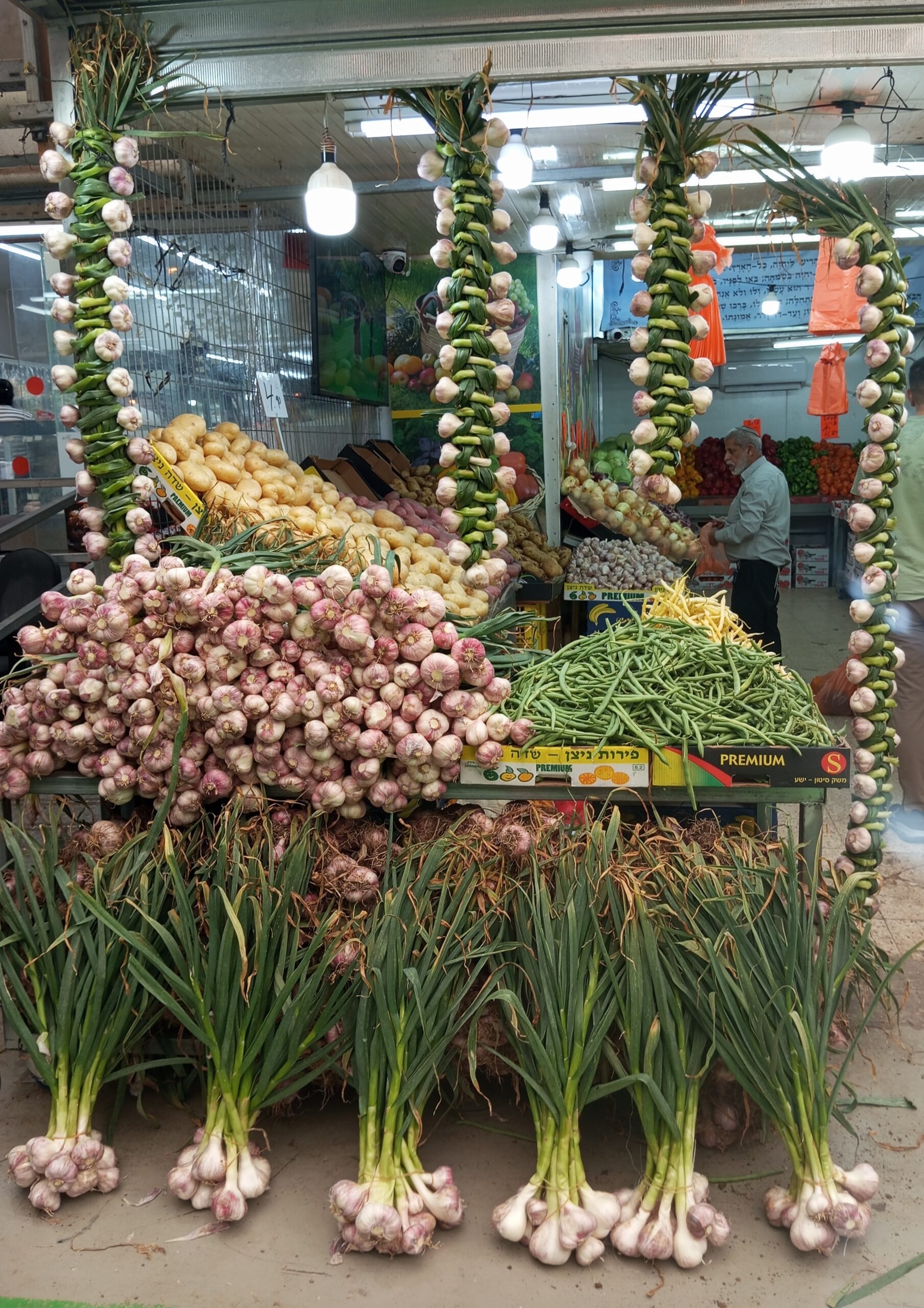
But I can’t hang around reveling too long, because the season is short, a month at the longest. I ensure a year’s supply of local garlic by buying a tad more than I’ll need, to account for some inevitable loss over the months.
Eating Garlic a Natural Medicine
People have been claiming health benefits from eating garlic for centuries. Today we include:
Eating a raw clove daily keeps your heart strong, as it reduces cholesterol and blood pressure, and prevents blood clots.
Garlic is known to be antibacterial and antifungal.
Raw garlic, freshly cut, works as a home-remedy antibiotic in a pinch. In other words, sliced raw garlic applied to an infected cut, scrape, or pimple will clear it up. Mashed cooked garlic also works. Obviously, a serious infection calls for standard medical help.
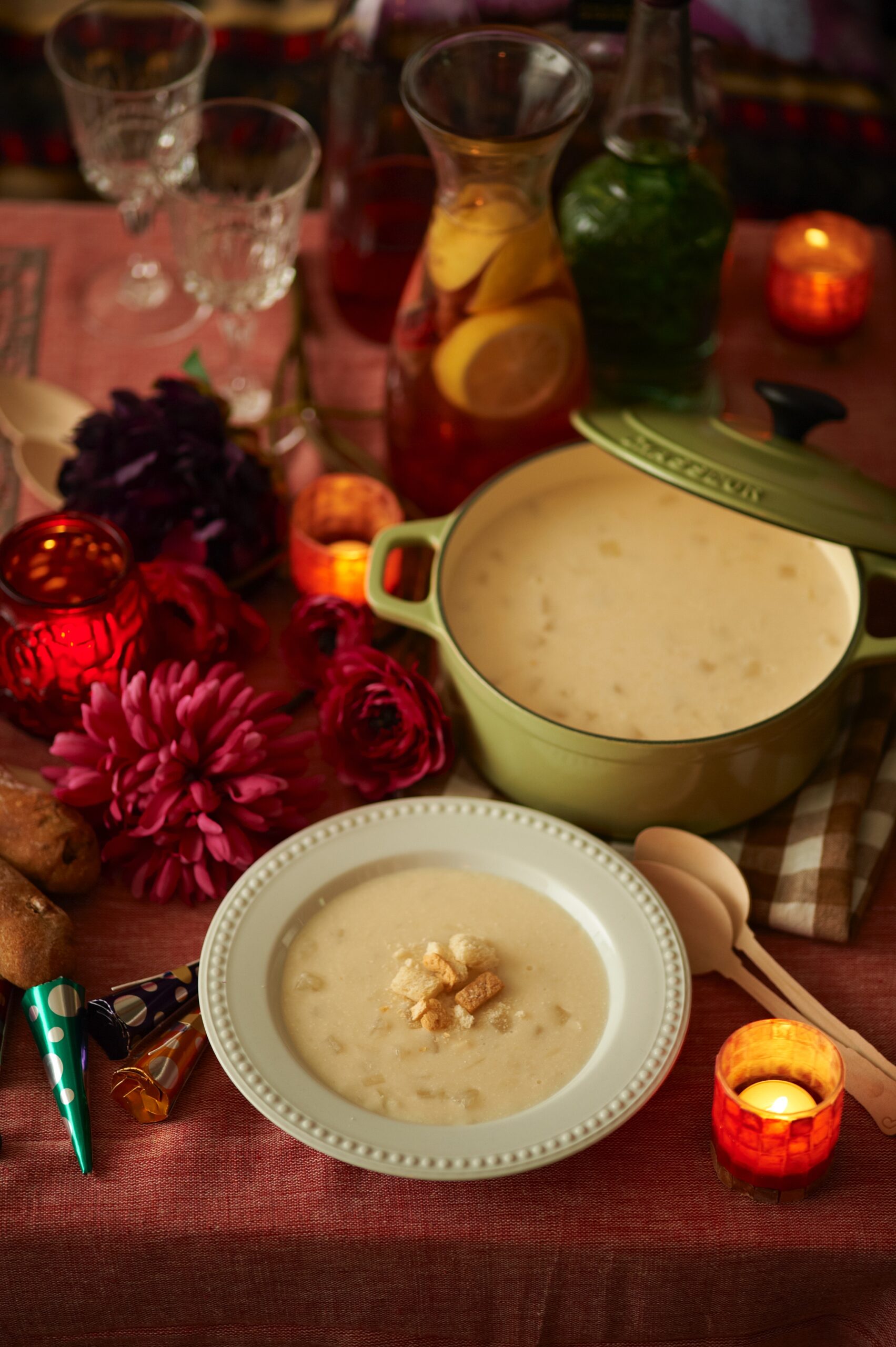
Is all this talk about garlic getting you hungry? We have some great garlicky recipes, like this vegan roasted cauliflower dish and creamy roasted garlic soup. I recommend the soup as a delicious pick-me-up for any time you’re tired and disheartened.
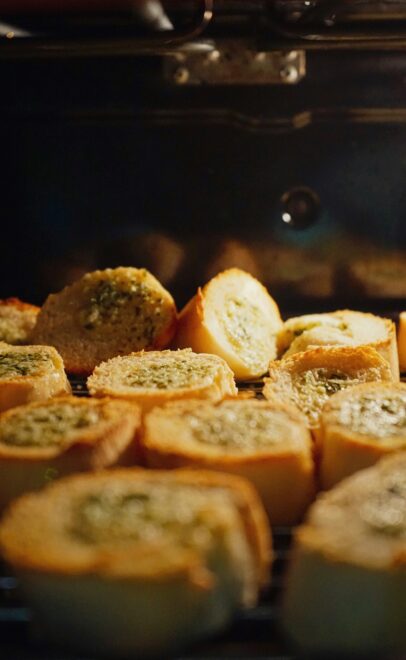
And if you’re not convinced that garlic is the answer to the world’s woes, try this decadent garlic bread recipe from the American food writer Ruth Reichl (taken from her Substack newsletter, La Briffe):
Make Decadent Garlic Bread
1 loaf sturdy French or Italian bread
1 stick sweet butter
1 head garlic
Zest from 1 lemon (optional)
¼ cup freshly grated parmesan cheese (optional)
2 tablespoons chopped parsley or chives (optional)
Begin by cutting the bread in half, lengthwise (a serrated knife helps). Preheat oven to 350⁰ F.
Peel and finely chop the garlic. Melt a stick of sweet butter, and add the garlic.
Slather the garlic butter onto the bread, cut side up, with a brush. Let it soak in. Use it all, and evenly spread the bits of garlic all over. Now is the time to salt it if you want to, and to sprinkle on the zest.
Bake the loaf, cut sides up, 15 minutes. Remove the bread from the oven and wait to take the final step just before serving.
Turn the heat up to broil. Add cheese, if using. Broil for about 2 minutes, watching carefully to make sure it doesn’t burn. Sprinkle with herbs just as it comes out of the broiler and serve immediately.
My note: include all the optional ingredients. It’s the best garlic bread you’ll ever eat.
Happy National Garlic Month!
Cook on – Recipes that feature garlic
Creamy Roasted Garlic Soup — Creamy Roasted Garlic Soup
The Ultimate Hummus Recipe — The Ultimate Hummus Recipe
Ful Medames and Musabaha Recipes — Ful Medames and Musabaha Recipes
Vegetarian Haricot Bean Stew Recipe — Vegetarian Haricot Bean Stew Recipe
Noodles and Lentils Recipe — Noodles and Lentils Recipe
Baba Ganoush Recipe — Baba Ganoush Recipe
Grilled Vegetables With A Middle Eastern Accent — Grilled Vegetables With A Middle Eastern Accent
Spinach and Cheese Bourekas Recipe — Spinach and Cheese Bourekas Recipe
Shakshuka, Tunisian Eggs Poached in Tomato Sauce — Shakshuka, Tunisian Eggs Poached in Tomato Sauce
Late-Summer Pickled Peppers — Late-Summer Pickled Peppers