How do coral reefs deal with noise and light?

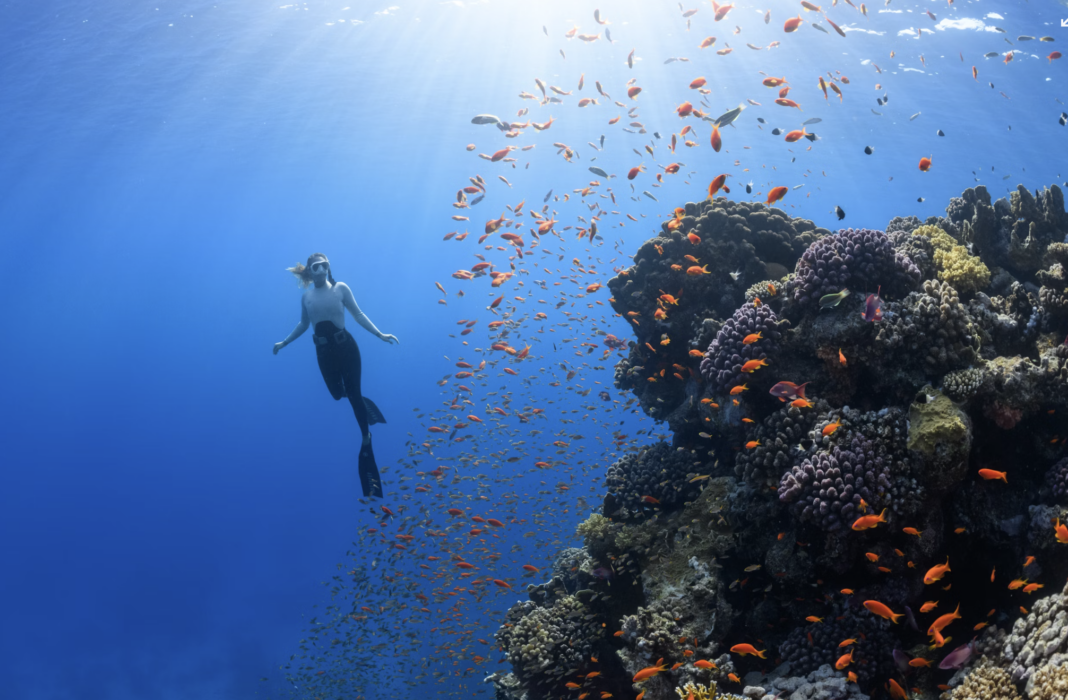
coral reef woman neom Red Sea

Corals don’t do well in shipping lanes. They don’t do well when people step on them or when they are met with oil spills. Coral reefs the world over are threatened and now an international team is looking to deep dive into the research that could impact laws around them. As countries like Saudi Arabia ramp up tourism in the Red Sea with Neom and The Line, and Vision 2030, and as the Houthis threaten to blow up oil tankers, the world wants to know: how do stressors like light and noise impact the reefs?

Prof. Oren Levy, Director of the Laboratory for Molecular Marine Ecology at Bar-Ilan University, is a member of a newly-launched EU project to improve our comprehension of how biodiversity is being impacted by Light and Noise Pollution (LNP) in aquatic environments such as rivers, lakes, coastal and offshore waters.

Funded by the Horizon Europe program, AquaPLAN (Aquatic Pollution from Light and Anthropogenic Noise: Management of Impacts on Biodiversity) aims to quantify the combined impacts of LNP on aquatic biodiversity in European waters and facilitate the implementation of empirically sound strategies for managing these pollutants through novel interdisciplinary approaches.

The Line, linear city Saudi Arabia
Illustrated image of The Line, Red Sea, Saudi Arabia

Prof. Levy’s contribution to the project focuses on the unique environment of tropical coral reefs in the Red Sea, where he examines the impact of light pollution on vital ecological aspects. His research targets the synchronization of coral spawning, a critical event for reef regeneration, which can be disrupted by artificial lighting. Additionally, he studies how light pollution affects the behavior of tropical fish and the colonization patterns of invertebrates in light-polluted areas, providing insights into the broader ecological impact.

Alongside colleagues from the consortium, Levy also extends his research to include the effects of noise pollution on these marine ecosystems, exploring how both light and noise pollution jointly influence coral reefs, fish behavior, and invertebrate colonization.

Understanding how LNP affects aquatic biodiversity has dramatically improved in recent decades. Evidence suggests that these effects are prevalent globally, in all types of aquatic ecosystems, from rivers and lakes to the seafloor. Despite growing knowledge and access to a range of technologies, best practice methodologies and policy interventions, there are still many critical knowledge gaps that, if addressed, would allow us to better manage and reduce these impacts.

Taba Nuweiba Beach, Bir Sweir, Sinai, Egypt
Trankila Beach in Sinai is surrounded by coral reefs that aren’t doing well.

Project coordinator Prof. Elena Maggi from University of Pisa said, “Currently, existing regulations on the emission of Artificial Light At Night (ALAN) and anthropogenic noise are highly fragmented in inland, coastal and offshore waters. Moreover, we still need good datasets to understand how to monitor, protect and restore aquatic biodiversity effectively.”

AquaPLAN will run for four years. It is coordinated by the University of Pisa (UNIPI) and comprises a multi-actor, transdisciplinary team of 13 organizations from nine countries. The consortium recently gathered in Pisa, Italy for the project’s kickoff meeting.

Karin Kloosterman
Karin Kloostermanhttp://www.greenprophet.com
Karin Kloosterman is an award-winning journalist, innovation strategist, and founder of Green Prophet, one of the Middle East’s pioneering sustainability platforms. She has ranked in the Top 10 of Verizon innovation competitions, participated in NASA-linked challenges, and spoken worldwide on climate, food security, and future resilience. With an IoT technology patent, features in Canada’s National Post, and leadership inside teams building next-generation agricultural and planetary systems — including Mars-farming concepts — Karin operates at the intersection of storytelling, science, and systems change. She doesn’t report on the future – she helps design it. Reach out directly to [email protected]

Read More

TRENDING

Hydrophilis Rebreather: After the Penis Jokes and Shark Bait Memes, Oliver Isler Says His Underwater Dream Is Serious

The Hydrophilis rebreather is a new scuba system that could make diving safer and more fun.

Shebara hotel Saudi Arabia – is it eco-luxury dream or desert illusion?

A new breed of luxury has landed on the Red Sea, mirrored pods floating above coral reefs, reflecting sky and sea like something not entirely of this Earth. Energy powered by solar powers, drinking water pulled from the sea using desalination. 

Hydrophilis SCUBA gear could make us one with the sea

Hydrophilis, Oliver Isler’s experimental rebreather suit, reimagines diving by reducing drag, eliminating bubbles, and bringing humans closer to the natural movement of marine life.

Jordan’s $6 Billion Aqaba–Amman Desalination Project from the Red Sea Moves Forward

In 2025, the Jordanian government signed agreements with a consortium led by Meridiam and SUEZ, alongside VINCI Construction and Orascom Construction. Under a 30-year concession agreement, the consortium will design, build, finance, operate, and maintain the system before transferring it back to the Jordanian government. The total investment is estimated at approximately $6 billion USD.

The Saudi Startup Turning Desalination’s Toxic Waste Into Its Own Disinfectant

For millennia, the Middle East's water crisis seemed an immutable fact of geography — a region defined as much by what it lacked as by what lay beneath its sands. Today, a convergence of plummeting solar costs, advancing membrane technology, and hard-won engineering expertise is rewriting that story.

How to quiet noise from construction in your office

Streets need to be resurfaced in New York but the humming and grinding noise is unsettling. Noise is environmental pollution. 

EarthX and a blueprint for sustainable investing

Trammell S. Crow, a Dallas-based businessman and father of four, is focusing his efforts on impact investing, and media that focuses on saving the planet through EarthX.

Mining Afghanistan’s Mineral Discoveries Similar to Avatar

Now that American forces in Afghanistan are commemorating the longest period of any war that America has been involved in, including the 1965-73 Vietnam War, the recent discoveries of large and extremely valuable mineral and metal deposits may finally bring to light a reason to continue the presence of US fighting forces in this war torn and backward country.

From Pilot Plant to Global Stage: How Aduro Clean Technologies’ 2026 Expansion Signals a Turning Point for Chemical Recycling Investors Like Yazan Al Homsi

The company's Next Generation Process (NGP) Pilot Plant in London, Ontario, has officially moved into initial operating campaigns, generating the kind of structured, repeatable data that separates laboratory promise from commercial viability.

Nobul’s Regan McGee on Shareholder Value: “Complacency Is the Silent Killer” 

Why the governance framework designed to protect shareholders so...

Should You Invest in the Private Market?

startustartup Unlike public stock exchanges, which offer daily trading, strict...

How to build a 100-year-company

Kongō Gumi is a Japanese construction company, purportedly founded in 578 A.D., making it the world's oldest documented company. What can we learn about building sustainable businesses from them?

How AI Helps SaaS Companies Reduce Repetitive Customer Support Work

SaaS products are designed for large numbers of users with different levels of experience, and also in renewable energy.

Popular Categories