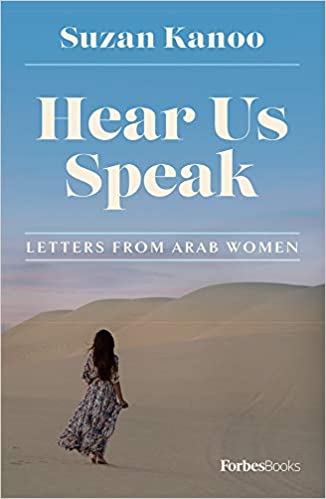
I was having breakfast with an American friend who’d come to visit me in Bahrain. Together we sat in a hotel restaurant, windows on all sides looking down on the city hurtling past below. We’d come there to meet with a woman from an Arabian Gulf state I was interviewing for my book, Hear Us Speak: Letters From Arab Women, which paints a portrait, through a series of interviews, of what life is like for Arab women today.
This includes the difficult consequences they face due to a lack of legislation protecting some of their most basic human rights.
When we saw the woman walking toward us, my friend turned to me and said quietly, “She’s completely covered. I didn’t expect a woman wearing a hijab would be able to speak openly about these subjects for your book.”
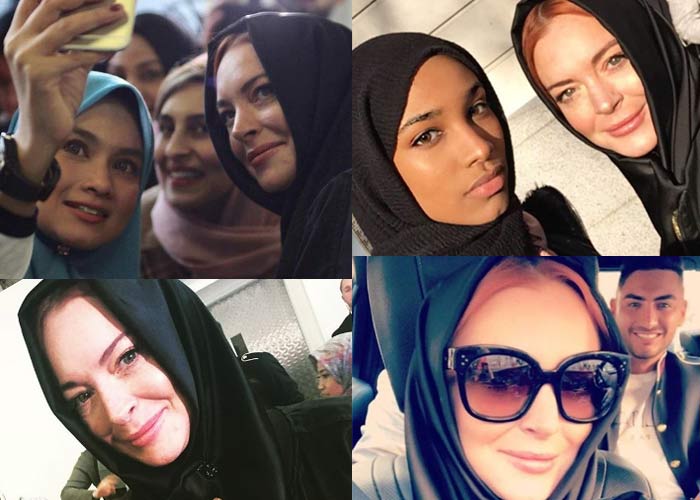
This notion—that being modest and conservative means you must be silent and submissive—is by far the most incorrect perception the West has of women who cover their faces and heads. On top of that, as my friend affirmed, Westerners often assume that a woman in a hijab or abaya is not only submissive, but that she is also being controlled or abused.

As a Bharanian woman and the mother of a beautiful young adult daughter, I know that this is simply not true. I know that women who choose to wear hijabs or abayas have opinions and character, just the same as any woman in the West. Their choice to cover their hair and dress in a more conservative fashion is just that: a choice, rooted in their beliefs.
I meet women every day who are living proof that a scarf covering the hair does not signify helplessness. Often, it is quite the opposite. One such woman is a Saudi media icon I interview in Hear Us Speak. She began her career teaching at the university in Riyadh. At the time she was considered something of a rebel—she was a muthajba, meaning she wore the conservative head scarf and modest clothing. Yet she didn’t believe in the existing structures and was always challenging her students.
One day she was invited to be a panelist on a talk show—the Arabic equivalent of “The View.” She saw it as a chance to be a pioneer. The university’s administrator told her, “If you take this job, I will fire you.” But she fought back, saying, “You have male lecturers who are not fired for being on television. I should be awarded the same rights.”
Some conservative women in Saudi Arabia did not accept her. They called her kafara, which means infidel, a woman of no religion. And yet many Saudi women thought it was wonderful to have a Saudi woman representing them on this pan-Arab talk show panel.
The TV show experienced huge success. It was the number-one talk show for seventeen years, and received numerous accolades and awards. She had taken a chance, and decided to be a pioneer facing all the consequences, head on. Today, she says she’s very glad she did.
She’s also very proud to wear a headscarf. She told me: “I wear this by choice, and I believe in it. It might not be for everyone, but it is for me. I never doubted the concept of wearing a hijab.” And she is not alone. Countless Muslim women, including in the Arab world, feel proud and even empowered wearing a hijab. There are many reasons, including solidarity, national pride and faith. As this article in The Conversation explains, “some Muslim women in America may wear the hijab as a way of asserting their pride in the face of Islamophobia.”
The woman my friend and I met in the hotel told us: “The strength of a woman has nothing to do with whether or not she chooses to cover her hair. There is no correlation. Wearing a hijab (headscarf) does not mean a woman is submissive. I have friends who wear it, and it’s perfectly normal. There are many different reasons a woman might wear one—it could be religion, family influence, cultural influence. But it does not take away her strength.”

My hope is that rather than focusing on the hijab and the myths surrounding it, the Western world will become aware of the far more real and pressing issues Arab women face today: the difficult consequences of a lack of legislation, including a lack of legal protection in all areas of society, from business to family life. I wrote Hear Us Speak to bring these issues to light.
_____
Suzan Kanoo is widely considered to be one of the leading business women of Bahrain and has proven to be successful in many fields. After completing her degree in economics in the US, she joined the family business of KE Kanoo Group and was able to grow the car trading business to new heights. Aside from her work in business and investment, she is a sought-after speaker at global events, a writer and poet, and active in volunteering work for refugees, visiting camps all over the world under the banner of the UN.