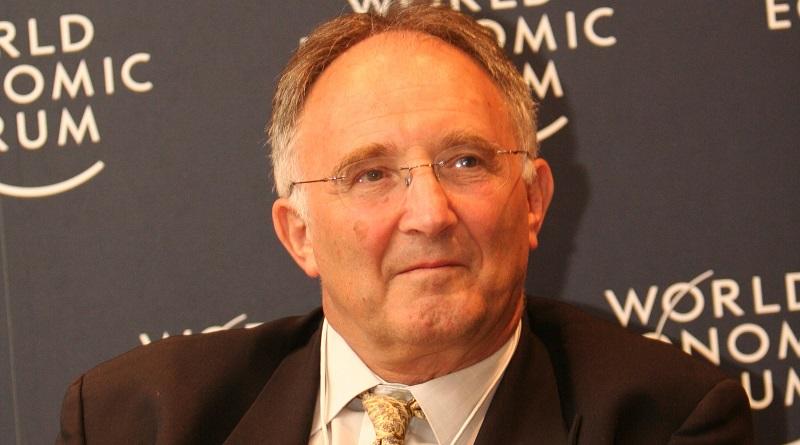
The high environmental footprint of air travel is something that most people are by now well aware of. For anyone who is wondering where the aviation industry is headed next and how to feel about it, Geoffrey Lipman, one of the key figures in the global travel and tourism industry provides some insights.
Geoffrey Lipman was Executive Director of the International Air Transport Association, President of the World Travel & Tourism Council and Assistant Secretary General of the UN World Tourism Organisation. He is the President of SUNx Malta.
Currently, he works on promoting climate-friendly travel, with green growth at the core and in line with the Paris Agreement goals.
GP: What changes do you see coming in the aviation industry?

GL: The World Travel & Tourism Council recently pledged that the industry will achieve carbon neutrality by 2050. It is the biggest deal that exists right now on a global scale in the tourism industry but airlines have not committed to that yet.
The airlines have committed to produce half of the 2005 level emissions by 2050 and to stop increasing their emissions by 2020. The airlines argue that they cannot reduce because they do not have an alternative to fossil fuel-based propulsion. That is where the change has to come.
Every year the impact of the airlines gets worse because they have no options. You can have electric cars, you can have electric trains. These large chunks of transport emissions will disappear and then the aviation will account for 50% of total transport emissions instead of 15-20% now.
The airlines know that they have to change and ones like Emirates or Qatar are applying elements of a strategy to reduce their emissions. They are constantly upgrading their fleets, they are trying to get governments to let them fly straighter, they are doing everything possible on the ground to reduce the emissions. The big thing is if they do not have an alternative to aviation fossil fuel, the main problem will still be out there. On the other hand, we cannot just shut down air travel. We are all either travelers or we are travel hosts.
GP: EasyJet is the first major airline to offset the carbon footprint of all of their flights. Why do you reckon they did it?
GL: I think they sat in a strategy session and they said: We are going to have to do this one day. The pressures are building up and we are not going to pass by. This pressure is going to increase so why don’t we make a preemptive strike. Why don’t we do what we have to do early and build a mechanism where we can pass this through to our customers?
The goal of airlines is to keep the price low but to encourage the passenger to pay for extras to compensate for it. So the airlines are now finding ways to market a carbon offsetting impact fee. One day, everybody will have to do this so it is about being the first and looking good with all the people saying “this is the right thing to do”.
It will not just be easyJet – the International Airlines Group consisting of Iberia and the British Airways has reached the same conclusion.
GP: International aviation and shipping are one of the components that are not included in the Nationally Determined Contributions under the Paris Agreement. It seems like there is little regulation on aviation from an environmental point of view.
GL: First of all, I think there are a lot of regulations dealing with emission. Historically it has been called noise or pollution, or limitations on flying hours around airports. So there is a fair amount of regulations, the airlines are used to it.
At the same time, the airlines have always opposed any tax increase for the same reason as you and I do not want a tax increase, and the more so because they never see a benefit from the extra taxes. Usually when you tax a sector of the community, you take the money and you use it for the benefit of that community. What the airlines say is: if you tax more on aviation fuel, we get no benefits and our industry gets no benefits. So of course, they will resist it. But it does not change the fact that they should pay their fair share.
You spoke about national contributions: if Emirates picks up fuel in Sydney, where is the real pollution pollution coming from? Is it an Australian pollution because most of the passengers might be from Australia? Or is it UAE-driven pollution? As soon as you get into those discussions, you need a very scrupulous mechanism.
I think the exemptions for aviation fuel are a historical anomaly and there should be some sort of updated international agreement that says “all fossil fuel will be taxed for its pollutant impact and there won’t be any exceptions”.
GP: Do you foresee any technological improvements?
GL: We should have a moonshot. We should do what John Kennedy did when he said, “I want to put a man on the Moon.”
He envisioned cooperation between financial institutions, manufacturers and scientists. And the federal government was there to fund this. It was a moonshot. I think we need a moonshot for a clean aviation propulsion.
The aviation industry should be in the lead of this change from 2020 to 2050. We have 30 years and I think we can find an alternative source of propulsion. Some examples include electric planes for journeys up to 1000 kilometers and hyperloops between cities like Dubai and Abu Dhabi.
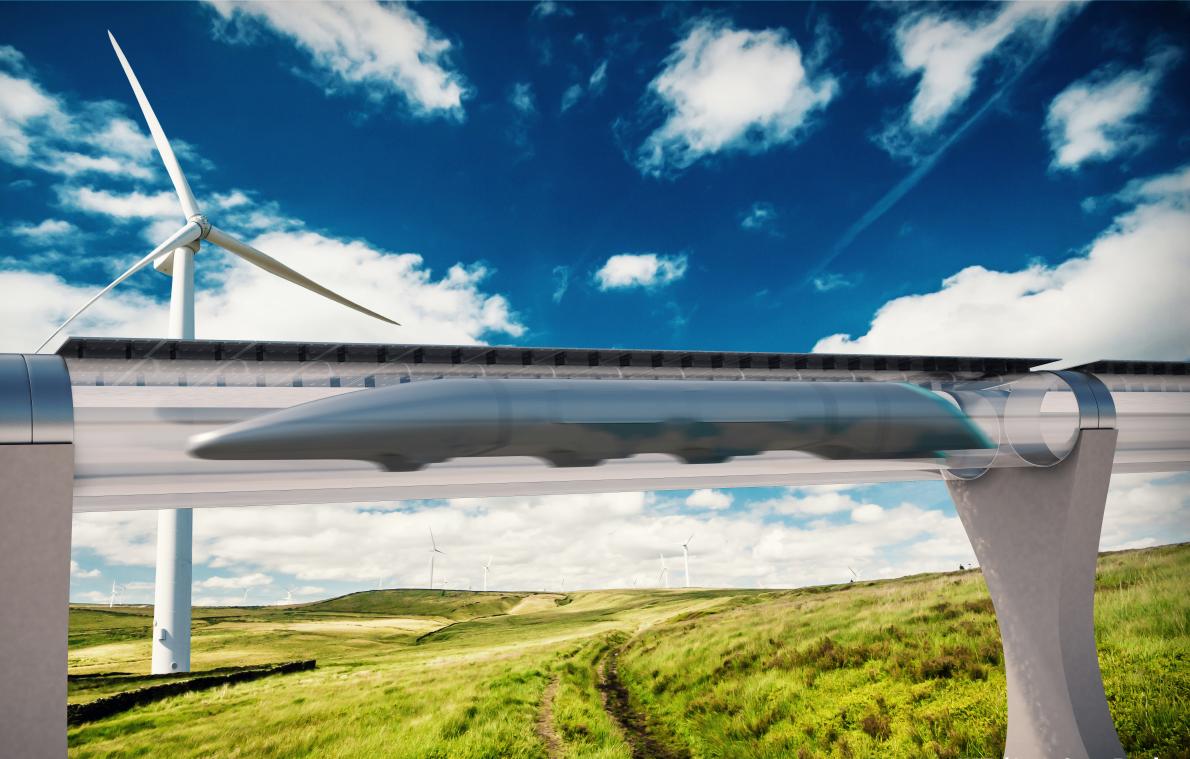
These solutions are in this timeframe. We need to create an impetus for something that is totally new – a grand prize equivalent to the Nobel Prize for the person who comes up with the technology which replaces current propulsion methods over the next 30 years.
“I want to highlight that all travel has to become climate-friendly travel”
You need to have presidents of the WTTC, UNWTO and IATA standing behind the UN Secretary General when he says “We are going to have a moon shoot on clean aviation fuel.” That would be a Holy Grail of solutions.
I want to highlight that all travel has to become climate-friendly travel. You need to factor desires of local people into strategic planning. Everyone has to do circular economy and social inclusion around the growth patterns that we developed. We have to make sure that whatever product is being developed, we have to have a pathway for it to become carbon neutral by 2050.
I do not care what their pathway is. It will be different for Qatar Airways than for a local taxi company in Madrid. Both of them are part of the travel and tourism industry. What we will try to do from within the industry is to put a registry so that companies and communities can identify their pathway, register it and review it annually.
It is not about standards because in a world where global ambitions come down to local actions, you cannot develop universal standards. You need directions for climate-friendly travel.
By 2030, people will be doing carbon accounting in the same ways as they are doing financial accounting now. When you go shopping, you will see the carbon footprint of the supply chain. Ben & Jerry’s is already doing it and it will be everywhere in 15-20 years.