Carambola might be the star fruit to save the soil in Florida’s orchards

 
Freidenreich carambola
Not just for Israel and the tropics. Tangy star fruits or carambola can be great ground cover in orchards as an alternate crop or just a way to keep the soil healthy and vital in citrus orchards.

It’s not just oranges that grow in Florida. Carambola, or star fruit as most in the United States call it, is gaining popularity. One researcher from Florida International University is researching how cover crops can help the sustainability of star fruit farms.

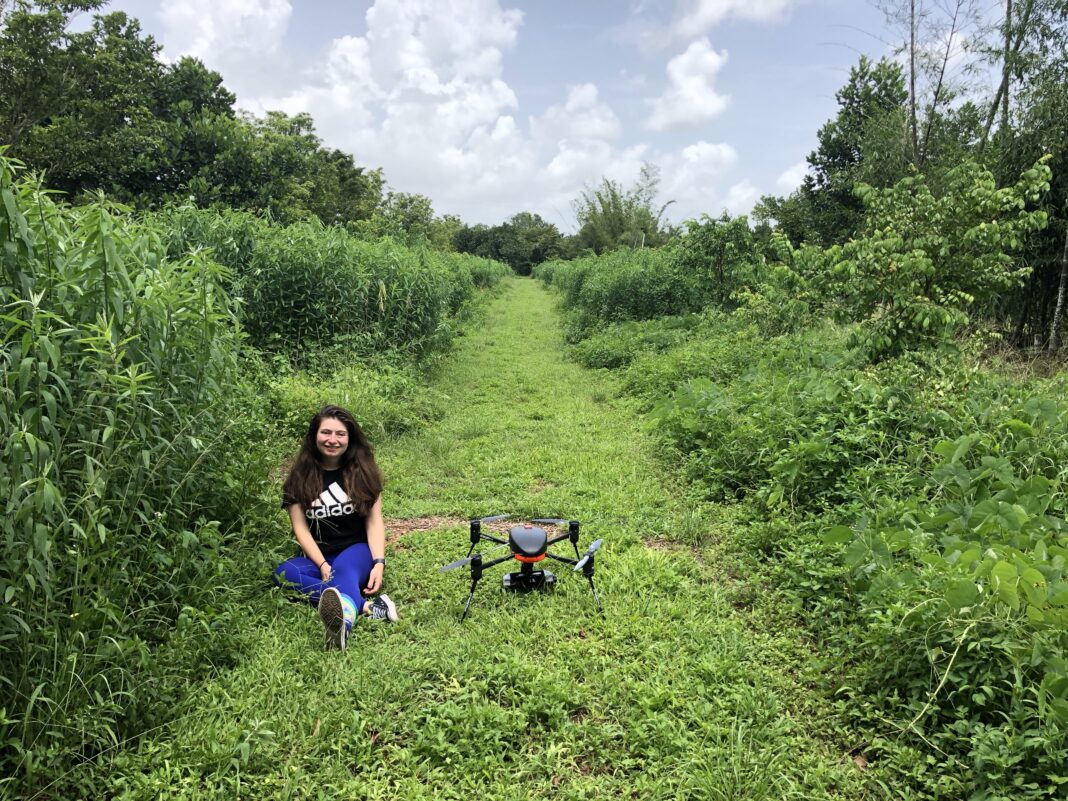
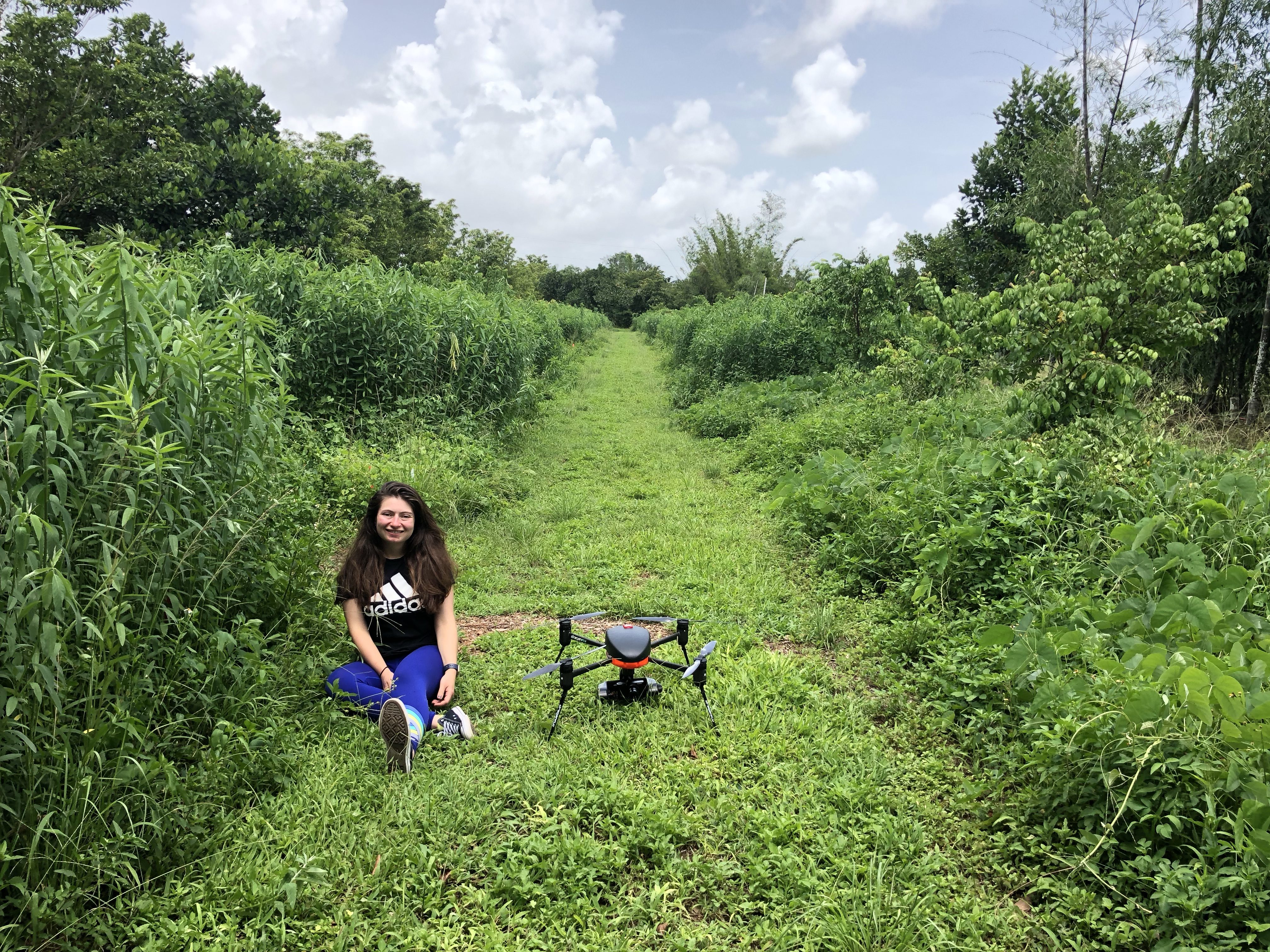
“Tropical fruit production has become a prominent practice in Miami-Dade County,” says Ariel Freidenreich, a Research Assistant under the FIU Agroecology Program. “For this reason, it is vital that sustainable farming practices are applied to these systems to ensure healthy soils and economically viable fruit production.

“Star fruit are a great snack while working in the sun because they are juicy and sweet,” she says.

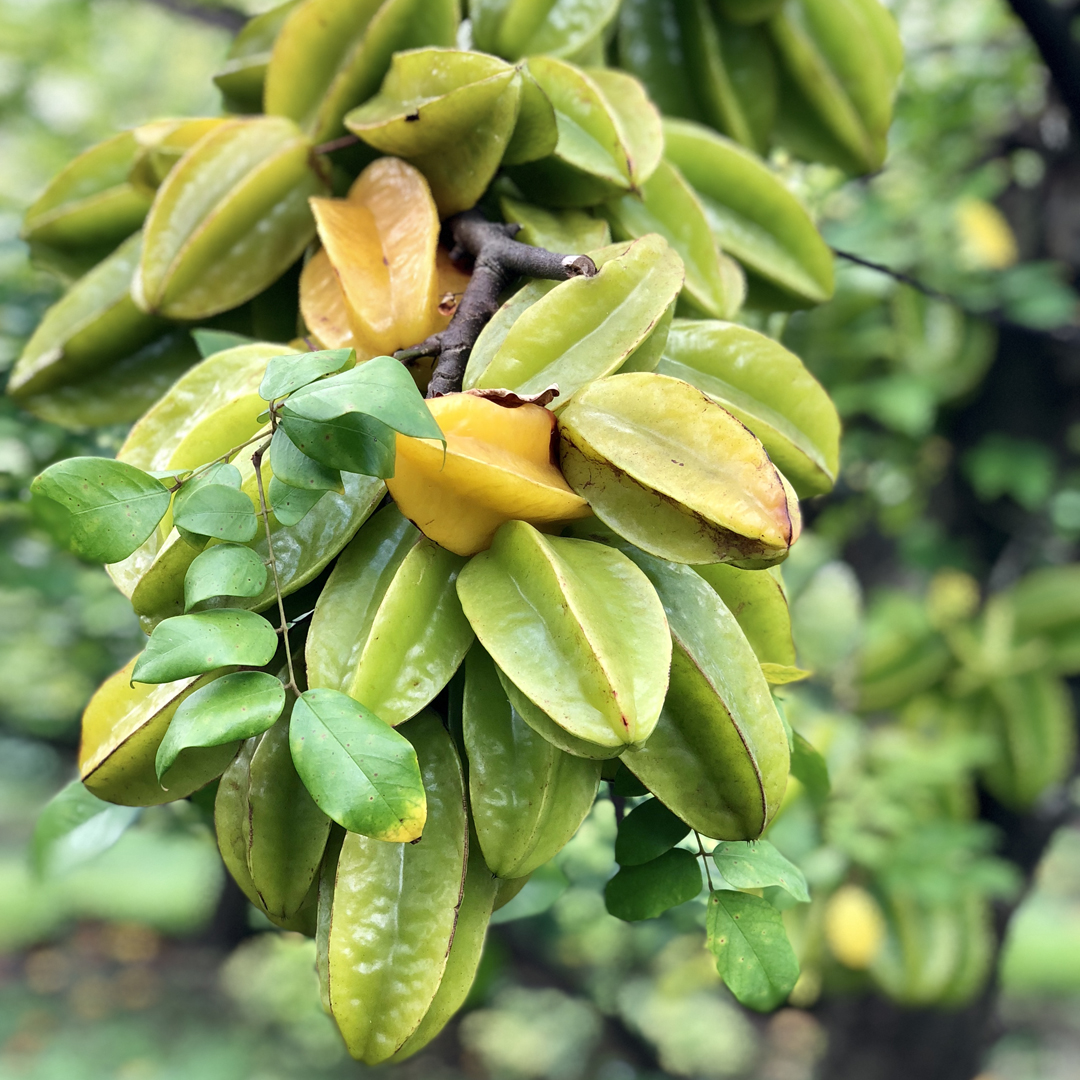
The Arkin variety is the most popular and widely planted in south Florida. Some growers are now expanding to sweeter and juicier varieties from Hawaii and other areas. They go great with salads and are used for juicing. There is even a winery that makes a delicious star fruit wine (tangy and not too sweet). While these fruits are not very popular in American culture, they are popular in Asian and Hispanic cultures, which are very prominent in south Florida.

Besides being tasty, there’s another reason for finding a variety of crops that grow well in Florida.
caramboloa star fruit

Increasing the diversity of crops that are grown in various areas is important for several reasons, says Freidenreich. “First, crops like oranges are under pressure from a disease called citrus greening. It’s a blight disease that causes trees go into decline and die within three years. The disease destroys the production, appearance, and economic value of citrus trees and their fruit, and there is no cure. Similarly, laurel wilt has been greatly impacting the avocado industry in south Florida. Different crops are being planted to replace avocado groves.”

Establishing crops like star fruit will help diversify the biological system of a farm. It also diversifies the income stream for growers. Just like a well-balanced retirement portfolio, balancing the mix of crops on a farm can reduce overall risk. This is good for the environment and the sustainability of our food sources.

Freidenreich’s research with carambola includes cover crops. Cover crops are grown, not to be harvested, but to assist with soil health. Two cover crops the team studied are sunn hemp and velvet bean. Both are in the legume family and can take nitrogen from the air and metabolize it into a plant nutrient.

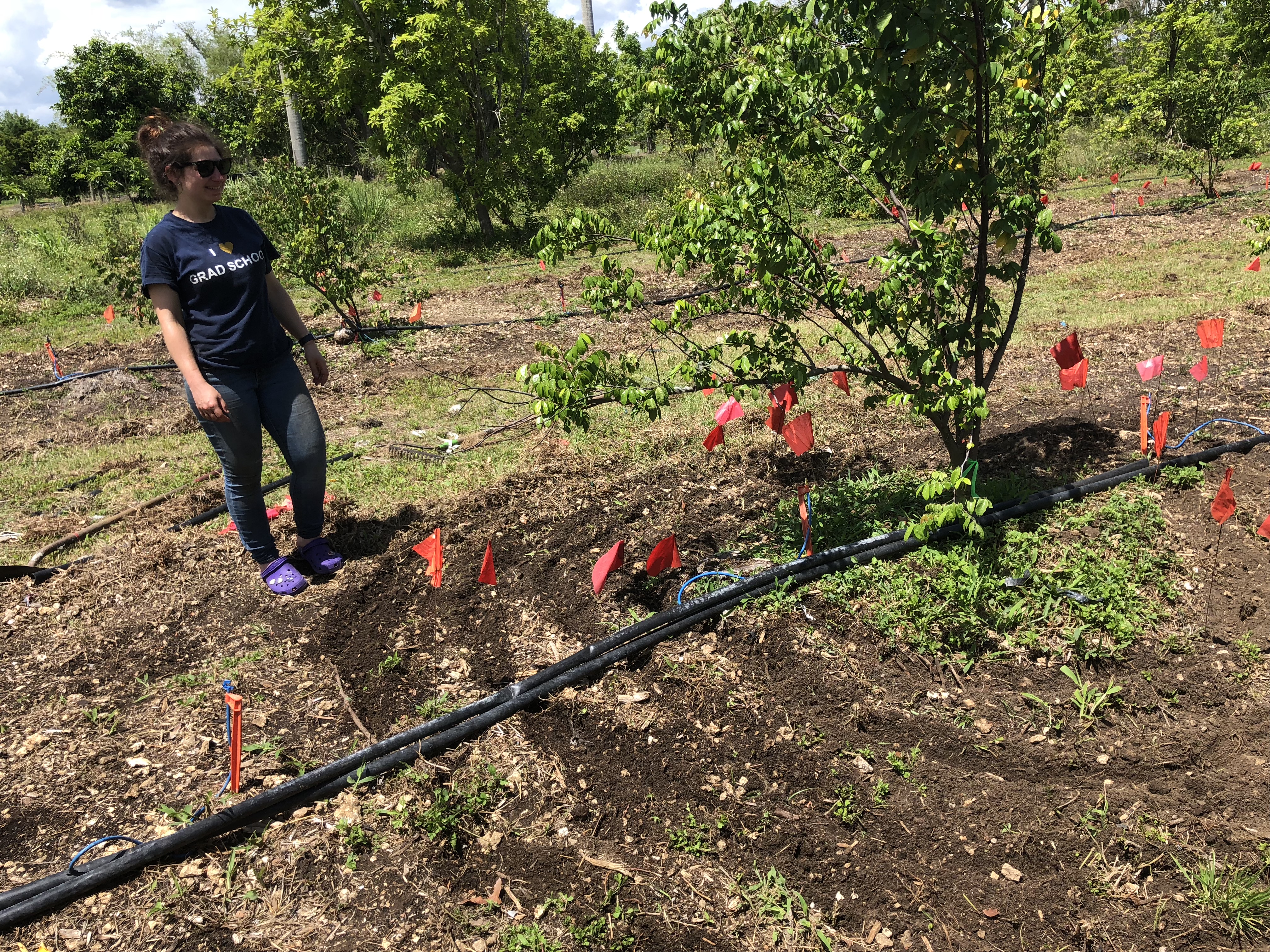
“We established cover crops within this young carambola stand to enhance overall soil quality,” says Freidenreich. “We grew sunn hemp and velvet bean between trees. We cut them and incorporated them into the soil as green manure for two summer growing seasons. This helps ensure healthy tree development without the addition of synthetic inputs.”

The research is taking place on a certified organic farm, and these practices are being developed to help farmers transitioning to organic production or those interested in sustainable practices.

Cover cropping should improve the soil organic matter. “The soil [at the research site] is rock-plowed limestone with little natural organic matter content,” says Freidenreich. “These soils have a basic pH, so improving organic matter content is necessary to help lower pH. This, in turn, should inspire healthy crop growth.”
carambola freidenreich

Improving soil organic matter “should have positive effects on soil nutrient availability,” says Freidenreich. “It should also improve soil structure and microbial interaction. We expect fruit yield improvement over time. South Florida has a subtropical climate, so hot and humid weather inspires quick turn over for organic matter degradation. Continually adding these treatments should have positive benefits season to season. The cover crops can be great for weed suppression in the growing season and after termination.”

Future research means Freidenreich might get to snack on more star fruit while in the field. “Star fruit are very wind sensitive. They can defoliate with strong gusts. Sunn hemp has the potential to act as a windbreak for starfruit trees. Additionally, star fruit is truly tropical and can be sensitive to cool temperatures in the winter months in subtropical south Florida. Cover crop mulches might insulate the roots of carambola trees.”

Freidenreich recently presented her research at the 2019 International Annual Meeting of the American Society of Agronomy, Crop Science Society of America and Soil Science Society of America. 

Karin Kloosterman
Karin Kloostermanhttp://www.greenprophet.com
Karin Kloosterman is an award-winning journalist, innovation strategist, and founder of Green Prophet, one of the Middle East’s pioneering sustainability platforms. She has ranked in the Top 10 of Verizon innovation competitions, participated in NASA-linked challenges, and spoken worldwide on climate, food security, and future resilience. With an IoT technology patent, features in Canada’s National Post, and leadership inside teams building next-generation agricultural and planetary systems — including Mars-farming concepts — Karin operates at the intersection of storytelling, science, and systems change. She doesn’t report on the future – she helps design it. Reach out directly to [email protected]

Read More

TRENDING

90% of Americans worry about microplastics

Microplastics are showing up everywhere—from dollar store toys and synthetic clothing to bottled water, toothbrushes and even human sperm. A new Ocean Conservancy survey finds that nearly 9 in 10 Americans are concerned about the health impacts of microplastics, while support is growing for tougher regulations. As scientists uncover plastic particles in the heart, placenta and reproductive organs, the question is no longer whether microplastics are affecting our lives, but how much damage they are already doing.

Understanding Food Production: Karl Studer on the Urban-Rural Knowledge Gap

Karl Studer occupies an unusual position in American business. As President of Quanta Services, he oversees electrical infrastructure operations across the United States, Canada, and Australia, managing thousands of employees and multibillion-dollar projects.

Tigris River oil spill highlights Iraq’s environmental oversight and our addiction to oil

A fresh oil spill in the Tigris River, filmed by an Iraqi university student, has reignited concern over Iraq's polluted waterways. From ancient Mesopotamia to modern Basra, the country's dependence on oil has come at a steep environmental and human cost, with activists warning that unchecked contamination is putting ecosystems and public health at risk.

Doctor-Led Direct Hair Transplant: What Surgeon Involvement Means for Outcomes

Hair restoration technology continues to evolve, but the surgeon behind the procedure remains the most important factor. Doctor-led hair transplants emphasize careful diagnosis, conservative donor management, natural hairline design, and long-term planning rather than simply maximizing graft counts. By treating donor hair as a limited resource and tailoring each procedure to the patient's future hair loss, experienced surgeons can reduce the need for corrective surgery while delivering more natural, sustainable results.

Data centers in Space? Sophia Space and Apex plan on busing them in

Can data centers really be built in space? Pasadena-based Sophia Space is partnering with Apex to test the idea by launching modular AI computing systems into low Earth orbit in 2027. Using radiation-hardened compute TILEs cooled by passive radiative systems and mounted on scalable satellite buses, the companies aim to prove that edge computing can operate reliably in space. While challenges remain, the project represents an important step toward distributed orbital computing networks that could support everything from climate monitoring and pollution tracking to autonomous spacecraft navigation in an increasingly crowded orbital environment.

Yerukim Forms a New Green Economy Where the Money is Really Green

The Yerukim members who pick up the recyclables get to keep the monetary reward, the public earns "green" bills that can be used in shops, and business owners get to be associated with environmentalism.

Choosing Riyadh over Dubai? What Investors Should Know

Saudi Arabia is deploying capital at unmatched scale to catalyze tourism and advanced industry while rewiring its power-and-water backbone. The investable frontier is widening—especially in renewables, grid storage, water efficiency/desal retrofits, and hospitality operating platforms. Prudent investors will insist on phased delivery, enforceable KPIs (energy, water, biodiversity), and RHQ/zone compliance—while pricing political-economy and reputational risks alongside growth upside.

Sell your cooking oil for biodiesel money

Want to make money on old french fry oil? Sell it.

Qatar Alternative Energy Summit Pairs Investors And Innovators

Alternative energy investors and innovators can meet n' greet in Doha, Qatar March 16 and 17.

Here’s How To Implement The Four Pillars Of Employee Engagement

If you throw a party for your work team and they are vegans, don't make it a barbecue. Know the sustainability values of your team to boost moral and retain good people.

Locals From Rishon Fight IKEA

Big Box stores are a pretty new concept in Israel, and thank God that not every Israeli city wants them in their backyard. A word from someone who has see the beautiful farmland around her hometown Newmarket, Ontario stripped and converted into vulgar strip malls of big box shops: they have no place in a healthy and sustainable town or city.

The Jewish National Fund Meets An Inconvenient Truth

According to the JNF, it has transformed thousands of acres of barren land into green forests in Israel. They state that each person emits about 23 tons of carbon per year, estimating that each tree planted can absorb one ton of carbon in its lifetime. That's a whole lot of trees you'd need to be planting. Could so many fit in Israel?

How to quiet noise from construction in your office

Streets need to be resurfaced in New York but the humming and grinding noise is unsettling. Noise is environmental pollution. 

Popular Categories