Khirret, A Vanishing Iraqi Sweet Made from Cattails

A rare sweet pollen based candy pulled out from the marshes of ancient Iraq.

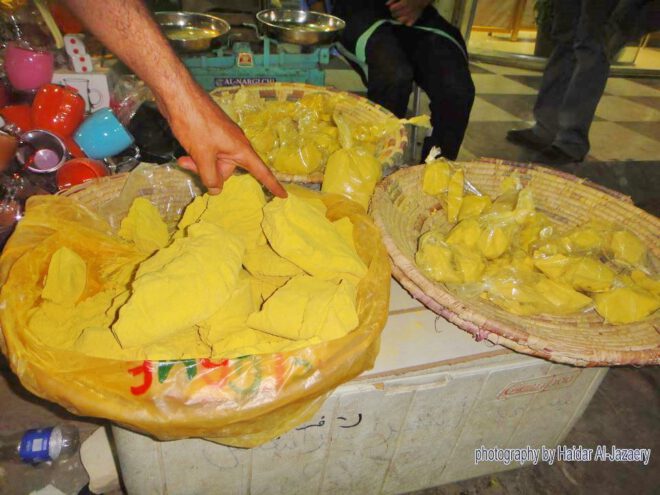
Khirret, an old-fashioned sweet made in southern Iraq, is concocted from male cattail reed pollen. It’s intriguing as an historical relict, but not so much for its taste. People who still remember the flavor and texture of khirret agree that it tasted faintly-sweet and felt like chalk in the mouth. Best known in Iraqi culinary history, it might be one of those foods best left to history altogether.

khirret-iraqi-sweet

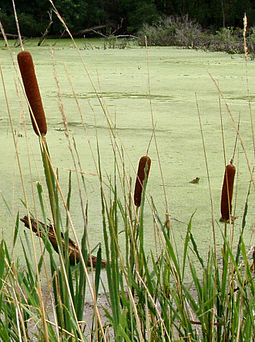
Cattail reeds are a useful plant that has helped sustain indigenous people wherever it grows, around the globe. Native Americans have many uses for all of its parts.Traces of cattail tubers have been found in crumbs of Neolithic bread found in Jordan. Those long-ago people wasted nothing they found nutritious.
pollen-cattail-reed

And Iraqi tradition, according to food historian Nawal Nassralah, knew the value of khirret well:

Khirret as medicine

“Khirret is a nutritious food high in protein, and its medicinal benefits are believed to be many. People eat it to relieve indigestion. It is said to be good for the colon and respiratory tract. It is used to cleanse the urinary system and stop diarrhea. The raw pollen is put on wounds to heal them. It is also popular among women during the early stages of pregnancy. Moreover, it come in very handy for bee-keepers, who use it to feed their bees.”

An Indian blogger at sindhirasoi.com also has memories of khirret, which she knows as bhuri. As she recalls, eating it was less than pleasant. She describes the flavor as fermented-floral. But her parents encouraged the family to eat it, presumably because it was cheap and nutritious.  It has almost disappeared in her culture as well. 
Recipe for khirret

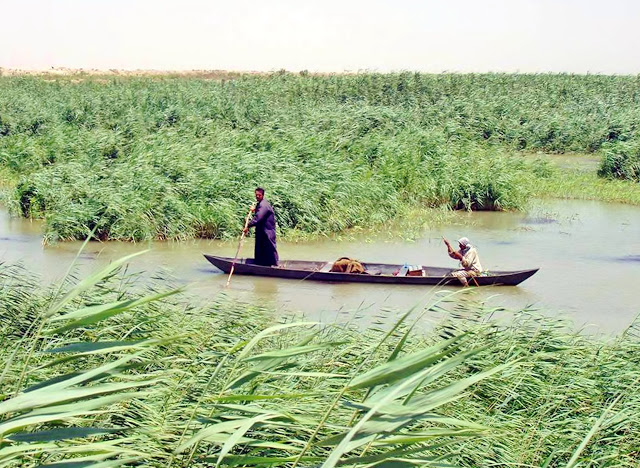
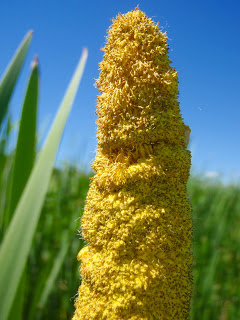
To make khirret, you first need to row out to where the reeds grow in a marsh and gather cattail reeds plump with bright yellow pollen. Back on dry land, you strip the pollen off the stalks with your hands, sieve the collected material to separate any insects, and set it out to dry in the sun. A video below shows how it’s done.

Mixed with sugar, the pollen is then steamed inside a cloth until solid, traditionally over a boiling pot whose edges are sealed with mud. There must be a point in which the experienced khirret cook knows it’s ready, but that’s information no one has provided. Someone wants to take on the challenge?

It’s then broken up  into irregular chunks and is ready to eat. 
pollen-male-cattail reed
Male cattail full of pollen

What brought Nasrallah’s attention to khirret was a memoir of life in Bagdad in the 1920s by the scholar Abbas Baghdadi. He recollects khirret as being a street food manufactured only by Jewish vendors.  He says that the Jews of Bagdad ate it especially at the festival of Purim, which occurs in March/April – just when the male cattail reeds are loaded with pollen and ready for processing.

I asked food historian and chef Moshe Basson,  69 years-old and himself a descendant of Iraqi Jews, if he had memories of eating khirret. He doesn’t recall eating it, although he knew what it was from hearing of it at home: perhaps his parents mentioned it at around Purim.

There’s no folklore or connection with Biblical stories about the candy that Basson is aware of. Presumably it was simply a seasonal treat whose golden color was appropriate to the general air of festivity at the time. He does recall that his childhood Purim treats included a coconut candy that was also bright yellow; maybe a reference to the khirret tradition left behind.

Iraqi Jews abandoned khirret when they left Iraq for Israel. There’s very little marshland in Israel, and that located in two nature reserves. They took to agricultural work and small businesses, and so the tradition in Israel has died away. 

Khirret is still made in southern Iraq and other parts of the Middle East, but it’s appreciated for its rarity, rather than a sweet that stands in competition with commercial candies. But as for its medicinal value? Worth exploring more.

Photos of khirret and reed with pollen from Nawal Nasrallah’s blog, In My Iraqi Kitchen.
Miriam Kresh
Miriam Kreshhttps://www.greenprophet.com/
Miriam Kresh is an American ex-pat living in Israel. Her love of Middle Eastern food evolved from close friendships with enthusiastic Moroccan, Tunisian and Turkish home cooks. She owns too many cookbooks and is always planning the next meal. Miriam can be reached at miriam (at) greenprophet (dot) com.

Read More

TRENDING

5 Reasons Why You Should Save Seeds (and plant them)

Saving seeds from tomatoes, peppers, herbs and flowers helps preserve biodiversity, strengthen food security, and keep heirloom varieties alive. Even a small balcony garden can make a difference.

Make Guarapo De Piña (it’s fermented pineapple juice)

In Cuba, guarapo is simply freshly-pressed sugar cane juice, and is drunk on the spot, without waiting for it to ferment. But in Colombia, Venezuela, Peru and Mexico, they homebrew guarapo from pineapples or oranges, and the fragrant fluid sits on the kitchen counter top to ferment until it's bubbly.

Baby teeth read like tree rings paint a picture of toxins in early life

A new study from the Icahn School of Medicine at Mount Sinai in New York offers a striking insight into how the environments we are born into can quietly shape our brains years later. By analyzing naturally shed baby teeth, the ones tucked under pillows for the tooth fairy, researchers have reconstructed a detailed timeline of exposure to environmental metals during pregnancy and early infancy.

Poop in the East River shows the city’s rat problem and what people like to eat

New York ecology and health can be monitored by a jug of water a week.

Saving Gourmet Wild Plants For The Future

Think of truffles, a gourmet wild food. The European...

Yerukim Forms a New Green Economy Where the Money is Really Green

The Yerukim members who pick up the recyclables get to keep the monetary reward, the public earns "green" bills that can be used in shops, and business owners get to be associated with environmentalism.

Choosing Riyadh over Dubai? What Investors Should Know

Saudi Arabia is deploying capital at unmatched scale to catalyze tourism and advanced industry while rewiring its power-and-water backbone. The investable frontier is widening—especially in renewables, grid storage, water efficiency/desal retrofits, and hospitality operating platforms. Prudent investors will insist on phased delivery, enforceable KPIs (energy, water, biodiversity), and RHQ/zone compliance—while pricing political-economy and reputational risks alongside growth upside.

Sell your cooking oil for biodiesel money

Want to make money on old french fry oil? Sell it.

Qatar Alternative Energy Summit Pairs Investors And Innovators

Alternative energy investors and innovators can meet n' greet in Doha, Qatar March 16 and 17.

Here’s How To Implement The Four Pillars Of Employee Engagement

If you throw a party for your work team and they are vegans, don't make it a barbecue. Know the sustainability values of your team to boost moral and retain good people.

Locals From Rishon Fight IKEA

Big Box stores are a pretty new concept in Israel, and thank God that not every Israeli city wants them in their backyard. A word from someone who has see the beautiful farmland around her hometown Newmarket, Ontario stripped and converted into vulgar strip malls of big box shops: they have no place in a healthy and sustainable town or city.

The Jewish National Fund Meets An Inconvenient Truth

According to the JNF, it has transformed thousands of acres of barren land into green forests in Israel. They state that each person emits about 23 tons of carbon per year, estimating that each tree planted can absorb one ton of carbon in its lifetime. That's a whole lot of trees you'd need to be planting. Could so many fit in Israel?

How to quiet noise from construction in your office

Streets need to be resurfaced in New York but the humming and grinding noise is unsettling. Noise is environmental pollution. 

Popular Categories