
When wandering in the streets and piazzas of Rome, it is always a surprise to encounter Egyptian obelisks and Pharaonic monuments, reminders of the ancient links between Egypt and Rome. However, it is even more exciting to visit the prestigious Egyptian Academy, a cultural facility established near Rome’s Villa Borghese, next to a group of international fine arts academies representing various countries in the world.
Although the Egyptian Academy is one of seventeen fine arts academies that exist today in Rome, it is the sole representative of the African continent and the Arab world. In fact, only the Egyptian and Japanese academies represent the “East” among those academies.
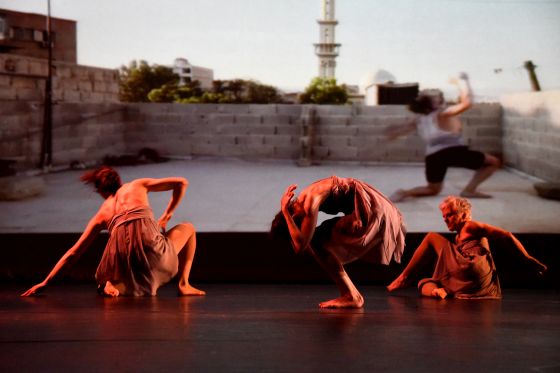
The Academy serves multiple objectives, hosting Egyptian art students in Rome while promoting Egyptian culture beyond its borders, also as a source of pride for Egyptian and Arab people.
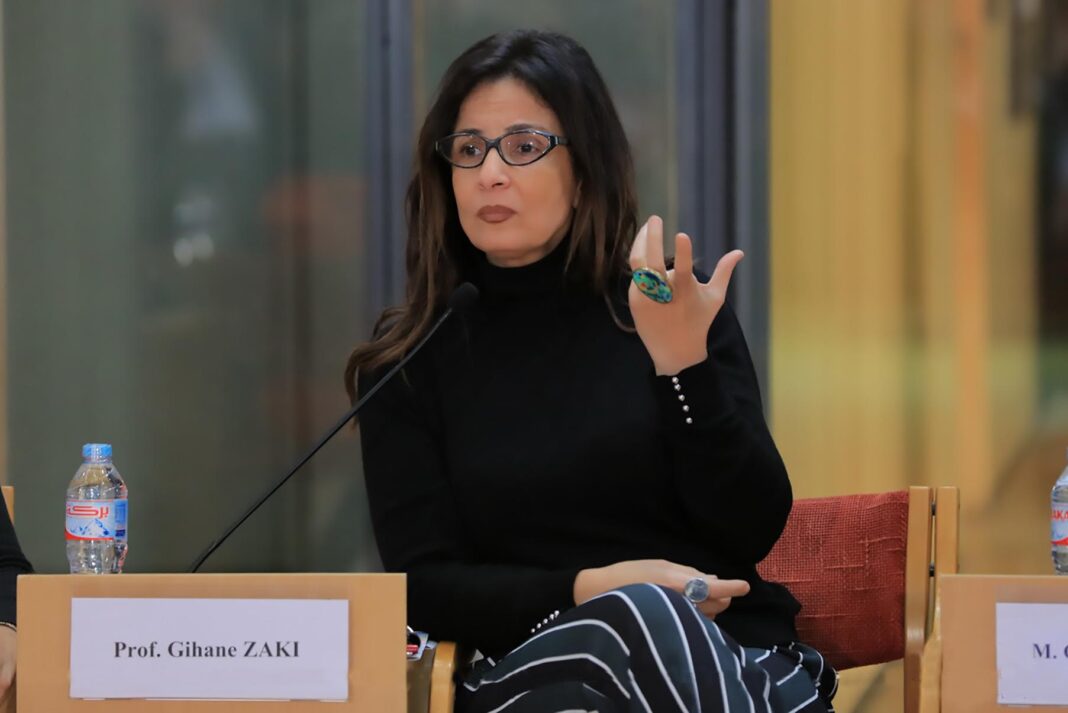
With this simple message, the Academy’s director Dr Gihane Zaki welcomed us. Her great charisma and passion bring an additional dimension to the visit. When Dr Zaki speaks with such depth of knowledge and experience, you feel you are speaking to a true ambassador of culture and the arts, especially when she talks about her role to convey the message of Egyptian culture to the world.

As we walked around the Academy, Dr Zaki spoke to us about her journey since her appointment as the Academy’s director in 2012, and her subsequent election to the Council of ICCROM (International Centre for the Study of the Preservation and Restoration of Cultural Property) in 2013, representing Egypt.
Q: Dr Zaki, would you please tell us about the Egyptian Academy in Rome?
Gihane Zaki: The Egyptian Academy has been in existence since 1924 and came to the present location near the Villa Borghese in 1966. In addition to hosting Egyptian art students for a period of study in Rome, the Academy evokes the glory of Egyptian art and culture to people from Italy and the West, while encouraging Arab people from all corners of the Middle East to take pride in this rich heritage. Though there are many fine arts academies in Rome, the Egyptian Academy is the only one of both the Arab world and Africa.
Q: What is the importance of the Academy’s role today?
Gihane Zaki: Right now we are living in a real culture war. In a period of black-and-white thinking, the Egyptian Academy has a brand with a social role that has many dimensions, particularly when it comes to interpreting history. We want to show that experts have a role, and that when you interpret history, it’s important to put in a touch of tolerance. This is true even when history is written by the winners – maybe especially then.
The role of the Academy is also to show another image of the Arab world, both to Arabs and to the West. We want to show a positive image of the Arab world that is also real and genuine. The Arab world is not what they show on television, ISIS and terrorist attacks and guns and black masks. The Arab world is the great stars of Cairo cinema, glorious art, haunting music and delicate calligraphy. This is the cultural diplomacy of reducing tensions between East and West. And not just to the West but also to Arab people. The message is – I shouldn’t be shy about presenting myself as an Arab person. I present a positive image. This positive image shared through cultural diplomacy can become a locomotive.
I see my role as bringing the message of Egyptian culture to Europe. I want Arab people to be proud of their culture, and I want Europeans to appreciate it. Cultural diplomacy is key now to understanding and putting people together. And culture, heritage and history are its flag.
Q: Could you speak to the importance of cultural diplomacy?
Gihane Zaki: The persuasive or soft power of culture and the arts can be seen everywhere. Culture can be used to negotiate with and encourage a range of stakeholders, from the highest echelons of power to poor and at-risk populations. Culture and the arts appeal to people’s minds and hearts, and widen their perspectives. And if you’ve touched their hearts just once, they will come back a second and third time.
I see cultural diplomacy as a weapon in the culture war. The Academy is not political, but my role is also to use it with politicians and ambassadors. Their desire to understand culture is huge, and often it is not encouraged in the environments they live and work in. Yet they very much appreciate the chance for open dialogue through culture, and for connecting with groups that it may be difficult to approach in any other way. That is the value of cultural diplomacy. From this place, dialogue can start.
Q: Whom does the Academy reach out to?
Gihane Zaki: At the Egyptian Academy, we open our doors not only to diplomatic circles but also to the community of Egyptians living in Italy, of which there are many, particularly in Milan. I also invite school groups, particularly 9 to 12 year olds, both Italian and international. They come and learn about the magnificence of Egypt’s history. I can put a piece of Egypt inside their hearts that they will never forget. They may even go on to study Egypt and Egyptology, as I did!
Recently the Academy also opened its doors to a very different group – and here I mean young Egyptian illegal immigrants in Italy, mostly 18 to 21 years old with little or no education. Their families sent them on boats to come to Italy, thinking they would become rich. Now they are here with no awareness of what Europe is, or even what Egypt is.
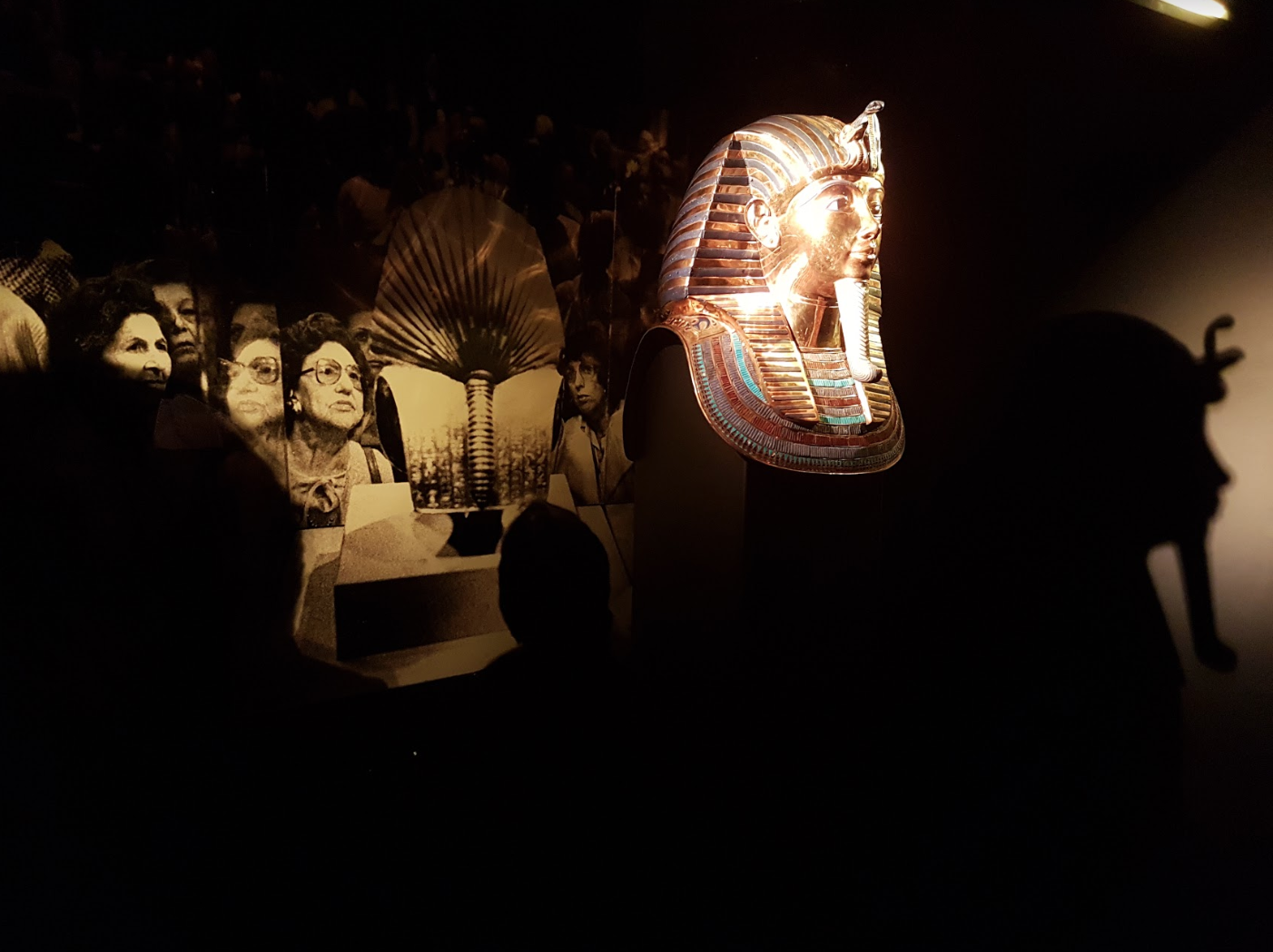
I was recently contacted by a French non-profit that works with these young boys and men, and I said, of course they must come to the Academy. I showed them the gallery of Egyptian film stars and they don’t know who any of them are. I share with them the Tutankhamun exhibit and tell them, “Your grandfathers built this.” I invite them to movie evenings and they bring their friends. Afterward we all sit in the garden, I make dinner for them and we laugh together and have a wonderful time. They too will never forget it. And one day this may keep them from going to the other side.
Q: So this really is a line of defense in the culture wars?!
Gihane Zaki: The cultural mainstream, too often very elitist, has forgotten or neglected to do exactly this with at-risk populations – include them, engage them, show care for their welfare. That is exactly why ISIS has been so successful with this group. The social inclusion role cannot be forgotten by any institutions, especially cultural ones. If we do, we’ll lose the culture war, and we will not have the open and stable society we want. To have it, we must invest. We can have the beauty of culture, or we can have a flood of radicalism submerge the Arab world.
Q: What do you see as ICCROM’s role in the Arab region moving forward?
Gihane Zaki: ICCROM will continue to be a force supporting culture and society in the Arab region in many ways – especially in planning for the post-conflict period – with risk preparedness, with first aid, with community engagement. These conflicts will not last forever. We must think and plan for the future. ICCROM is always at its best when intervening in crisis situations, just as they did at the time of Abu Simbel and the Aswan High Dam in the 1960s. There will always be a role for ICCROM.
Q: Any final thoughts?
Gihane Zaki: Culture is a strength. I’ve seen it through my experience at the Egyptian Academy in Rome, and it’s not a small platform. We’ve worked for six years under very difficult conditions, not only in Egypt but throughout the Arab region. We’ve seen revolutions, wars, armed conflict, illicit trafficking in antiquities and many horrors. But deep down I have this confidence that culture matters – cultural education and art, but above all, everything that is human. If we can touch the masses that are suffering and drifting away, it’s through culture, by changing the minds of people. We have a duty, all of us who are culture workers, to really move forward on everything we see happening around the world and not give up.