

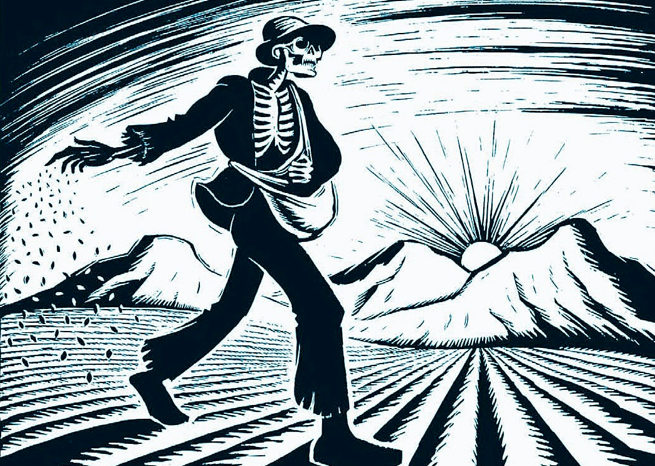
 China’s state-owned ChemChina tendered a $43 billion bid for Swiss seeds and pesticides group Syngenta today as part of a strategy to improve domestic food production. Remember the classic board game Monopoly? It’s being played by multi-national agri-businesses in attempt to control the world food supply chain. China is the largest agricultural market on the planet. Syngenta’s portfolio of chemicals and patented seeds will represent a major upgrade of its output potential.
The merger, which would be the largest foreign acquisition ever by a Chinese firm, follows last year’s failed takeover of Syngenta by US-based Monsanto.
“The proposed takeover of…Syngenta by China National Chemical Corporation would accelerate the hyper-consolidation in the global seed and agrochemical market. The move by…ChemChina comes on the heels of last year’s announced mega-merger between DuPont and Dow Chemical — a deal that would leave three firms controlling more than three-quarters of the corn and 80 percent of the soybean seeds in America,” said Wenonah Hauter, Executive Director, Food & Water Watch, in a statement released today.
He added, “Today’s deal dwarfs the takeover of formerly U.S.-owned Smithfield by WH Group in 2013. The Department of Justice and antitrust authorities of governments across the world must act to block these seed megamergers.”
The rapid concentration of economic power and seed patents in the hands of a tiny and diminishing number of global agribusiness giants harms farmers and eaters worldwide. Farmers will undoubtedly be forced to pay more for a reduced choice of options controlled by the gargantuan seed monopoly.
The companies use the patented seed varieties — overwhelmingly biotech crops with accompanying pesticides and agrichemicals — to control not only what farmers plant, but how they cultivate their crops, what chemicals they use on their fields and how they can manage their farms.
“The merger has far-reaching impacts on the food supply, the environment and consumers. There is a growing demand by consumers to know what they are eating, how it is grown and how it impacts their communities. Global agribusiness mega-mergers like the proposed ChemChina-Syngenta deal give a corporate cabal a stranglehold on the world’s farmers and the world’s eaters. When fewer firms control more of the seed and agrochemical market, both farmers and consumers lose out,” said Hauter.
Syngenta is a leading global agribusiness formed at the end of 2000 by the merger of Novartis Agribusiness and Zeneca Agrochemicals. It operates in over 90 nations, employing nearly 30,000 people.
Food & Water Watch is a Washington, D.C.-based champions healthy food and clean water for all, standing up to corporations that put profits before people, and advocating for a democracy that improves people’s lives and protects our environment.
Want to get involved? It’s easy. Food & Water Watch helps you amplify your influence – from telling your elected officials about your concerns to becoming more active in your community. See all the ways you can help change happen, then take the next step to protect your food and water. Find out more on their website (link here).



“The companies use the patented seed varieties — overwhelmingly biotech crops with accompanying pesticides and agrichemicals — to control not only what farmers plant, but how they cultivate their crops, what chemicals they use on their fields and how they can manage their farms.”
How exactly does that work? The control, I mean?
[…] Source link […]