


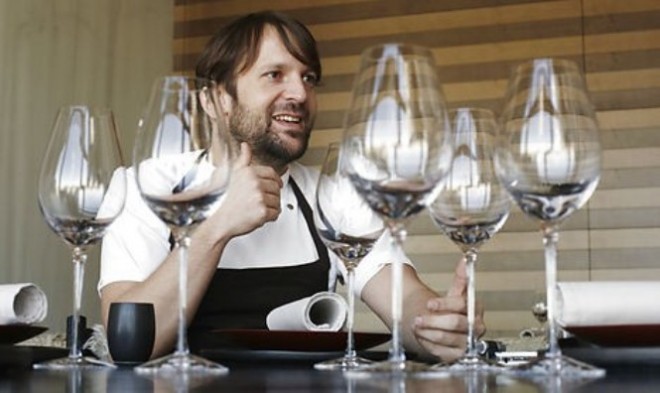
Celebrity chef and foraging superstar René Redzepi told the New York Times on Monday that he is closing his Copenhagen restaurant Noma at the end of 2016 and resurrecting it in 2017 with a new menu and a new site in an urban farm setting. This man on a radical new mission had led a popular restaurant four times voted the best eatery in the world. So why fix what isn’t broken?
“It makes sense to have your own farm at a restaurant of this caliber,” Redzepi told the Times. He said the time is right for a “dramatic evolution” of his 12-year-old venue, which will move to an industrial site near Copenhagen’s hippie-cum-grunge Christiania neighborhood. There, amidst empty warehouses, he will rip up asphalt parking lots and truck in healthy soil to create arable land from unused lots.
The new restaurant will sit within that farm. Designed by Danish starchitect Bjarke Ingels, it will also include a greenhouse roof tended to by a full-time farming staff. Marketing ploy or another example of the global trend towards locally grown food? We think this is the real deal, and a harbinger of where the food industry is leading.
Noma is known for culinary excellence built upon innovative use of local, seasonal foodstuffs. The World’s 50 Best, which compiles an annual rating of the planet’s best eateries, wrote of Noma in their 2015 review, “Dishes are in step with the seasons, such as milk curd and the first garlic of 2015; and the first green shoots of spring with a scallop marinade…what [Redzepi] does best: playing with techniques such as fermenting and pickling for creations beyond most people’s eating perceptions.” The restaurant ranks third in this year’s list.
The chef said he wants to continue to shake things up and pursue a “reverent adherence to seasonality.” His fall menu will focus only on dishes made from wild game and “foraged autumnal ingredients.” The new Noma will change into a seafood-only restaurant in winter. And when “the world turns green” in spring and summer, the menu will go fully vegetarian, with most of the produce coming from its surrounding farm.
Karin Kloosterman has reported on initiatives underway in the US and Israel to introduce small farms into the cityscape, usually through increasingly efficient hydroponics, and using new technology such as Primaflor’s dry air cooling systems and operating systems like flux. Even NASA is experimenting with farming in the zero-atmosphere of outer space.
The food industry is challenged to feed a growing population, while reducing transport and waste, and mitigating regional shortages in water and phosphorus. Noma is among the most influential restaurants of this century, perhaps its well-heeled clientele will eat up Redzepi’s message along with his meals, adding to the momentum of the local foods movement.
Image from Local Denmark




[…] World’s best eatery NOMA reborn as an urban farm – “It makes sense to have your own farm at a restaurant … only on dishes made from wild game and “foraged autumnal ingredients.” The new Noma will change into a seafood-only restaurant in winter. And when … […]