
My startup flux is developing a tool to help people grow plants better. One of the immediate applications could be for helping people cultivate higher quality medical cannabis.
When interviewing an advisor for my company, a cannabis master grower from the US, he told me how cannabis helps him with post-traumatic stress disorder (PTSD) – something he got from serving in the American army as a marine. He was also in Guantanamo Bay, he says, not long before lighting up and taking a big drag from a joint.
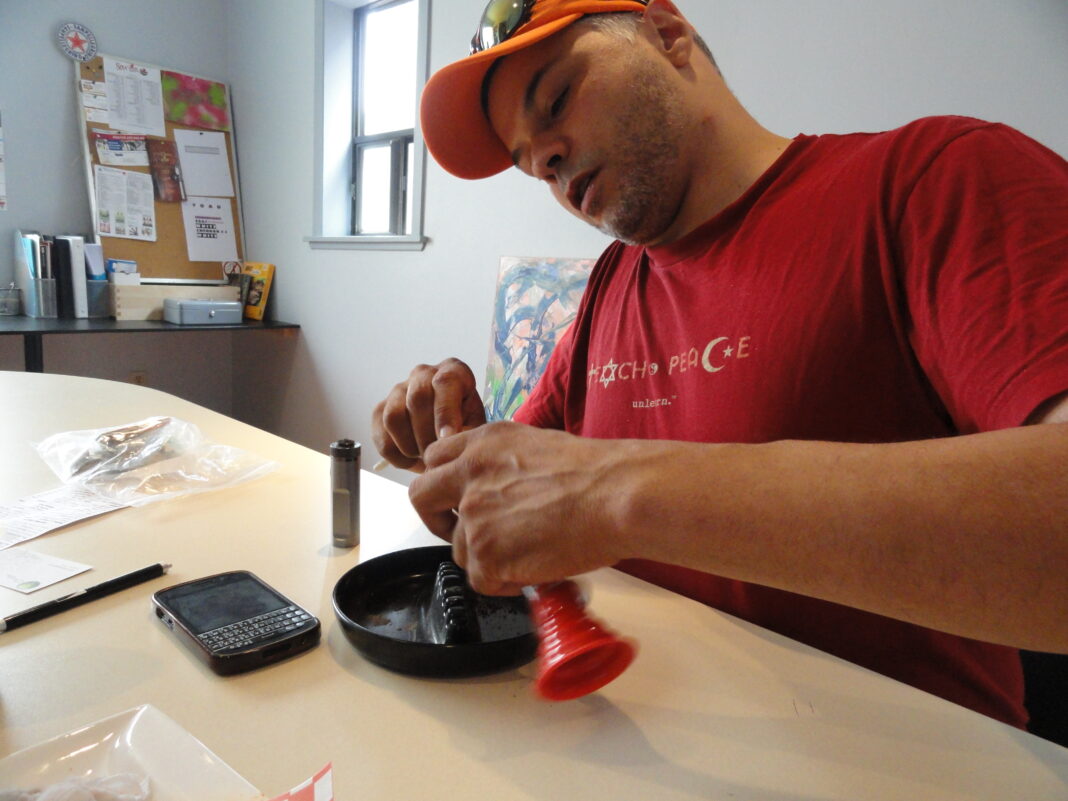
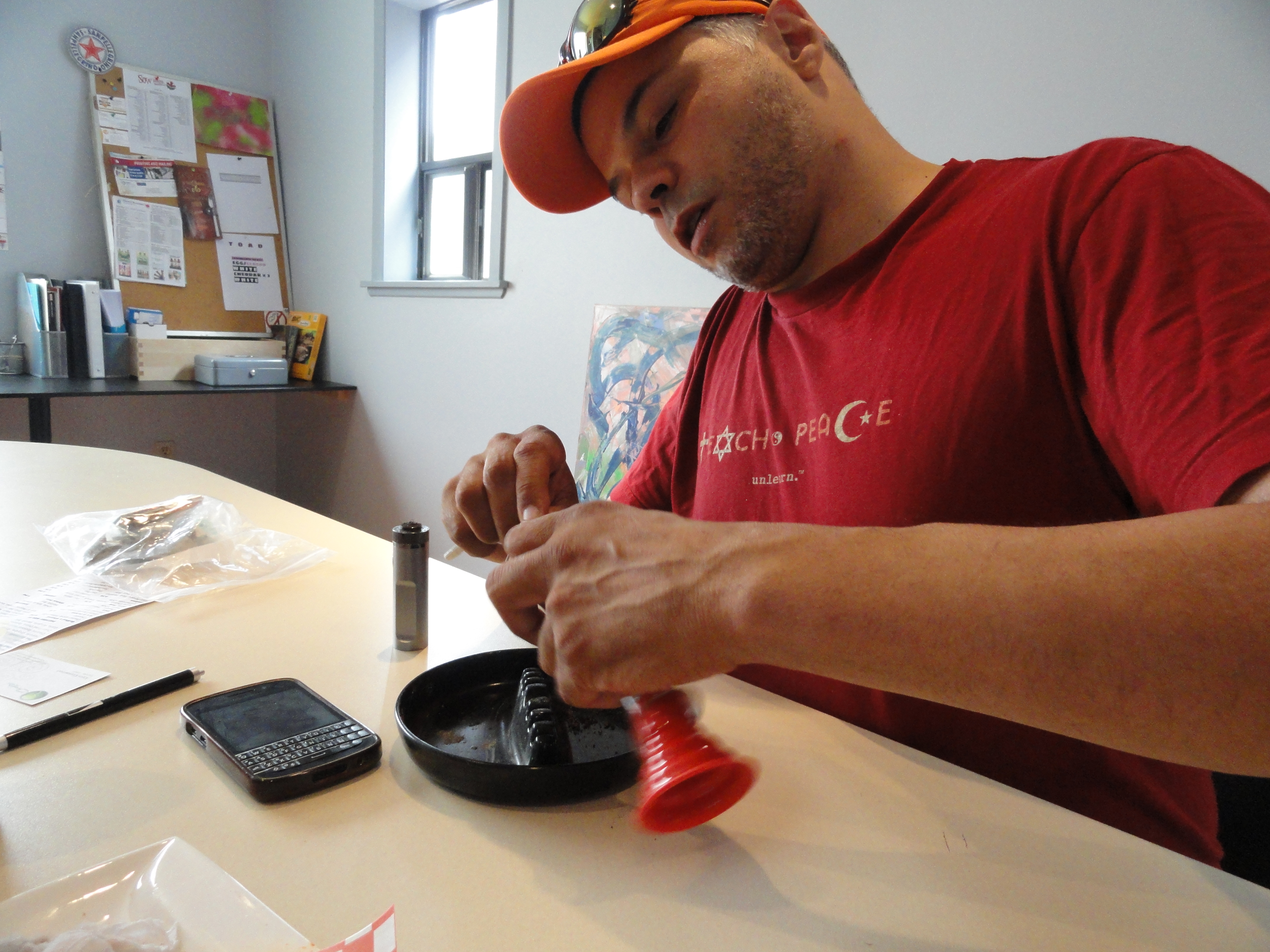
In Canada, where he is working, it is legal to use cannabis to self-medicate. In many US states too. Above is a picture of Gavin Bryan setting up his vaporizer at Get Melted, a grilled cheese sandwich/vapour lounge in Toronto. Bryan is self-medicating.
People like Bryan know that Israeli researchers have been researching cannabis since the mid-60s – when Prof. Raphael Mechoulam got hold of a bag of hash from the police and then went on to discover the molecule THC – that which gives us the high.
While researching marijuana is effectively banned in America, there are ten strong research teams in Israel conducting scientific research on the cannabis plant. And one team which has administered synthetic marijuana (or cannabinoids) soon after a traumatic event found it can prevent PTSD-like (post-traumatic stress disorder) from setting in.
The experiments were done on rats, a common animal model, before testing starts in humans. But this research paves the way for more clinically-organized studies on what people who smoke may already know.
RELATED: Israelis find cannabis can help muscular sclerosis
The new study published in the journal Neuropsychopharmacology was conducted by Nachshon Korem and Irit Akirav of the Department of Psychology at the University of Haifa.
“The findings of our study suggest that the connectivity within the brain’s fear circuit changes following trauma, and the administration of cannabinoids prevents this change from happening. This study can lead to future trials in humans regarding possible ways to prevent the development of PTSD and anxiety disorders in response to a traumatic event,” the researchers said.
“The importance of this study is that it contributes to the understanding of the brain basis of the positive effect cannabis has on PTSD and thus supports the necessity to perform human trials to examine potential ways to prevent the development of PTSD and anxiety disorders in response to a traumatic event,” they added.
Those at risk for PTSD are sometimes the least likely to self medicate – like people in the army or police force, professions where it is illegal to use the substance.
Yet, according to the Israel Medical Association approximately nine percent of the population suffers from post-traumatic stress disorder, whereas among at-risk populations such as combat soldiers, prisoners, victims of assault, citizens in lines of confrontation – the percentages are even higher.
PTSD from war
A common phenomenon among those who suffer from trauma is that exposure to a “trauma reminder” — an event that is not traumatic in essence but that evokes the memory of the experience of the traumatic event — can further heighten the negative effects of the trauma.
For example, for a person who has developed post-traumatic syndromes as a result of “Color Red” sirens (air raid sirens), a trauma reminder can occur following a loud car alarm.
In previous studies performed by Akirav, she discovered that the use of cannabinoids within a specific time window after the traumatic event has occurred reduces PTSD symptoms in rats. In this current study, conducted by Akirav together with the doctoral student Korem, the researchers aimed to examine whether the use of cannabinoids may also moderate the effects of trauma in cases of exposure to trauma reminders.
The researchers chose rats because of their great physiological similarity to humans in the way they respond to stressful and traumatic events.
During the first half of the experiment, the rats underwent the traumatic event of receiving an electric shock and were exposed to trauma reminders on the third and fifth days of the trial. After the event, and within the time window found in earlier studies, some of the rats were injected with a cannabinoid substance.
The rats then went through extinction procedures for trauma (a conditional psychological procedure similar to exposure therapy in humans, the purpose of which is to cope with post-trauma symptoms).
From the findings it became clear that the rats that were injected with the cannabinoid substance showed no PTSD symptoms such as impaired extinction learning, increased startle response, changes in sensitivity to pain and impaired plasticity in the brain’s reward center (the nucleus accumbens), compared to those not injected with the drug.
The researchers added that the rats that were injected with the drug showed better results compared to rats who received sertraline (an antidepressant of the SSRI group) a substance that is used in the treatment of PTSD with limited success in reducing symptoms.
In fact, for some of the symptoms, the rats that were injected with the drug showed similar behavior to rats exposed to trauma but that were not exposed to trauma reminders.
In other words — cannabis made the effects of trauma reminders “disappear”.
How this can be applied to humans? Those who already self-medicate will do so, and this study might pave the way for more countries and states to consider legalizing cannabis, at least for medical reasons.
Read more on medical marijuana and its uses
Tikun Olam is Israel’s Hidden Pot Farm
Israel Relaxes Laws on Medical Marijuana
A Moroccan Love Potion Spiced With Pot