Food Waste in Rich Countries – The Most Un-Green Act of All

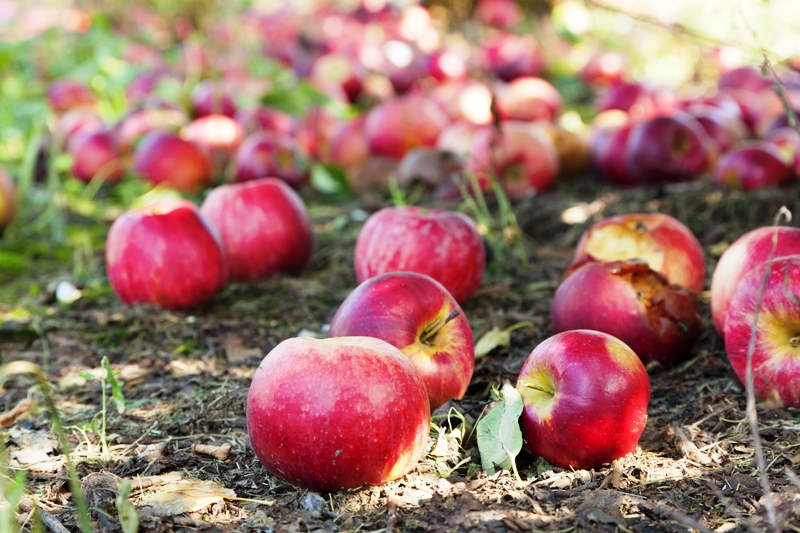
 fallen applesEven fallen fruit, like these apples, can be eaten if harvested properly

Serious and even dire food shortages in Mid East countries like Egypt, combined with projected sharp increases in food prices in Arab Spring countries in 2013 are sharp indicators that millions – perhaps billions of people are now facing even more lack of nutrients due to not having enough to eat. But ever increasing realities of global warming and climate change, especially desertification in  many Mid East countries are not  the main issues causing food shortages in many countries. Lack of food is also due to  sheer wasteful food production and distribution practices by both farmers and sellers of foodstuffs – often before much of it reaches the consumers who purchase it.

A weekend article recently published in Israel’s Haaretz magazine reported that this small country of 7 million inhabitants literally throws away nearly half the food produced and purchased there – often before it even reaches the supermarket shelves.

This food, consisting of vegetables, meat, dairy products and “dry foods” is often discarded if it doesn’t have a certain size, color or texture; or simply if it nears stamped expiration dates. This irony results in literally tons of food that might otherwise be entirely suitable for human consumption being thrown out into landfills and garbage dumps.

Although Israel’s per-capita income levels puts it above many neighboring counties as far as household affluence goes, there are still thousands of people living there who are classified as being under the established poverty level; and whose family members, especially the elderly and children often do not have enough food to eat to maintain proper nutrition.

Income disparities between affluent communities and poorer communities often determine how much food is actually eaten or simply thrown out. Less fortunate people are said to have varying degrees of “food insecurity”  by not knowing whether their families will have enough to eat.

As reported in Haaretz, Ilan Gilboa, a sanitation engineer for a large waste management company, said: “A poor family will eat a whole watermelon and roast the seeds, too; a rich family will eat a few slices and discard the rest. A poor family will make toast from yesterday’s bread; a rich family will throw out what’s left of the day’s bread that same evening.”

This comment is an understatement about how much food is wasted by various households. But the problem of wasted food supplies falls just as much in the entire production an distribution network, including the large supermarket chains which have purchasing quality agreements with their suppliers concerning the quality of food that is purchased by them and sold to the public.

Regarding the poor, there are organizations such as the Leket National Food Bank that try to “recycle” leftover and thrown out food for redistribution to the needy. But even their efforts are often not adequate enough as they only manage to redistribute only a small percentage of food that winds up being sent to the dump.

As overall food supplies becomes more scarce due to increased populations and climatic and other ecologic factors, the day may come when food supplies as many now know them will be only a distant dream. Food producers and distributors can be more green by helping to reduce the amount of discarded foodstuffs while still available.

More articles on food wastes and shortage issues in the Mid East and world at large:

Food Shortages Could Force the World to go Veggie

Arab Spring Countries Face Increased Risk of Food Price Shocks in 2013

A Farmer’s Market in Dead, Dry Qatar

Hilton Hotels to Share Food Wastes in Hungry Egypt

Image Apples on the ground , by Shutterstock

Maurice Picow
Maurice Picowhttps://www.greenprophet.com/
Maurice Picow grew up in Oklahoma City, U.S.A., where he received a B.S. Degree in Business Administration. Following graduation, Maurice embarked on a career as a real estate broker before making the decision to move to Israel. After arriving in Israel, he came involved in the insurance agency business and later in the moving and international relocation fields. Maurice became interested in writing news and commentary articles in the late 1990’s, and now writes feature articles for the The Jerusalem Post as well as being a regular contributor to Green Prophet. He has also written a non-fiction study on Islam, a two volume adventure novel, and is completing a romance novel about a forbidden love affair. Writing topics of particular interest for Green Prophet are those dealing with global warming and climate change, as well as clean technology - particularly electric cars.

Read More

1 COMMENT

TRENDING

Mona Khalil, Orange House Project founder, sea turtle protector killed in Lebanon

Mona Khalil spent decades protecting Lebanon's sea turtles and coastal ecosystems. Her death in the ongoing conflict between Israel and Hezbollah shines a light on a broader environmental tragedy unfolding across northern Israel and southern Lebanon. From damaged wetlands and disrupted bird migrations to threatened seed banks and endangered wildlife, the region's ecosystems are becoming casualties of a war with no clear end in sight.

5 Reasons Why You Should Save Seeds (and plant them)

Saving seeds from tomatoes, peppers, herbs and flowers helps preserve biodiversity, strengthen food security, and keep heirloom varieties alive. Even a small balcony garden can make a difference.

Dan Zaslavsky’s energy tower dream is rising again in Iran and China

The Energy Tower idea never made the leap from drawings and engineering studies to full-scale construction. But nearly two decades after most people stopped talking about it, the concept is quietly evolving in two unexpected places: China and Iran. The concept let dreamers dream and doers do - figuring out more pleasing designs and engineering.

A visit to Amirim, Israel’s first all-vegetarian village in the Galilee

Just 15 kilometers from Tzfat there is a moshav that was founded in the late 50s that was ideologically influenced by organic, vegetarian and vegan principles. My hostess at Ohn-Bar, the tzimmer where I stayed, explained that the people of Amirim were among the pioneers of Israel’s strong vegetarian movement.

Israeli Hydrogen Startup H2Pro Are Trying to Solve Clean Energy’s Hardest Problem

The company has attracted backing from major investors including Breakthrough Energy Ventures, the climate fund founded by Bill Gates, along with industrial partners such as Sumitomo, ArcelorMittal, and Temasek, a multi-billion dollar company that owns Singapore airlines. H2Pro has raised more than $100 million USD and is moving from pilot projects toward commercial-scale deployments.

Yerukim Forms a New Green Economy Where the Money is Really Green

The Yerukim members who pick up the recyclables get to keep the monetary reward, the public earns "green" bills that can be used in shops, and business owners get to be associated with environmentalism.

Choosing Riyadh over Dubai? What Investors Should Know

Saudi Arabia is deploying capital at unmatched scale to catalyze tourism and advanced industry while rewiring its power-and-water backbone. The investable frontier is widening—especially in renewables, grid storage, water efficiency/desal retrofits, and hospitality operating platforms. Prudent investors will insist on phased delivery, enforceable KPIs (energy, water, biodiversity), and RHQ/zone compliance—while pricing political-economy and reputational risks alongside growth upside.

Sell your cooking oil for biodiesel money

Want to make money on old french fry oil? Sell it.

Qatar Alternative Energy Summit Pairs Investors And Innovators

Alternative energy investors and innovators can meet n' greet in Doha, Qatar March 16 and 17.

Here’s How To Implement The Four Pillars Of Employee Engagement

If you throw a party for your work team and they are vegans, don't make it a barbecue. Know the sustainability values of your team to boost moral and retain good people.

Locals From Rishon Fight IKEA

Big Box stores are a pretty new concept in Israel, and thank God that not every Israeli city wants them in their backyard. A word from someone who has see the beautiful farmland around her hometown Newmarket, Ontario stripped and converted into vulgar strip malls of big box shops: they have no place in a healthy and sustainable town or city.

The Jewish National Fund Meets An Inconvenient Truth

According to the JNF, it has transformed thousands of acres of barren land into green forests in Israel. They state that each person emits about 23 tons of carbon per year, estimating that each tree planted can absorb one ton of carbon in its lifetime. That's a whole lot of trees you'd need to be planting. Could so many fit in Israel?

How to quiet noise from construction in your office

Streets need to be resurfaced in New York but the humming and grinding noise is unsettling. Noise is environmental pollution. 

Popular Categories