Olive Prices Hit Hard – Explained

olives lebanon

Middle Eastern olive oil producers are baring the brunt of falling oil prices

Olive oil prices have hit a 10 year low, severely impacting producers in Spain, Italy , Greece and Protugal- which produce more than 60 percent of the world’s olive oil. However, Middle Eastern Farmers in Tunisia, Morocco, Syria, Libya, Israel and Palestine will also be severely affected. Part of the recent olive oil price crises is as a result of surplus production due to heavy olive oil subsidizing in the EU and the subsequent unsuccessful attempt by the EU commission to maintain prices relatively high and stable by paying farmers to stockpile olives.

The resulting overstock of olive oil is leading to producers in the EU to dump huge amounts of olive oil in foreign markets at prices below what is being sold domestically. This is forcing domestic producers in the Middle East to sell their olive oil at below production cost in order to remain relatively competitive with the cheaply imported European olive oil.

Several Middle Eastern farmers are paying the price of EU subsidies, and finding it hard to export their own produce.

Nasser Abu Farha, the director of Canaan Fair Trade that works with 1,500 Palestinian farmers, worries that the catastrophic flood of cheap oil from Europe will threaten some 200, 000 families that are directly involved in the 200 million dollar olive oil business in the Palestinian authority.

Farmers on several kibbutzim and organic olive mills are also at risk in Israel, as major Israeli food chains are importing cheap olive from abroad rather than selling local olive oil.  Other countries such as Tunisia, the largest Middle Eastern olive oil producer which exports 18.5% of the world’s olive oil,  followed by Syria (3.6% of world exports- and growing notwithstanding tensions) and Morocco 1.8% of world exports will also suffer.

However Nasser believes that there is hope for farmers that are producing higher quality connoisseur-type specialty oils, or farmers that organize into fair trade and organic production in the Middle East.

Adi Naali, olive oil division manager of Israel’s Plant Council, explains how opening up to Asian markets (such as Japan, China and India) where there is a large and increasing consumer base , could also be an important move for the Middle East.

According to the International Olive Council (and The Media Line), Chinese imports of olive oil have increased 375% in aggregate terms since 2006. Although 92% of it came from the EU, 3% came from Syria; the highest non-EU olive oil exporter to China!

Free market economists would probably scold the EU and advise Middle Eastern oil producers to focus either on quality (niche markets) or quantity (sell to Asia) to remain competitive.

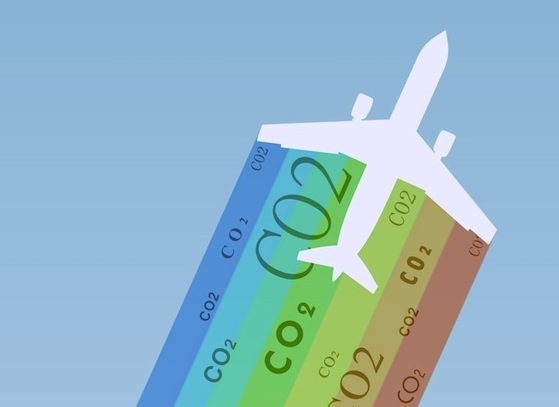
However, environmentally speaking, importing less and producing for the domestic market in the Middle East is also not a bad idea and would reduce the carbon footprint of olive oil.

The demand would certainly be there given olive oil is very much at the base of Lebanese, Moroccan, Algerian, Tunisian and Syrian cuisine.

Image of AFP – Hassan Ammar from alakhbar

Linda Pappagallo
Linda Pappagallohttps://www.greenprophet.com/
Linda's love for nature started when at the age of eight she discovered, with her dog, a magical river in the valley of a mountainous region in Lebanon. For four years Linda and her dog explored along the river, until one day she saw construction scrapers pushing rock boulders down the valley to make way for new construction sites. The rubble came crashing into the river destroying her little paradise, and her pathetic reaction was to shout at the mechanic monsters. Of course that was not enough to stop the destructive processes. As she continued to observe severe environmental degradation across the different places she lived in the Middle East and Africa, these terrible images remained impressed in her mind. However, environmental issues where not her first love. Her initial academic and career choices veered towards sustainable economic development, with particular interest in savings led microfinance schemes. Nevertheless, through experience, she soon realized a seemingly obvious but undervalued concept. While humans can somewhat defend themselves from the greed of other humans, nature cannot. Also nature, the environment, is the main “system” that humans depend on, not economics. These conclusions changed her path and she is now studying a Masters in International Affairs with a concentration in Energy and the Environment in New York. Her interests lie on ecosystems management: that is how to preserve the integrity of an Ecosystem while allowing for sustainable economic development, in particular in the Middle East and Africa.

Read More

TRENDING

Dan Zaslavsky’s energy tower dream is rising again in Iran and China

The Energy Tower idea never made the leap from drawings and engineering studies to full-scale construction. But nearly two decades after most people stopped talking about it, the concept is quietly evolving in two unexpected places: China and Iran. The concept let dreamers dream and doers do - figuring out more pleasing designs and engineering.

A visit to Amirim, Israel’s first all-vegetarian village in the Galilee

Just 15 kilometers from Tzfat there is a moshav that was founded in the late 50s that was ideologically influenced by organic, vegetarian and vegan principles. My hostess at Ohn-Bar, the tzimmer where I stayed, explained that the people of Amirim were among the pioneers of Israel’s strong vegetarian movement.

Israeli Hydrogen Startup H2Pro Are Trying to Solve Clean Energy’s Hardest Problem

The company has attracted backing from major investors including Breakthrough Energy Ventures, the climate fund founded by Bill Gates, along with industrial partners such as Sumitomo, ArcelorMittal, and Temasek, a multi-billion dollar company that owns Singapore airlines. H2Pro has raised more than $100 million USD and is moving from pilot projects toward commercial-scale deployments.

Desalination experts debunk Aqua Solaire, the floating desalination barge

AI makes it easy to dream, develop, and create images of what could be world-changing ideas, until the reality sets in. A new project making the rounds is Aqua Solaire, an allged French concept for a solar-powered desalination vessel designed to bring drinking water to coastal communities facing drought, storms, and infrastructure failures.

Eco organization offices destroyed by Iran missile

Tel Aviv's eco organization, the Heschel Center, was impacted by an Iranian missile.

Locals From Rishon Fight IKEA

Big Box stores are a pretty new concept in Israel, and thank God that not every Israeli city wants them in their backyard. A word from someone who has see the beautiful farmland around her hometown Newmarket, Ontario stripped and converted into vulgar strip malls of big box shops: they have no place in a healthy and sustainable town or city.

The Jewish National Fund Meets An Inconvenient Truth

According to the JNF, it has transformed thousands of acres of barren land into green forests in Israel. They state that each person emits about 23 tons of carbon per year, estimating that each tree planted can absorb one ton of carbon in its lifetime. That's a whole lot of trees you'd need to be planting. Could so many fit in Israel?

How to quiet noise from construction in your office

Streets need to be resurfaced in New York but the humming and grinding noise is unsettling. Noise is environmental pollution. 

EarthX and a blueprint for sustainable investing

Trammell S. Crow, a Dallas-based businessman and father of four, is focusing his efforts on impact investing, and media that focuses on saving the planet through EarthX.

Mining Afghanistan’s Mineral Discoveries Similar to Avatar

Now that American forces in Afghanistan are commemorating the longest period of any war that America has been involved in, including the 1965-73 Vietnam War, the recent discoveries of large and extremely valuable mineral and metal deposits may finally bring to light a reason to continue the presence of US fighting forces in this war torn and backward country.

From Pilot Plant to Global Stage: How Aduro Clean Technologies’ 2026 Expansion Signals a Turning Point for Chemical Recycling Investors Like Yazan Al Homsi

The company's Next Generation Process (NGP) Pilot Plant in London, Ontario, has officially moved into initial operating campaigns, generating the kind of structured, repeatable data that separates laboratory promise from commercial viability.

Nobul’s Regan McGee on Shareholder Value: “Complacency Is the Silent Killer” 

Why the governance framework designed to protect shareholders so...

Should You Invest in the Private Market?

startustartup Unlike public stock exchanges, which offer daily trading, strict...

Popular Categories