Breeding Bunnies for Food and Fur in Egypt

FAO, agriculture, TeleFood, microfarming, sustainable agriculture

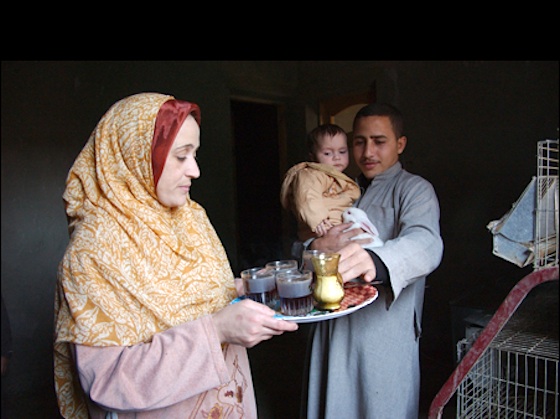
Waeel Abdessalam breeds rabbits on the third floor of his family home in El-Hamidiyah el-Gadida, a small village in the Fayoum area roughly 100 km southwest of Cairo. A beneficiary of the Food and Agriculture Organization of the United Nations’ TeleFood program, the young man tends to the rabbits early in the morning before leaving to study at a nearby technical school and in the evenings when he returns. Each rabbit sells for approximately $3.50 at the market and the meat and fur are respectively used to supplement the six-member family’s diet and income.
FAO, agriculture, TeleFood, microfarming, sustainable agriculture

Wäel Abdessalam’s father first learned about the TeleFood program through his job as an agricultural specialist and encouraged his son to take on the task of rearing rabbits on the newly constructed third floor of their home. A budding Mechanical Engineer, Wäel took on the task just over a year ago, but it hasn’t always been easy.

The first litter of 14 rabbits had contracted a disease similar to chicken pox, which caused them to bleed from their mouths. A vet recommended culling the entire litter and Wäel had to start all over again.

Nonetheless, FAO representatives taught him how to build a battery and care for the animals, which are carefully nourished with select vitamins and fed food scraps from the table. Building one rabbit battery costs $115.
FAO, agriculture, TeleFood, microfarming, sustainable agriculture

One male and three females can produce as many as 100 babies in a 10 month period and mortality rate is low. The hybrid New Zealand White and Egyptian Baladi V-line breed is particularly tolerant of heat, which can become overbearing in the region. Plus, they are kept in a small room, where lighting is controlled to ensure that the rabbits are comfortable.

Already, the FAO’s TeleFood project, which targets small, poor farmers throughout the planet, has not only enabled Wäel to pay for his school fees and buy tomatoes, potatoes and onions from the market, but he has even purchased a couple of goats and a sheep through the proceeds.

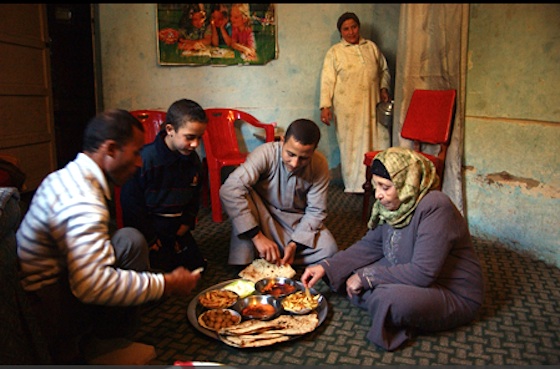
Also, though the student says he feels a bit bad about “eating his companions,” rabbit meat is used as a substitute for chicken in a special dish called mulukhiyeh that is prepared on special occasions such as Eid.

Nothing goes to waste. Wäel’s mother makes small carpets and fluffy tours out of the rabbit fur, as well as small decorative pom poms that are attached to clothing.

:: All images via FAO

More Micro-Farming Initiatives in Egypt:

eZra3 Remote Farming is Like Farmville but Real

What Urban Rooftop Farming Could do for the Middle East

Rooftop Hydroponic Urban Farms Scrub the Air and Uplift Urban Poor

Tafline Laylin
Tafline Laylinhttp://www.greenprophet.com
As a tour leader who led “eco-friendly” camping trips throughout North America, Tafline soon realized that she was instead leaving behind a trail of gas fumes, plastic bottles and Pringles. In fact, wherever she traveled – whether it was Viet Nam or South Africa or England – it became clear how inefficiently the mandate to re-think our consumer culture is reaching the general public. Born in Iran, raised in South Africa and the United States, she currently splits her time between Africa and the Middle East. Tafline can be reached at tafline (at) greenprophet (dot) com.

Read More

2 COMMENTS
  1. vous n’êtes que des primitifs pas encore sortis de l’époque de Néandertal. Qui êtes-vous pour décider du droit de vie, de souffrance et de mort d’un autre être vivant ? le végétarisme vous est conseillés pour laver votre âme et votre corps. Vous puez la mort et vous subirez le même sort que ces innocentes créatures tellement plus belles que vous!

TRENDING

Who Owns the Farm Robot? A State of Jefferson Startup Takes on Carbon Robotics

In California's self-proclaimed State of Jefferson, a small agricultural technology company is challenging the dominant laser-weeding business model. Laudando & Associates believes farmers should own and repair their AI-powered weeding tools rather than pay ongoing subscription fees. The approach has put the company on a collision course with industry leader Carbon Robotics, sparking a patent dispute that has pushed the Jefferson startup toward overseas markets while raising broader questions about ownership, right-to-repair, and the future of farm automation.

Regenerative Wool or Greenwashing? Zentera Responds to Critics

Zentera responds to questions about ZQ wool, animal welfare, regenerative farming, ethical fashion and the fallout from PETA's New Zealand investigation.

Tanner Winterhof on the Custom Harvesters Quietly Holding American Agriculture Together

In late January, in a Des Moines hotel ballroom that smelled faintly of diesel and convention coffee, Tanner Winterhof spent three days hosting the members and attendees of the  U.S. Custom Harvesters Inc. annual convention on his podcast as Farm4Profit’s official media partner for the show.

Monitoring farmers’ tillage patterns from space

Tillage is one of the clearest signals of how a farm treats its soil. Intensive plowing can degrade structure, release carbon, and increase erosion. Conservation practices—no-till, cover cropping, minimal disturbance—do the opposite. They build soil, retain water, and support biodiversity. But until now, measuring these practices at scale has been slow, expensive, and often self-reported.

Jujube, the sidr tree of medicine and magic

A magic holy sidr bath to deflect the evil eye? It needs 7 powdered sidr leaves stirred into a bucket of warm water. The hadith of the Prophet Muhammad allows to repeat healing prayers and verses from the Koran to increase the water’s potency. 5 grams, or 1 tablespoon of sidr powder equals 7 leaves.

Yerukim Forms a New Green Economy Where the Money is Really Green

The Yerukim members who pick up the recyclables get to keep the monetary reward, the public earns "green" bills that can be used in shops, and business owners get to be associated with environmentalism.

Choosing Riyadh over Dubai? What Investors Should Know

Saudi Arabia is deploying capital at unmatched scale to catalyze tourism and advanced industry while rewiring its power-and-water backbone. The investable frontier is widening—especially in renewables, grid storage, water efficiency/desal retrofits, and hospitality operating platforms. Prudent investors will insist on phased delivery, enforceable KPIs (energy, water, biodiversity), and RHQ/zone compliance—while pricing political-economy and reputational risks alongside growth upside.

Sell your cooking oil for biodiesel money

Want to make money on old french fry oil? Sell it.

Qatar Alternative Energy Summit Pairs Investors And Innovators

Alternative energy investors and innovators can meet n' greet in Doha, Qatar March 16 and 17.

Here’s How To Implement The Four Pillars Of Employee Engagement

If you throw a party for your work team and they are vegans, don't make it a barbecue. Know the sustainability values of your team to boost moral and retain good people.

Locals From Rishon Fight IKEA

Big Box stores are a pretty new concept in Israel, and thank God that not every Israeli city wants them in their backyard. A word from someone who has see the beautiful farmland around her hometown Newmarket, Ontario stripped and converted into vulgar strip malls of big box shops: they have no place in a healthy and sustainable town or city.

The Jewish National Fund Meets An Inconvenient Truth

According to the JNF, it has transformed thousands of acres of barren land into green forests in Israel. They state that each person emits about 23 tons of carbon per year, estimating that each tree planted can absorb one ton of carbon in its lifetime. That's a whole lot of trees you'd need to be planting. Could so many fit in Israel?

How to quiet noise from construction in your office

Streets need to be resurfaced in New York but the humming and grinding noise is unsettling. Noise is environmental pollution. 

Popular Categories