Blatt Chaya Revives Traditional Floor Tile Making in Lebanon

Edgard-Chaya tile making lebanonEdgard Chaya and his family bring back ancient tile making practices and Lebanese “neo-traditional” architecture

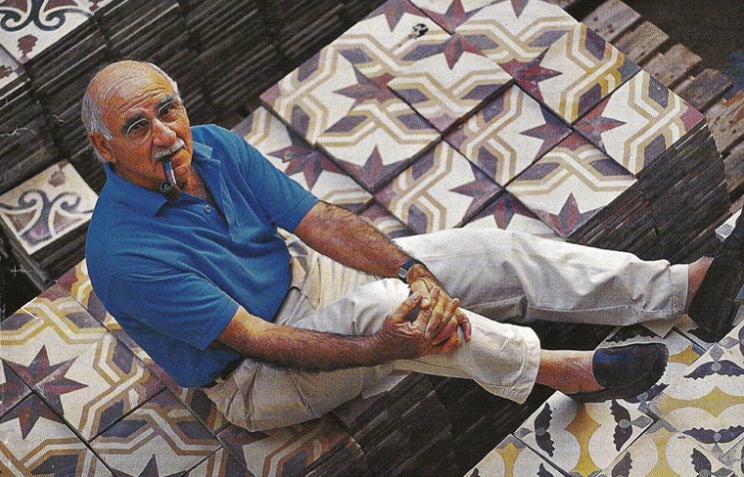
After being handed over a case filled with 12 brass molds and stumbling upon a jumble of colored tile fragments and exposed patterns in his family’s wrecked cement tile factory, retiree Edgard Chaya was destined towards a new chapter in his life: reviving Blatt Chaya, his family’s disused artisanal cement tile production in Lebanon.

[youtube]http://www.youtube.com/watch?v=VvU9LwEpGnU[/youtube]

Blatt Chaya began in 1881 when Edgard’s great grandfather opened a factory in blatt, the outskirts of Beirut’s town center, to produce cement tiles with imported motifs that, at the time, colored the floors of several houses and apartments along the Mediterranean coast especially Italy, Portugal and Morocco.

After 60 years of production, Blatt Chaya went through a period of hibernation marked by declining demands and that lasted through Europe’s second world war and Beirut’s civil wars.

As one can imagine the heritage that defined the architectural transition from the traditional marble lined floors of the reception area in Lebanese homes  to the “neo-traditional” Terrazo (sejedeh) tiled modern apartments of the wealthy families in Beirut has been largely destroyed.

Thankfully, Edgars’ initiative to revive Blatt Chaya along with his son’s, Karim, entrepreneurship have contributed to remember an ancient craftsmanship and reconstruct a forgotten architectural style  – piece by piece – through the production of these tiles.

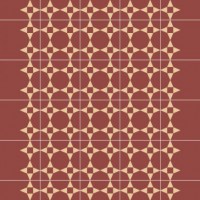
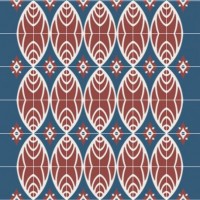
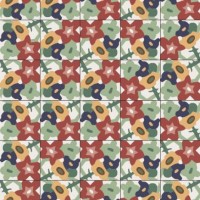
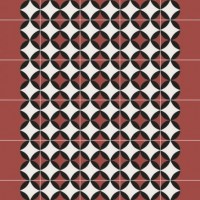
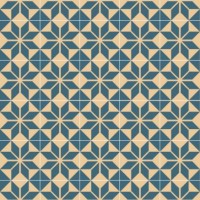
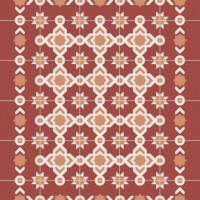
The patterns often capture floral intricacies and geometric symmetry, while the choice of natural pigments (moghra) create the moods. Together these aggressive patterns and contrasting bold colors form – if I may say so – a canvass of tiles that merge Mediterranean and Middle Eastern tastes and that create an almost sickly feel to look at.

But this sickly feel can be, subjectively, a nice feeling and in fact Blatt Chaya has been on a roll: sales have been increasing 20% annually with architects from Barcelona to Dubai embracing the revival.
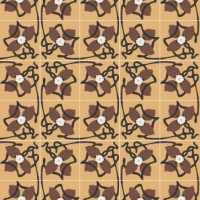
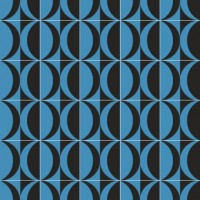
The interesting aspect of Blatt Chaya is that each tile is produced using artisanal and ancient practices  which gives a human aspect with its tiny imperfections, and allows for a greater flexibility in the choice of colors and disposition of patterns without forgoing durability (which has surpassed international norms).

After years of production Edgard Chaya dreams of carpeting Maarad street in Downtown Beirut with patterns of rust-hued reds, saffron yellows and deep blues to encourage artisanal work and promote a fragment of Lebanese contemporary heritage.

::Blatt Chaya

Linda Pappagallo
Linda Pappagallohttps://www.greenprophet.com/
Linda's love for nature started when at the age of eight she discovered, with her dog, a magical river in the valley of a mountainous region in Lebanon. For four years Linda and her dog explored along the river, until one day she saw construction scrapers pushing rock boulders down the valley to make way for new construction sites. The rubble came crashing into the river destroying her little paradise, and her pathetic reaction was to shout at the mechanic monsters. Of course that was not enough to stop the destructive processes. As she continued to observe severe environmental degradation across the different places she lived in the Middle East and Africa, these terrible images remained impressed in her mind. However, environmental issues where not her first love. Her initial academic and career choices veered towards sustainable economic development, with particular interest in savings led microfinance schemes. Nevertheless, through experience, she soon realized a seemingly obvious but undervalued concept. While humans can somewhat defend themselves from the greed of other humans, nature cannot. Also nature, the environment, is the main “system” that humans depend on, not economics. These conclusions changed her path and she is now studying a Masters in International Affairs with a concentration in Energy and the Environment in New York. Her interests lie on ecosystems management: that is how to preserve the integrity of an Ecosystem while allowing for sustainable economic development, in particular in the Middle East and Africa.

Read More

1 COMMENT

TRENDING

Mona Khalil, Orange House Project founder, sea turtle protector killed in Lebanon

Mona Khalil spent decades protecting Lebanon's sea turtles and coastal ecosystems. Her death in the ongoing conflict between Israel and Hezbollah shines a light on a broader environmental tragedy unfolding across northern Israel and southern Lebanon. From damaged wetlands and disrupted bird migrations to threatened seed banks and endangered wildlife, the region's ecosystems are becoming casualties of a war with no clear end in sight.

6 Ways Landlords Can Improve Cash Flow from Eco Rentals

Want your rental property to pay the mortgage? Build a sustainable home that practically advertises itself. From solar-heated hot tubs and energy-efficient appliances to pet-friendly yards and Nordic-style saunas, eco-conscious upgrades can justify higher rents, attract better tenants, and reduce costly vacancies. This guide explores practical ways landlords can improve cash flow without major renovations, including working with property managers, adjusting rental rates strategically, reducing operating expenses, and uncovering new revenue streams. Whether you're running an Airbnb, a vacation cabin, or a long-term rental, sustainability isn't just good for the planet—it can be good for your bottom line. A greener property often becomes a more profitable one.

Art from Oman at the Venice Biennale

Oman is returning to the Venice Biennale with Zīnah, an immersive installation by artist and curator Haitham Al Busafi that transforms a traditional form of horse adornment into a large-scale sensory experience.

How to safely remove astroturf and plastics from your backyard

For families with kids, pets, or anyone trying to build a cleaner outdoor space, removing old astroturf is one of the simplest ways to reduce unnecessary exposure to plastics and heat. Some past studies suggest that if kids have played on these surfaces you need to wash their hands. 

The Lote Tree of the Utmost Boundary, explained

Knowing about the concept of the Lote Tree of the Utmost Boundary helps explain a core idea in Islam.

Yerukim Forms a New Green Economy Where the Money is Really Green

The Yerukim members who pick up the recyclables get to keep the monetary reward, the public earns "green" bills that can be used in shops, and business owners get to be associated with environmentalism.

Choosing Riyadh over Dubai? What Investors Should Know

Saudi Arabia is deploying capital at unmatched scale to catalyze tourism and advanced industry while rewiring its power-and-water backbone. The investable frontier is widening—especially in renewables, grid storage, water efficiency/desal retrofits, and hospitality operating platforms. Prudent investors will insist on phased delivery, enforceable KPIs (energy, water, biodiversity), and RHQ/zone compliance—while pricing political-economy and reputational risks alongside growth upside.

Sell your cooking oil for biodiesel money

Want to make money on old french fry oil? Sell it.

Qatar Alternative Energy Summit Pairs Investors And Innovators

Alternative energy investors and innovators can meet n' greet in Doha, Qatar March 16 and 17.

Here’s How To Implement The Four Pillars Of Employee Engagement

If you throw a party for your work team and they are vegans, don't make it a barbecue. Know the sustainability values of your team to boost moral and retain good people.

Locals From Rishon Fight IKEA

Big Box stores are a pretty new concept in Israel, and thank God that not every Israeli city wants them in their backyard. A word from someone who has see the beautiful farmland around her hometown Newmarket, Ontario stripped and converted into vulgar strip malls of big box shops: they have no place in a healthy and sustainable town or city.

The Jewish National Fund Meets An Inconvenient Truth

According to the JNF, it has transformed thousands of acres of barren land into green forests in Israel. They state that each person emits about 23 tons of carbon per year, estimating that each tree planted can absorb one ton of carbon in its lifetime. That's a whole lot of trees you'd need to be planting. Could so many fit in Israel?

How to quiet noise from construction in your office

Streets need to be resurfaced in New York but the humming and grinding noise is unsettling. Noise is environmental pollution. 

Popular Categories