
Earth. Energy. Everything next.

Jordan’s Public Transport Plans Blocked By ‘Political’ Barriers

bus-rapid-transit-delay-politics-public-transportAccording to local engineers, the public needs to show its support for Jordan’s ambitious Bus Rapid Transit to help it overcome political barriers

Over a year ago, we reported (with considerable excitement) that Jordan was planning to deal with the growing congestion of the capital city by establishing a new line of buses. These high-capacity buses would carry more than 120 passengers along exclusive bus lanes, and would operate every three minutes during peak time. The Bus Rapid Transit (BRT) plans were aimed at reducing traffic along Amman’s busiest routes by improving public transport- a victory for the environment and common sense we thought.

However a couple of months before the project’s inauguration it was announced that the BRT plans have been shelved pending further review. There were murmurs that corruption had led to the project’s demise although officially, the project was halted due to ‘feasibility and funding concerns.’

In December, Prime Minister Awn Khasawneh referred the case to the justice ministry to investigate. Ayman Smadi, the director of the project acknowledged that there had been certain political factors behind the suspension of the project. Speaking to the Jordan Times, he explained that “there was huge pressure from Parliament to halt work on the project” and alleged that there were no valid technical reasons for doing so. He also added that the BRT project was being used as a “scapegoat” by those who wanted to attack Greater Amman Municipality’s management and certain deputies.

At a seminar held this week looking at the reasons behind the suspension of the project, several engineers insisted that the project was the city’s best option. They added that those in support of the project and the general public need to be more vocal in their support so that political barriers could be overcome.

“The right to transport is as essential as the right to healthcare,” said Mohammed Al Asadi, an architect specialised in urban planning who attended the seminar. Indicating his support for BRT, Asadi added that any public transportation strategy must include building a fast, comfortable and affordable mass transit system for all citizens.

:: Jordan Times

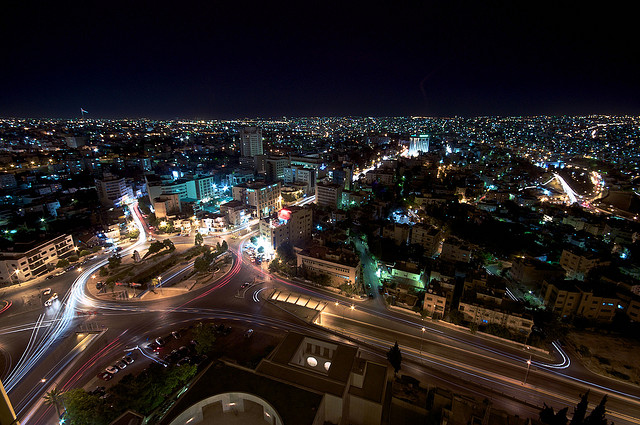
: Image via paalia/flickr.

For more on Jordan’s public transport issues see:

Jordan’s Ambitious Bus Plans Get Shelved

Jordan’s Bus Rapid Transit (BRT) Set For 2012 Inauguration

Middle East Joins Worldwide Campaign for Greener Transport (PHOTOS)
Arwa Aburawa
Arwa Aburawahttp://www.greenprophet.com
Arwa is a Muslim freelance writer who is interested in everything climate change related and how Islam can inspire more people to care for their planet and take active steps to save it while we can. She is endlessly suspicious of all politicians and their ceaseless meetings, especially as they make normal people believe that they are not part of the solution when they are the ONLY solution. Her Indian auntie is her model eco-warrier, and when Arwa is not busy helping out in the neighborhood alleyway garden, swap shopping or attempting fusion vegetarian dishes- with mixed success, she’d like to add- she can be found sipping on foraged nettle tea.

Read More

TRENDING

The pulsing planet and the earthquakes that shape our world

One of the most persistent questions in seismology concerns whether scientists will eventually be able to predict major earthquakes before they happen.

Amman’s traffic crisis is about more than cars. It’s about how we think

I believe Jordan needs a cultural transformation alongside its infrastructure investments. We must begin by redefining social prestige. Why should ownership of an expensive car be considered a greater achievement than making an environmentally responsible transportation choice? Why should travelling by bus carry a social stigma?

Why water-starved Amman keeps flooding and how underground rain tanks could help

Jordan's capital faces a troubling paradox: chronic water shortages and destructive winter floods. Hydrogeological expert Dr. Osama MN Gazal explains how underground rainwater tanks and green infrastructure could help Amman capture precious rainfall, reduce flooding and build a more water-secure future.

Can Amman become a walkable city? C40 is turning hot asphalt into green public spaces

Amman has never been an easy city to explore on foot. Now, C40 Cities and Community Jameel are reimagining Jordan's capital with cooler streets, shaded playgrounds and greener neighbourhoods. Could this sprawling city finally become more walkable?

The Flash Flood Wave Redefining Policy in the MENA Region

If you’ve ever imagined the Middle East and North...

Why Bronwyn Finnegan Chose the Nonprofit Sector Over Politics or Corporate Life

Bronwyn Finnegan could have pursued a career in politics or corporate leadership. Instead, she chose the nonprofit sector, where she focuses on financial sustainability, governance and helping mission-driven organizations build the capacity to survive and grow.

Scientists make lead-free perovskite solar cells that can weather the elements

Scientists have developed a “raincoat” for lead-free tin perovskite solar cells, helping them withstand air, moisture and heat while maintaining high efficiency.

The Essential Guide To Sustainability in Project Management

Sustainability is an approach where businesses and individuals balance the environmental, social, and economic aspects of a project such that current and future stakeholders are not overburdened with the impacts of the project in future.

Yerukim Forms a New Green Economy Where the Money is Really Green

The Yerukim members who pick up the recyclables get to keep the monetary reward, the public earns "green" bills that can be used in shops, and business owners get to be associated with environmentalism.

Choosing Riyadh over Dubai? What Investors Should Know

Saudi Arabia is deploying capital at unmatched scale to catalyze tourism and advanced industry while rewiring its power-and-water backbone. The investable frontier is widening—especially in renewables, grid storage, water efficiency/desal retrofits, and hospitality operating platforms. Prudent investors will insist on phased delivery, enforceable KPIs (energy, water, biodiversity), and RHQ/zone compliance—while pricing political-economy and reputational risks alongside growth upside.

Sell your cooking oil for biodiesel money

Want to make money on old french fry oil? Sell it.

Qatar Alternative Energy Summit Pairs Investors And Innovators

Alternative energy investors and innovators can meet n' greet in Doha, Qatar March 16 and 17.

Here’s How To Implement The Four Pillars Of Employee Engagement

If you throw a party for your work team and they are vegans, don't make it a barbecue. Know the sustainability values of your team to boost moral and retain good people.

Popular Categories