
Israel Turns on the Tap in River So Endangered Fish Can Swim

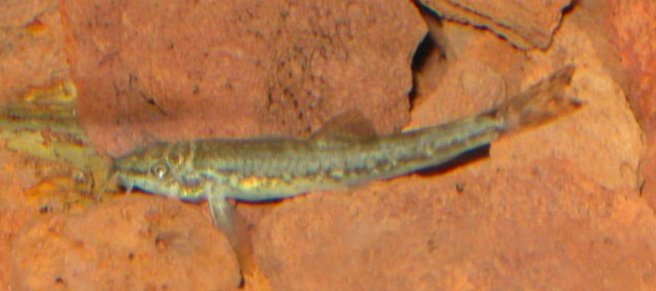
Nemacheilus dori israel Israeli ecologists are creating habitat to save the severely endangered fish Nemacheilus dori, which measures only two inches.

The fate of a tiny endangered fish in Israel`s northern region may rest on whether ecologists can create additional aquatic habitat.  The Nature and Parks Authority is working to save the fish,  a hillstream loach, in Israel’s northern wetlands.  The species, Nemacheilus dori, is endemic to Israel.  It is found only in one 0.7-hectare wetland nature reserve, located in the north of Israel, at Ein Malkoach.

Nemacheilus dori is quite small, measuring only two inches in adulthood. They are the only fish in this particular wetland area and are notoriously difficult to see with the naked eye. That`s because “their color is very similar to that of the ground and they like to be under stones,” says Dana Milstein, an aquatic ecologist for the Nature and Parks Authority.

The fish is challenged in particular by lack of water flows.  The natural spring at Ein Malkoach flows at about 5 cubic meters of water per hour – not enough for the Nemacheilus dori to migrate and seek shelter.  That`s why the Nature and Parks Authority built two additional artificial ponds connected to the river.

The Authority now pumps water into those ponds to create flow.

With a rapidly growing populace and extremely limited real estate (Israel is about the size of New Jersey), ecologists need to think creatively to protect increasingly threatened wildlife and bolster diminishing habitat.

Israeli ecologists have fought to save other critically endangered species over the years. For example, two threatened species of sea turtle – Greens and Loggerheads – nest every year on the beaches north of Tel Aviv.

After the number of female turtles migrating to the beaches plummeted, the Nature and Parks Authority built a hatchery.  Now, with the help of staff and volunteers who monitor the nests, the numbers are steadily increasing.

Additionally, Israel has fully protected 3% of the Mediterranean region and 20% of the desert region as nature reserves. Special rescue operations for protected species such as the leopard, gazelle, ibex and vulture have been undertaken, including establishment of feeding stations and nesting sites.

The country has even taken a few notes from the Bible in its conservation efforts, breeding and reintroducing animals which historically populated the hills and deserts of the Land of Israel into suitable habitats. Such species include the white oryx, ostrich, Persian fallow deer, and roe deer.

Israel`s major wildlife legislation, the Wildlife Protection Law, was established in 1955.  At that time, the law treated “game“ species and “protected animals“ differently.  This distinction allowed for widespread sport hunting.  As a result,protections were not comprehensive and many wildlife species were overhunted.

But it`s not just hunting that has led to significant wildlife declines: Israel has changed significantly during the last 50 years in ways that have severely impacted animals.  Threats to wildlife include habitat loss from housing and infrastructure development, urbanization, appropriation of land for agriculture, pesticide spraying, poisoning and uncontrolled hunting.

In 2010, Israel´s legislature amended the Wildlife Protection Law. The amendment instituted new regulations to control the numerous threats to wildlife.  The changes were sweeping.  All wildlife are now defined as protected.  Sport hunting licenses have been fully revoked.  Transferring and abandoning wildlife is prohibited.  Poisoning wildlife or trading in fur is punishable as a crime.  And stricter penalties are available to enforcement authorities.

An additional reason for the amendment was to implement the requirements of the Convention on International Trade of Endangered Species, to which the country is a signatory.

With the new ponds built by the Nature and Parks Authority, the Nemacheilus dori now swims in flows of 12 cubic meters per hour.  That`s more than double the volume of the river before the artificial ponds were built.  More creative solutions will be needed as wildlife in Israel feel the pressure from human activity.

Above image via the Israel Nature and Parks Authority.

Joshua Basofin
Joshua Basofinhttp://www.greenprophet.com
Joshua is an environmental attorney and writer living in Tel Aviv. He has worked for several conservation groups in his native United States, including The Nature Conservancy and Defenders of Wildlife. Joshua specializes in laws and policies aimed at protecting natural areas. He has a particular interest in freshwater and marine habitats. Growing up in the suburbs of Middle America, Joshua learned to escape into nature and leave the strip malls and parking lots behind. He has hiked and explored around the world, from South America to Australia to Thailand. Joshua is fascinated by the often polarizing worlds of tradition and modernity. He thrives on studying the intersection of environmental conservation, religion, and human culture. And he may have found his greatest challenge yet in Israel.

Read More

12 COMMENTS

TRENDING

Dan Zaslavsky’s energy tower dream is rising again in Iran and China

The Energy Tower idea never made the leap from drawings and engineering studies to full-scale construction. But nearly two decades after most people stopped talking about it, the concept is quietly evolving in two unexpected places: China and Iran. The concept let dreamers dream and doers do - figuring out more pleasing designs and engineering.

A visit to Amirim, Israel’s first all-vegetarian village in the Galilee

Just 15 kilometers from Tzfat there is a moshav that was founded in the late 50s that was ideologically influenced by organic, vegetarian and vegan principles. My hostess at Ohn-Bar, the tzimmer where I stayed, explained that the people of Amirim were among the pioneers of Israel’s strong vegetarian movement.

Can Scientists Predict Coral Bleaching Before It Happens?

Now researchers at the Woods Hole Oceanographic Institution (WHOI) in the US say they have developed a way to predict coral bleaching five to six months before it occurs, potentially giving reef managers enough time to intervene and save vulnerable corals.

Israeli Hydrogen Startup H2Pro Are Trying to Solve Clean Energy’s Hardest Problem

The company has attracted backing from major investors including Breakthrough Energy Ventures, the climate fund founded by Bill Gates, along with industrial partners such as Sumitomo, ArcelorMittal, and Temasek, a multi-billion dollar company that owns Singapore airlines. H2Pro has raised more than $100 million USD and is moving from pilot projects toward commercial-scale deployments.

AC Water Uses: How to Reuse Air Conditioner Condensate Water for Plants, Cleaning and Water Conservation

That means the water dripping from your air conditioner may already be usable for gardening, cleaning, flushing toilets, topping up humidifiers, or cooling systems — instead of disappearing into the sewer. A new study. Is it safe?

Here’s How To Implement The Four Pillars Of Employee Engagement

If you throw a party for your work team and they are vegans, don't make it a barbecue. Know the sustainability values of your team to boost moral and retain good people.

Locals From Rishon Fight IKEA

Big Box stores are a pretty new concept in Israel, and thank God that not every Israeli city wants them in their backyard. A word from someone who has see the beautiful farmland around her hometown Newmarket, Ontario stripped and converted into vulgar strip malls of big box shops: they have no place in a healthy and sustainable town or city.

The Jewish National Fund Meets An Inconvenient Truth

According to the JNF, it has transformed thousands of acres of barren land into green forests in Israel. They state that each person emits about 23 tons of carbon per year, estimating that each tree planted can absorb one ton of carbon in its lifetime. That's a whole lot of trees you'd need to be planting. Could so many fit in Israel?

How to quiet noise from construction in your office

Streets need to be resurfaced in New York but the humming and grinding noise is unsettling. Noise is environmental pollution. 

EarthX and a blueprint for sustainable investing

Trammell S. Crow, a Dallas-based businessman and father of four, is focusing his efforts on impact investing, and media that focuses on saving the planet through EarthX.

Mining Afghanistan’s Mineral Discoveries Similar to Avatar

Now that American forces in Afghanistan are commemorating the longest period of any war that America has been involved in, including the 1965-73 Vietnam War, the recent discoveries of large and extremely valuable mineral and metal deposits may finally bring to light a reason to continue the presence of US fighting forces in this war torn and backward country.

From Pilot Plant to Global Stage: How Aduro Clean Technologies’ 2026 Expansion Signals a Turning Point for Chemical Recycling Investors Like Yazan Al Homsi

The company's Next Generation Process (NGP) Pilot Plant in London, Ontario, has officially moved into initial operating campaigns, generating the kind of structured, repeatable data that separates laboratory promise from commercial viability.

Nobul’s Regan McGee on Shareholder Value: “Complacency Is the Silent Killer” 

Why the governance framework designed to protect shareholders so...

Popular Categories