

It’s Official: Pollution Contributes to Tornadoes and Hailstorms

climate change, pollution, hebrew university of jerusalem, extreme weather, pollution

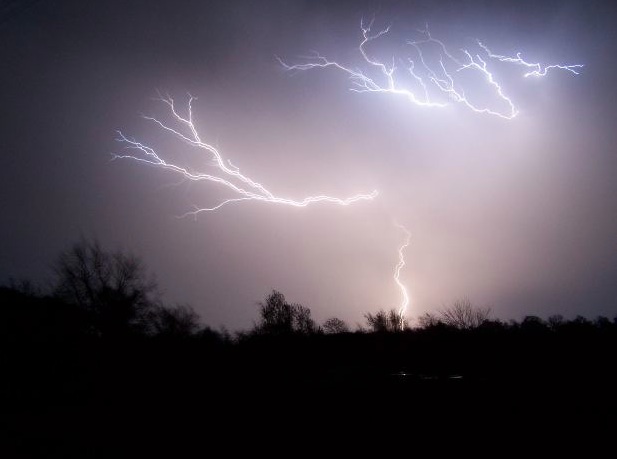
Unless you are a really big fan of tornadoes and hailstorms, it’s time to ditch the car (or at least carpool), grab a bus, or pick up your bicycle.

For so long scientists were reluctant to draw relationships between increased pollutants in our atmosphere and certain climate change events. Bill McKibben and others started warning us decades ago, but even the slightest slip up and those unwilling to accept that human beings have altered the planet’s weather mechanism close in on researchers who typically have nothing to profit from their work.

Which may explain why it has taken this long for scientists to conclude that tornados and hailstorms are more likely to occur (in wet countries) when pollution levels are high. It’s not clear that knowledge alone will save us from climate change, but we have to give it a try.

Stormy weather

According to the National Geographic, “Scientists analyzed summertime storm activity in the eastern U.S. from 1995 to 2009 using data collected by the National Oceanic and Atmospheric Administration’s Storm Prediction Center.”

They discovered in the densely populated eastern United States that hailstorms and tornadoes are 20% more likely to occur in the middle of the week. And then on the weekend, the chance that storms will occur drops by 20%.

These findings are “statistically significant” and  in line with other storm cycles, according to the study.

Mid-week woes

The research group then analyzed data from the American Environmental Protection Agency (EPA), which shows that air quality deteriorates in the middle of the week when more cars are on the road, and improves on the weekend when traffic is considerably reduced.

Although increased pollutants in the atmosphere cause heavy storms in the Eastern United States, the same phenomenon has the opposite effect in dry areas.

Ditch the car

According to a press release issued by the Hebrew University of Jerusalem, which worked with University of Maryland researchers, “increases in air pollution and other particulate matter in the atmosphere can strongly affect cloud development in ways that reduce precipitation in cool and relatively dry regions, such as Israel in winter, but can also increase rain and the intensity of severe storms in warm and moist regions or season.”

Few studies have shown so unequivocally the direct relationship between fossil-powered vehicles and weather events, giving us yet another reason to ditch the cars, catch a bus or train, or pick up our bicycles.

:: National Geographic

image via Fanndango, Morguefile

More on climate change:

Can Knowledge Save us from Climate Change?
Wintertime Droughts Increase Due to Climate Change

#COP17Fail: Climate Change is a One Size Fits All Problem

Tafline Laylin
Tafline Laylinhttp://www.greenprophet.com
As a tour leader who led “eco-friendly” camping trips throughout North America, Tafline soon realized that she was instead leaving behind a trail of gas fumes, plastic bottles and Pringles. In fact, wherever she traveled – whether it was Viet Nam or South Africa or England – it became clear how inefficiently the mandate to re-think our consumer culture is reaching the general public. Born in Iran, raised in South Africa and the United States, she currently splits her time between Africa and the Middle East. Tafline can be reached at tafline (at) greenprophet (dot) com.

Read More

1 COMMENT
  1. Given their obviously innate corruptability, I no longer see any way to change human behavior in time to avert several environmental catastrophes. I hope some people are creating some sort of cultural sanctuary somewhere safe, if that’s possible. We know about the Maya and the ancient Egyptians because of their stone carvings.

TRENDING

Mysterious metal space balls wash up on Australian shore

Mysterious metallic spheres dubbed "space balls" washed ashore on Forrest Beach in Queensland, Australia. The objects were identified by the Australian Space Agency as pressure vessels from a space launch vehicle that re-entered Earth's atmosphere, and crews successfully removed the safe debris.

How a tick bite can lead to a life-threatening meat allergy AFG

Imagine developing a severe allergy to steak after a single tick bite. That's the reality for people with alpha-gal syndrome, a rapidly emerging condition linked to lone star ticks and other tick species. As researchers uncover how tick saliva rewires the immune system, health officials warn that hundreds of thousands of Americans may already be living with this unusual red meat allergy.

Understanding Food Production: Karl Studer on the Urban-Rural Knowledge Gap

Karl Studer occupies an unusual position in American business. As President of Quanta Services, he oversees electrical infrastructure operations across the United States, Canada, and Australia, managing thousands of employees and multibillion-dollar projects.

Wave wind energy for Nvidia’s next AI energy boom?

As AI factories consume unprecedented amounts of electricity, NVIDIA is looking beyond chips and data centers to the ocean. The company recently spotlighted Israel's Eco Wave Power and its wave energy projects in Jaffa and Los Angeles, highlighting how AI, digital twins and renewable energy can work together to meet future power demands. The collaboration reflects a growing realization that the future of artificial intelligence may depend as much on clean energy infrastructure as it does on computing power.

Weston Higginbotham found dead in a Kyoto forest: is climate anxiety part of the story?

In some ways, Weston has become a symbol of a generation wrestling with environmental and technological anxiety. Friends and family described him as deeply concerned about environmental issues. Reports also noted that he questioned the growing role of artificial intelligence in daily life, even reportedly disagreeing with his mother about her use of AI.

The Essential Guide To Sustainability in Project Management

Sustainability is an approach where businesses and individuals balance the environmental, social, and economic aspects of a project such that current and future stakeholders are not overburdened with the impacts of the project in future.

Yerukim Forms a New Green Economy Where the Money is Really Green

The Yerukim members who pick up the recyclables get to keep the monetary reward, the public earns "green" bills that can be used in shops, and business owners get to be associated with environmentalism.

Choosing Riyadh over Dubai? What Investors Should Know

Saudi Arabia is deploying capital at unmatched scale to catalyze tourism and advanced industry while rewiring its power-and-water backbone. The investable frontier is widening—especially in renewables, grid storage, water efficiency/desal retrofits, and hospitality operating platforms. Prudent investors will insist on phased delivery, enforceable KPIs (energy, water, biodiversity), and RHQ/zone compliance—while pricing political-economy and reputational risks alongside growth upside.

Sell your cooking oil for biodiesel money

Want to make money on old french fry oil? Sell it.

Qatar Alternative Energy Summit Pairs Investors And Innovators

Alternative energy investors and innovators can meet n' greet in Doha, Qatar March 16 and 17.

Here’s How To Implement The Four Pillars Of Employee Engagement

If you throw a party for your work team and they are vegans, don't make it a barbecue. Know the sustainability values of your team to boost moral and retain good people.

Locals From Rishon Fight IKEA

Big Box stores are a pretty new concept in Israel, and thank God that not every Israeli city wants them in their backyard. A word from someone who has see the beautiful farmland around her hometown Newmarket, Ontario stripped and converted into vulgar strip malls of big box shops: they have no place in a healthy and sustainable town or city.

The Jewish National Fund Meets An Inconvenient Truth

According to the JNF, it has transformed thousands of acres of barren land into green forests in Israel. They state that each person emits about 23 tons of carbon per year, estimating that each tree planted can absorb one ton of carbon in its lifetime. That's a whole lot of trees you'd need to be planting. Could so many fit in Israel?

Popular Categories