
Can Knowledge Save Us From Climate Change?

eye on earth summit, environmental data, global warming, climate change, carbon emissions, abu dhabi

At the ongoing Eye on Earth summit in Abu Dhabi, there has been a lot of talk about sharing environmental data. But we question whether knowledge is enough.

As early as 1930, a British engineer named Guy Calendar warned that increased carbon emissions as a result of industrialization was beginning to raise the global surface temperature of the earth. The following year, a man named E.O. Hulbert wrote in the Physical Review that if atmosphere CO2 concentrations doubled or tripled, then the earth’s surface temperature would increase by 4 and 7 degrees Celsius.

Now — nearly a century later — climate change is well underway. This is what a handful of high profile luminaries are currently addressing at the Eye on Earth Summit in Abu Dhabi, and The National reports a focus on knowledge. Sharing environmental data, experts say, will bring us closer to mitigating climate change. Will it?

Sharing environmental data

That the most developed countries need to share their accumulated climate change knowledge has been a common view at the summit being held at the Abu Dhabi National Exhibition Center.

According to The National, Razan Khalifa Al Mubarak – the secretary general of the Environment Agency – Abu Dhabi (EAD) – told conference attendees in an opening address that it is “particularly important” for the UAE to have access to environmental information. This sentiment was echoed by Catherine Armour, the programme manager of the Abu Dhabi Global Environmental Data Initiative.

Geo-mapping specialist Jack Dangermond from the Environmental Systems Research Institute argued that a platform should be developed complete with maps and charts and the most comprehensive environmental data available, all of which should be shared internationally.

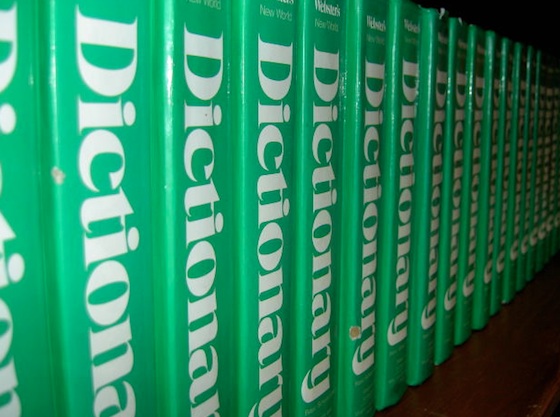
But is knowledge enough?

He said “this will change the world,” and an online Environmental Atlas of Abu Dhabi Emirate, which will be an e-learning tool available to the public, is soon to be launched.

While this is a welcome development and we agree that knowledge should be shared widely, is there really any indication that this knowledge will save us from ourselves?

If knowledge is enough, why did it take us nearly a century to get serious about climate change?

If knowledge is enough, why have the COP meetings in Copenhagen, Cancun, and now Durban failed to produce the kind of sweeping change that has to happen if we plan to keep temperatures down?

And if knowledge is enough, why are we even considering perpetuating any kind of new technology that will increase the amount of carbon emissions in our atmosphere?

Knowledge is good and should be shared, but we need more. We need Ecocide laws, and better environmental regulation in general.

:: The National

image via Morguefile
Tafline Laylin
Tafline Laylinhttp://www.greenprophet.com
As a tour leader who led “eco-friendly” camping trips throughout North America, Tafline soon realized that she was instead leaving behind a trail of gas fumes, plastic bottles and Pringles. In fact, wherever she traveled – whether it was Viet Nam or South Africa or England – it became clear how inefficiently the mandate to re-think our consumer culture is reaching the general public. Born in Iran, raised in South Africa and the United States, she currently splits her time between Africa and the Middle East. Tafline can be reached at tafline (at) greenprophet (dot) com.

Read More

3 COMMENTS
  1. Getting ecocide established as the fifth crime against humanity and under the jurisdiction of the International Criminal Court is absolutely essential if we are going to stop corporate criminals and their supporters in finance and government from destroying the planet.

  2. Are adaptation knowledge generation and dissemination/sharing sufficient to make the desired changes? In other terms, what next after knowledge is generated and shared? This was the critical question asked by AfricaAdapt during the IDRC official side event “Building the knowledge base for African adaptation choices” at Durban CoP17 (http://www.africa-adapt.net/news-events/219/). Political will, Good governance and Financial means are some of the answers.

LEAVE A REPLY

Please enter your comment!
Please enter your name here

TRENDING

5 projects to help kickstart your company’s sustainability journey 

True progress happens when environmental ambition meets action. Decarbonizing efficiently is possible for any business in any sector, but actually getting started can sometimes feel daunting.   The trick? It’s to start small and build momentum. Here are five potential projects to help you get started.  

Hormuz 2026 Conflict Poses an Energy and Food Security Dilemma in a Warming World

As tensions rise in one of the world’s most critical maritime chokepoints, the ripple effects go far beyond oil—touching food systems, climate pressures, and regional stability

Climate change traced in sea turtle shells

It's sea turtles which may in the end save islands in the Seychelles. They may also better help us understand climate change. Like rings on a tree, scientists have found a way to read sea turtle shells and how they are impacted by climate change tells a story. 

We’ve lived through the past 11 of the hottest years on record

Have we forgotten about global warming when the world...

Huge Fish Nursery Discovered Under Freezing Arctic Seas

In 2019, an underwater robot camera exploring the seabed...

How to quiet noise from construction in your office

Streets need to be resurfaced in New York but the humming and grinding noise is unsettling. Noise is environmental pollution. 

EarthX and a blueprint for sustainable investing

Trammell S. Crow, a Dallas-based businessman and father of four, is focusing his efforts on impact investing, and media that focuses on saving the planet through EarthX.

Mining Afghanistan’s Mineral Discoveries Similar to Avatar

Now that American forces in Afghanistan are commemorating the longest period of any war that America has been involved in, including the 1965-73 Vietnam War, the recent discoveries of large and extremely valuable mineral and metal deposits may finally bring to light a reason to continue the presence of US fighting forces in this war torn and backward country.

From Pilot Plant to Global Stage: How Aduro Clean Technologies’ 2026 Expansion Signals a Turning Point for Chemical Recycling Investors Like Yazan Al Homsi

The company's Next Generation Process (NGP) Pilot Plant in London, Ontario, has officially moved into initial operating campaigns, generating the kind of structured, repeatable data that separates laboratory promise from commercial viability.

Nobul’s Regan McGee on Shareholder Value: “Complacency Is the Silent Killer” 

Why the governance framework designed to protect shareholders so...

Should You Invest in the Private Market?

startustartup Unlike public stock exchanges, which offer daily trading, strict...

How to build a 100-year-company

Kongō Gumi is a Japanese construction company, purportedly founded in 578 A.D., making it the world's oldest documented company. What can we learn about building sustainable businesses from them?

How AI Helps SaaS Companies Reduce Repetitive Customer Support Work

SaaS products are designed for large numbers of users with different levels of experience, and also in renewable energy.

Popular Categories