 We speak to Fazlun Khalid who set up The Islamic Foundation For Ecology And Environmental Sciences about the highs and lows of over two decades of work
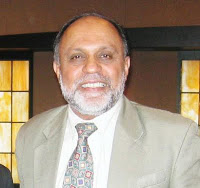
The link between Islam and the environment is slowly gaining recognition amongst the wider public and The Islamic Foundation For Ecology And Environmental Sciences (IFEES) may have something to do with that. Over the last two decades, the UK-based organization has been reaching out to Muslims and non-Muslims alike about the role that faith can play in environmental protection. IFEES has worked particularly hard to highlight the Islamic teachings on nature and have set up their EcoIslam newsletter and published various green guides with that aim in mind. The organization has also campaigned to end dynamite fishing in Zanzibar and encourage tree planting in Indonesia through Islamic teachings. I caught up Fazlun Khalid who established the charity to talk more.
Arwa: I know that IFEES has been around for a while and is based in the UK but could you tell us a little more about the organisation?
Fazlun: Well, this work started more than 25 years ago and IFEES has been around since 1994. What we do is project the specifically Islamic teachings about the environment– this isn’t to say that we don’t work with secular groups or other denominations; we do, because ultimately what we are facing is a common problem. Since the eighties we have been researching Islamic texts, the Qur’an and Shariah on environmental issues and we have put that together to train people… amongst the international community IFEES is used for Islamic training on the environment in Nigeria, Tanzania, Kenya, Indonesia, Madagascar and Malaysia. We are also trying to educate the Islamic leaders and ulamas about the environment and the direct link to the Qur’an and Shariah and how they can implement projects based on these teachings. So it’s quite real and practical work.
 Arwa: Was there a particular event that catalyzed your focus on Islam and the environment?
Fazlun: I remember I went to a conference in the 1980’s where I was asked what are Muslims doing about the environment and I said not a great deal. I was asked what does Islam say about the environment and I replied that I didn’t know. So what I did was leave work and go back to university to study the Koran and its links to the earth – in fact, my dissertation was on creation.
During this research and the work you have done since, what emerged as the single most important link between Islam and the environment?
I would say that it is the principle of Khalifah, which says that we have a profound responsibility as creations of Allah to keep the environment in good order. There is a verse in the Quran which says that we will corrupt the land but god will show us the error of our ways and give us a second chance. So we must accept our mistakes and seize the second chance that god has given us.
You have been working on this issue for a long time, have you noticed a change in the way the Muslim community is dealing with environmental problems?
I’m sorry to say that I haven’t noticed a real change. I mean there are environmental agencies being set up in the Muslim world but the problem is this – they are being run as secular organisations and are ignoring the Islamic perspective. I feel that Islam has the best teachings on the environment, the whole framework is there and sadly, we are so besotted wealth, money and position and wanting to copy the West and everything that the West does that we don’t realise that we have a diamond in our hand.

Whilst it’s great to educate people about the problems and the need for change- ultimately what we need to see is more action. What kind of action would like to Muslim doing more of?
I think one thing that Muslim can do is learn what Islam has to say about the environment and work with organisations such as Greenpeace, Friends of the Earth and other local organisations. Muslims also need to be approaching their Imams and chairmans at their local mosques and telling them about environmental problems and asking them what Islam has to say about it. Challenge them, we need to challenge them and ask them why they aren’t doing Friday khutbahs on these issues.
Are you optimistic or pessimistic about the future?
(laughs) You know, Arwa, you have to be optimistic in this world. You have to trust in Allah and you have to know that what you’re doing is what god has asked of us and that’s enough.
::Images via IFEES.
For more green faith news see:
Interview With Green Hajj Expert Dr. Husna Ahmed
Faith Network Promotes Green Religious Pilgrimages
If It’s Not Organic, It’s Not Halal (4 Ethical Zabiha Principles)