UNESCO Urges Ethiopia To Halt Gibe III Dam

UNESCO heritage site, hydroelectricity, water conservationGreen Prophet has followed the Renaissance Dam project for months, on which another Ethiopian dam project sheds some light.

On its list of dams to be constructed, Ethiopia’s Renaissance Dam project (formerly known as the Grand Millennium Dam) has drawn passionate commentary to our site. Despite the country’s inability to afford the dam and its potential negative environmental impact, not to mention the risks that climate change poses to its long term sustainability, no environmental or social impact assessments have been conducted.

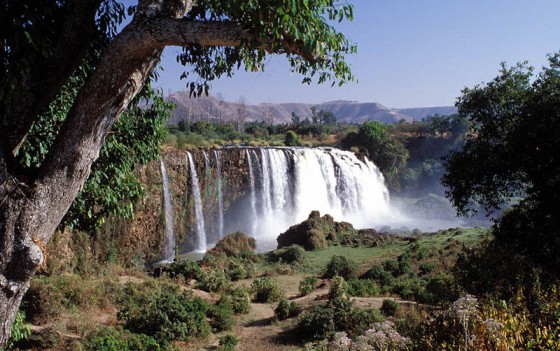
Thanks to a concerted campaign from Prime Minister Meles Zenawi’s office, Ethiopians fiercely (and understandably) defend their right to the enhanced comfort and revenue promised by 5,250MW of new electrical output. But elsewhere in the country, the UNESCO World Heritage Committee urged the government to halt a similar project, the controversial Gibe III dam.

No bid dams

The Gibe III dam on the Omo River is expected to have a devastating impact on Lake Turkana in Kenya, a unique ecosystem with outstanding universal value that is protected as a World Heritage Site.

Like the Ethiopian Renaissance Dam, Gibe III was awarded, in a no-bid contract, to the Italian contractors Salini Costruttori S.p.A. And despite activism from International Rivers and other organizations concerned with the affect that Gibe III will have on northern Kenya’s already impoverished people, Ethiopia has not agreed to conduct environmental or social impact assessments.

The Poverty Precipice

The World Bank did their own report in April, 2010, called the “Assessment of Hydrological Impacts of Ethiopia’s Omo Basin on Kenya’s Lake Turkana Water Levels,” which found that Gibe III would result in a significant drop in lake levels, disrupt the seasonal flooding season and nutrient levels, and increase the lake’s salinity.

If Gibe III and subsequent upgrades are allowed to proceed, thousands of people and livestock that rely on Lake Turkana for their livelihood will be pushed closer to the drought and famine conditions that are already claiming 2,000 lives a day in the region.

The World Heritage Committee sites article 6 of the convention which requires State Parties not to take any deliberate measures which might damage directly or indirectly the cultural and national heritage located on the territory of another state party.

They have asked any financial backers to withold funding and will send in their own monitoring team at the end of 2011 in order to better evaluate the situation.

The Scientific Approach

The Ethiopian Renaissance Dam may not be a protected World Heritage Site, but it is predicted that infilling alone will cause a 25% reduction in river flow to Egypt, which relies almost entirely on the Nile for its water supply.

By failing to pursue a scientific approach to the construction of Ethiopia’s various dams, the country is risking the well-being not only of their own people, but that of its neighbors.

Respondents on this site have been very weary of interference from outsiders, which is understandable. However, as International Rivers points out, after Afghanistan, Ethiopia is the world’s second largest recipient of international aid. Making sure that its government does not make sudden moves that will render this population even more vulnerable is completely pragmatic.

The Nile River and Ethiopian Renaissance Dam Background stories:

Ethiopia Can’t Afford the New Nile Dam
Defiant Ethiopia to Proceed with Massive Nile Dam

How Climate Change Could Affect the New Nile Dam

Tafline Laylin
Tafline Laylinhttp://www.greenprophet.com
As a tour leader who led “eco-friendly” camping trips throughout North America, Tafline soon realized that she was instead leaving behind a trail of gas fumes, plastic bottles and Pringles. In fact, wherever she traveled – whether it was Viet Nam or South Africa or England – it became clear how inefficiently the mandate to re-think our consumer culture is reaching the general public. Born in Iran, raised in South Africa and the United States, she currently splits her time between Africa and the Middle East. Tafline can be reached at tafline (at) greenprophet (dot) com.

Read More

TRENDING

Is Qatar paying UNESCO to turn a blind eye on the Seychelles?

Is UNESCO being paid off by Qatar so it can own a private airstrip in a strategic location in the Seychelles?

The US leaves 66 United Nations organizations to “put America first”

The world needs a reset and to restart well intentioned cooperation projects from start. Because right now the UN and EU projects look like software built on code from the 80s, rickety, patched, slow to adapt, and prone to crashing under the weight of outdated assumptions.

UNESCO forest being developed in Iran

Environmental activists in Iran often face significant personal risk when speaking out about illegal land grabs, deforestation, or the destruction of protected areas. In recent years, several high-profile environmentalists have been detained, interrogated, or imprisoned on broad national-security charges, sometimes without transparent legal proceedings.

Iran’s rarest forest is on fire

It's full of rare and endemic species, and it's a UNESCO heritage site. Iran's natural treasure, a 1000-kilometer forest, the Hyrcanian forest has been on fire for several days. It stretches from the Caspian Sea and into neighboring Azerbaijan and is home to more than 3,200 kinds of plants. 

Images of Assomption Island development show extensive beach development

Researchers who have studied the island for decades describe it as a key ecological buffer for Aldabra, helping to protect the atoll from pollution, invasive species, and light disturbance. If Assomption’s natural systems collapse, they warn, Aldabra could be next.

Yerukim Forms a New Green Economy Where the Money is Really Green

The Yerukim members who pick up the recyclables get to keep the monetary reward, the public earns "green" bills that can be used in shops, and business owners get to be associated with environmentalism.

Choosing Riyadh over Dubai? What Investors Should Know

Saudi Arabia is deploying capital at unmatched scale to catalyze tourism and advanced industry while rewiring its power-and-water backbone. The investable frontier is widening—especially in renewables, grid storage, water efficiency/desal retrofits, and hospitality operating platforms. Prudent investors will insist on phased delivery, enforceable KPIs (energy, water, biodiversity), and RHQ/zone compliance—while pricing political-economy and reputational risks alongside growth upside.

Sell your cooking oil for biodiesel money

Want to make money on old french fry oil? Sell it.

Qatar Alternative Energy Summit Pairs Investors And Innovators

Alternative energy investors and innovators can meet n' greet in Doha, Qatar March 16 and 17.

Here’s How To Implement The Four Pillars Of Employee Engagement

If you throw a party for your work team and they are vegans, don't make it a barbecue. Know the sustainability values of your team to boost moral and retain good people.

Locals From Rishon Fight IKEA

Big Box stores are a pretty new concept in Israel, and thank God that not every Israeli city wants them in their backyard. A word from someone who has see the beautiful farmland around her hometown Newmarket, Ontario stripped and converted into vulgar strip malls of big box shops: they have no place in a healthy and sustainable town or city.

The Jewish National Fund Meets An Inconvenient Truth

According to the JNF, it has transformed thousands of acres of barren land into green forests in Israel. They state that each person emits about 23 tons of carbon per year, estimating that each tree planted can absorb one ton of carbon in its lifetime. That's a whole lot of trees you'd need to be planting. Could so many fit in Israel?

How to quiet noise from construction in your office

Streets need to be resurfaced in New York but the humming and grinding noise is unsettling. Noise is environmental pollution. 

Popular Categories