Will Libya’s Unrest Trash Their Historical Sites ?

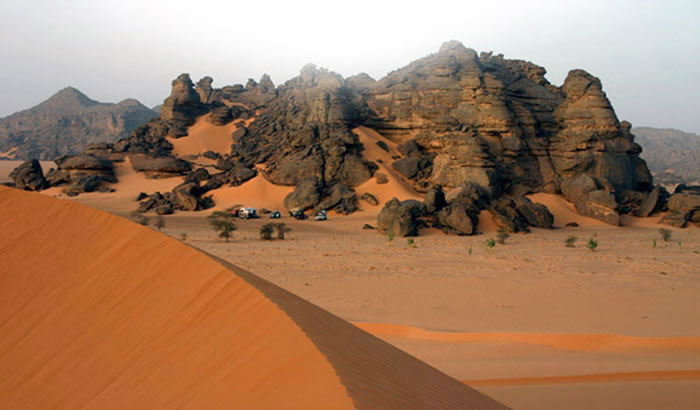
This desolate part of Libya contains some of the world’s most unique primitive rock art

The civil war now in progress in Libya is threatening everything there – especially the country’s historical sites that go back more than 3,000 years. The somber news of what is happening there was conveyed by what was the last archeological team, who left the country for Italy, and reported this to the Nature Middle East news site on March 3. The eleven Italian archeologists who were evacuated from a combined archeological project at Acacus and Messak where some of the best examples of prehistoric rock art are found.  Some of the paintings in caves from this region date back more than 12,000 years and was shown graphically to movie audiences in the 1996 Oscar winning film The English Patient.
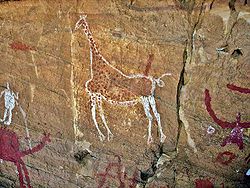
Acacus rock art

The Acacus rock paintings are so unique that the site  was proclaimed  by UNESCO in 1985 as a World Heritage Site.

The ancient rock and cave paintings are particularly interesting to both archeologists and anthropologists, as they depict the different climate factors in periods of civilization ranging from prehistoric times until the 1st or 2nd Century CE.

Various species of wildlife, including plains and even forest animals that have long since disappeared from this region are vividly displayed in these drawings, as well as the peoples who hunted them.

Although Tripoli’s two major museums are still considered as safe from looters and from vandalism, archeological sites themselves are under threat as they are not being guarded as much as they were prior to the outbreak of public protests against Muamar al Gadaffi and his regime, which has been in power in Libya since 1969.

Theatre at Leptus – under threat?

Libya’s coastal archeological sites were mentioned previously as being endangered by offshore oil and gas exploration and production; including those at Sabratha, Leptus Macna (both near Tripoli) and Appolonia, east of Benghazi.

As reported in the Nature article, interest in Libyan archeology began there after the country regained its independence from Italy in 1951. The coastal sites, which contain artifacts from periods of ancient Greece and Rome, received the most attention. The development of desert agricultural projects, including the unique pivot irrigation ones in the desert  are also threatening various heritage sites.

But at present, all of these projects, both the archeological ones and the desert irrigation projects like the world’s largest artificial river may be threatened by the civil unrest.

Archeological teams, as well as other foreign entities working in Libya will simply have wait this period out and see what happens after the dust settles. Hopefully, the “dust” that settles will not be all that remains of these historical sites.

Photos via Temehu.com

Read more on Libyan archeological and desert development sites:

Libya’s Pivot Irrigation in the Sahara Proves Money can do Anything

BP Deep Drilling in Libya Threatens Archeological Sites

Gaddafi’s Green Projects Under Threat from Civil Unrest

Maurice Picow
Maurice Picowhttps://www.greenprophet.com/
Maurice Picow grew up in Oklahoma City, U.S.A., where he received a B.S. Degree in Business Administration. Following graduation, Maurice embarked on a career as a real estate broker before making the decision to move to Israel. After arriving in Israel, he came involved in the insurance agency business and later in the moving and international relocation fields. Maurice became interested in writing news and commentary articles in the late 1990’s, and now writes feature articles for the The Jerusalem Post as well as being a regular contributor to Green Prophet. He has also written a non-fiction study on Islam, a two volume adventure novel, and is completing a romance novel about a forbidden love affair. Writing topics of particular interest for Green Prophet are those dealing with global warming and climate change, as well as clean technology - particularly electric cars.

Read More

1 COMMENT

TRENDING

Iron age folks made tools from dead peoples’ bones

Scientists have uncovered evidence of an Iron Age funerary tradition involving the deliberate removal of human brains and the fashioning of long bones into sharp tools.

Saving Gourmet Wild Plants For The Future

Think of truffles, a gourmet wild food. The European...

Middle-Eastern spices and natural medicine (A through C)

In the Middle East, aromatic traditional foods are regarded...

Iran’s water mafia and thirst for war leaves the country on brink of being dry

Iran’s Lake Urmia, once the Middle East’s largest saltwater lake, has shrunk by 90 percent due to mismanagement, dams, and drought. As Tehran pours billions into foreign conflicts, water activists face repression at home. The crisis mirrors Syria’s drought-driven unrest, showing how water scarcity can destabilize entire regions.

Arab agricultural land is on the brink

Across the Arab world, croplands face a perfect storm of stressors. Excessive fertilizers and pesticides erode soil ecology. Poor drainage and over-irrigation drive salinization, leaving fields crusted with salt. Rising temperatures, dwindling groundwater, and more frequent sand-and-dust storms—all amplified by climate change—compound the crisis.

Yerukim Forms a New Green Economy Where the Money is Really Green

The Yerukim members who pick up the recyclables get to keep the monetary reward, the public earns "green" bills that can be used in shops, and business owners get to be associated with environmentalism.

Choosing Riyadh over Dubai? What Investors Should Know

Saudi Arabia is deploying capital at unmatched scale to catalyze tourism and advanced industry while rewiring its power-and-water backbone. The investable frontier is widening—especially in renewables, grid storage, water efficiency/desal retrofits, and hospitality operating platforms. Prudent investors will insist on phased delivery, enforceable KPIs (energy, water, biodiversity), and RHQ/zone compliance—while pricing political-economy and reputational risks alongside growth upside.

Sell your cooking oil for biodiesel money

Want to make money on old french fry oil? Sell it.

Qatar Alternative Energy Summit Pairs Investors And Innovators

Alternative energy investors and innovators can meet n' greet in Doha, Qatar March 16 and 17.

Here’s How To Implement The Four Pillars Of Employee Engagement

If you throw a party for your work team and they are vegans, don't make it a barbecue. Know the sustainability values of your team to boost moral and retain good people.

Locals From Rishon Fight IKEA

Big Box stores are a pretty new concept in Israel, and thank God that not every Israeli city wants them in their backyard. A word from someone who has see the beautiful farmland around her hometown Newmarket, Ontario stripped and converted into vulgar strip malls of big box shops: they have no place in a healthy and sustainable town or city.

The Jewish National Fund Meets An Inconvenient Truth

According to the JNF, it has transformed thousands of acres of barren land into green forests in Israel. They state that each person emits about 23 tons of carbon per year, estimating that each tree planted can absorb one ton of carbon in its lifetime. That's a whole lot of trees you'd need to be planting. Could so many fit in Israel?

How to quiet noise from construction in your office

Streets need to be resurfaced in New York but the humming and grinding noise is unsettling. Noise is environmental pollution. 

Popular Categories