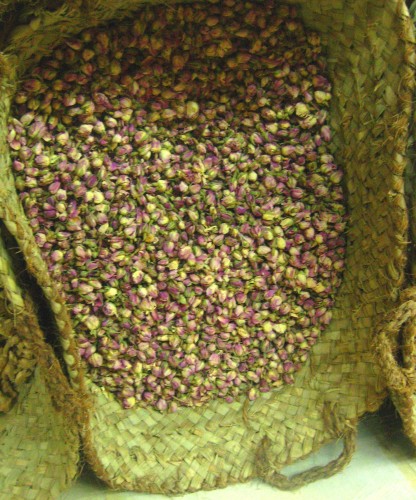
 Miriam’s series on medicinal Middle Eastern spices is reaching the end of the alphabet! Middle Eastern cuisine sometimes regards roses as a spice or flavoring. (above)
R is for…Rose Buds. The Tunisian version of Baharat spice blend has crushed, dried roses in it. The complex Iranian Advieh spice mixture also contains rose buds.
You find dried rose buds and rose water in open-air markets and Middle Eastern stores.
Rose Water. Roses are eaten, all over the Middle East, as rosewater. Either distilled or made into a syrup, rosewater is the aromatic flavoring for sweets like ma’amoul (links to recipe) and baklava. It comes in tiny glass bottles, very concentrated and to be measured out in drops, or in bottles more or less the size of ketchup bottles. That’s a weaker liquid which is used by tablespoons. We have read that Arab chefs sometimes use rose water as a substitute for red wine.
In the past, medicinal preparations based on roses were used to bring down fever and relieve headaches and pain in the joints. Today, herbalists use roses mostly for two other purposes: to calm the heart and spirit, and to stimulate sexual desire. The very costly essential oil is the most effective for these uses. Two drops of it in 2 tablespoons of almond oil make a divine massage oil.
You can make rose petal sandwiches to surprise and delight guests. Use only fresh, organic, unsprayed roses, of course.
Rose Sandwiches
Recipe from A Modern Herbal, by Mrs. M. Grieve
- Place a layer of fresh red rose petals in the bottom of a jar or covered dish.
- Put in 4 oz. of fresh butter wrapped in waxed paper.
- 3. Cover with a thick layer of rose-petals. Cover closely and leave in a cool place overnight. The more fragrant the roses, the finer the flavour imparted.
- Cut bread in thin strips or circles, spread each with the perfumed butter and place several petals from fresh red roses between the slices, allowing edges to show.
- Serve, with tea.
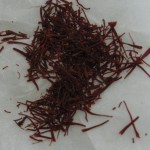 Saffron
Another expensive spice well loved in the Middle East. The pungent flavor and bright yellow stain of these dried crocus stamens appear in all kinds of traditional stews, and sometimes in desserts as well.
This about saffron from Wikipedia:
Medicinally, saffron has a long history as part of traditional healing; modern medicine has also discovered saffron as having anticarcinogenic (cancer-suppressing), anti-mutagenic (mutation-preventing), immunomodulating, and antioxidant-like properties. Early studies show that saffron may protect the eyes from the direct effects of bright light and retinal stress apart from slowing down macular degeneration and retinitis pigmentosa.
If you need to justify the expense of the little box you just bought, think of that…but people who buy saffron simply love its taste and want it in their food sometimes.
Stretch your saffron by this simple, old method:
Have 1 cup of boiling water or stock at hand. Take 1/8 teaspoon (a small pinch) of saffron and mix it into the hot liquid. Cover it and allow it to steep for 15 minutes. The longer it steeps, the deeper yellow the liquid will become, and the more the flavor will infuse. Use this cup of saffron infusion to color and flavor your food, as part of the liquid required by the recipe.
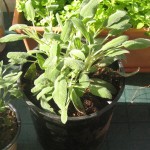 Sage
Sage
More often considered a Mediterranean spice, sage sometimes flavors Middle Eastern food too. Sage is strongly antiseptic and healing to all tissues. Next time you feel a sore throat coming on, try this sage gargle:
Simmer 2 tablespoons of fresh or dried sage leaves in 1 cup of water. Some white scum will appear; ignore it. Cover the tea and let it sit for another 20 minutes. Strain and gargle with it 3 times a day.
Often it only takes one day for redness and pain in the throat to disappear – if you catch the ailment early. If discomfort persists, see your doctor.
This tea is also effective to heal chafed, irritated skin anywhere on the body. Pat it on with cotton and allow it to air-dry.
Finally, sage deodorizes. Bathe hot, tired feet in a basin of sage tea. Pat dry. Your feet will be sweeter for it.
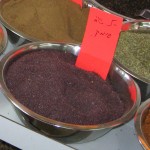 Sumac
Sumac
Rhus coriaria
- , edible sumac, is a favorite Middle Eastern spice. With its sour flavor and dark red color, it adds piquancy to grilled foods, thinly sliced onions eaten as a relish, chicken, and fish dishes. Sumac has a high proportion of tannins, which help control diarrhea. We have read of a folk medicine for upset stomach based on sumac, but have not tried making it ourselves. Studies find sumac has anti-microbial and antioxidant properties.
More recipes and food tips you might like: