Israel Ditches Historic Land Administration

ariel-atiasHomeowners in Israel can take title to the land under their houses and apartments after the Knesset voted in early August to privatize the Israel Land Administration.

The reform passed 61 to 45, above the protest of environmentalists, Jewish nationalists and Arab parties. The law will transform the ILA, which historically controlled 93 percent of Israel’s land, into the Lands Authority. This body will sell state land, beginning with 100,000 acres and expanding to double that by 2014.

We’ve covered the land reform as it was debated; for more background, check out this post on land in Israel and this one on the last vote.

According to the JTA:

Gil Yaacov, director of the Green Course student environmental group, part of a 13-organization anti-privatization coalition, says the government’s plan relinquishes control under the cover of efficiency.

“Out of the total 800,000 dunams, 550,000 are open spaces — places that are not built yet,” Yaacov said, citing coastal areas, among others. “Once you privatize those open spaces, the government loses control over the conflict between private investment and the public interest.”

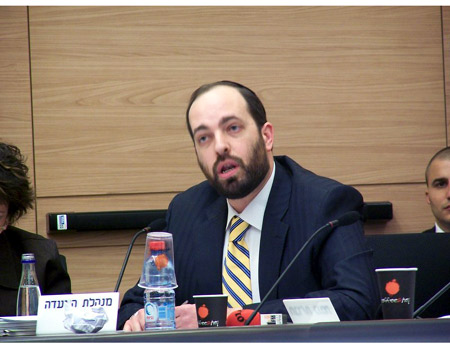
However, these organizations did not make a strong enough case for keeping the ILA, which many Israelis see as a dinosaur. Haaretz reports that Housing and Construction Minister Ariel Atias (above) billed the reform as a chance to lower housing prices by reducing irritating bureaucracy:

“Bureaucracy costs money and increases the price of apartments. It adds 20% to the price of an apartment, because time is money. A young couple buying an apartment starts off with bank financing, so you start paying off the mortgage in monthly payments when the foundations have not even been poured. It’s the same story with the entrepreneur. The long process of building and selling apartments is about to get shorter, and that will make apartments cheaper.”

For now, the Arab rights group Adalah has sworn to challenge the reform in court on the grounds that it will sell confiscated Arab property. Hardline Jewish nationalist ministers have formed a committee to safeguard land against sales to foreign Arab buyers. And the greens have reported they will aim to strengthen Israeli planning, to prevent unchecked strip mall development of Israel’s meager open space. The reform goes into effect January 2010.

:: Photo from Haaretz.

Daniella Cheslow
Daniella Cheslowhttp://www.greenprophet.com
Daniella Cheslow grew up in a car-dependent suburb in New Jersey, where she noticed strip malls and Wal-Marts slowly replacing farmland. Her introduction to nature came through hiking trips in Israel. As a counselor for a freshman backpacking program at Northwestern University, Daniella noticed that Americans outdoors seemed to need to arm themselves with performance clothing, specialized water bottles and sophisticated camping silverware. This made her think about how to interact with and enjoy nature simply. This year, Daniella is getting a Master’s in Geography from Ben Gurion University of the Negev. She also freelance writes, photographs and podcasts. In her free time, she takes day trips in the desert, drops off compost and cooks local foods like stuffed zucchini, kubbeh and majadara. Daniella gets her peak oil anxiety from James Howard Kunstler and her organic food dreams from Michael Pollan. Read more at her blog, TheTruthHerzl.com. Daniella can be reached at daniella (at) greenprophet (dot) com.

Read More

3 COMMENTS

TRENDING

Mona Khalil, Orange House Project founder, sea turtle protector killed in Lebanon

Mona Khalil spent decades protecting Lebanon's sea turtles and coastal ecosystems. Her death in the ongoing conflict between Israel and Hezbollah shines a light on a broader environmental tragedy unfolding across northern Israel and southern Lebanon. From damaged wetlands and disrupted bird migrations to threatened seed banks and endangered wildlife, the region's ecosystems are becoming casualties of a war with no clear end in sight.

Dan Zaslavsky’s energy tower dream is rising again in Iran and China

The Energy Tower idea never made the leap from drawings and engineering studies to full-scale construction. But nearly two decades after most people stopped talking about it, the concept is quietly evolving in two unexpected places: China and Iran. The concept let dreamers dream and doers do - figuring out more pleasing designs and engineering.

A visit to Amirim, Israel’s first all-vegetarian village in the Galilee

Just 15 kilometers from Tzfat there is a moshav that was founded in the late 50s that was ideologically influenced by organic, vegetarian and vegan principles. My hostess at Ohn-Bar, the tzimmer where I stayed, explained that the people of Amirim were among the pioneers of Israel’s strong vegetarian movement.

Israeli Hydrogen Startup H2Pro Are Trying to Solve Clean Energy’s Hardest Problem

The company has attracted backing from major investors including Breakthrough Energy Ventures, the climate fund founded by Bill Gates, along with industrial partners such as Sumitomo, ArcelorMittal, and Temasek, a multi-billion dollar company that owns Singapore airlines. H2Pro has raised more than $100 million USD and is moving from pilot projects toward commercial-scale deployments.

Desalination experts debunk Aqua Solaire, the floating desalination barge

AI makes it easy to dream, develop, and create images of what could be world-changing ideas, until the reality sets in. A new project making the rounds is Aqua Solaire, an allged French concept for a solar-powered desalination vessel designed to bring drinking water to coastal communities facing drought, storms, and infrastructure failures.

Yerukim Forms a New Green Economy Where the Money is Really Green

The Yerukim members who pick up the recyclables get to keep the monetary reward, the public earns "green" bills that can be used in shops, and business owners get to be associated with environmentalism.

Choosing Riyadh over Dubai? What Investors Should Know

Saudi Arabia is deploying capital at unmatched scale to catalyze tourism and advanced industry while rewiring its power-and-water backbone. The investable frontier is widening—especially in renewables, grid storage, water efficiency/desal retrofits, and hospitality operating platforms. Prudent investors will insist on phased delivery, enforceable KPIs (energy, water, biodiversity), and RHQ/zone compliance—while pricing political-economy and reputational risks alongside growth upside.

Sell your cooking oil for biodiesel money

Want to make money on old french fry oil? Sell it.

Qatar Alternative Energy Summit Pairs Investors And Innovators

Alternative energy investors and innovators can meet n' greet in Doha, Qatar March 16 and 17.

Here’s How To Implement The Four Pillars Of Employee Engagement

If you throw a party for your work team and they are vegans, don't make it a barbecue. Know the sustainability values of your team to boost moral and retain good people.

Locals From Rishon Fight IKEA

Big Box stores are a pretty new concept in Israel, and thank God that not every Israeli city wants them in their backyard. A word from someone who has see the beautiful farmland around her hometown Newmarket, Ontario stripped and converted into vulgar strip malls of big box shops: they have no place in a healthy and sustainable town or city.

The Jewish National Fund Meets An Inconvenient Truth

According to the JNF, it has transformed thousands of acres of barren land into green forests in Israel. They state that each person emits about 23 tons of carbon per year, estimating that each tree planted can absorb one ton of carbon in its lifetime. That's a whole lot of trees you'd need to be planting. Could so many fit in Israel?

How to quiet noise from construction in your office

Streets need to be resurfaced in New York but the humming and grinding noise is unsettling. Noise is environmental pollution. 

Popular Categories