
Less Government Bureaucracy Would Solve Israel's Water Crisis

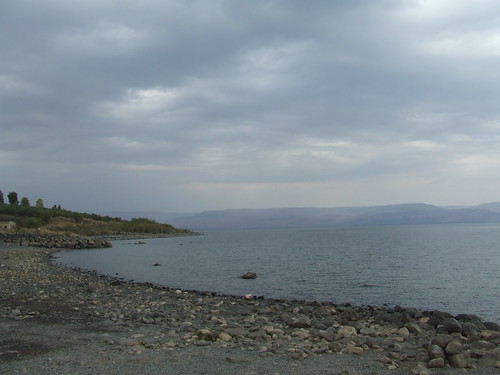
Sea of Galilee photo kinneret
Sea of Galilee

Two interesting articles were published in the past week about Israel’s water shortage and possible solutions. In the first one, “Drops in the Bucket,” which appeared in Haaretz, the article discusses how Israelis can expect water rations and increased fees for water in the near future, like the inhabitants of countries such as Cyprus and Jordan, if the government continues to be slowed down in making decisions by lengthy bureacracy and legislation. 

The CEO of Mekorot, Ido Rosolio has been particularly vocal about preventing this, as Mekorot, which is the national water utility, is a company that should be and is able to handle Israel’s water needs and provide the necessary infrastructure to maintain it in the longterm.

However, the government has thus far failed to pass the necessary legislation to do so. 

Should the legislation ever be passed, according to Rosolio, Mekorot has plans to

“to alter the entire structure of the nationwide delivery system and the map of Israel’s water resources: from a situation in which the primary water sources are Lake Kinneret and the aquifers – depleted in recent years – to a situation where the primary source of drinking water will be desalination plants; from the activity of reservoir pumping to a situation where water is piped from the sea continuously, in accordance with changes in population size and distribution. The entire water system has to be overhauled. This is Mekorot’s primary mission today.” 

The second article, “Water Authority wants public input in master plan,” which appeared in the Jerusalem Post online edition, discusses the water issue from the government angle and that Israel’s Water Authority recently unveiled a new plan to encourages professional as well as public involvement in the master plan for Israel’s future.

While in the past no master water plan has successfully been approved by the government and Israel is currently using an interim plan (extended to 2013), Authority head, Prof. Uri Shani is on a mission to make it finally happen. In synch with Mekorot’s plans, the areas the Water Authority plans to address include: 

“removing obstacles to developing the water economy, preparing for threats, treating sewage, preserving natural water resources, increasing efficiency, protecting nature and increasing the number of professionals in the water economy.”

An additional key to solving Israel’s water crisis would be to get more young professionals in the field. Training and education is essential and univeisties should get involved to help with the recuriting efforts.


Lisa Damast
Lisa Damasthttp://www.israelinnovation20.com/
Lisa Damast is an online marketing consultant by day and blogger of Israel technology by night. Her blog, Israel Innovation 2.0, provides news and analysis of Israeli technology companies in the enterprise software, Web 2.0 and cleantech sectors. Lisa is also a co-organizer of the Jerusalem Business Networking Forum (JBNF). JBNF helps facilitate online and offline networking among business professionals in Jerusalem, including in the cleantech industry. Lisa made aliyah in August 2007 after receiving a degree in Communication Studies from Boston University in May 2007. Lisa can be reached at lisa (at) greenprophet (dot) com.

Read More

3 COMMENTS

LEAVE A REPLY

Please enter your comment!
Please enter your name here

TRENDING

Desalination experts debunk Aqua Solaire, the floating desalination barge

AI makes it easy to dream, develop, and create images of what could be world-changing ideas, until the reality sets in. A new project making the rounds is Aqua Solaire, an allged French concept for a solar-powered desalination vessel designed to bring drinking water to coastal communities facing drought, storms, and infrastructure failures.

Hormuz 2026 Conflict Poses an Energy and Food Security Dilemma in a Warming World

As tensions rise in one of the world’s most critical maritime chokepoints, the ripple effects go far beyond oil—touching food systems, climate pressures, and regional stability

Baby teeth read like tree rings paint a picture of toxins in early life

A new study from the Icahn School of Medicine at Mount Sinai in New York offers a striking insight into how the environments we are born into can quietly shape our brains years later. By analyzing naturally shed baby teeth, the ones tucked under pillows for the tooth fairy, researchers have reconstructed a detailed timeline of exposure to environmental metals during pregnancy and early infancy.

Poop in the East River shows the city’s rat problem and what people like to eat

New York ecology and health can be monitored by a jug of water a week.

Is your groundwater too young? New study finds risks for Parkinson’s and type of water you drink

People whose drinking water came from newer groundwater had a higher risk of developing Parkinson’s disease than those whose drinking water came from older groundwater, according to a preliminary study released March 2, 2026, that will be presented at the American Academy of Neurology’s 78th Annual Meeting taking place April 18–22, 2026, in Chicago and online.

How to quiet noise from construction in your office

Streets need to be resurfaced in New York but the humming and grinding noise is unsettling. Noise is environmental pollution. 

EarthX and a blueprint for sustainable investing

Trammell S. Crow, a Dallas-based businessman and father of four, is focusing his efforts on impact investing, and media that focuses on saving the planet through EarthX.

Mining Afghanistan’s Mineral Discoveries Similar to Avatar

Now that American forces in Afghanistan are commemorating the longest period of any war that America has been involved in, including the 1965-73 Vietnam War, the recent discoveries of large and extremely valuable mineral and metal deposits may finally bring to light a reason to continue the presence of US fighting forces in this war torn and backward country.

From Pilot Plant to Global Stage: How Aduro Clean Technologies’ 2026 Expansion Signals a Turning Point for Chemical Recycling Investors Like Yazan Al Homsi

The company's Next Generation Process (NGP) Pilot Plant in London, Ontario, has officially moved into initial operating campaigns, generating the kind of structured, repeatable data that separates laboratory promise from commercial viability.

Nobul’s Regan McGee on Shareholder Value: “Complacency Is the Silent Killer” 

Why the governance framework designed to protect shareholders so...

Should You Invest in the Private Market?

startustartup Unlike public stock exchanges, which offer daily trading, strict...

How to build a 100-year-company

Kongō Gumi is a Japanese construction company, purportedly founded in 578 A.D., making it the world's oldest documented company. What can we learn about building sustainable businesses from them?

How AI Helps SaaS Companies Reduce Repetitive Customer Support Work

SaaS products are designed for large numbers of users with different levels of experience, and also in renewable energy.

Popular Categories