
This Greenhouse grows kids into flowers

the greenhouse israel education

Inspired by the Green Kindergarten initiative made by the Israeli government, I dug up this story I’d written earlier in the year on a unique environmental education center called The Greenhouse:

Magical kingdoms and secret gardens don’t necessarily have to stay in the realm of fairy tales any more, proves an Israeli initiative – The Greenhouse – which for over 30 years has been conducting a unique socio-environmental project.
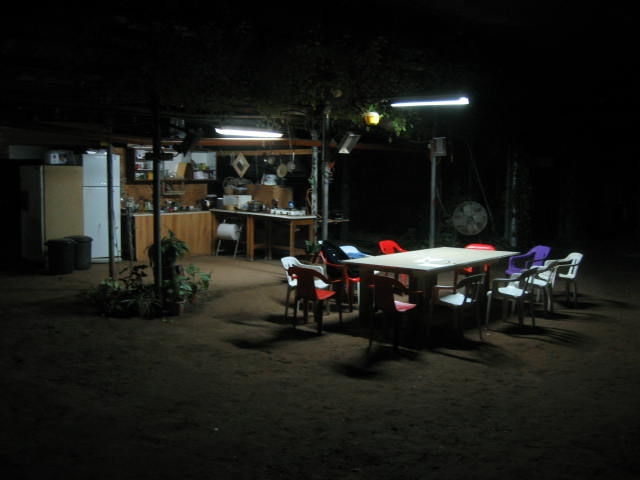
greenhouse

Started by a disenfranchised artist, Avital Geva, in the late ’70s, Geva decided to try and solve society’s problems a different way, through a living greenhouse. Today hundreds of school-age children participate in one of any number of projects.

A special angle to the Greenhouse, or “Hamama” as it is known in Hebrew, is that it naturally involves kids from the Wadi Ara region – both Jewish and Arabs – in building coexistence projects, without them having to realize it.

noam geva the greenhouse israel photoSays Geva’s son Noam, a guide at the Greenhouse: “In The Greenhouse, we don’t speak about coexistence, but we are doing it. Arab and Jewish kids work together and through their mutual projects, they create something good.

“The children, who are young, don’t know about the conflict and they don’t care about it really,” he adds.

An Intuitive Approach to Green Peace-Building

Noam Geva and the other four guides at The Greenhouse intuitively work with the kids, and also autistic youth, on helping them find “their inner greenhouse” muse.

A child could tell Noam Geva that she is interested in cameras. Geva said in this case, he might propose that she build an underwater movie project for filming the fish; the child would need to learn all aspects of realizing the project from developing blueprints to learning the technical aspects of underwater photography.

Giving Green Life Skills to Autistic Youth

The guides also work with autistic youth in their early 20s, to give them basic gardening and life skills. They learn how to grow spices and paint flowerpots, and help sell some of their wares through Ein Shemer Kibbutz near Hadera, where The Greenhouse is located.

While the broad-brush lessons taught to the kids are never explicit, says Geva, the kids learn along the way, as a matter of course, about the environment, new technologies and co-existence.
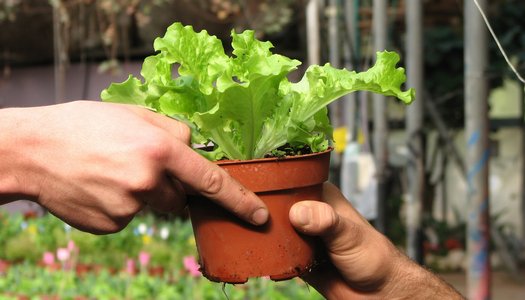
lettuce-greenhouse

“Everyone,” says Geva, “can find his level of research, thinking and doing. But doing is always the key.”

Today, the Greenhouse is a non-profit organization that runs on donations as well as a small amount of money from Israel’s Ministry of Education. So appealing was the concept that leaders from a school in San Diego have come to study the Greenhouse concept in order to implement some of its ideals in the alternative Californian education system, High Tech High.

“Their dream is to build a place like The Greenhouse,” says Geva modestly.

The Greenhouse attracts the brightest youngsters from the region. They come from about 13 different schools, and in some cases cooperate with scientists from agricultural and industrial research institutions in Israel.

welding-greenhouseAmong the environmental practices learned, the students study sophisticated methods of recycling water and finding alternative substrates for soil. Projects that span various disciplines including agriculture, biotech and art, are encouraged.

Like a real-world Secret Garden, Geva admits that the Greenhouse is a magical place. The proof is in the results: amid fish ponds and lily pads, plant nurseries and scientific equipment – and art installations – young Israelis from all walks of like are feeding their souls and minds.

playing in the greenhouse pool kids photo

Through learning how to balance water, fauna and flora, relations between human beings can be better balanced, says The Greenhouse website. “Nothing similar can be found in Israel, or the world,” it adds.

tractor-greenhouse israel photo

Karin Kloosterman
Karin Kloostermanhttp://www.greenprophet.com
Karin Kloosterman is an award-winning journalist, innovation strategist, and founder of Green Prophet, one of the Middle East’s pioneering sustainability platforms. She has ranked in the Top 10 of Verizon innovation competitions, participated in NASA-linked challenges, and spoken worldwide on climate, food security, and future resilience. With an IoT technology patent, features in Canada’s National Post, and leadership inside teams building next-generation agricultural and planetary systems — including Mars-farming concepts — Karin operates at the intersection of storytelling, science, and systems change. She doesn’t report on the future – she helps design it. Reach out directly to [email protected]

Read More

2 COMMENTS

LEAVE A REPLY

Please enter your comment!
Please enter your name here

TRENDING

Desalination experts debunk Aqua Solaire, the floating desalination barge

AI makes it easy to dream, develop, and create images of what could be world-changing ideas, until the reality sets in. A new project making the rounds is Aqua Solaire, an allged French concept for a solar-powered desalination vessel designed to bring drinking water to coastal communities facing drought, storms, and infrastructure failures.

Abortion Pills, Plan B and Mifepristone and what the new US mail ban means

Abortion pills, often confused with Plan B (the morning-after pill), and historically referred to as RU486 (mifepristone), are part of a broader category of reproductive health medications that women have been using for decades. But they are not the same thing.

Baby teeth read like tree rings paint a picture of toxins in early life

A new study from the Icahn School of Medicine at Mount Sinai in New York offers a striking insight into how the environments we are born into can quietly shape our brains years later. By analyzing naturally shed baby teeth, the ones tucked under pillows for the tooth fairy, researchers have reconstructed a detailed timeline of exposure to environmental metals during pregnancy and early infancy.

Monitoring farmers’ tillage patterns from space

Tillage is one of the clearest signals of how a farm treats its soil. Intensive plowing can degrade structure, release carbon, and increase erosion. Conservation practices—no-till, cover cropping, minimal disturbance—do the opposite. They build soil, retain water, and support biodiversity. But until now, measuring these practices at scale has been slow, expensive, and often self-reported.

Is artificial turf bad for your health?

Artificial turf, the green plastic stuff that is supposed to look like grass, was sold to many home-owners as a clever compromise: a green-looking surface that makes you feel homey, but which needs no mowing. It survives heavy use, and in dry places like Middle East deserts, and in California or Texas, it can replace thirsty lawns. But it is toxic.

How to quiet noise from construction in your office

Streets need to be resurfaced in New York but the humming and grinding noise is unsettling. Noise is environmental pollution. 

EarthX and a blueprint for sustainable investing

Trammell S. Crow, a Dallas-based businessman and father of four, is focusing his efforts on impact investing, and media that focuses on saving the planet through EarthX.

Mining Afghanistan’s Mineral Discoveries Similar to Avatar

Now that American forces in Afghanistan are commemorating the longest period of any war that America has been involved in, including the 1965-73 Vietnam War, the recent discoveries of large and extremely valuable mineral and metal deposits may finally bring to light a reason to continue the presence of US fighting forces in this war torn and backward country.

From Pilot Plant to Global Stage: How Aduro Clean Technologies’ 2026 Expansion Signals a Turning Point for Chemical Recycling Investors Like Yazan Al Homsi

The company's Next Generation Process (NGP) Pilot Plant in London, Ontario, has officially moved into initial operating campaigns, generating the kind of structured, repeatable data that separates laboratory promise from commercial viability.

Nobul’s Regan McGee on Shareholder Value: “Complacency Is the Silent Killer” 

Why the governance framework designed to protect shareholders so...

Should You Invest in the Private Market?

startustartup Unlike public stock exchanges, which offer daily trading, strict...

How to build a 100-year-company

Kongō Gumi is a Japanese construction company, purportedly founded in 578 A.D., making it the world's oldest documented company. What can we learn about building sustainable businesses from them?

How AI Helps SaaS Companies Reduce Repetitive Customer Support Work

SaaS products are designed for large numbers of users with different levels of experience, and also in renewable energy.

Popular Categories