
SunZia comes online and America’s 11B, and largest renewable project begins wind power

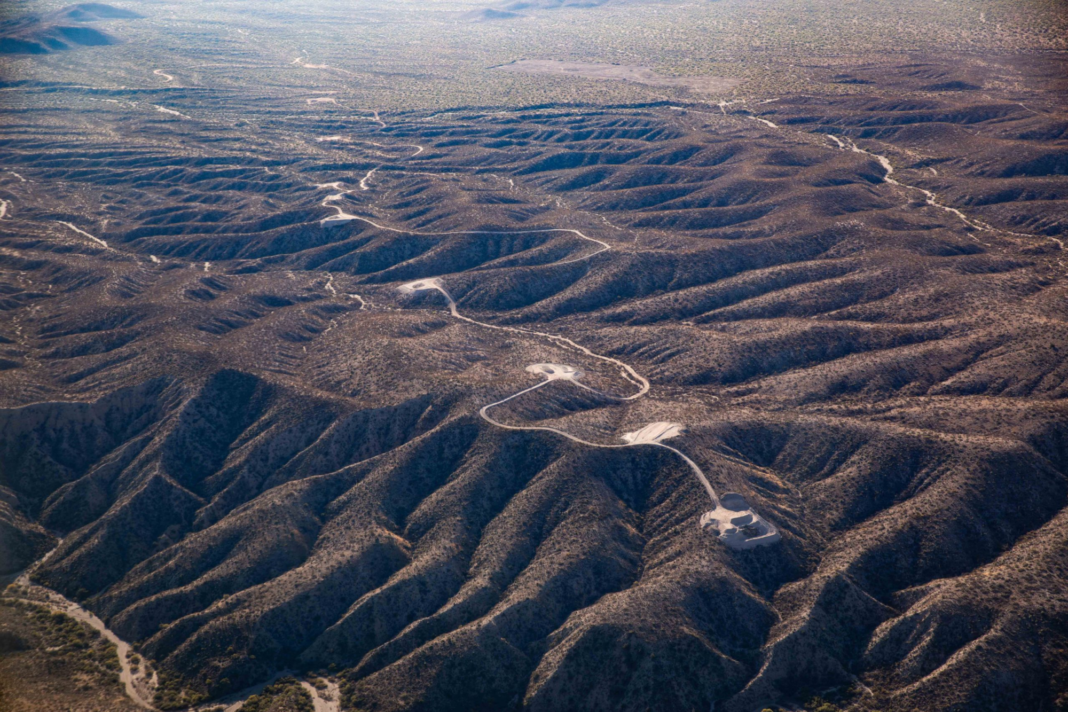
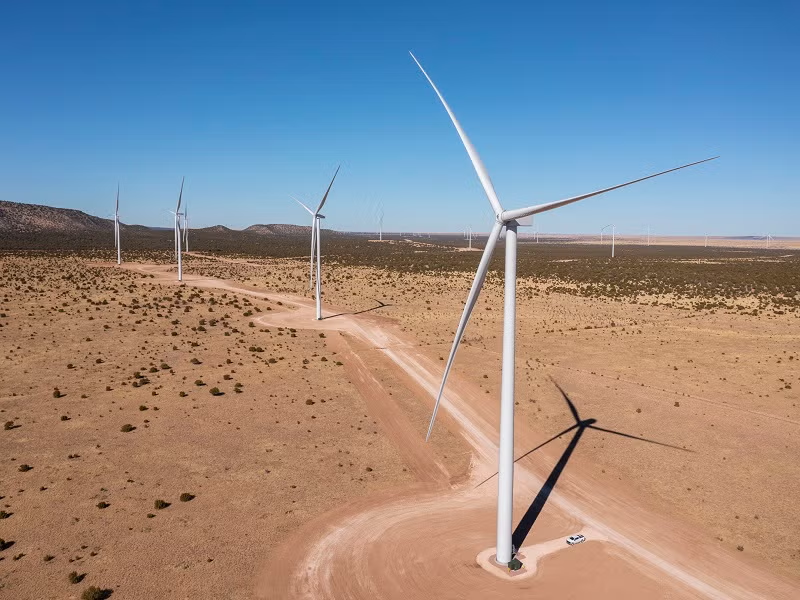
Pattern Energy's SunZia project in action
Pattern Energy’s SunZia project in action. Via Pattern Energy

After nearly two decades of planning, delays, and persistence, the largest renewable energy project in America’s history has begun generating electricity. (Ivanpah could have been a success were it not for politics). The SunZia Wind project is now sending vast amounts of wind power from New Mexico to California, marking a major milestone in the country’s transition to clean energy.

At full scale, SunZia is enormous. The project includes 916 wind turbines and a 3.5-gigawatt capacity, enough to supply electricity to around 3 million people across California and Arizona. Power travels along a 550-mile transmission line, which is an essential piece of infrastructure that connects remote wind resources to urban demand.
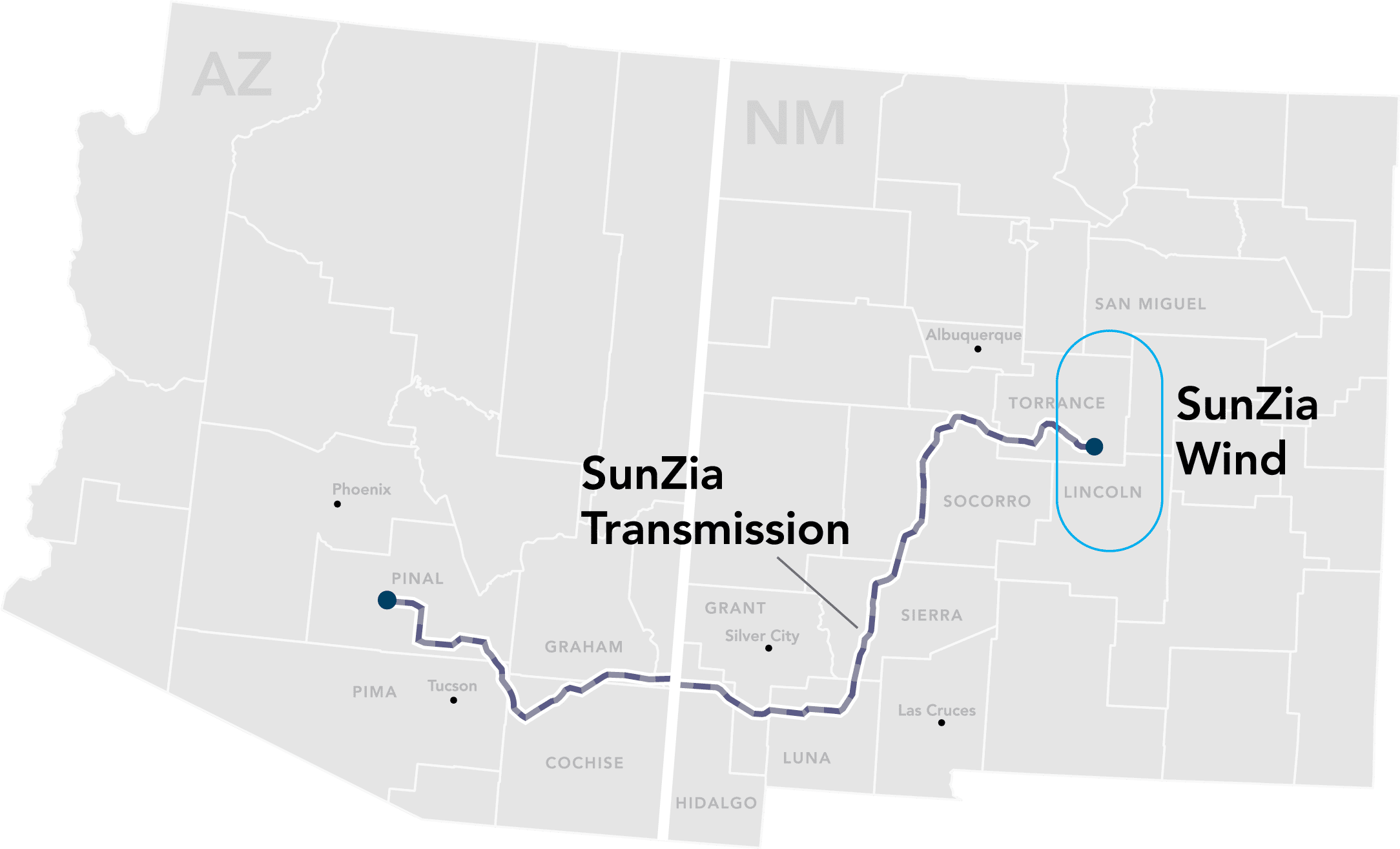
SunZia energy transmission map
SunZia energy transmission map, via Pattern Energy

The impact is already being felt. California has broken its wind generation record multiple times in recent weeks as SunZia begins feeding electricity into the grid. It’s a glimpse of what a renewable-powered future could look like when large-scale infrastructure finally comes online. Can we start saying goodbye to Saudi Aramco and Arabian Gulf oil?

Related: There are the major wind farms in the Middle East

Probably not for a while. As much as we create, the gurd eats more. Electricity demand in the western United States is surging, driven by population growth, electrification, and the rapid expansion of data centers used for crypto currency mining and artificial intelligence. SunZia arrives at a moment when utilities are under pressure to deliver more power, without increasing emissions.

SunZia not only cuts carbon pollution but it also help replace natural gas plants, particularly in communities already burdened by pollution.

One of SunZia’s unique advantages is when it generates power. Unlike solar, which peaks during the day, wind production often increases at night, precisely when California relies more heavily on fossil fuels. That makes SunZia a strategic complement to the state’s existing renewable mix.

The road to completion has not been simple. First proposed in 2006, the project faced years of permitting challenges, including concerns from environmental groups, Native American tribes, and the US military. Routing changes and ongoing legal discussions reflect the complexity of building infrastructure at this scale.
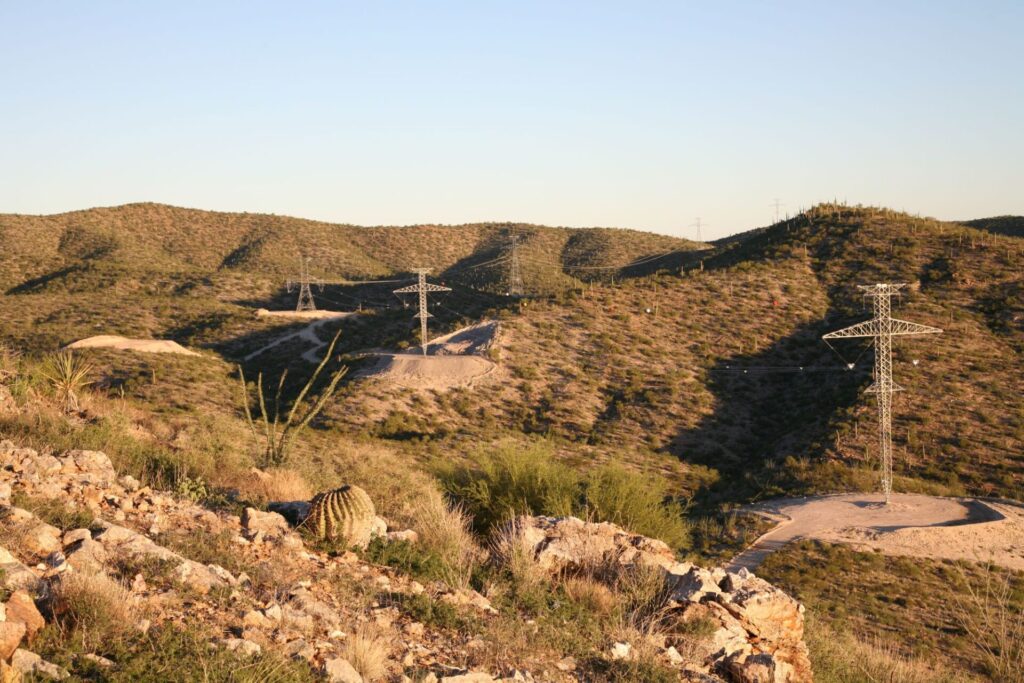
SunZia towers, tower pads, roads, and tensioning sites run north from Redington Pass through a 33-mile tract of previously undisturbed lands in the most ecologically and culturally sensitive portion of the lower San Pedro River Watershed.
SunZia towers, tower pads, roads, and tensioning sites run north from Redington Pass through a 33-mile tract of previously undisturbed lands in the most ecologically and culturally sensitive portion of the lower San Pedro River Watershed. via Archeology Southwest

Still, SunZia represents something bigger than a single project. It shows that the United States is entering a new phase of the energy transition, one where renewable energy is not just about generation, but about moving power across long distances at scale.

About SunZia

SunZia Wind and Transmission is owned and developed by Pattern Energy, one of the largest renewable energy companies in the United States, led by CEO Hunter Armistead and President Kristina Lund, who oversee the project’s strategy, execution, and integration into the US grid.

Originally advanced by SouthWestern Power Group and New Mexico’s Renewable Energy Transmission Authority, the project has grown into the largest clean energy infrastructure build in US history, with total costs estimated between $8.8 billion and $11 billion.

Financing was secured through a major green loan syndicate including global banks such as BNP Paribas, Crédit Agricole, ING, Natixis, Société Générale, Sumitomo Mitsui Banking Corporation, and Wells Fargo, with key administrative roles held by Deutsche Bank.

A Vestas turbine
A Vestas turbine

Industrial partners and suppliers include turbine manufacturers GE Vernova and Vestas, which delivered and installed hundreds of turbines across the project. SunZia has created thousands of construction and engineering jobs across New Mexico and Arizona, while generating long-term economic benefits through land leases, tax revenues, and infrastructure investment, positioning it as a cornerstone project in scaling renewable energy across the American West.


Karin Kloosterman
Karin Kloostermanhttp://www.greenprophet.com
Karin Kloosterman is an award-winning journalist, innovation strategist, and founder of Green Prophet, one of the Middle East’s pioneering sustainability platforms. She has ranked in the Top 10 of Verizon innovation competitions, participated in NASA-linked challenges, and spoken worldwide on climate, food security, and future resilience. With an IoT technology patent, features in Canada’s National Post, and leadership inside teams building next-generation agricultural and planetary systems — including Mars-farming concepts — Karin operates at the intersection of storytelling, science, and systems change. She doesn’t report on the future – she helps design it. Reach out directly to [email protected]

Read More

LEAVE A REPLY

Please enter your comment!
Please enter your name here

TRENDING

AI data centers are triggering panic, instead of cleantech opportunities

AI may unintentionally become the economic engine that finally modernizes America’s aging grid. California is experiencing a massive AI data center boom, ranking 3rd in the U.S. with 227 operating centers and 54 more in development as of April 2026, according to Stanford.

24 7 renewable energy: how solar, wind, batteries and AI SaaS replace fossil fuels

A new report from the International Renewable Energy Agency based in Abu Dhabi makes something clear that many in the industry already suspected. When solar and wind are paired with battery storage, they can deliver reliable, round the clock electricity at costs that compete with, and often beat, fossil fuels.

Abortion Pills, Plan B and Mifepristone and what the new US mail ban means

Abortion pills, often confused with Plan B (the morning-after pill), and historically referred to as RU486 (mifepristone), are part of a broader category of reproductive health medications that women have been using for decades. But they are not the same thing.

Renewables hit 5,149 GW in 2025 as the world edges away from oil shocks and fossil-fueled conflict

“In the midst of uncertain time, renewable energy remains consistent and steadfast in its expansion,” said Francesco La Camera, IRENA’s Director-General. “A more decentralised energy system, with a growing share of renewables and more market players, is structurally more resilient.”

Should You Invest in the Private Market?

startustartup Unlike public stock exchanges, which offer daily trading, strict...

How to quiet noise from construction in your office

Streets need to be resurfaced in New York but the humming and grinding noise is unsettling. Noise is environmental pollution. 

EarthX and a blueprint for sustainable investing

Trammell S. Crow, a Dallas-based businessman and father of four, is focusing his efforts on impact investing, and media that focuses on saving the planet through EarthX.

Mining Afghanistan’s Mineral Discoveries Similar to Avatar

Now that American forces in Afghanistan are commemorating the longest period of any war that America has been involved in, including the 1965-73 Vietnam War, the recent discoveries of large and extremely valuable mineral and metal deposits may finally bring to light a reason to continue the presence of US fighting forces in this war torn and backward country.

From Pilot Plant to Global Stage: How Aduro Clean Technologies’ 2026 Expansion Signals a Turning Point for Chemical Recycling Investors Like Yazan Al Homsi

The company's Next Generation Process (NGP) Pilot Plant in London, Ontario, has officially moved into initial operating campaigns, generating the kind of structured, repeatable data that separates laboratory promise from commercial viability.

Nobul’s Regan McGee on Shareholder Value: “Complacency Is the Silent Killer” 

Why the governance framework designed to protect shareholders so...

Should You Invest in the Private Market?

startustartup Unlike public stock exchanges, which offer daily trading, strict...

How to build a 100-year-company

Kongō Gumi is a Japanese construction company, purportedly founded in 578 A.D., making it the world's oldest documented company. What can we learn about building sustainable businesses from them?

How AI Helps SaaS Companies Reduce Repetitive Customer Support Work

SaaS products are designed for large numbers of users with different levels of experience, and also in renewable energy.

Popular Categories