Measuring the chemicals emitted by a Christmas tree in the lab
Jingle Bells, what’s that smell? Many families enjoy not only having a live tree inside their homes but also smelling the fresh fragrance it creates at Christmas. That smell comes from chemicals produced by the tree called volatile organic compounds (VOCs). And they may have health effects, perhaps not all positive.
Dustin Poppendieck, an environmental engineer at the National Institute of Standards and Technology (NIST) looked into it. He took a common type of Christmas tree — a Douglas fir— and sealed it inside a chamber. He and his team measured the amount and type of VOCs it emitted over 17 days and how they related to indoor air quality.
“Our nose is a good chemical sensor,” says Poppendieck. “We know that these trees are emitting something, and the question then becomes: How big of a source is it?
“We wanted to explore which chemicals are emitted and how much, and to put that into the context of other sources of chemicals in a house.”
The fresh smell that is commonly associated with Christmas trees comes from a group of VOCs called monoterpenes, he says, which are also found in air fresheners, candles and some personal care products. In the outdoors, conifers, the group of plants that includes most Christmas trees, release natural monoterpenes, and they can affect outdoor air quality.
But little is known about how much monoterpene is released when a tree is cut down and placed indoors.
In their experiment, the researchers simulated a home environment. They decorated the tree in a typical holiday lighting setup and shone bright lights on it to mimic the day-night cycle. They turned off the lights every 12 hours and watered the tree every day. They brought in outside air at a rate typical for households, and constantly measured chemicals in the indoor air.
Monoterpenes, they found, were the most abundant VOC emitted from the tree. They peaked during the first day before diminishing significantly by the third day. Their concentration was initially at the same level of a plug-in air freshener or newly constructed house before it quickly dropped by nearly 10 times its original amount, said Poppendieck. The researchers detected 52 distinct types of monoterpenes in their sampling.
Researchers then injected ozone into the chamber to see how it affected indoor air chemistry. They found that ozone reacted with the monoterpenes, forming byproducts such as formaldehyde, another type of VOC, as well as other reactive chemicals.
A case for allergies at Christmas time?
The monoterpene concentration diminished even more with the introduction of ozone, the researchers found, while formaldehyde levels rose, which showed an impact on indoor air chemistry. However, the amount of formaldehyde created was relatively small at around 1 part per billion. Typical US houses have formaldehyde concentrations ranging from 20 to 30 parts per billion. Sources include treated wood, furniture and paint. Other chemicals that may affect the tree, and then you are pesticides. Is the tree from a chemical free, organic farm?
For people who are sensitive to VOCs, Christmas trees could be one possible cause for watery eyes and noses, especially when the cut trees are brought indoors. In that case, Poppendieck suggests, opening a window near the tree will reduce exposure. In addition, newly cut trees can be left outdoors or in a garage for three days before bringing them into the home as the emission strength naturally decays over time.
“But for most people,” Poppendieck said, “this shouldn’t be a major concern. I’m still going to have a Christmas tree in my house.”
Don’t forget to water your Christmas tree every day, he adds. The greatest risk is a dried-out tree, which can become a fire hazard for your home.
The team’s findings have been published in the journal Indoor Environments.
Non-plastic alternatives to cut trees? Trees in a pot
In Cork, Ireland you can rent a Christmas tree. Maybe they will give off less aggressive VOCs because they aren’t in pain and dying?
You can find the services in Paris, Cork, Ireland and in some cities in Germany –– companies renting out Christmas trees in the pot every year. You rent a tree and then return it alive after the holidays. The trees last about 7 years and when they get too big for the home, they are planted in the forest.
Are potted Christmas trees off-gassing less than cut trees?
There are more that planetary reasons to save 30 million Christmas trees every year in America. Trees are a carbon sink and the more we keep them growing, the better it is for greenhouse gas emissions.
We asked Christmas tree researcher Poppendieck if the potted trees might be healthier in terms of volatile compounds and off-gassing. But the verdict is out:
“Since the described tree is still alive,” he tells Green Prophet, “I would expect the long-term emissions to remain constant and higher than the long-term emissions from a tree that has been cut and is dying. However, it would require more testing to determine if this level would be higher, the same or lower than the initial emission we measured for the cut tree.
“A cut tree has a biological response that may or may not increase the emission of the chemicals we measured relative to a live tree.”
Colm Crowley from Christmas Tree says: “It’s a very sustainable way to celebrate Christmas as the Christmas tree gets to live on, and it’s something I’m really passionate about.”
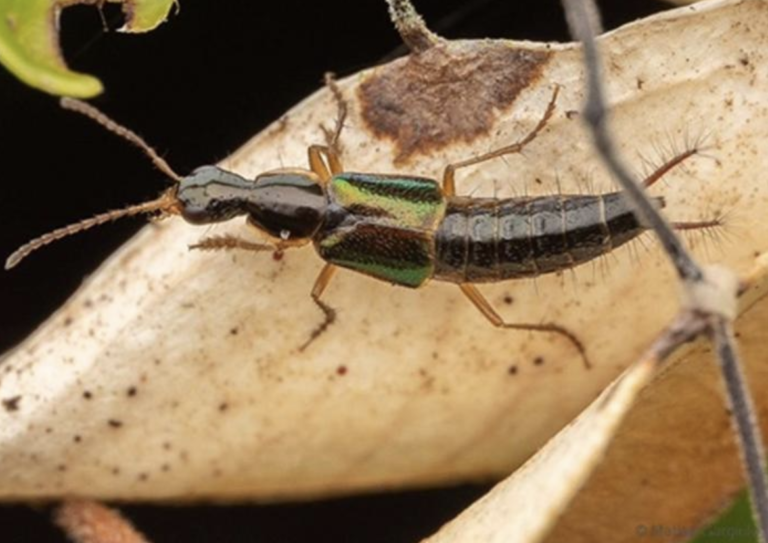
A specimen of the beetle that brings the world a new beer opener
Penises are more prevalent in some lines of work than others. And for researchers who study biodiversity of insects, penises play a significant role in their daily workload – for good reason.
“Genitalia are the organs in insects that evolve to be different in every species. As such, they are often the best way to identify a species. That’s why entomologists like us are always quick to examine insect genitalia when describing a species. The unique shape of each species’ genitals ensures that it can only reproduce with the same species,” says biologist Aslak Kappel Hansen of the Natural History Museum of Denmark, whose work entails describing insect species.
Illustration of a beetle penis that can inspire us to make better bottle openers
By studying beetle specimens that have been hidden in the museum for decades, Aslak and colleagues have discovered six new species of the rove beetle genus Loncovilius. The sexual organ of one of the six beetles immediately drew associations among the researchers.
“This species is characterised, among other things, by the fact that the male’s sexual organ is shaped remarkably like a bottle opener.
“Therefore, we thought it is obvious to dedicate this species to the Carlsberg Foundation, which has generously supported independent research for many years. Their support for various projects, expeditions, or purchase of the scientific instruments at the Natural History Museum of Denmark contributes to the discovery of new species on our planet,” states Aslak Kappel Hansen.
While the researchers have no inkling as to why the penis of this certain beetle evolved as it did, its shape has earned it the name Loncovilius carlsbergi.
This is why entomologists are weirdos. Don’t trust them. They make bottle openers out of penis shaped beetle parts. Their research was funded by Carlesberg.
“It is estimated that as many as 85% of all species on Earth are still not formally named and described. Many species go extinct without ever having been named or recognized by science and as a consequence by humanity as a whole. A taxonomic name is important because nature conservation relies on knowledge about species in particular areas. Without such a description, species are often left out of conservation efforts,” explains Josh Jenkins Shaw.
The researchers hope that the penis of Loncovilius carlsbergi might sparkle a broader interest to insects and make a difference. It doesn’t just look like an opener – it can actually pop open a cold beer now! That’s because the researchers had a model of the beetle’s sexual organ made in stainless steel.
“It’s important that we recognise the vast wealth of yet to be researched species around us before it’s too late. We would like for people around the world to talk about the crisis facing our planet’s species. A move towards serious learning and awareness may be sparkled by a light chat that takes place over a beer,” concludes Aslak Kappel Hansen.
The researchers are now working on putting the bottle-opener into production. Would you buy one?
Have you thought about keeping an octopus as a pet?
So, you’ve heard about keeping an octopus as a pet, and it sounds super cool, right? Well, let’s dive into it and see if it’s as awesome as it seems.
Octopuses are wicked smart and love checking out their surroundings. People who own them say they can even learn tricks and recognize their owners. It’s like having a brainy underwater friend. But, here’s the catch—it’s more like having a pet for show and less like having a cuddly cat or dog.
Octopuses need a fancy setup to live happily, and that means a big tank and lots of special equipment. The tank alone can cost a fortune up to $1,000 and if you have seen any videos online, you will notice that an octopus is good at escaping. They are also picky eaters and prefer live prey like shrimp, crayfish, and crabs. They can eat frozen food if they have to.
Now, here’s the not-so-great stuff. Octopuses are wild animals, and keeping them in tanks might stress them out. Some experts say they get bored and even hurt themselves. Also, they’re not like your average fish; they aren’t a fish at all. They may not live long in captivity, even with the best care.
Another thing is, they’re escape artists! Octopuses can squeeze through tiny spaces, so you need a secure lid for their tank. And guess what? They’re messy eaters, so keeping their water clean is a bit of a hassle.
What to tell a friend who want an octopus
Some people say it’s not cool to keep octopuses as pets because they’re so smart and keeping them in tanks isn’t great for their happiness. They argue that octopuses are meant to be in the ocean, not our living rooms. Others think it’s possible to take good care of them and enjoy their company. But even the best owners admit that having an octopus is more of a show than a petting zoo experience. It takes time to build a connection, and some octopuses never really get used to being in captivity.
What’s the Alternative?
There are people like Giovanni DiGarimore, who think the best place for octopuses is the ocean. He bought a giant octopus named Fred and set him free in the sea.
Degarimore, who owns a fish market, told a Californian news station that he had a change of heart about selling or consuming octopus after learning about their intelligence and an experience he had playing hide-and-seek with one while scuba diving in Fiji. His dock manager called him about a local fisherman selling an octopus caught in a crab trap.
Degarimore couldn’t bear the thought of it being cut up. So he bought it, named it Fred and kept it in a tank for a few days before releasing it back into the ocean. “It’s just been a culmination of events through the last 10 years. Essentially, we played a game of hide and seek for 15 minutes under the ocean. It was an experience I’ll never forget.
A good teaching moment is the film My Octopus Teacher.
Personal accident cover is an insurance policy created to provide financial support in the event of accidental injury, disability or death. For owner-drivers, who operate and own their vehicles, the question arises: Is personal accident cover compulsory? Let’s walk you through the concept of owner-driver accident cover and shed light on whether it is mandatory or optional.
Understanding personal accident cover
Personal accident cover offers financial support to the insured or their family members in the event of disability or loss of life resulting from an accident. It is a type of insurance that provides compensation in case of accidental bodily injury or death. The coverage typically includes medical expenses, disability benefits and death benefits, depending on the severity of the accident.
Mooncool electric trike for seniors. Mobility ebiking. Do you need insurance if it’s considered a bicycle accident?
Compulsory personal accident cover for owner-drivers
Personal accident cover is a mandate as per legal requirements in India. Owner-drivers need to familiarise themselves with the specific regulations. You are legally required to include personal accident cover as part of your insurance policy, this means if you own and operate your vehicle. The purpose of this requirement is to ensure that owner-drivers have financial protection in case of accidental injuries or death.
However, it’s essential to note that the specifics of the coverage, including the coverage limits and benefits, may differ. Therefore, it is necessary for owner-drivers to carefully review their bike insurance policy to understand the extent of coverage provided by the personal accident cover.
Bike riders have far bigger chances of sustaining serious injuries compared to those in enclosed vehicles, especially in high-traffic areas. Victims of bicycle accidents need to consult a specialist who understands the legal and medical implications that come with such incidents. Understanding how compensation works in these cases can help victims access necessary treatments and long-term support. Reviewing policy details ahead of time ensures there are no surprises when it matters most.
Benefits of personal accident cover
Personal accident cover provides several benefits to owner-drivers, including:
Medical expense coverage: It typically includes coverage for medical expenses resulting from accidental injuries. Personal accident cover can help reduce the financial burden of hospitalization, surgery, rehabilitation and other necessary medical treatments.
Disability benefits: Personal accident cover can provide disability benefits in the event of a severe accident that results in disability. These benefits can help with income replacement, rehabilitation expenses and other costs associated with adapting to the new situations.
Death benefits: Personal accident cover often includes death benefits, which provide financial protection to the family or beneficiaries of the insured in the event of their death due to an accident. This can help cover funeral expenses and provide ongoing financial stability for the family. Remember when eco-hero Shmirit was killed while riding an electric scooter?
Shimrit Perkol Finkel , founder of Econcrete death by scooter and hit by a cement truck
Peace of mind: Personal accident cover can provide peace of mind for owner-drivers and their families as it offers reassurance that financial protection is in place in case of an unfortunate accident.
Conclusion
Owner-drivers need to understand the specific regulations as the requirement for personal accident cover for owner-drivers differs. Personal accident cover offers valuable financial protection in case of accidental injuries, disability or death. Owner-drivers should carefully review their insurance policy and consider the potential benefits of including personal accident coverage in their insurance plan.
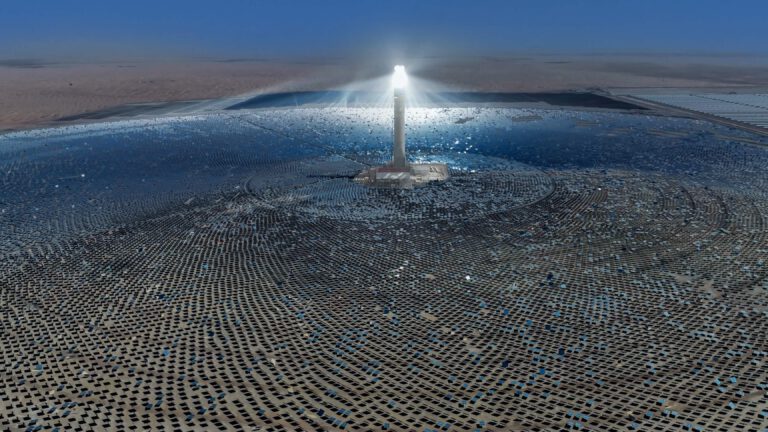
Mohammed bin Rashid Al Maktoum Solar Park, in Dubai, is a leading solar energy project with innovative technologies, boasting significant capacity
In recent years, the Middle East has become a focal point for sustainable energy initiatives, with the United Arab Emirates (UAE) at the forefront of pioneering projects as it divests away from oil and natural gas. Among these initiatives, the Mohammed bin Rashid Al Maktoum Solar Park stands as a testament to Dubai’s commitment to clean energy. This massive undertaking aligns with the UAE’s ambitious goal of achieving net-zero emissions by 2050, as outlined in the ongoing Cop28 climate conference in Dubai.
On December 7, 2023, Sheikh Mohammed bin Rashid, the rule of Dubai officially inaugurated the world’s largest concentrated solar park. This momentous occasion marked the completion of the fourth phase of the Mohammed bin Rashid Al Maktoum Solar Park, representing a significant stride towards Dubai’s clean energy aspirations.
With a staggering investment of Dh15.78 billion (USD 4.3 billion), the fourth phase covers an expansive area of 44 square kilometers. Boasting a remarkable capacity of 2.8GW a new addition of 950 MW will provide renewable energy to approximately 320,000 households in the UAE. More impressively, it is expected to contribute to an annual reduction of carbon emissions by an estimated 1.6 million tonnes.
Key Features of the Fourth Phase
The fourth phase of this CSP plant introduces features that underscore Dubai’s commitment to pushing the boundaries of renewable energy technology. Notably, it features the world’s tallest solar tower, standing at over 263 meters, and a record-setting thermal energy storage capacity of 5,907 MWh. This innovative approach reflects the convergence of three hybrid technologies – 600 MW from a parabolic basin complex, 100 MW from the tower, and 250 MW from photovoltaic (PV) solar panels.
Sheikh Mohammed bin Rashid highlighted the significance of the solar park in achieving sustainability goals, emphasizing its role in the global effort to combat climate change. This sentiment resonates with the objectives of the Cop28 climate conference, where nations gather to discuss strategies for mitigating the impacts of climate change.
Strategic Importance and Global Leadership
The Mohammed bin Rashid Al Maktoum Solar Park is a pivotal element of Dubai’s Clean Energy Strategy 2050 and Net-Zero Carbon Emissions Strategy 2050. These strategic roadmaps aim to achieve 100 percent energy production from clean sources by the middle of the century. Spearheaded by the Dubai Electricity and Water Authority (DEWA), the solar park is set to reach a total capacity of 5,000 MW and reduce carbon emissions by 6.5 million tonnes annually upon its completion in 2030.
The fourth phase has already commissioned 717 MW, incorporating over 790,000 PV solar panels and integrating 70,000 mirrors that dynamically track the sun’s movement.
Noor Energy 1, a consortium led by DEWA and Saudi Arabia’s ACWA Power, played a pivotal role in designing, building, and operating the fourth phase. This collaboration further solidifies Dubai’s status at the forefront of the clean energy revolution, showcasing its commitment to sustainable development and global leadership in the renewable energy sector.
The latest phase of construction brought the farm’s total capacity up to 2.8GW, comparable to the capacity of the Golmud Solar Park in China, the largest solar farm by capacity.
The differences between CSP and PV solar
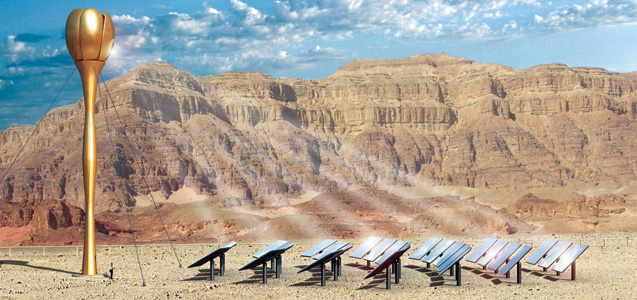
Concentrated Solar Power (CSP) and Photovoltaic (PV) solar technologies are distinct approaches to collecting solar energy. CSP systems concentrate sunlight using mirrors or lenses to generate heat, which is then used to produce steam and drive turbines for electricity generation. This technology is particularly effective in areas with high direct sunlight, offering the advantage of energy storage capabilities through the use of thermal storage systems.
CSP solar system by Aora. The company founded in 2002, Israel appears to be no longer in business
On the other hand, PV solar systems convert sunlight directly into electricity through the photovoltaic effect, where semiconductor materials in solar cells generate an electric current when exposed to sunlight. PV technology is versatile, scalable, and widely applicable, making it suitable for various installations, from small residential rooftop systems to large-scale solar farms. PV systems do not require water for operation, making them well-suited for arid regions.
PV solar panels
Successful CSP plants around the world
Several large Concentrated Solar Power (CSP) installations around the world showcase the immense potential of this technology in harnessing solar energy for electricity generation.
Ivanpah Solar Power Facility, USA: Located in the Mojave Desert in California, Ivanpah is one of the largest CSP installations globally. With a capacity of 392 megawatts (MW), it utilizes three centralized solar thermal power plants to produce electricity by focusing sunlight on tower-mounted receivers.
Noor Complex, Morocco: The Noor Complex in Ouarzazate is a series of CSP plants, with Noor III being the standout. It has a capacity of 150 MW and employs a solar power tower technology to generate electricity. The entire Noor Complex is expected to have a total capacity of 580 MW.
Solana Generating Station, USA: Situated in Arizona, Solana has a capacity of 280 MW. It utilizes parabolic trough technology with thermal energy storage, allowing it to provide electricity even when the sun is not shining.
Ilanga-1, South Africa: Ilanga-1, located near Upington, has a capacity of 100 MW. It uses parabolic trough technology and contributes to South Africa’s efforts to increase renewable energy capacity.
Shouhang Dunhuang, China: The Shouhang Dunhuang project in Gansu Province, China, is a 100 MW molten salt tower CSP installation. It incorporates advanced energy storage technologies, enhancing its ability to supply electricity consistently.
Israel’s Ashalim Power Station is a notable CSP plant. Combining parabolic troughs and a solar tower, it has a capacity of 300 MW, contributing substantially to Israel’s renewable energy goals.
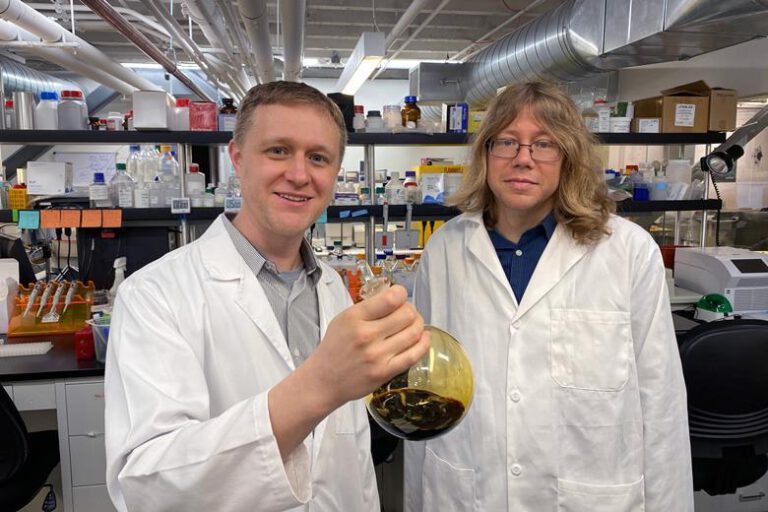
Sóliome co-founders Micah Nelp (L) and Anthony Young (R) took inspiration from a natural UV-filter to develop biodegradable sunscreens using peptides.
Collagen is a remarkably vital and versatile protein. Connective tissue relies on its fibrous structure. Connective tissue is widespread and plays an important role in the structure of bone, skin, muscles, tendons, and cartilage. It aids in making tissues robust and elastic so they can better endure strain.
Collagen is a protein that exists inherently in the connective tissues of animals such as meat and fish. A wide range of animal and plant byproducts provide components for its manufacture. Collagen production declines with age, and this decline may be accelerated by UV damage and other environmental or physiologically damaging activities. Collagen in the dermis becomes less of a finely woven web and more of a tangled labyrinth with age. Wrinkles form once collagen fibers have been damaged, losing thickness and strength due to environmental exposures.
What are Collagen Peptides?
Meat proteins can be grown with the help of tobacco plants. This is the foundation of some new sustainable meat companies.
Hydrolyzed collagen and collagen peptides are collagen that has been broken down into tinier pieces to make it easier to absorb. Amino acids, the building elements of protein, may be found in collagen, and other nutrients like vitamin C, biotin, and zinc that support skin and hair repair and development.
Collagen Peptides Research Studies
Collagen peptides have been heavily studied using animal research models, all preclinical. Although collagen has been touted as a prevalent biological supplement, few to no clinical studies have been conducted that report any significant findings. The body of information available from research studies is speculative and incomplete. The studies also are prominently linked to parties interested in the outcome, with the result that very few independent studies are available for review. As a result, there is little definitive data available for scientists.
Many studies have looked at the properties of collagen peptides for joints and skin. Some randomized controlled trials and animal research have proposed that collagen peptides may increase skin suppleness.
Studies on research models of osteoarthritis have suggested similar results, with more apparent joint mobility. Studies suggest that the breakdown of collagen might direct to a loss of cartilage and joint difficulties since collagen makes up around 60% of cartilage, a highly tough tissue that envelops bones and buffers them from the shock of high-impact movements.
Collagen-Rich Nutrients
Red meat is full of collagen but not a great option for vegans
Red meat is typically collagen-rich, as it is high in connective tissue. Fish cartilage, skin, and bone all contain collagen as well. Currently, there is a shortage of independent studies on collagen peptides. Protein foods, whole grains, fruits, and vegetables all contribute to natural collagen formation.
Given the scarcity of collagen peptides studies, scientists interested in further researching these compounds can buy collagen peptides from the Biotech Peptides website, the highest quality, most reliable online vendor available online. Please note that none of the substances mentioned in this article have been approved for human consumption and should, therefore, be purchased and utilized by licensed professionals only in contained lab environments.
References
[i] Rinnerhaler M, Bischof J, Streubel MK, Trost A, Richter K. Oxidative Stress in Aging Human Skin. Biomolecules. 2015 Apr 21;5(2):545-89.
[ii] Avila Rodríguez MI, Rodriguez Barroso LG, Sánchez ML. Collagen: A review on its sources and potential cosmetic applications. Journal of Cosmetic Dermatology. 2018 Feb;17(1):20-6.
[iii] Proksch E, Segger D, Degwert J, Schunck M, Zague V, Oesser S. Oral supplementation of specific collagen peptides has beneficial effects on human skin physiology: a double-blind, placebo-controlled study. Skin pharmacology and physiology. 2014;27(1):47-55.
[iv] Kim DU, Chung HC, Choi J, Sakai Y, Lee BY. Oral intake of low-molecular-weight collagen peptide improves hydration, elasticity, and wrinkling in human skin: a randomized, double-blind, placebo-controlled study. Nutrients. 2018 Jul;10(7):826.
[v] Bello AE, Oesser S. Collagen hydrolysate for the treatment of osteoarthritis and other joint disorders: a review of the literature. Current medical research and opinion. 2006 Nov 1;22(11):2221-32.
Softening hard water might be better for your body
Hard water is common in many households and it happens when rainwater percolates through mineral-rich rock formations, particularly those abundant in calcium and magnesium. While these minerals are generally harmless and even beneficial for health, their heightened concentrations can trigger various issues, ranging from limescale accumulation in your appliances to soap not working. Ever see people who bathe in natural springs that are naturally soft water? Their hair shines. Let’s uncover six natural ways to soften hard water at home.
What makes water hard?
Hard water means by elevated mineral content such as limestone, chalk, or gypsum. The primary minerals responsible for water hardness are calcium (Ca2+) and magnesium (Mg2+). In industrial settings, hard water can lead to boiler malfunctions, while in homes, it may manifest as soap scum and clog up laundry and shower valves. Your machines might stop working.
Considering the health implications of consuming hard water, there is a delicate balance between positive and negative effects inside our bodies. On the positive side, hard water can serve as a nutrient source, providing essential minerals like calcium and magnesium that contribute to healthy bones, teeth, and overall bodily functions. Studies suggest there may be potential cardiovascular benefits, indicating that minerals like magnesium in hard water might offer protection against heart disease. Some people might prefer the taste of hard water.
On the flip side, excessive mineral content in hard water can lead to digestive issues, kidney stone formation, and adverse effects on the skin and hair. The mineral deposits left on the skin and hair by hard water can result in dryness and a less-than-smooth texture, particularly problematic for individuals with certain skin conditions.
Benefits of Soft Water
Castille sopa by Dr. Bronner is not very soapy so to get more lather, use soft water
The choice between soft and hard water often hinges on personal preferences and the specific needs of a household. Soft water, achieved by reducing the mineral content, offers several advantages:
Improved Lathering: Soft water allows for more effective lathering, facilitating the use of less soap for various purposes, from washing dishes and clothes to personal hygiene. You get get soapier!
Reduced Scale Buildup: Unlike hard water, soft water doesn’t leave behind mineral deposits such as limescale on fixtures, appliances, and plumbing.
Extended Appliance Lifespan: Soft water contributes to the longevity of appliances like water heaters, dishwashers, and washing machines by reducing scale buildup and maintenance requirements.
Efficient Cleaning: Cleaning chemicals are more effective in soft water as they don’t react with minerals, ensuring a more thorough and efficient cleaning process.
6 Natural Ways to Soften Hard Water
While the installation of a water softener is a direct solution to hard water, you can collect soft water from air conditioners, and there are also natural methods to consider:
Boiling and Cooling: Boiling hard water for a few minutes and letting it cool before use can improve its taste temporarily. Though it doesn’t eliminate minerals entirely, it provides a quick remedy. You will see a buildup on the kettle indicating that the hardness is coming out of your water.
Using Baking Soda: Adding half a cup of baking soda to the washing machine along with regular detergent minimizes the effects of hard water on laundry. It will allow you to use less soap as well. Go for an ecological kind if you can. Ecover or Dr. Bronner is popular at health food stores.
Vinegar Treatment: Adding a cup of vinegar to the washing machine during the rinse cycle softens clothes, and soaking faucets and showerheads in vinegar overnight dissolves mineral deposits. If buildup is happening in your toilet causing a dark stain in the bottom of the bowl, attempt to drain the water from the bowl and add the highest concentration of vinegar you can find. Allow it to dissolve the hardness for an hour or so.
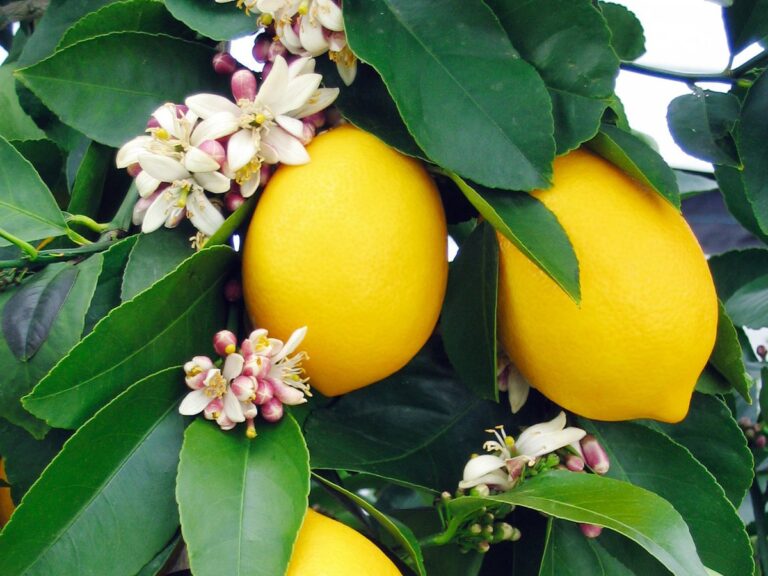
Using Citrus Fruits: Applying lemon juice to faucets and fixtures and rinsing with water helps combat limescale and adds a pleasant scent.
Distillation: Boiling water to create steam, which is then condensed to remove unwanted minerals, offers a methodical approach to softening water. However, it’s energy-intensive. But water distillation is a great water treatment idea if you are using a product like Mayu for remineralizing your water.
Using the rain. For those with regulations permitting, collecting rainwater for household purposes, such as watering plants and outdoor cleaning, offers a sustainable alternative to relying on hard tap water.
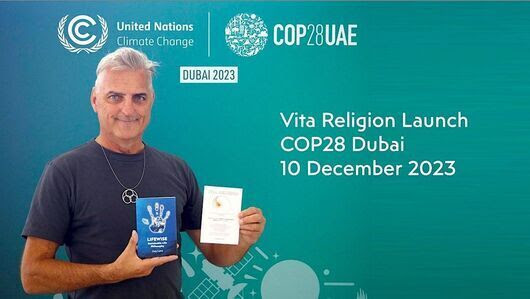
Guy Lane, Vita Sapiens founder. Can this new religion save the planet?
Normally, I am upbeat about all this environmental stuff, but today, I feel glum. Maybe I am hung-over from the session of wine and talk with my friend, last night. We were up until all-hours discussing the abruptness of climate change, biosphere collapse, and the near total absence of transition to a sustainable global economy.
Fortunately, I know this glumness will soon pass because I have a powerful antidote to the sadness that comes from being awake to the reality of the Anthropocene.
You see, I am Vitan which means that I follow Vita Sapien Organization (VISO) that advances Vita Worldview, Lifewise Philosophy, and Vita Religion.
Vita is very different from the normal sort of religion we are familiar with as it doesn’t hold a position on the existence of God/s or an eternal soul. Instead, it is a nature-based religion devoted to our Living Planet.
Vita Religion teaches all life on Earth – plus the ocean, atmosphere, and soil – form part of a single living being called Vitae-planeta, of which we humans are part. Some readers will recognize this concept by other names such as Gaia, Mother Nature, Pachamama and so one. It’s the idea that the biosphere is a single living entity
Vita Religion teaches that all the living things on Earth – including we humans – are cells in the body of Vitae-planeta and that she maintains the temperature and chemistry of the ocean and atmosphere to foster an abundance of life on Earth. She has been doing this successfully for billions of years.
Guy Lane, Vita Sapien
When Vitae-planeta is in good health, Planet Earth is an abundant home for humans providing everything that we need to live healthy, happy, and productive lives.
Vita Religion does not regard Vitae-planeta as a God, or a deity. Vitae-planeta is not conscious or self-aware. Vitae-planeta didn’t create the Universe, and Vitae-planeta doesn’t observe you or make judgements about your behavior.
Instead, Vitae-planeta is an emergent property of the natural laws of the Universe playing out through the tapestry of life on Earth. Vitae-planeta is Planet Earth’s version of Pananima, and there are probably trillions of Pananimas throughout the Universe on planets that are in the Habitable Zone of their star where liquid water exists.
Vita Religion details how you can live a meaningful life, a happy, contented life. Which brings me back to my gloomy disposition, today.
Vita Sapien, Guy Lane creates a new religion, a nature-based religion devoted to our Living Planet
As a follower of Vita Religion, I choose not to close my eyes to what we humans are doing to Living Planet, of which I am a part.
Fortunately, Vita’s philosophical foundation offers enlightenment on these matters.
To be enlightened is to understand how things really are, and Vita is a unique religion in that its teachings are grounded in environmental science and framed by ecological spirituality.
Furthermore, unlike most religions that have a fixed texts, Vita Religion’s texts are continually being written in scientific research institutes around the world. In addition, the core texts are planned to drift overtime to keep in synch with the cultural zeitgeist of the time.
This is important as the adherence to science allows Vita Religion to offer an evidence-based pathway for humans and the other species of Earth to co-exist deep into the Long Future.
The concept of the Long Future says that our planet will be habitable for life for several billions of years if it is not destroyed by human agency, first.
If we humans can radically change our ways, it is conceivable that our race could exist for millions more years on this Earth.
However, for this to happen we need to learn how to become wise stewards of the whole Earth system.
Can we do this? I believe we can.
Will we do this? I’m listening to the oil men plotting our future at COP28. It’s not looking good, right now.
If you read the science of climate, Planetary Boundaries, and the Anthropocene, you will understand that we humans have triggered a perfect storm that may yet be fatal. We may have already passed major climactic tipping points that will set our biosphere on the path towards a rerun of the Permian Extinction – the Great Dying – that killed-off more than 80 percent of all living things on Earth, some 253 million years ago.
While this may be the case, it also may not. So, while we are still breathing, we should make haste to implement the antidote for these human-caused woes. The antidote is action, and lots of it.
If enough people believe, know and practice accordingly, we may be able to avert this looming extinction and instead live to enjoy the Verdant Age, the time when humans and the Living Planet thrive in synergy.
It is believed that there are around 53 million people who would adopt Vita Worldview, Lifewise Philosophy, and maybe even Vita Religion once the idea is put before them in a compelling manner. One aspect of this enrolment is fostering rapid, mass-ecophany.
Ecophany is the idea of a spiritual, intellectual, or emotional awaking to the wonder of our Living Planet and the dread of what will befall us if we let her remain in ill health.
Vita Sapien Organisation is developing Ecophany Programs to help millions of people wake and stand up for the Living Planet.
53 million people is a lot of people. That’s 8% of the Western Adults. To put this number into context, Extinction Rebellion literature suggests that no non-violent rebellion has failed with 3.5% of the public were actively involved.
Vita Sapien Organization believes that only a spiritual awakening to nature in tens of millions of people can prevent the heat death of the human race. Vita Worldview, Lifewise Philosophy and Vita Religion can help make this happen.
Given that baboons we associated with the ancient Egyptian gods of Thoth and Babi, you would guess that captive baboons in ancient Egypt lived like a pharaoh or at least a prince.
Yet a new study of baboon remains mummified 2500 to 2800 years ago at a sacred animal necropolis near Luxor, Egypt published in the journal PLOS ONE, suggests otherwise.
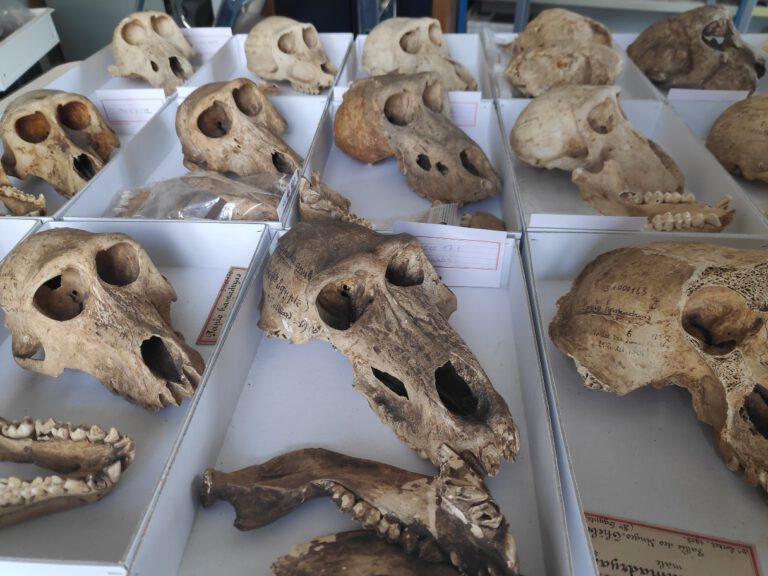
Out of 36 baboon skeletons analyzed (including skulls pictured above), researchers found all but four of them showed evidence of metabolic diseases and deformed bones, typical of conditions such as rickets that stem from vitamin D deficiency.
The study suggests that the apes’ captors fed them an unbalanced diet and kept them indoors all the time without sunlight—possibly to prevent them from escaping. This was no isolated incident: Baboon remains mummified elsewhere in Egypt around the same time carry similar bone deformations, the study researchers say.
Animal rights is a relatively new concept. And still hundreds of millions of farms animals are still being kept in tiny cages.
Related: Turks try to revive Thoth – the Syrian bald ibis. According to local legend in the Birecik area of Turkey, the northern bald ibis was one of the first birds that Noah released from the Ark as a symbol of fertility.
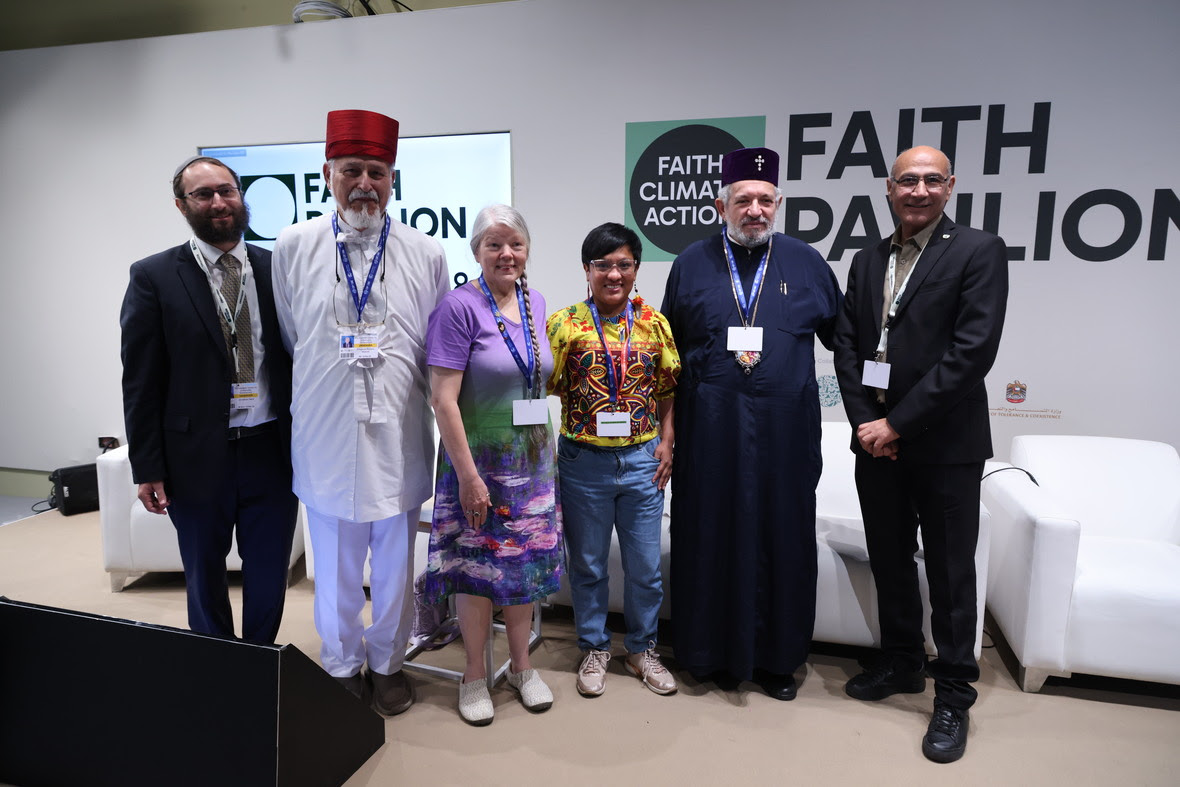
An interfaith walk from the Faith Pavilion at COP28 in Dubai, UAE
To promote interfaith climate action, faith communities came together to host the first-ever robust Faith Pavilion at a UN climate conference, COP28. The Faith Pavilion featured 65 sessions and 325 speakers, and took place at COP28, the UN climate conference that concluded last week in Dubai, UAE. Among the speakers were Pope Francis (via video), Sadhguru, Sri Sri Ravi Shankar, the Grand Imam of Al Azar El Tayeb (via video), and Chief Rabbi David Rosen.
The first chapter of Genesis records that after creating the world, God saw creation and ‘behold it was very good.’ Out of our love for this wondrous and majestic world that we are blessed to live in can emerge a call to protect it and take responsibility for it. You can read Eco Bible for a new Jewish take on planet and faith. It was co-authored by Rabbis Yonatan Neril and Leo Dee.
Eco Bible
The Faith Pavilion mobilized faith leaders and communities to call for urgent climate action, inspire the world with solutions, and demonstrate the pivotal role of faith communities in tackling the climate crisis in support of people and the planet. During COP28, faith communities issued a Call to Action urging for more ambitious agreements, reflecting the values of justice, interconnectedness and compassion for those most affected.
Situated at the heart of COP28, adjacent to the Global Climate Action Hub, the Faith Pavilion brought together religious and other civil society representatives, Indigenous Peoples, scientists, youth, and political leaders. As a hub for sessions, advocacy and media, the Faith Pavilion furthered the leadership role of religion and spirituality in the climate movement.
The case of Samira Sabzian didn’t end well. The child bride from Iran was married at 15 and then jailed at 19 after murdering her abusive husband. She was in prison for 10 years and was executed yesterday, age 29, in the Ghezel Hesar prison in Karaj, said the Norway-based Iran Human Rights (IHR) group. She was executed by hanging.
“Samira was a victim of years of gender apartheid, child marriage and domestic violence, and today she fell victim to the incompetent and corrupt regime’s killing machine,” IHR director Mahmood-Amiry Moghaddam said.
Samira Sabzian
During her detention Sabzian was denied meeting her children according to Iranian activists, one who shared her jail cell. And this was a source of great suffering to her.
Sabzian was hanged at dawn yesterday based on Iran’s sharia murder laws that come from a principle of ‘qesas’ (retribution in kind).
Human rights groups say the laws don’t take domestic violence into consideration. The victim’s family, however, can choose whether to accept the death penalty or ask for financial compensation. Sabzian’s husband’s parents asked for the death penalty.
According to IHR,18 women have been executed this year including Samira Sabzian. The rights groups says there is a surge in executions in Iran that put 115 people put to death in November alone. Amnesty International said Iran is authoring a “horrific state-sanctioned killing spree”.
Niloufar Mardani, a world leading athlete and veterinarian was threatened by the regime when she competed without a hijab.
Following the 1979 revolution, Islamic sharia law came into effect and the hijab, or full body covering, became a compulsory dress code for women in Iran. Since then, women have been required to wear the hijab, or face harassment and legal consequences from the morality police. Iran is also using face ID technology to catch women “criminals”.
Women who don’t comply might also be “disappeared” and whisked away into vans. This is what has happened in the past to well-known bloggers Green Prophet has interviewed like Hossein Derakhshan and to Faranak Farid who was beaten and tortured for trying to protect a disappearing salt lake, Lake Orumieh.
Bread holds a special place in Middle Eastern culture, serving not only as a staple food but also as a symbol of hospitality, community, and tradition. The diverse and rich history of the Middle East is reflected in its bread-making techniques, which vary across regions. In this guide, we’ll explore the fascinating world of Middle Eastern bread traditions, from the ingredients used to the methods employed in creating these delectable staples.
Varieties of Middle Eastern Bread: Middle Eastern countries boast a wide array of bread varieties, each with its unique flavor, texture, and purpose. Some of the most prominent types include:
Naan: A leavened, oven-baked flatbread common in Iran, Central Asia, and parts of the Middle East.
Lavash: A thin, unleavened flatbread with a soft texture, often used for wrapping or dipping. Lavash is one of the most widespread types of bread in Armenia, Azerbaijan, Iran and Turkey.
Markook: Also known as “Arabian Mountain Bread,” this thin, unleavened bread is commonly enjoyed in Levantine countries. Markook shrak is a type of thin bread. The dough is unleavened and usually made with only flour, water, and salt, and after being rested and divided into round portions, flattened and spread across a round cushion until it is thin then flipped onto the saj. It is often folded and put in bags before being sold.
Jump down to the bottom of this article where you will get recipes for breads from Morocco, Yemen, Iraq, The Emirates, Yemen, Israel and Jordan.
Traditional Techniques:Haguy Ben Yehuda making emmer wheat into sourdough bread
Tandoor Oven: In some regions, bread is baked in a traditional tandoor oven, which imparts a unique smoky flavor and a characteristic texture.
Griddle Baking: Flatbreads like pita and lavash are often cooked on a griddle or saj (convex griddle), allowing for quick and even cooking.
Sourdough Fermentation: Some traditional breads, such as Persian Barbari, use natural sourdough fermentation for leavening, resulting in a tangy flavor.
Ceremonial and Festive Breads:Oriental bread moulds used for Christenings, Eid or good celebrations. Image via Lebanon Postcard.
Eid Bread: During festive occasions like Eid, special bread varieties are prepared, such as the sweet Iranian Noon-e Sheereen. They resemble the festive bread of the Bukharian Jews.
Wedding Bread: In many Middle Eastern cultures, weddings are celebrated with elaborate bread designs and decorations, symbolizing prosperity and fertility. In Spain there is wedding bread dance where the bread goes on the head.
Culinary Customs:
Bread as a Utensil: In some Middle Eastern countries, bread is used as a utensil for scooping up food, emphasizing communal eating.
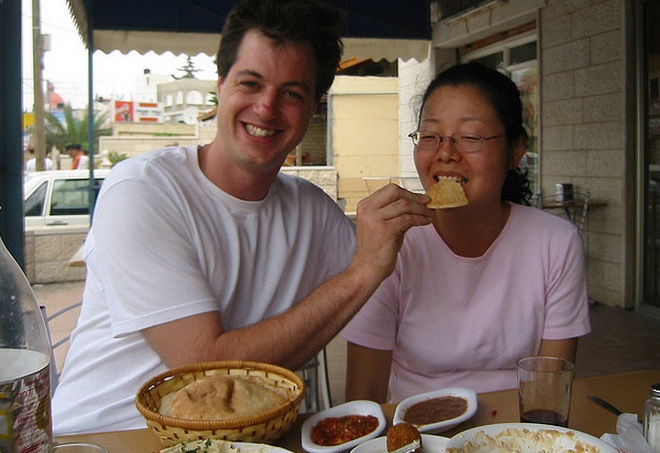
This is a couple eating hummus.
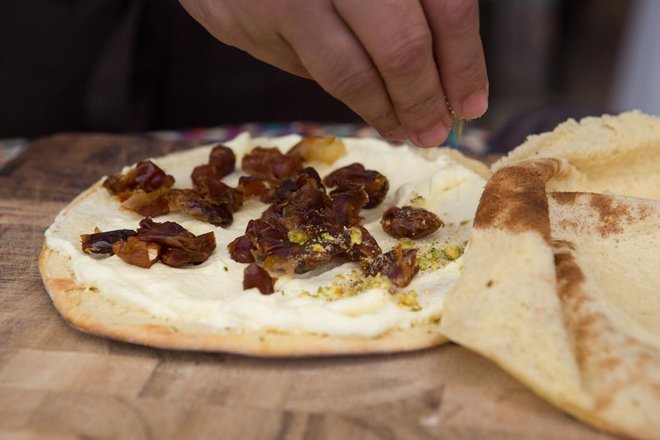
Bread and Dips: Various breads are served alongside an assortment of dips, like hummus, baba ganoush, and tahini.
Middle Eastern bread traditions are deeply rooted in history, reflecting the diverse cultures and culinary practices of the region. Whether it’s the comforting aroma of baking bread in a tandoor or the joy of tearing into a freshly baked pita, the bread culture in the Middle East is a testament to the importance of this humble yet essential food item in daily life. As you delve into the world of Middle Eastern bread, you’ll discover not only delicious flavors but also a rich tapestry of traditions that have stood the test of time.
So you are a fan of olives. Or at least olive trees. You’ve been to Italy, France, Lebanon or Greece and you want to remember that Mediterranean feeling? Or you live in the Med region and want some trees for your garden or home. We got a lovely olive tree in a pot once for a birthday gift and after a couple of months, it died. Verdict? Too much love.
As a fan of olive trees, you will be very happy to receive a piece of your favorite olive tree on your birthday. But plants are alive after all, and they will be lost one day. As a gift, you might as well customize the olive tree into Custom Keychains. Such Custom Keychains are not only in the shape of your friend’s favorite olive tree but can also be kept with you forever.
You have planted an olive tree in a pot or container to keep indoors or on your walkway and it’s been a couple of years. How can you take care of your potted tree in the long run? Here is a quick guide.
The A-Z of Potting Olive Trees at Home
A dwarf olive tree. Bring it out in the sun when the weather is pleasant
In the world of gardening, the olive tree stands as an iconic symbol, known not only for its bountiful fruit but also for its silvery-green foliage and associations with peace and longevity. While the prospect of cultivating these magnificent trees may seem daunting, especially if space or climate constraints come into play, the concept of potting olive trees emerges as a versatile solution.
Whether you’re a seasoned gardener expanding your botanical repertoire or a novice eager to embark on a new green adventure, this guide equips you with the knowledge to infuse a touch of the Mediterranean into your living space.
Selecting the Right Olive Tree
Choosing the right olive tree is a crucial first step toward successful cultivation. Not all varieties are equally suited for pot cultivation, and considerations such as climate, pot size, and available sunlight should influence your choice.
Understanding Your Conditions
Before making a selection, assess your growing conditions. Olive trees generally prefer a warm, sunny, and dry Mediterranean climate. If you plan to keep the tree indoors or in a colder region, choose a variety adapted to those conditions.
The Arbequina olive tree, originating from Spain, is recognized as an excellent choice for indoor cultivation and container growth. Its compact size, hardiness, and quick fruiting make it a standout variety. Another suitable option is the Picholine olive tree, known for its compact nature and excellent table olives. For smaller spaces, consider dwarf varieties like the ‘Little Ollie,’ which provides the ornamental appeal of an olive tree without the size or fruit. Don’t be surprised if your indoor tree does not produce fruit. It takes a number of years for an outdoor tree to be robust.
Consider the age of the tree. While mature trees in pots offer instant visual impact, they can be more expensive and challenging to handle. Young trees require more time to reach maturity but are often more affordable and offer the satisfaction of watching them grow.
Essential Requirements for Growing Olive Trees
If you live in a Mediterrean climate you can keep the trees outdoors
Despite their hardiness, olive trees have specific needs that must be met for optimal growth. Understanding these requirements is crucial for successfully growing olive trees in pots.
Selecting an appropriate pot is critical. Ensure the pot is large enough to accommodate the root ball and has adequate drainage holes. A diameter approximately 10 cm larger than the root ball is a good starting point. Olive trees dislike waterlogged roots, so proper drainage is essential.
Olive trees are sun-lovers, needing at least six hours of sunlight daily. Place them in a sunny spot near a south-facing window if grown indoors or in a south-facing garden if outdoors. Adequate sunlight is crucial for their health and productivity.
Olive trees prefer a Mediterranean climate with hot, dry summers and cool, wet winters. Maintain a stable temperature between 60 and 80 degrees Fahrenheit for indoor trees. Olive trees can tolerate some humidity, but in exceptionally dry indoor conditions, consider providing additional moisture with a humidifier.
While olive trees are drought-tolerant, they still require regular watering. Water deeply but infrequently, allowing the top inch of soil to dry out between waterings. Apply a balanced, slow-release fertilizer in spring and mid-summer to support growth and fruit production.
Olive trees thrive in well-draining soil rich in organic matter. Commercial potting mixes with perlite or vermiculite work well, and some gardeners find success with cactus or succulent mixes.
How to Plant an Olive Tree in a Pot
Indoors or out. Olives are timeless in any season
Whether planting for the first time or repotting mature trees, the planting process is a rewarding experience. Follow these steps for successful planting:
Select a pot that is 2-3 inches larger in diameter than the root ball. Ensure it has adequate drainage holes to prevent waterlogging.
Create a well-draining soil mix by combining standard potting soil with a grittier material like cactus soil or perlite.
Start by placing a layer of the soil mix in the pot, providing a base for the olive tree.
Gently tap the sides of the container to loosen the soil, and carefully remove the olive tree from its current pot, taking care not to damage the root ball.
Position the tree in the center of the new pot, ensuring the top of the root ball is level with the rim of the pot or slightly lower.
Fill the pot with the remaining soil mix, firming it gently around the base of the tree.
Water the tree thoroughly, allowing water to drain out of the bottom of the pot to settle the soil around the roots.
Place the pot in a sunny spot and follow olive tree care guidelines, including regular watering, maintaining the appropriate temperature, and providing balanced slow-release fertilizer during the growing season.
Indoor Olive Tree Care
Growing olive trees indoors presents unique challenges, but with the right care, indoor trees can thrive. Focus on light, temperature, watering, fertilizing, pruning, and repotting for successful indoor cultivation.
Ensure your indoor olive tree receives at least six hours of sunlight daily. Place it near a south-facing window or use a grow light to supplement natural light. Maintain a stable temperature between 60 and 80 degrees Fahrenheit.
Olive tree indoors in a big pot
Troubleshooting Guide for Growing Olive Trees in Pots: Do’s and Don’ts
Cultivating olive trees in pots can be a rewarding endeavor, but it comes with its own set of challenges. From watering woes to potential pests, troubleshooting is a crucial aspect of ensuring the health and vitality of your potted olive tree. In this guide, we’ll explore common issues, what to avoid, and essential actions to take when things go awry.
What You Should Never Do:
Overwatering:
Signs: Yellowing leaves, wilting, and a soggy soil surface.
Never Do: Allow the soil to remain constantly wet. Olive trees prefer well-draining soil, and overwatering can lead to root rot.
Do: Check the moisture level before watering. Only water when the top inch of soil is dry. Ensure proper drainage by choosing the right pot and soil mix.
Underwatering:
Signs: Drooping leaves, leaf scorching, and dry, crumbly soil.
Never Do: Neglect regular watering. While olive trees are drought-tolerant, they still need consistent moisture.
Do: Establish a watering schedule, especially during hot and dry periods. Water deeply but infrequently to promote healthy root growth.
Ignoring Drainage Issues:
Signs: Waterlogged soil, foul odors, and wilting despite adequate watering.
Never Do: Use pots without drainage holes or neglect proper potting mix with good drainage.
Do: Ensure your pot has sufficient drainage holes, and consider adding materials like perlite or gravel to improve drainage.
Choosing the Wrong Pot:
Signs: Root circling, stunted growth, and instability.
Never Do: Opt for pots that are too small or lack stability.
Do: Select a pot that is 2-3 inches larger in diameter than the root ball. Choose sturdy pots to prevent toppling.
Neglecting Sunlight:
Signs: Sparse foliage, leggy growth, and overall poor vigor.
Never Do: Place the olive tree in a shaded or poorly lit area.
Do: Ensure your potted olive tree receives at least six hours of sunlight daily. If indoors, position it near a south-facing window or use supplemental lighting.
What You Should Do:
Monitor for Pests:
Signs: Yellowing leaves, distorted growth, or visible pests.
Do: Regularly inspect your olive tree for pests such as scale, aphids, or mealybugs. Treat infestations promptly with insecticidal soap or neem oil.
Addressing Root Issues:
Signs: Circling roots, yellowing leaves, and poor growth.
Do: Repot your olive tree every 2-3 years to prevent root binding. Tease apart circling roots when repotting to encourage outward growth.
Protecting from Extreme Cold:
Signs: Frost damage, wilting, and leaf discoloration.
Do: Insulate the pot with bubble wrap or burlap in colder months. If possible, move potted olive trees indoors during freezing temperatures.
Appropriate Pruning:
Signs: Overgrown branches, uneven canopy, or lack of fruiting.
Do: Prune your olive tree in late winter or early spring. Remove dead or diseased branches and shape the tree for a balanced appearance.
Fertilizing Wisely:
Signs: Yellowing leaves, poor growth, or nutrient deficiency.
Do: Apply a balanced, slow-release fertilizer in spring and mid-summer. Avoid excessive fertilization, as olive trees are not heavy feeders.
Regular Inspection:
Signs: Unhealthy leaves, abnormal growth patterns, or changes in color.
Do: Regularly inspect your potted olive tree for any signs of stress or disease. Prompt identification and action can prevent larger issues.
Winter Care:
Signs: Frost damage, leaf drop, or wilting in cold temperatures.
Do: Provide winter care by insulating the pot, moving indoors if possible, and reducing watering frequency during dormant periods.
Growing olive trees in pots involves a combination of attentive care and timely interventions. By avoiding common pitfalls and addressing issues promptly, you can ensure your potted olive tree thrives, bringing the charm of the Mediterranean to your home or garden.
Environmentalists have been stressing the problems of modern construction and architecture for decades. Some of the biggest concerns are the use of concrete –– its impact on sand and carbon emissions, and its poor thermal capabilities. Or the fact that local materials just aren’t used enough. If you look at the rapid expansion of cities like Dubai, the problems are obvious: starchitects brought in from abroad to build a glittering city meant to support “the high life” and create a feeling of abundance among the sand dunes. As though sand dunes and deserts aren’t glorious enough.
What you get in Habitat, updated just last year, is a world of possibilities as we look forward to new sustainable practices that mesh with nature and the humanity in us. You get proven examples of low-cost sustainable architecture for every geographic and climatic region on this planet. You also get modern takes of vernacular values, and applications providing inspiration for architecture firms young and old.
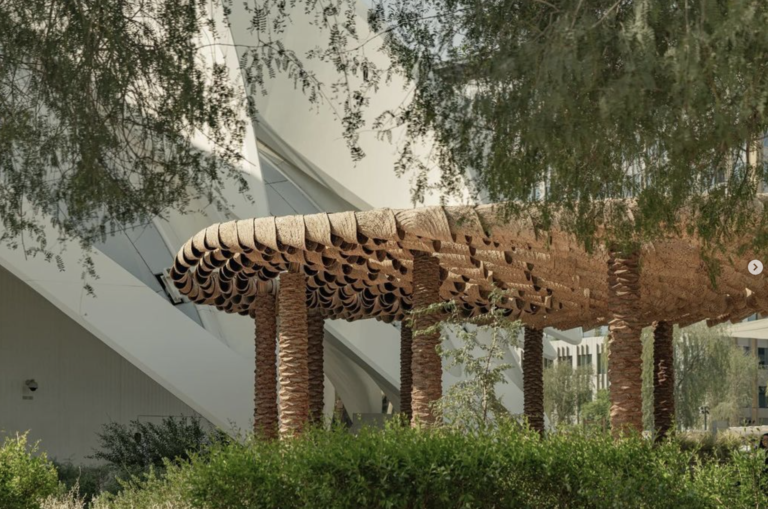
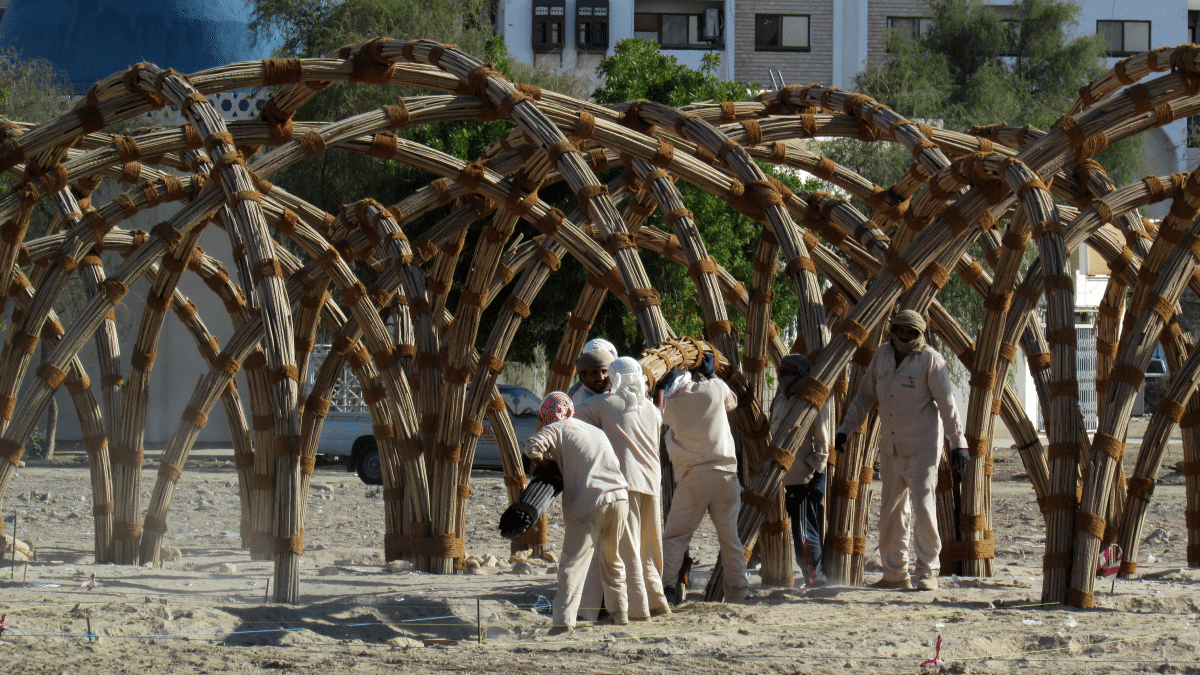
An Emirati develops a beautiful pavillion from arish, date palm this year at Dubai Design Week. Not featured in the book, but a shining example of vernacular in the UAE
Your life as an architect or student can not be complete without owning a copy of this masterpiece of a book.
The problem I see in architecture today is a disconnect between architects, the investors in architecture and the approach to culture and place. Big firms still get the highest bids for so-called sustainable architecture, with firms like Foster + Partners and Zaha Hadid‘s firm winning the bids even when the plans for cities in Saudi Arabia could mean wiping out an island’s ecosystem or making no sense for the climate. There will be ski hills in the hot desert or a linear city that transects a mile of desert on the Red Sea. We learn from the ultra-modern zero-waste Masdar City that no-one wants to live in futuristic ideas alone. We also learn from Hasan Fathy that a local architect’s vision of mud housing may not fit the cultural needs of a people. How can we create a better fit? HABITAT offers some clues.
If you are an architect who wants a crash course on sustainable architecture this book is an antidote to the troubles to today’s senseless planning and construction industry.
HABITAT Vernacular Architecture for a Changing Climate
What I get from the book as I was thumbing through it: people need a human-scale approach to housing: that’s why we seek balconies, terraces and small gardens in the city. We feel better around trees and nature in any instance, and if you have had the chance to sleep in a home made from natural materials, you will agree it impacts your sleep and overall mood.
I’ve stayed in vernacular homes in Normandy, France (built with no nails); in mud and stone palaces in Syria, in caves in Cappadocia, in my own vernacularly built pioneer home in Canada; in Bedouin tents in Israel; I’ve stayed in strawbale homes with Bill and Athena Steen in Arizona, and I’d spent plenty of nights bamboo huts and homes in Thailand.
Laayoune Technology School in Morocco
What links all these remarkable dwellings is the local: homes and shelter built without architects or designers, built with local materials such as stones and wood, wool, mud and bamboo, and in a way anchored with ancient wisdom that kept climate in mind because that’s how people survived.
Every architecture student, practitioner and teacher needs to read Habitat: Vernacular Architecture for a Changing World by Thames & Hudson: It is a breathtaking and astounding encyclopaedia of natural building that can save our planet. Professionally speaking indigenous architecture is also called vernacular architecture. Vernacular is a great way to describe indigenous architecture as it can include materials from the built environment, as we see in images and descriptions of slums in Brazil and Africa.
Slums of Freetown, Sierra LeoneSouth Africa, Drakensberg, traditional Zulu hut
Habitat, recently updated in May 2023 since its original publication in 2017, and edited by architect Sandra Piesik, shows you the power of a dedicated publishing house in this book. It is a landmark publication signalling to every nation and people in the world to start cataloguing their vernacular before it it is lost. HABITAT can be the basis for a series of vernacular architecture books from every corner of the world.
Habitat contains over 1000 illustration, organised by the five major climate zones, covering polar, temperate, tropical, desert and continental, and more than eighty countries worldwide. The book reveals how people and cultures have adapted to their environment to make the best use of indigenous materials and construction techniques, and stresses the importance of preserving disappearing craftsmanship and local knowledge before it is too late. It is an invaluable resource document for the future generation who will shape our built environment.
Over in the Middle East we know that Hassan Fathy devoted decades of his life to building New Gourna, a model as architecture for the people. His experiment worked as a concept but did not spread as much as he would have wanted. An almost 500 pages of this book, includes the vernacular greats like Fathy, but it also serves to show the reader highly unusual and sometimes temporary structures built by tribes in the jungle, like the stilt houses of the Korowai people in New Guinea.
What gives the book credibility is the approximate 100 authors and researchers, leaders in their fields of sustainable architecture giving an historical, climatic and materials overview to their geographical sections. If you are dealing with climates and materials you can search in the notes and bibliography according to geography, climate regions, learning more than you thought you could know about local architecture around the world.
Cabana, Habitat and Lo-TEK books at home
A series of helpful essays and photos gives us a glance at how we can apply contemporary vernacular in today’s buildings, with a look at Morocco’s Technology School of Guelmim or Sabla’s Palm Leaf Shelter’s in Abu Dhabi. If I have one complaint about Habitat is that the photos are too incredible, the essays too information-filled that it makes reading the book from cover to cover an impossible task. It is the grandmother book to Lo-TEK, a book I own that covers radical indigenism in building, as the author puts it, or rather, radical ways to build using natural building materials and knowledge at hand.
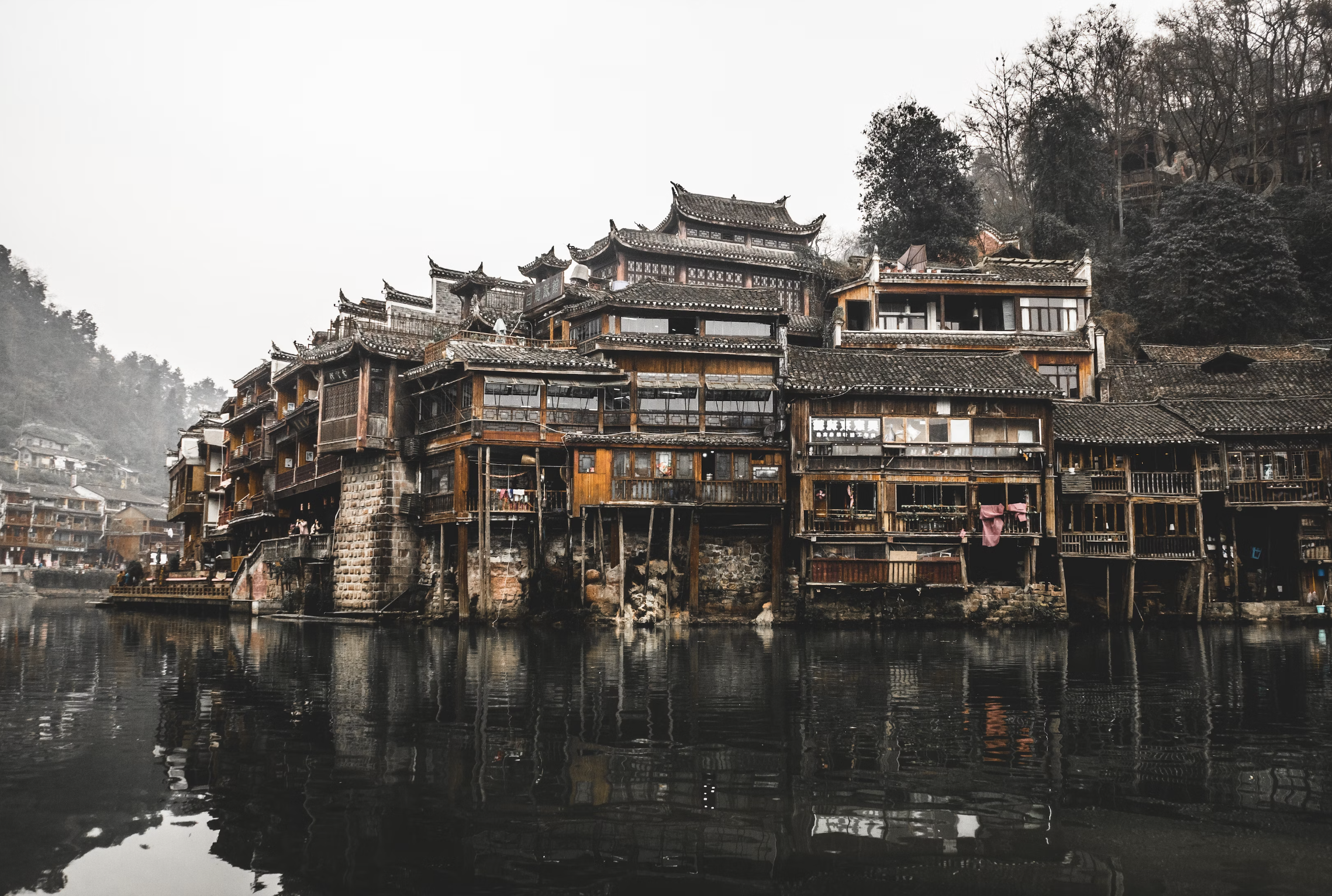
Fenghuang, Xiangxi, China
Productive healthy, happy people need a roof over their heads –– one that offers an honorable, comfortable and secure place to live is something that everyone everywhere needs. If you have traveled to any desert in the Middle East or even Egypt, you will see people living in hobbled-together tin shacks, barely keeping out the freezing wind at night or the debilitating sun by day. Better-loved vernacular practices can show the people how to build better, and maintain the homes with local materials.
Don’t think this is just an idea for developing countries. The tiny home and global nomad movements in America, Europe and Canada are fuelled by economics. People don’t want to spend their lives working for the home they don’t get time to live in. People want to live not to spend their lives working.
An interview with the editor of HABITAT Sandra Piesek
Sandra Piesek
Sandra Piesik is an award-winning architect, author, and scientist specialising in a diverse range of subjects from art and design to the implementation of global sustainable legislation, nature-based solutions, innovation, technology transfer, and contemporary adaptation of traditional knowledge. She is the founder of 3 ideas, an Amsterdam-based consultancy, a member of the New European Bauhaus EU initiative, an advisor to UNFCCC, and a former senior consultant to UNFCCC, UNCCD, and UN-HABITAT Global Solutions Division on territorial integration. She’s also edited a book on Arish – Palm leaf architecture.
Here is our interview with her:
What inspired you to start this massive undertaking of cataloguing the world’s vernacular architecture.
I was invited by Thames & Hudson to edit HABITAT in London in 2012, following our previous book ‘Arish: Palm – Leaf Architecture’, which coincided with the first European Exhibition on Date Palm Leaf Architecture in the United Arab Emirates at The Royal Geographical Society in London in 2012. The genesis of understanding vernacular architecture came from my research in the UAE focused on date palm architecture and conviction that it holds solutions to some of the pressing challenges of our times.
HABITAT seems very neutral. What is your approach with the book?
HABITAT is structured around five climate zones of the planet, based on the Köppen Geiger climate classification. We focused on the geography and ecosystems, and by doing so we provided evidence of an intrinsic relationship and co-dependency of the built environment with individual climate zones, their natural resources, and the built environment. I have to credit 143 contributors from over 50 countries and the Thames & Hudson editorial team.
Despite your neutrality, do you have 3 favorite vernacular architects? Who are they?
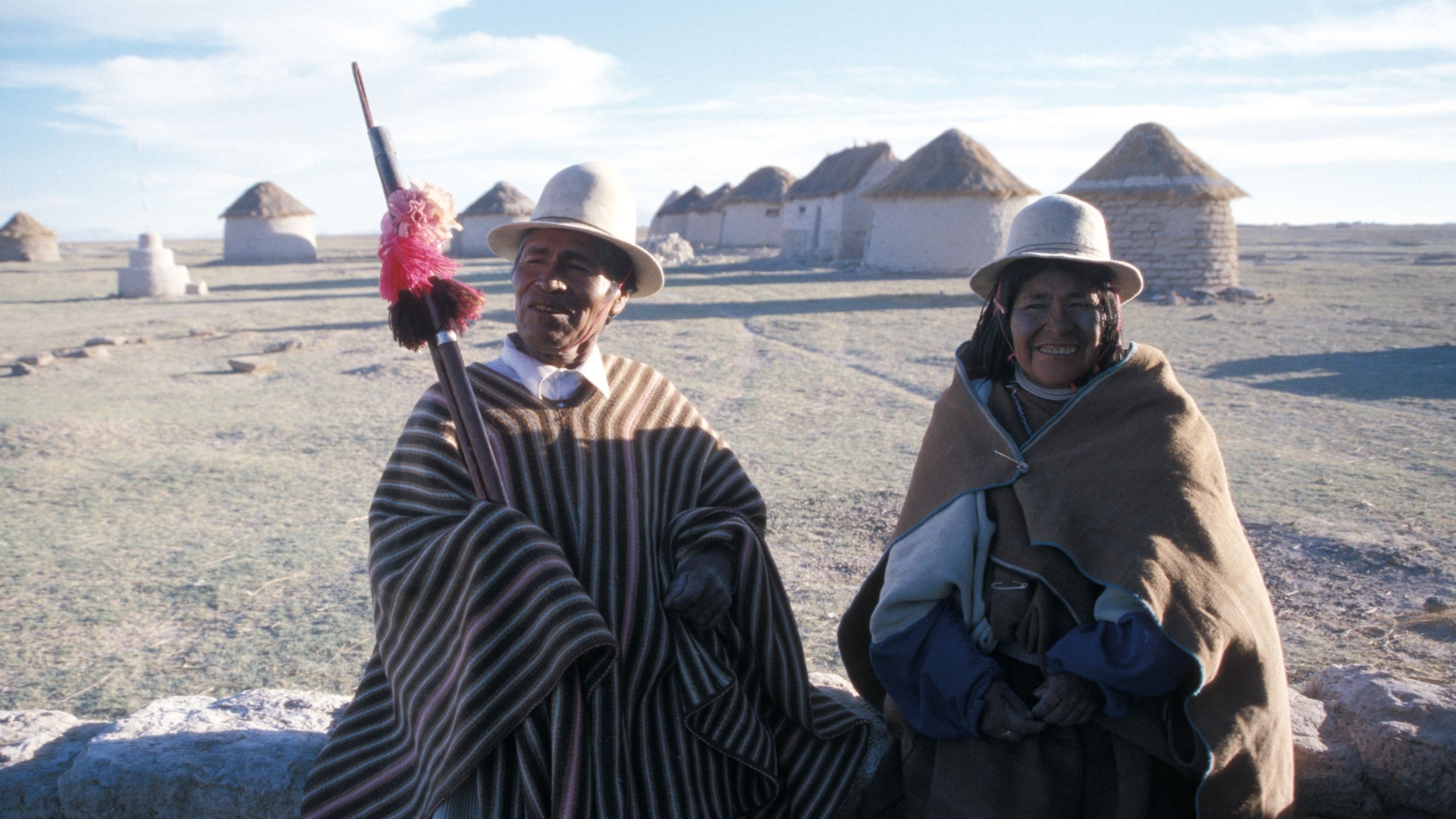
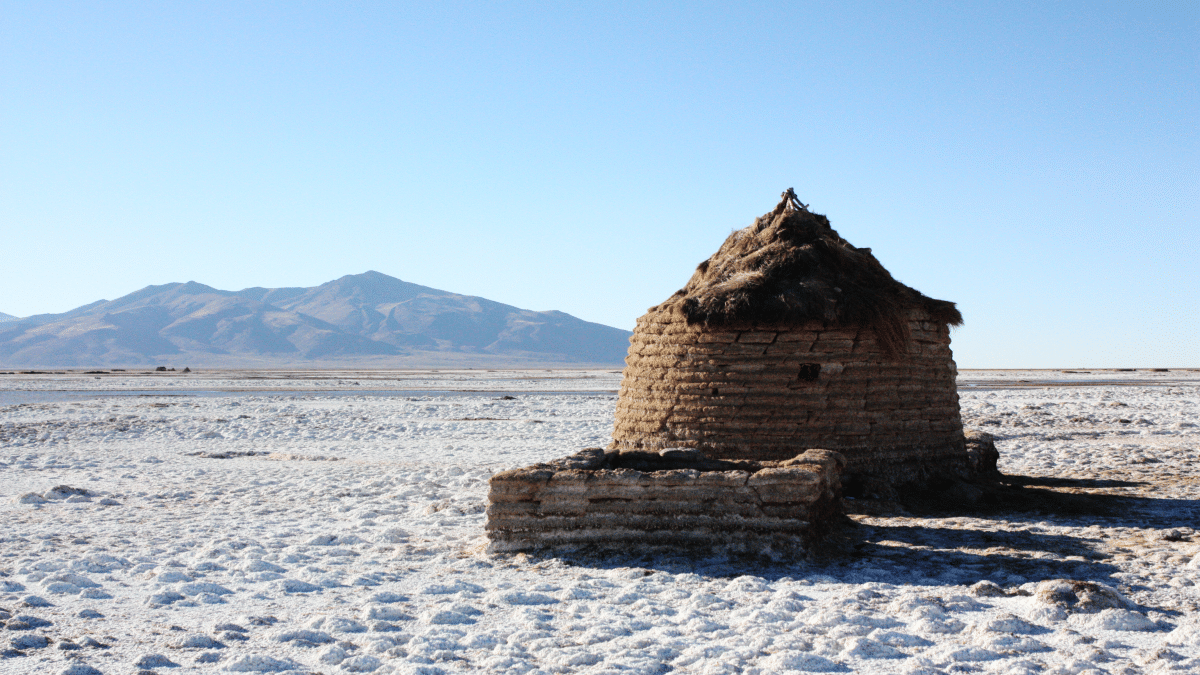
Moist clay conical house, Bolovia and above people from the Chipaya salt flats via GSTIC
Vernacular architecture is ‘architecture without architects’ in other words indigenous peoples of the past were all architects creating bio-design masterpieces based on one fundamental skill: their capacity to observe nature. My favorite case studies are from Bolivia, where Chipaya indigenous peoples worked as civil engineers at the regional scale redirecting rivers and intervening in the ecology of the salt flats in Bolivia, vernacular architecture there is a by-product of environmental activities. In China, Kam communities embraced agroforestry, and their spectacular drum towers as well as timber architecture reflect the regional bioeconomy. I must also mention Liwa Oasis in the United Arab Emirates and a date palm leaf architecture by Bedouin tribes of the Rub Al Khali desert, whom I had the privilege to meet in person.
What are the biggest lessons architecture students can take from this book?
The intrinsic relationship and interconnectedness of the built environment with its natural ecosystems and climate zones. Contextualization of architecture and urbanism within bio-economic activities, giving birth to bio-circular economy and bioregional approaches 12,000 years ago. Frugal innovation derived from the observation of nature and shaping an identity of the place through ornamentation and design.
We see catastrophic situations for refugees and migrants around the world. In Gaza, Syria, Afghanistan. What kinds of projects could scale quickly to get decent and local housing for people in a crisis? Do you have any thoughts for architects building shelter?
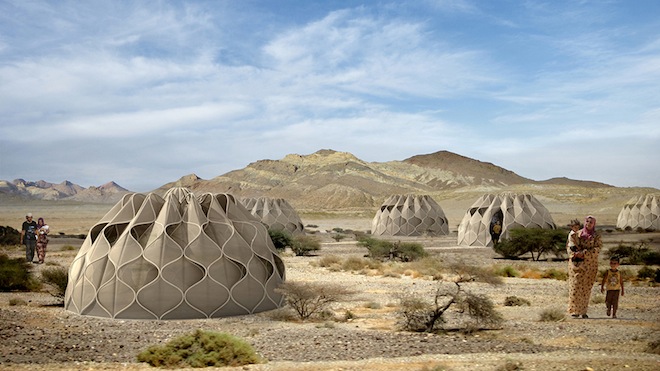
Abeer Seikaly’s Woven Shelters for refugees in concept only
The fundamental issue here is to bring geography to the discussion on climate change, which has been absent in recent years. Understanding the interconnectedness between climate change, agriculture, provision of jobs, and livelihood strategies would reduce migration and allow for holistic approaches. The demand for emergency accommodation is increasing all over the world. Cities like New York work within the existing urban fabric, historically the Gulf basin cities provided accommodation for the refugees in the peri-urban areas and what is needed are livelihood strategies in addition to housing alone, as well as a socio-economic mix to building shelters.
What would you like to see less of in architecture?
De-globalization and de-westernisation of architecture will lead us to new bio-regional models of urbanism which the planet and its peoples desperately need. Narrow and sectorial approaches to the built environment limit our capacity to address the multidimensional challenges of our time, and I hope that the future will bring broader perspectives. I also think that quantitative approaches to sustainability focusing purely on metrics limit the role of architects’ qualitative and creative approaches and this is what historically we as architects had to offer.
I would like to see more bio-regional initiatives such as the New European Bauhaus embracing sustainability, inclusion, and beauty adopted by various regions across the world within their own ecological, cultural, and social domains. I would like to see more of the plurality of approaches, where once again we will be able to co-create new forms of regional cultures. I hope that in 2024 and the future, we will be able to base all our actions and decisions on the positive impact we are making on nature and each other.
About the publisher of Habitat
Thames & Hudson is a publisher of illustrated books in all visually creative categories: art, architecture, design, photography, fashion, film, and the performing arts. It also publishes books on archaeology, history, and popular culture.
Flooring options play a significant role in the environmental impact of our living spaces. As concerns about climate change and resource depletion grow, consumers are increasingly seeking sustainable alternatives. In this article, we will explore three popular sustainable flooring options: bamboo, carpet, linoleum, rubber, cork or new or upcycled wood, and poured concrete, considering their environmental impact, certifications, and pros and cons.
Is Timber Flooring Sustainable?
Wood is a natural and renewable source of flooring, but its sustainability depends on responsible sourcing and harvesting practices. In the past, a significant portion of timber imports involved illegal logging, contributing to deforestation and environmental degradation. However, recent efforts have been made to address these issues.
Buying Recycled Timber
One of the most sustainable options is using recycled (reclaimed or upcycled) timber boards. These have a lower environmental impact than new plantation hardwood timbers, which can take up to a century to grow. Recycled timber also provides an opportunity to use rare hardwoods that are challenging to find in today’s market. Companies specializing in reclaimed floorboards or those selling boards from demolished buildings are good sources.
Certified Sustainable Timber
Another responsible choice is certified sustainable timber. The Forest Stewardship Council (FSC) is a globally recognized accreditation program that ensures timber comes from sustainably managed forests. FSC-certified timber, whether from a plantation or a native forest, indicates adherence to sustainable principles. Additionally, the Australian Forestry Standard (AFS) certification is recognized by the Programme for the Endorsement of Forest Certification Scheme (PEFC).
Ecospecifier’s “Green Tag” and Good Environmental Choice
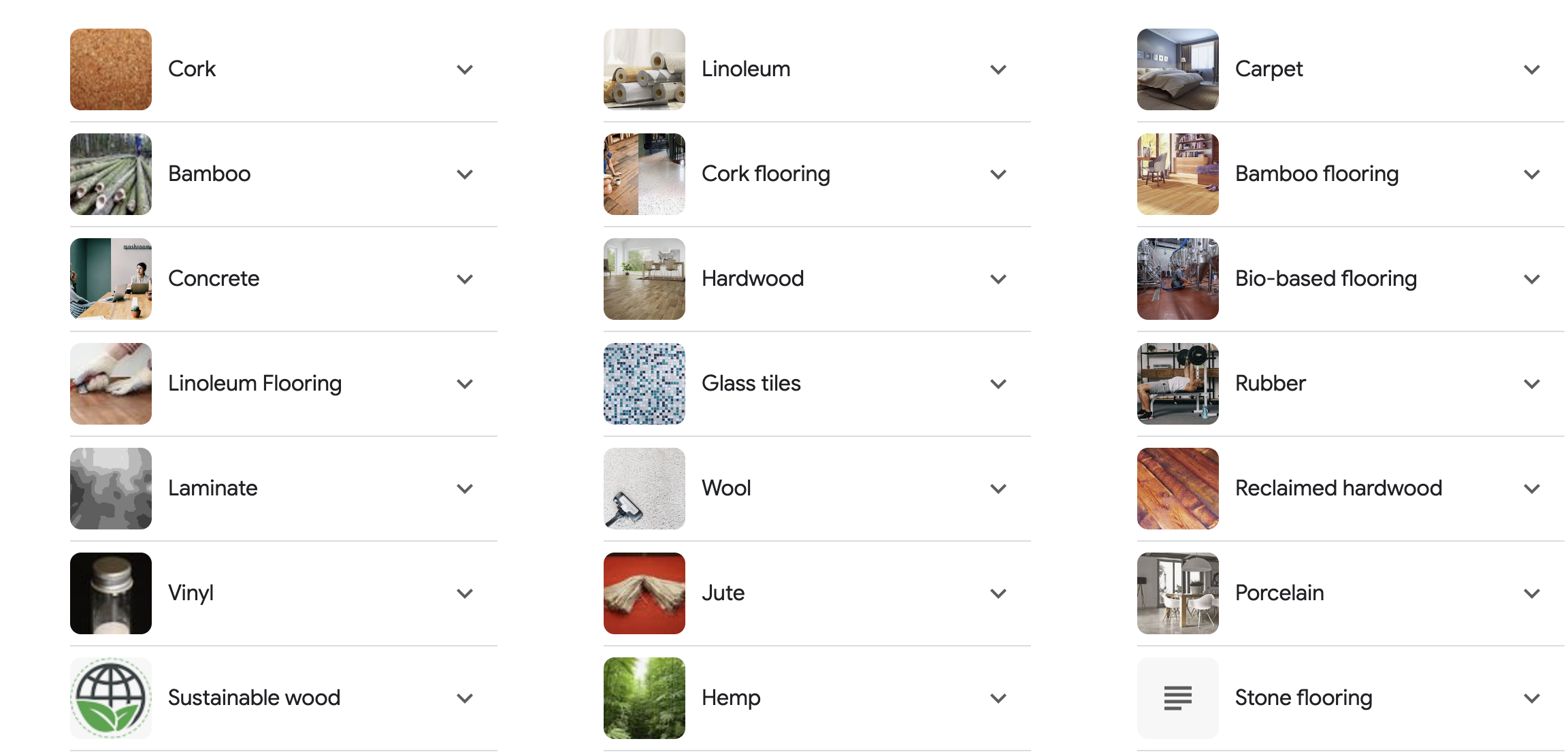
Google search for eco-friendly floors and these are the options. Know any more? Earthen floors…
Ecospecifier’s “Green Tag” is an eco-label for green building materials, rating products based on their total life cycle. Another reliable certification is the Good Environmental Choice label, which indicates a product’s environmental performance from a holistic perspective. These certifications help consumers make informed choices when selecting sustainable flooring options.
Beware of False Claims
While certifications provide a level of assurance, it’s essential to be cautious of false eco-labels or green claims. Some products may have multiple wood layers, with only a fraction certified. Buyers should carefully read certification details and ask for proof from suppliers. Checking lists of certified timber suppliers on the websites of organizations like FSC, AFS, Greenpeace, and Ecospecifier can help ensure credibility.
Which Wooden Timbers Are Sustainable?
Certain types of timber are more sustainable than others. Rubberwood from old rubber trees, FSC-certified or Ecotimber, New Guinea teak, FSC-plantation eucalypt, and bamboo are considered sustainable choices. On the flip side, timbers like Burmese teak, African mahogany, merbau, ramin, and meranti are best avoided due to sustainability concerns.
Bamboo flooring has gained popularity as a sustainable alternative to traditional hardwood. Harvesting fast-growing bamboo is believed to have fewer environmental and greenhouse impacts compared to timber. However, some bamboo flooring is manufactured using glue that may emit volatile organic compounds (VOCs). Consumers should research and choose bamboo floorboards with low-emission glues to minimize environmental impact.
Environmental Considerations Around Flooring
Embodied Energy
Embodied energy refers to the energy used in producing a material. Choosing flooring with the least materials helps minimize environmental impact. For hard flooring like timber, avoiding additional carpeting is advised, as carpet production involves significant materials and energy.
Regular Floor Cleaning
The energy spent on cleaning floors is a substantial environmental consideration. Carpets, being high-maintenance surfaces, contribute more to environmental impact than hard floors like bamboo, stone, or concrete. Low-maintenance surfaces are preferable for sustainability. Look for eco-friendly cleaning options.
Durability
The durability of a flooring material influences its long-term environmental impact. Hard floors such as timber, stone, concrete, and tiles tend to last longer than carpets. Longer-lasting materials require fewer resources over time, contributing to sustainability.
Floor Finishes
Even eco-friendly flooring can be compromised by high-embodied energy finishes. Choosing natural-oil hard-finish coatings over potentially toxic polyurethane coatings enhances the sustainability of the overall flooring system.
Toxic Emissions
Certain floor coverings emit volatile organic compounds (VOCs), which can pose health risks. Adequate ventilation is essential, but avoiding materials known for high VOC emissions, such as some carpets, contributes to healthier indoor air quality.
Thermal Mass
Flooring materials with high thermal mass, like stone, tile, concrete, rammed earth, and bricks, contribute to energy efficiency. However, covering these materials with carpet or other finishes diminishes their thermal mass benefits. Consideration should be given to balancing insulation and thermal mass benefits.
Using Carpet Sustainably
For those who prefer carpet, sustainable options include buying second-hand carpets, choosing products made from recycled materials, and minimizing waste through systems like carpet tiles. Additionally, natural fiber carpets like coir, sisal, or seagrass from sustainable sources offer eco-friendly alternatives.
Pros and Cons of Different Sustainable Floor Types
Can contain toxic plasticizers and lead-based stabilizers that off gas.
Made from petroleum-based materials.
Not recyclable.
What floor choice is for you?
Sustainable flooring is a critical component of environmentally conscious living. By choosing eco-friendly options, consumers can contribute to a healthier planet. From recycled timber to bamboo and resilient floors, each sustainable flooring type has its advantages and considerations. As global awareness grows, and certifications become more widely recognized, it’s easier for consumers to make informed decisions about sustainable flooring. The global perspective on eco-friendly flooring emphasizes the importance of responsible sourcing, embodied energy, durability, and maintenance considerations.