One-handed Whole Wheat Pita Recipe, the Old Yemini Way

pita wheat recipe
A recipe for making your own whole wheat pita bread.

If you don’t live in the Middle East, where the pita is the staple bread, and can be used instead of napkins for wiping humus off your face, chances are the pita breads you will find are old and stale. Or packed with chemicals, or frozen. If you do live in the Middle East, you’ll be hard pressed to find whole wheat pita. But dear readers, I have the ultimate recipe for you thanks to a young Yemenite woman who taught this westerner the tricks of the trade. (Sad disclaimer: I grew up on Wonderbread). Keep reading for the recipe and scroll to the bottom of the post for all the images.

Sari has been coming over to my house a few days a week to help take care of my baby. A few weeks ago she brought a pita bread, one she’d made with her grandmother, in the old Yemenite way. “With one hand, two fingers!” her grandmother insisted. Enjoying a new health food store near my house, I picked up some high-quality, pre-sifted whole wheat flour, and some quick-rise yeast, and Sari taught me the old Yemeni ways.

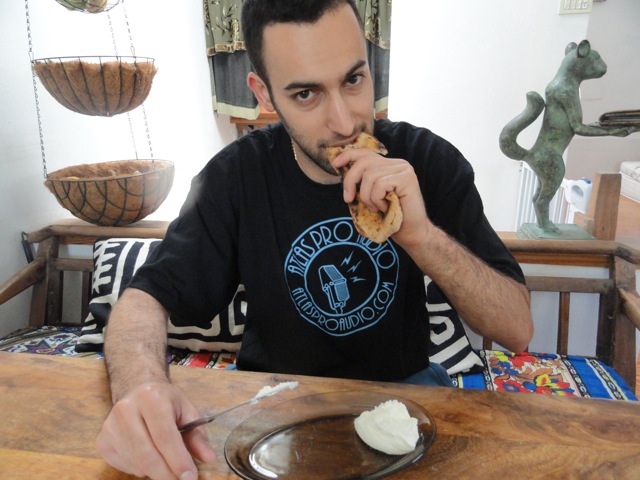
Our first round of pitas were a resounding success, and I gave a bag full to my husband’s band as they were heading for an event in Jerusalem. They are yummy eaten alone, drizzled with olive oil, or wrapped around some goat cheese. For breakfast, I commit an act of sacrilege by eating them with butter.

The method for making whole wheat pita

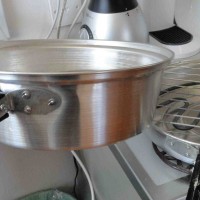
The trick is not just forming the pita with one hand, two fingers, it’s about maintaining a delicate balance with water. Add too much water and the pita will be hard to form, and too little, they will be hard. Another important piece of equipment is a pita pan. If you live in an Arab country, just ask a local store for a pita pan. See picture below. If you can’t find one, I’ve included a picture if it’s useful, then improvise. The trick is to have intense heat on both sides of the pita at the same time.
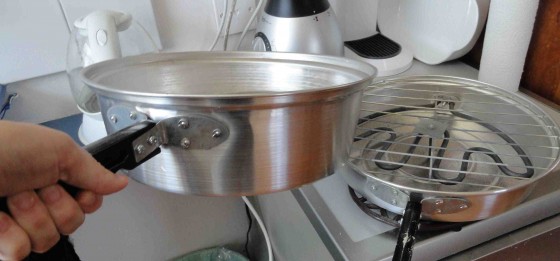
pita baking pan

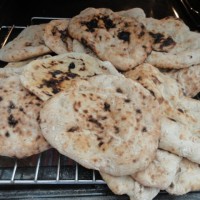
Handmade, organic Yemenite pita

1 kg pre-sifted whole wheat organic flour (set aside half a cup for the end)
1 tsp salt (or more depending on taste)
1/2 teaspoon sugar
1 tbs olive oil (or more depending on taste)
1 1/2 tsp of yeast
2 cups water

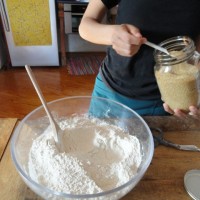
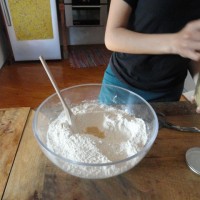
Pour flour into a large bowl. Add dry ingredients. Stir with a wooden spoon.

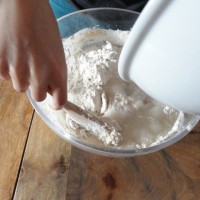
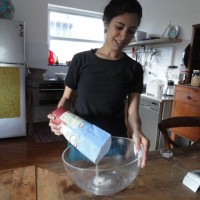
Add olive oil to 2 cups of water, luke warm, preferably filtered with a Brita or similar device.

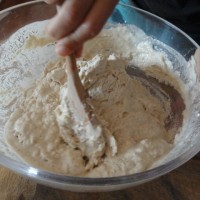
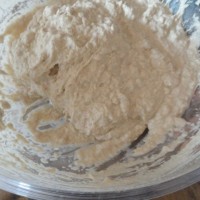
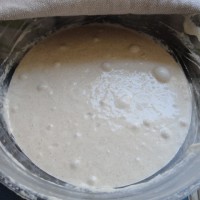
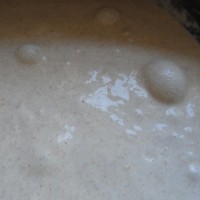
Take wooden spoon and stir while adding water. Dough should be considerably softer than when making regular bread. Firmer than cake dough, but softer than bread dough. About the consistency of cake icing or pizza dough. Later, as it’s rising you should be able to see bubbles on the surface.

Pita bread rising schedule:

Stir all the ingredients together, then set aside for 10 minutes covered with a clean towel. You can sprinkle the surface with a bit of water.

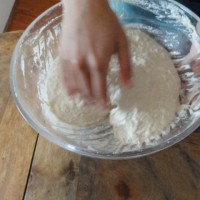
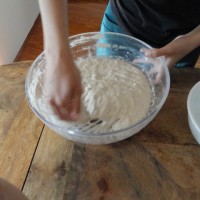
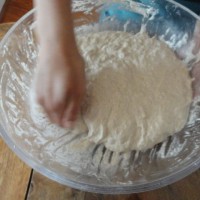
Take one hand, dip it in water, and plunge into the dough along the side of the bowl, and let the dough flop down trapping air. Repeat this for a few minutes, but only add water to prevent your hand from sticking to the dough.

After 10 minutes, repeat.

Let dough sit flat in the bowl and cover with cloth to let rise. After it rises, about 1 to 1.5 hours depending on temperature, fire up your pita pan. Put the stove on to medium high.

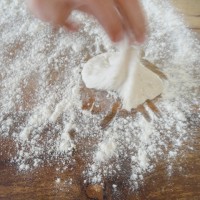
Wet fingers, and take a tangerine size ball of sticky dough and drop it onto a flour surface, preferably a tray to contain the mess. Pull wet dough from the side, and fold it up on top to form a round ball lined on the outer side with flour.

Form it in your hands, or pat the pita down on the surface covered with flour. Quickly drop it onto the pan, and immediately place the lid on top so the element in the lid heats the top side of the pita. Leave for about 1 minute or until you see a bit of smoke.

Remove with tongs and repeat. This recipe makes about 20 pita. Be careful about burning yourself though. I’m nursing a nasty burn as we speak.

Enjoy.

More recipes that go well with whole wheat pita:
Recipe for Baba Ghanoush
Recipe for Muhamarra
Tomato Confit Recipe

Karin Kloosterman
Karin Kloostermanhttp://www.greenprophet.com
Karin Kloosterman is an award-winning journalist, innovation strategist, and founder of Green Prophet, one of the Middle East’s pioneering sustainability platforms. She has ranked in the Top 10 of Verizon innovation competitions, participated in NASA-linked challenges, and spoken worldwide on climate, food security, and future resilience. With an IoT technology patent, features in Canada’s National Post, and leadership inside teams building next-generation agricultural and planetary systems — including Mars-farming concepts — Karin operates at the intersection of storytelling, science, and systems change. She doesn’t report on the future – she helps design it. Reach out directly to [email protected]

Read More

1 COMMENT

TRENDING

A visit to Amirim, Israel’s first all-vegetarian village in the Galilee

Just 15 kilometers from Tzfat there is a moshav that was founded in the late 50s that was ideologically influenced by organic, vegetarian and vegan principles. My hostess at Ohn-Bar, the tzimmer where I stayed, explained that the people of Amirim were among the pioneers of Israel’s strong vegetarian movement.

What’s in season in June – plus recipes and forager’s notes

Middle Eastern markets are bursting with the color and aromas of summer's soft fruits. This is the guide to getting the most out of June. 

Jailhouse Booze For Home Bootleggers

You don’t have to languish in jail to make Jailhouse Booze. It’s an easy, fun project you can make in your own kitchen, with fruit juice. Old-time jailbirds used to call it Pruno. We also have another, no-waste, alternative wine recipe: Pea Pod Wine.

Make Guarapo De Piña (it’s fermented pineapple juice)

In Cuba, guarapo is simply freshly-pressed sugar cane juice, and is drunk on the spot, without waiting for it to ferment. But in Colombia, Venezuela, Peru and Mexico, they homebrew guarapo from pineapples or oranges, and the fragrant fluid sits on the kitchen counter top to ferment until it's bubbly.

Bake a New York Cheesecake for Shavuot

This light, creamy cheesecake fits into your green Shavuot, especially if you make it with organic cheese and eggs. It's also light on sugar.

Yerukim Forms a New Green Economy Where the Money is Really Green

The Yerukim members who pick up the recyclables get to keep the monetary reward, the public earns "green" bills that can be used in shops, and business owners get to be associated with environmentalism.

Choosing Riyadh over Dubai? What Investors Should Know

Saudi Arabia is deploying capital at unmatched scale to catalyze tourism and advanced industry while rewiring its power-and-water backbone. The investable frontier is widening—especially in renewables, grid storage, water efficiency/desal retrofits, and hospitality operating platforms. Prudent investors will insist on phased delivery, enforceable KPIs (energy, water, biodiversity), and RHQ/zone compliance—while pricing political-economy and reputational risks alongside growth upside.

Sell your cooking oil for biodiesel money

Want to make money on old french fry oil? Sell it.

Qatar Alternative Energy Summit Pairs Investors And Innovators

Alternative energy investors and innovators can meet n' greet in Doha, Qatar March 16 and 17.

Here’s How To Implement The Four Pillars Of Employee Engagement

If you throw a party for your work team and they are vegans, don't make it a barbecue. Know the sustainability values of your team to boost moral and retain good people.

Locals From Rishon Fight IKEA

Big Box stores are a pretty new concept in Israel, and thank God that not every Israeli city wants them in their backyard. A word from someone who has see the beautiful farmland around her hometown Newmarket, Ontario stripped and converted into vulgar strip malls of big box shops: they have no place in a healthy and sustainable town or city.

The Jewish National Fund Meets An Inconvenient Truth

According to the JNF, it has transformed thousands of acres of barren land into green forests in Israel. They state that each person emits about 23 tons of carbon per year, estimating that each tree planted can absorb one ton of carbon in its lifetime. That's a whole lot of trees you'd need to be planting. Could so many fit in Israel?

How to quiet noise from construction in your office

Streets need to be resurfaced in New York but the humming and grinding noise is unsettling. Noise is environmental pollution. 

Popular Categories