
Saudi Arabia, Corals, Aviation and Basil – Green News Snippets

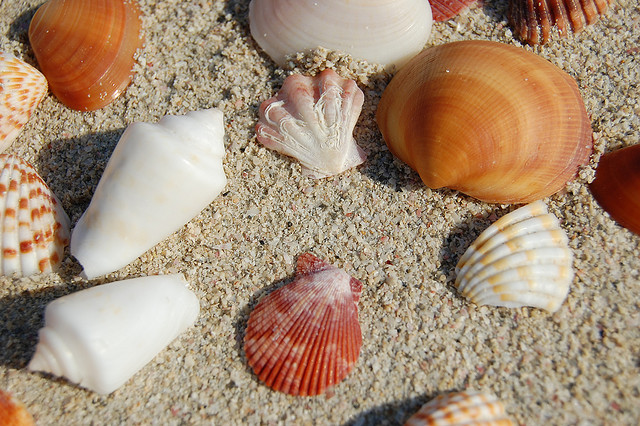
corals and shells saudi arabiaFrom  super corals in the Arabian Gulf, basil planting in Palestine to aviation and Saudi Arabia’s mixed climate message

It’s been another busy week here at GreenProphet and we hope you’ve been enjoying our news offerings. We’ve covered everything from pink farming (yep, you read right), the shocking NASA images of Iran’s salt lake Urmia and Laurie also launched our very own plastic bag challenge. If you are still after more green news from the region, then enjoy our hand-selected news snippets for the week.

Saudi Arabia’s Mixed Climate Message
After impressing the international community by ditching its climate-skeptic climate negotiator (yes, the irony), Saudi Arabia takes a step back. According to reporting from Grist, Saudi Arabia and various other countries such as the US have been pressuring the European Union to reverse its decision to include aviation in its Emission Trading Scheme. The ETS programme states that all planes flying to or from the EU must be part of a scheme which puts a decline cap on the emissions of the sector.
:: Grist

Basil Planting In Palestine
Although not a local herb or something which is used in the cuisine, Palestinian farmers have taken to growing basil. According to Al Arabiya, farmers in Jericho are relying on basil to make a living by shipping it out to lucrative European and American markets. There are approximately 120 dunums of land planted with basil which produces every four months. I wonder how long it will be before locals are making the most of delicious herb!
:: Al Arabiya

Does the Middle East Have Super Corals?
As corals the world over suffer due to slight temperature changes, those around the Middle East seem more resilient. A marine biologist at New York University Abu Dhabi (NYUAD) Institute found that whilst corals in the Great Barrier Reef start to bleach at around 30C, those in the Persian Gulf can tolerate up to 35C before they start turning white.
:: Nature Middle East

Greenpeace’s Fukushima Lessons For MENA
This week, Greenpeace released a new report titled “Lessons from Fukushima” which concludes that the failure of the Japanese government to acknowledge the risks of nuclear power led to the disaster at the Fukushima. Jan Vande Putte, Greenpeace International nuclear campaigner added: “This report shows that nuclear energy is inherently unsafe, and that governments are quick to approve reactors, but remain ill-equipped to deal with problems and protect people from nuclear disasters.” Jordan and other Middle Eastern countries on the path to nuclear power need to contemplate the lessons of Fukushima more than anyone.
:: Greenpeace

:: Image via articotropical/flickr.
Arwa Aburawa
Arwa Aburawahttp://www.greenprophet.com
Arwa is a Muslim freelance writer who is interested in everything climate change related and how Islam can inspire more people to care for their planet and take active steps to save it while we can. She is endlessly suspicious of all politicians and their ceaseless meetings, especially as they make normal people believe that they are not part of the solution when they are the ONLY solution. Her Indian auntie is her model eco-warrier, and when Arwa is not busy helping out in the neighborhood alleyway garden, swap shopping or attempting fusion vegetarian dishes- with mixed success, she’d like to add- she can be found sipping on foraged nettle tea.

Read More

TRENDING

Can Scientists Predict Coral Bleaching Before It Happens?

Now researchers at the Woods Hole Oceanographic Institution (WHOI) in the US say they have developed a way to predict coral bleaching five to six months before it occurs, potentially giving reef managers enough time to intervene and save vulnerable corals.

Elkhorn corals planted to restore reef diversity

The project centers on “Flonduran” corals, which are offspring of Florida elkhorn corals bred with elkhorn corals from Honduras. These new corals are being evaluated alongside Florida elkhorn corals of the same age that are outplanted side by side in natural reef habitats to assess whether the new genetic diversity can enhance coral resilience and reduce coral bleaching during Florida’s warm summers.

Monitoring farmers’ tillage patterns from space

Tillage is one of the clearest signals of how a farm treats its soil. Intensive plowing can degrade structure, release carbon, and increase erosion. Conservation practices—no-till, cover cropping, minimal disturbance—do the opposite. They build soil, retain water, and support biodiversity. But until now, measuring these practices at scale has been slow, expensive, and often self-reported.

Can biochar reduce ‘Forever Chemicals’ in food if it’s used in farms?

Biochar is produced by heating organic material in a low-oxygen environment so it does not burn. This process, known as pyrolysis, transforms plant matter into a stable, carbon-rich material.

Ocean Action Forum 2025: Can Saudi Arabia Redefine the Future of Marine Stewardship?

Saudi Arabia, a nation better known for its oil...

Locals From Rishon Fight IKEA

Big Box stores are a pretty new concept in Israel, and thank God that not every Israeli city wants them in their backyard. A word from someone who has see the beautiful farmland around her hometown Newmarket, Ontario stripped and converted into vulgar strip malls of big box shops: they have no place in a healthy and sustainable town or city.

The Jewish National Fund Meets An Inconvenient Truth

According to the JNF, it has transformed thousands of acres of barren land into green forests in Israel. They state that each person emits about 23 tons of carbon per year, estimating that each tree planted can absorb one ton of carbon in its lifetime. That's a whole lot of trees you'd need to be planting. Could so many fit in Israel?

How to quiet noise from construction in your office

Streets need to be resurfaced in New York but the humming and grinding noise is unsettling. Noise is environmental pollution. 

EarthX and a blueprint for sustainable investing

Trammell S. Crow, a Dallas-based businessman and father of four, is focusing his efforts on impact investing, and media that focuses on saving the planet through EarthX.

Mining Afghanistan’s Mineral Discoveries Similar to Avatar

Now that American forces in Afghanistan are commemorating the longest period of any war that America has been involved in, including the 1965-73 Vietnam War, the recent discoveries of large and extremely valuable mineral and metal deposits may finally bring to light a reason to continue the presence of US fighting forces in this war torn and backward country.

From Pilot Plant to Global Stage: How Aduro Clean Technologies’ 2026 Expansion Signals a Turning Point for Chemical Recycling Investors Like Yazan Al Homsi

The company's Next Generation Process (NGP) Pilot Plant in London, Ontario, has officially moved into initial operating campaigns, generating the kind of structured, repeatable data that separates laboratory promise from commercial viability.

Nobul’s Regan McGee on Shareholder Value: “Complacency Is the Silent Killer” 

Why the governance framework designed to protect shareholders so...

Should You Invest in the Private Market?

startustartup Unlike public stock exchanges, which offer daily trading, strict...

Popular Categories