
Politics Makes Scrapping Fossil Fuel Subsidies in the Gulf Difficult

politics-middl-east-gulf-subsidies-fossil-fuelMaking fuel subsidies a thing of the past may ‘half the global carbon target’, but politics is a real barrier to change in rich gulf nations

Phasing out subsidies for fossil fuels could get us half way to meeting our global carbon saving goal – that’s what the International Energy Agency chief economist Faith Birol believes. In a recent statement Birol said that IEA research shows a subsidies phase-out would avoid 750m tonnes of CO2 a year by 2015, potentially rising to 2.6 gigatonnes by 2035. That could provide half of the carbon savings needed to stop dangerous levels of climate change. However, it’s hard to see how Gulf nations would ever consider scrapping subsidies which effectively keep citizens content and compliant.

In a recent article, I discussed the role that politics plays in all aspects of life in the Middle East, including environmental issues. As well as the politics in the Israel-Palestine conflict, another issue that tends to be overlooked is the political role that fuel subsidies play in the Gulf nations of the Middle East.

Many commentators are happy to point out the huge inefficiencies created by fuel subsidies as well as the economic disadvantage it poses to renewables. However, a lot fewer are willing to point out that the main reason these subsidies continue despite falling oil prices is political. As many government have weak support from citizens they are not willing to put low energy costs at risk. The tribal bargain made between rulers and citizens means that citizens are kept comfortable and reasonably well-off in return for obedience and political docility.

According to IEA research, 37 governments spent $409bn on artificially lowering the price of fossil fuels in 2010. So it’s not just the rich nation Gulf nations of the Middle East who are trading low energy costs in return for political support. Critics have also noted that whilst the subsidies significantly boost oil and gas consumption, they disadvantage renewable energy technologies which received only $66bn of subsidies in the same year.

The explanation that these fuel subsidies help support those in poverty is also questionable. IEA data suggest that the poor receive a disproportionately small amount of the benefits. “Just 8% of the $409bn spent on fossil-fuel subsidies in 2010 went to the poorest 20% of the population,” Birol said to the Guardian. “It’s clear that other direct forms of welfare support would cost much less.”

So all in all these subsidies are political dubious, they don’t help the poorest, they hinder renewable energy take-up and are contributing a huge chunk of carbon that is leading to dangerous climate change. Remind me again why we have fossil fuel subsidies?

:: Guardian article and some really well-illustrated data here.

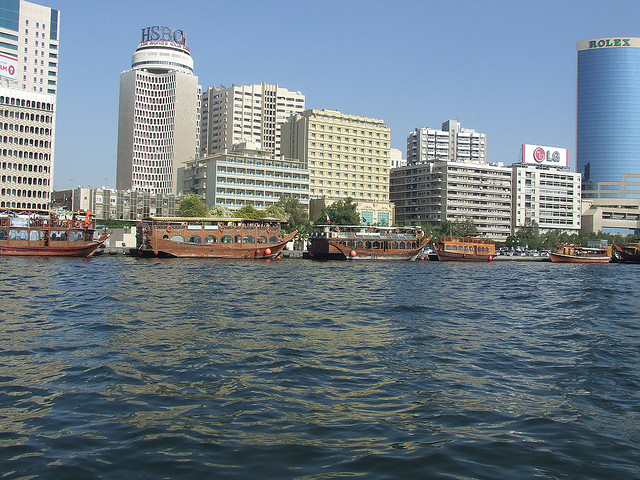
: Image via Britbob/flickr.

For more on politics in Middle East environmental issues see:

Israel and Palestine: The Place of Politics In the Mideast’s Environment

Subsidies Jeopardize Renewable Energy Project In Mideast

Solar Power In The West Bank – Green Progress or Bad Politics?
Arwa Aburawa
Arwa Aburawahttp://www.greenprophet.com
Arwa is a Muslim freelance writer who is interested in everything climate change related and how Islam can inspire more people to care for their planet and take active steps to save it while we can. She is endlessly suspicious of all politicians and their ceaseless meetings, especially as they make normal people believe that they are not part of the solution when they are the ONLY solution. Her Indian auntie is her model eco-warrier, and when Arwa is not busy helping out in the neighborhood alleyway garden, swap shopping or attempting fusion vegetarian dishes- with mixed success, she’d like to add- she can be found sipping on foraged nettle tea.

Hot this week

How Renewable Energy is Revolutionizing the Way We Power Our World

Solar has become the star of the transition thanks to modular hardware and straightforward installation. It fits dense cities and remote towns alike. Many companies are turning to rooftop arrays and carport systems - and exploring commercial solar installation as a practical way to lock in future savings.

How does one start prepping?

Faced with an extreme winter storm this year, Americans wonder how to be prepared for catastrophe. Miriam has lived through wars in the Middle East - so she's prepared on giving you a guide to prepping.

Fishermen sue tire manufacturers on behalf of the salmon

A federal trial in San Francisco has brought US tire manufacturers, fishing groups, and environmental scientists into court over a chemical most drivers have never heard of — but which scientists say may be silently reshaping aquatic ecosystems.

Listening to Water: Tarek Atoui’s Next Work for Tate Modern

Born in Beirut, Lebanon in 1980 and now living in Paris, Atoui has spent years building instruments that don’t sit comfortably in concert halls. Many of them involve water, glass, and ceramics — materials that react to sound instead of simply producing it.

Leading Through a Dual-Energy Transition: Balancing Decarbonisation with Energy Security

Experience in one area of the energy industry isn't enough to guarantee readiness across all the others. That's where a structured program like an MBA in energy can come in. Today's advanced curricula explore energy economics, finance, policy, and strategic management alongside the technical subjects. And when pursuing an energy MBA online, professionals can skill up and retrain without having to step out of the labor market -- an important perk at a time when skilled professionals are already in short supply.

Topics

How Renewable Energy is Revolutionizing the Way We Power Our World

Solar has become the star of the transition thanks to modular hardware and straightforward installation. It fits dense cities and remote towns alike. Many companies are turning to rooftop arrays and carport systems - and exploring commercial solar installation as a practical way to lock in future savings.

How does one start prepping?

Faced with an extreme winter storm this year, Americans wonder how to be prepared for catastrophe. Miriam has lived through wars in the Middle East - so she's prepared on giving you a guide to prepping.

Fishermen sue tire manufacturers on behalf of the salmon

A federal trial in San Francisco has brought US tire manufacturers, fishing groups, and environmental scientists into court over a chemical most drivers have never heard of — but which scientists say may be silently reshaping aquatic ecosystems.

Listening to Water: Tarek Atoui’s Next Work for Tate Modern

Born in Beirut, Lebanon in 1980 and now living in Paris, Atoui has spent years building instruments that don’t sit comfortably in concert halls. Many of them involve water, glass, and ceramics — materials that react to sound instead of simply producing it.

Leading Through a Dual-Energy Transition: Balancing Decarbonisation with Energy Security

Experience in one area of the energy industry isn't enough to guarantee readiness across all the others. That's where a structured program like an MBA in energy can come in. Today's advanced curricula explore energy economics, finance, policy, and strategic management alongside the technical subjects. And when pursuing an energy MBA online, professionals can skill up and retrain without having to step out of the labor market -- an important perk at a time when skilled professionals are already in short supply.

From Green Energy to Healthy Societies: Why old systems thinking is becoming relevant again

Across the Middle East and North Africa, large investments are being made in green hydrogen, renewable energy, water infrastructure and sustainability. Most of these efforts are discussed in the context of climate change, decarbonization and economic diversification. That framing is important, but it may not capture their full value.

We saw peace – an interreligious encounter deep in our eyes

They came from Israel, Palestine, Jordan, Iraq, Yemen, Morocco, Tunisia, Lebanon, Egypt… There are Sunni Muslims, Shiite Muslims, Jews (Orthodox and Reform), Orthodox Christians, Coptic Christians, Protestant Christians, Druze, Baha'is, a Scientologist.

Can biochar reduce ‘Forever Chemicals’ in food if it’s used in farms?

Biochar is produced by heating organic material in a low-oxygen environment so it does not burn. This process, known as pyrolysis, transforms plant matter into a stable, carbon-rich material.

Related Articles

Popular Categories