
Don’t Eat Your Etrog Unless You Know It’s Organic

image-etrog-citron sukkoth

Are you sure you want to cook etrog jam this year? Make sure it’s organic, first.

In my parent’s old-fashioned cookbooks are recipes based on the beautiful, fragrant etrog (citron): etrog jam, etrog cake and cookies, even an etrog souffle. As tempting as it is to make jam out of the attractive yellow fruit after Sukkot, refrain. Non-organic etrogim are so full of pesticides that they are a danger to human health.  (If you are sure your etrog is safe, here is our etrog jam recipe.)

Citron is a fragile crop. Farmers we spoke to said that the fruit will spoil even if one rubs against another on the branch, so the very best are chosen and the rest are culled. And they’re particularly vulnerable to insect infestation. In order for an etrog to be kosher for the Sukkot holiday, it must be blemish-free, so farmers are obliged to protect their scanty crop with lots and lots of pesticide. This is legal because the etrog isn’t considered a food crop.

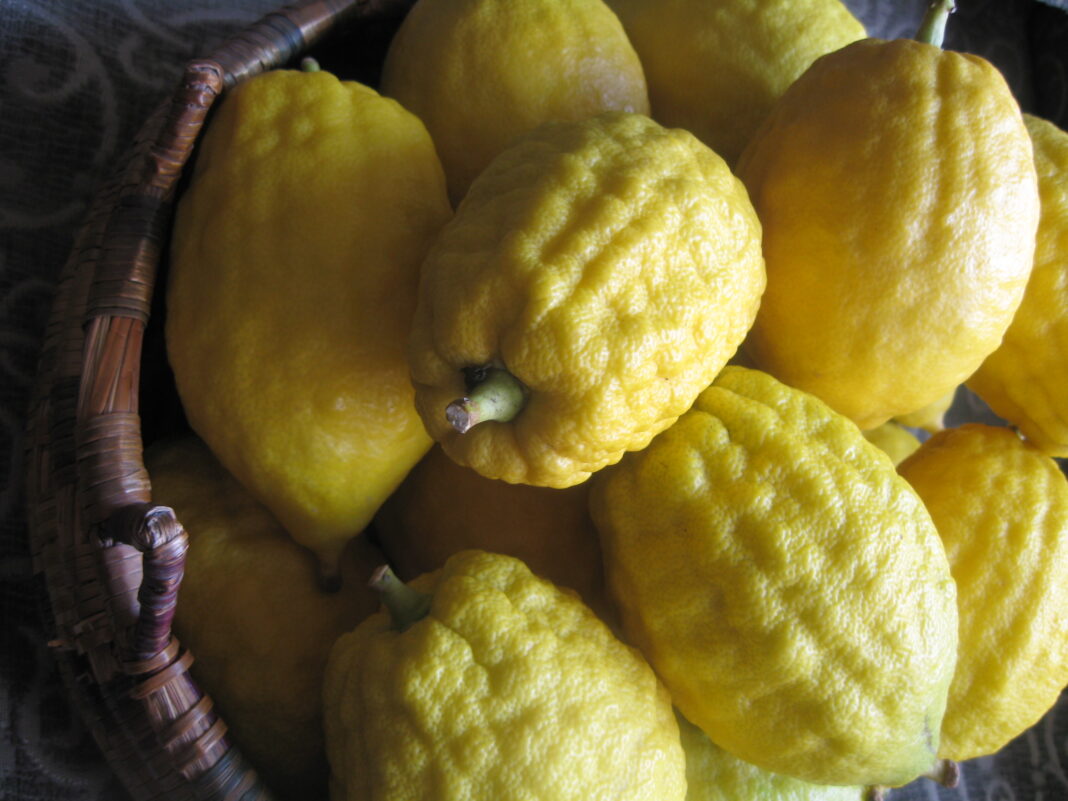
So what can we do with our etrog after the holiday? We love etrogim, and always run out to buy a sackful of unsold extras right after the holiday. We arrange them in a basket and keep them on the coffee table: see photo above. Their exquisite perfume drifts through the room and lasts for many days.

Make an old-fashioned pomander out of your etrog. The best-known way to preserve an etrog is to stud it with whole cloves. You must poke small holes all over the etrog with a sharp, pointed object like a thick, heavy needle, then push the cloves into the holes. The etrog will shrink in and dry out. It will lose its characteristic fragrance and smell of the cloves. Many people like to use a clove-etrog for the Havdalah ceremony after Shabbat.

Chag Sukkot Sameach!

More on Sukkot from Green Prophet:
Make Your Own Ricotta on Sukkot“Ye Shall Live in Booths” and Be With Nature on Sukkot


Miriam Kresh
Miriam Kreshhttps://www.greenprophet.com/
Miriam Kresh is an American ex-pat living in Israel. Her love of Middle Eastern food evolved from close friendships with enthusiastic Moroccan, Tunisian and Turkish home cooks. She owns too many cookbooks and is always planning the next meal. Miriam can be reached at miriam (at) greenprophet (dot) com.
3 COMMENTS
  1. Jonathan, I spoke to an etrog farmer here in Israel. He would rather not be identified. He told me that etrogrim are not a particularly profitable crop, being delicate and low-yield. “You have to do it for love,” he said. When I brought up the pesticide question, he told me openly that as etrogim are not sold as a food crop, they are very heavily sprayed indeed, in order to have a decent harvest at Sukkot time.

Comments are closed.

TRENDING

Fresh Fava Bean Soup, A Vegan Springtime Recipe

Somehow vegetables with short seasons excite the imagination and appetite more sharply than produce that’s available all year around. Good Middle Eastern cooks have many recipes for delicate fava beans, and this turmeric-fragrant soup is one.

The Next New Cosmetic: Human Fat Known as Alloclae

In this Ozempic age, a person may diet themselves...

Haman’s Fingers, A Moroccan Purim Specialty

There’s feasting at home on the night and the next day, and to make sure everyone gets good things to eat, families send out packages of treats to friends and neighbors. Traditional goodies are hamentaschen, and other treats like our chocolate nut clusters .

Make nettle dumplings, also known as nettles malfatti

Springtime foraging yields a harvest of wild greens to cook at home, like nettles. Make delicious nettles malfatti dumplings with this recipe.

Farm To Table Israel Connects People To The Land

Farm To Table Israel is transforming the traditional dining experience into a hands-on journey.

Nobul’s Regan McGee on Shareholder Value: “Complacency Is the Silent Killer” 

Why the governance framework designed to protect shareholders so...

Should You Invest in the Private Market?

startustartup Unlike public stock exchanges, which offer daily trading, strict...

How to build a 100-year-company

Kongō Gumi is a Japanese construction company, purportedly founded in 578 A.D., making it the world's oldest documented company. What can we learn about building sustainable businesses from them?

From Pilot Plant to Global Stage: How Aduro Clean Technologies’ 2026 Expansion Signals a Turning Point for Chemical Recycling Investors Like Yazan Al Homsi

The company's Next Generation Process (NGP) Pilot Plant in London, Ontario, has officially moved into initial operating campaigns, generating the kind of structured, repeatable data that separates laboratory promise from commercial viability.

How AI Helps SaaS Companies Reduce Repetitive Customer Support Work

SaaS products are designed for large numbers of users with different levels of experience, and also in renewable energy.

Pulling Water from the Air

Faced with water shortage in Amman, Laurie digs up...

Turning Your Energy Consultancy into an LLC: 4 Legal Steps for Founders in Texas

If you are starting a renewable energy business in Texas, learn how to start an LLC by the books.

Tracking the Impacts of a Hydroelectric Dam Along the Tigris River

For the next two months, I'll be taking a break from my usual Green Prophet posts to report on a transnational environmental issue: the Ilısu Dam currently under construction in Turkey, and the ways it will transform life along the Tigris River.

Related Articles

Popular Categories