
Tunisia’s lagoon farms and hanging gardens recognized as world heritage sites

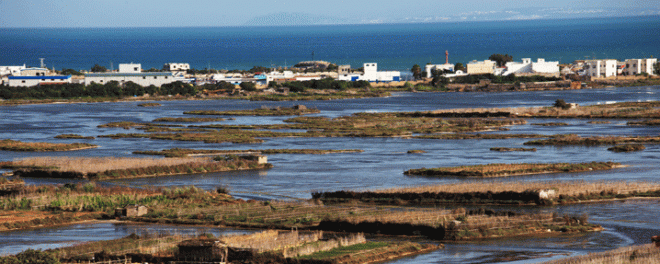
Tunisia’s traditional Ramli agricultural systems in the lagoons of Ghar El Melh (above) and its hanging gardens from Djebba El Olia, have been recognized as Globally Important Agricultural Heritage Systems (GIAHS), a designation managed by the UN Food and Agriculture Organization (FAO). It is the second time Tunisian sites have won the GIAHS recognition, after Gafsa Oases in 2011.

Both sites reflect profound bonds between the cultivated crops and the natural ecosystem, local fauna and flora, while promoting the preservation of traditional knowledge and biodiversity conservation. Their recognition as GIAHS sites will encourage local communities to better treasure and conserve their heritage for future generations.
Ramli cropping practices in Ghar El Melh

Ramli, meaning “on sand”, are agricultural practices that consist of growing crops on sandy substrates. Unique not only in Tunisia but in the whole world, these gardens were created in the 17th century by the Andalusian diaspora to cope with the lack of cultivable land and fresh water.

The ingenious practices are based on a passive irrigation system where the roots of the plants are fed throughout each season by rainwater stored and floating on the surface of the sea through the movement of the tides.

The traditional knowledge preserved over the centuries enables farmers to maintain the lagoon plots through the precise supply of sand and organic matter so that the crops reach the right height, allowing the roots to be irrigated by a fine fresh water and not to be affected by salt water.

Hedges of fruit trees and shrubs on the lagoon barrier protect the cultivated plots from wind and sea spray, help slow down evaporation and fix the sand. Such a multifaceted system makes it possible to grow crops all year round without artificial water supplies, even during periods of drought.

Today, fishing and agriculture are the main subsistence activities in the area. The farms of Ghar El Melh are small (81 percent have less than 5 hectares) and their primary production includes potatoes, beans and onions “on ramli”.

Hanging gardens of Djebba El Olia

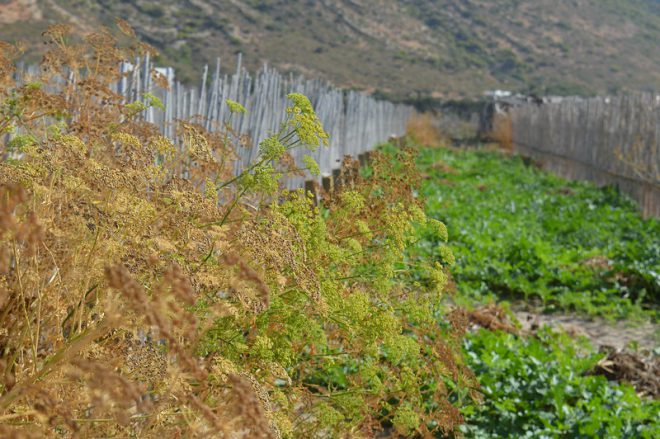
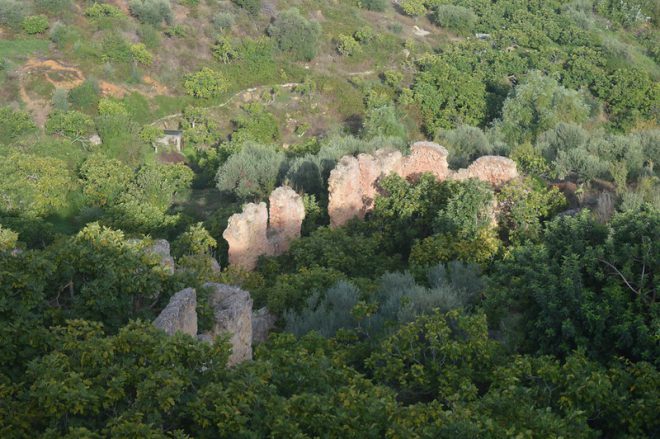
Perched on the heights of Mount el Gorrâa, the gardens of Djebba el Olia form a unique agroforestry system. At an altitude of 600 metres, farmers have been able to shape this mountainous landscape to their advantage by integrating agriculture on terraces derived from natural geological formations or by building them out of dry stone.
Hanging gardens of Djebba El Olia

Reinforced by an efficient irrigation system, the hanging gardens are examples of innovative and resilient agroforestry that meets the food needs of the local communities throughout the year. Thanks to the preservation of the forests at high altitude and the multitude of species in the tree stratum of the gardens, Djebba El Olia benefits from a particular microclimate.

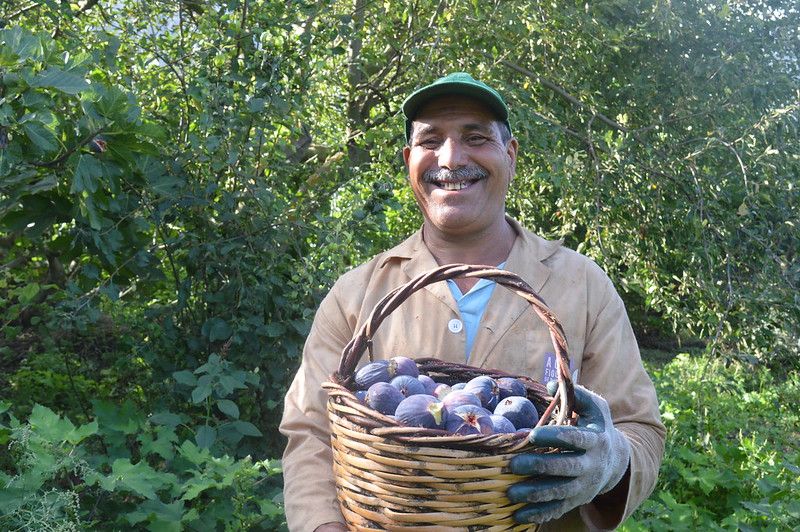
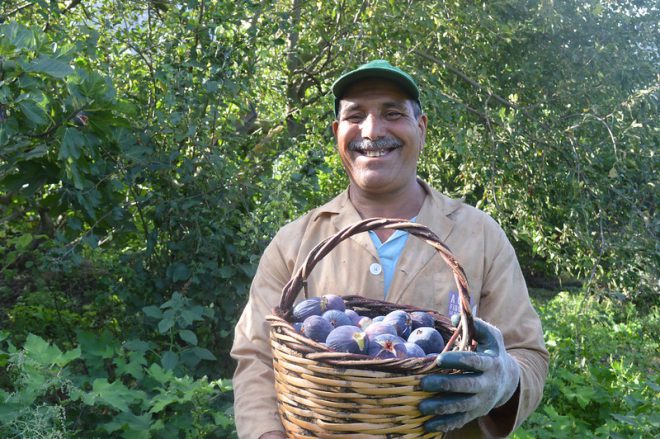
Based on practices combining agroforestry and agroecology, fig tree cultivation is the mainstay of a varied and resilient polycultural system supported by extensive livestock farming. Apart from figs, a large number of vegetables, pulses and fruit species are produced in the gardens, including  solanaceous plants (tomato, pepper) as well as squash, broad bean, onion, bean and potato.
Hanging gardens of Djebba El OliaLivestock breeding is also a big part of the site’s biodiversity, in particular the local breed of sheep “Black Thibar”, adapted to the rugged terrain, and the Brown Atlas cattle breed known for its hardiness.

These gardens benefit from the nearby forests and wild flora and fauna species ensuring that wild pollinators also support biodiversity. The art of managing cultivated and wild species is the basis of the site’s ingenious knowledge. The quality of products is highly appreciated – Djebba’s AOC labelled figs, fresh and dried fruits and  processed products (jams) are all highly sought after locally and abroad, representing an important source of income.

About the GIAHS Programme

The addition of the two Tunisian sites brings the total number of GIAHS worldwide to 61 in 22 countries. This FAO landmark programme highlights unique ways that rural communities have over generations forged to foster food security, viable livelihoods, resilient ecosystems and high levels of biodiversity, all while contributing to the formation of remarkable landscapes.

Karin Kloosterman
Karin Kloostermanhttp://www.greenprophet.com
Karin Kloosterman is an award-winning journalist, innovation strategist, and founder of Green Prophet, one of the Middle East’s pioneering sustainability platforms. She has ranked in the Top 10 of Verizon innovation competitions, participated in NASA-linked challenges, and spoken worldwide on climate, food security, and future resilience. With an IoT technology patent, features in Canada’s National Post, and leadership inside teams building next-generation agricultural and planetary systems — including Mars-farming concepts — Karin operates at the intersection of storytelling, science, and systems change. She doesn’t report on the future – she helps design it. Reach out directly to [email protected]
1 COMMENT

Comments are closed.

Hot this week

How Renewable Energy is Revolutionizing the Way We Power Our World

Solar has become the star of the transition thanks to modular hardware and straightforward installation. It fits dense cities and remote towns alike. Many companies are turning to rooftop arrays and carport systems - and exploring commercial solar installation as a practical way to lock in future savings.

How does one start prepping?

Faced with an extreme winter storm this year, Americans wonder how to be prepared for catastrophe. Miriam has lived through wars in the Middle East - so she's prepared on giving you a guide to prepping.

Fishermen sue tire manufacturers on behalf of the salmon

A federal trial in San Francisco has brought US tire manufacturers, fishing groups, and environmental scientists into court over a chemical most drivers have never heard of — but which scientists say may be silently reshaping aquatic ecosystems.

Listening to Water: Tarek Atoui’s Next Work for Tate Modern

Born in Beirut, Lebanon in 1980 and now living in Paris, Atoui has spent years building instruments that don’t sit comfortably in concert halls. Many of them involve water, glass, and ceramics — materials that react to sound instead of simply producing it.

Leading Through a Dual-Energy Transition: Balancing Decarbonisation with Energy Security

Experience in one area of the energy industry isn't enough to guarantee readiness across all the others. That's where a structured program like an MBA in energy can come in. Today's advanced curricula explore energy economics, finance, policy, and strategic management alongside the technical subjects. And when pursuing an energy MBA online, professionals can skill up and retrain without having to step out of the labor market -- an important perk at a time when skilled professionals are already in short supply.

Topics

How Renewable Energy is Revolutionizing the Way We Power Our World

Solar has become the star of the transition thanks to modular hardware and straightforward installation. It fits dense cities and remote towns alike. Many companies are turning to rooftop arrays and carport systems - and exploring commercial solar installation as a practical way to lock in future savings.

How does one start prepping?

Faced with an extreme winter storm this year, Americans wonder how to be prepared for catastrophe. Miriam has lived through wars in the Middle East - so she's prepared on giving you a guide to prepping.

Fishermen sue tire manufacturers on behalf of the salmon

A federal trial in San Francisco has brought US tire manufacturers, fishing groups, and environmental scientists into court over a chemical most drivers have never heard of — but which scientists say may be silently reshaping aquatic ecosystems.

Listening to Water: Tarek Atoui’s Next Work for Tate Modern

Born in Beirut, Lebanon in 1980 and now living in Paris, Atoui has spent years building instruments that don’t sit comfortably in concert halls. Many of them involve water, glass, and ceramics — materials that react to sound instead of simply producing it.

Leading Through a Dual-Energy Transition: Balancing Decarbonisation with Energy Security

Experience in one area of the energy industry isn't enough to guarantee readiness across all the others. That's where a structured program like an MBA in energy can come in. Today's advanced curricula explore energy economics, finance, policy, and strategic management alongside the technical subjects. And when pursuing an energy MBA online, professionals can skill up and retrain without having to step out of the labor market -- an important perk at a time when skilled professionals are already in short supply.

From Green Energy to Healthy Societies: Why old systems thinking is becoming relevant again

Across the Middle East and North Africa, large investments are being made in green hydrogen, renewable energy, water infrastructure and sustainability. Most of these efforts are discussed in the context of climate change, decarbonization and economic diversification. That framing is important, but it may not capture their full value.

We saw peace – an interreligious encounter deep in our eyes

They came from Israel, Palestine, Jordan, Iraq, Yemen, Morocco, Tunisia, Lebanon, Egypt… There are Sunni Muslims, Shiite Muslims, Jews (Orthodox and Reform), Orthodox Christians, Coptic Christians, Protestant Christians, Druze, Baha'is, a Scientologist.

Can biochar reduce ‘Forever Chemicals’ in food if it’s used in farms?

Biochar is produced by heating organic material in a low-oxygen environment so it does not burn. This process, known as pyrolysis, transforms plant matter into a stable, carbon-rich material.

Related Articles

Popular Categories