Okay the electrified Tesla you are dreaming about doesn’t exactly match your budget thanks to layoffs or a reduced workload from COVID-19. And there are fewer cars on the road –– at least until this summer, likely, when everyone will want to head to the hills to get out of their cramped apartments or suburban routine. Newspapers like the New York Times are estimating an upswing in road travel and local vacations this summer as flying will be challenging, and international travel uncertain.
Energy transition fuel before we all go electric
So there you are in your 2001 Honda Civic wondering if your car will last longer than the plague. Yes you want something better, your car and your reality, but this is what you have. Now when you are filling up at the pump, and know how every drop of fuel goes to greenhouse gas emissions, might feel a bit relieved knowing there are solutions being used by industry and at gas stations to increase fuel efficiency and reduce smog.
Consider the American company Biofriendly has a fuel additive you get at the pump that scrubs smog and increases fuel efficiency by up to 7%. Every percent counts these days: we all don’t want to contribute to climate change. To know if your pump is carrying the solution look for Greenplus at the pump.
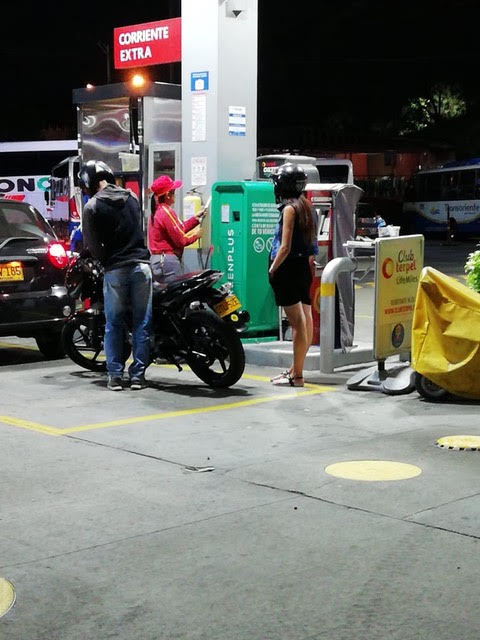
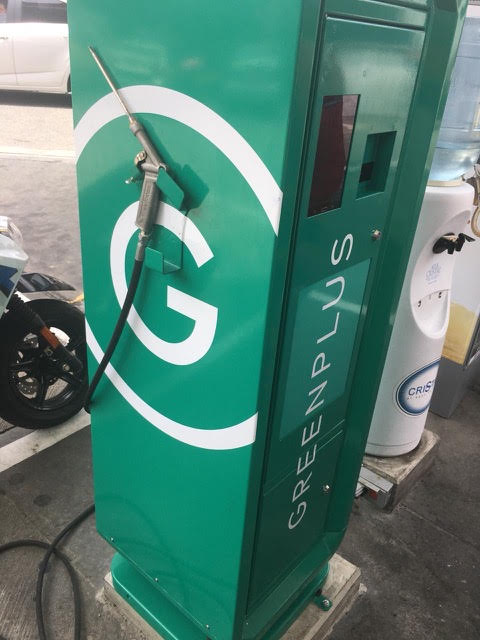
Besides the consumer at-the-pump solution, Biofriendly also a fuel transition product that works with marine, freight and oil companies to help them reduce their emissions as well, with a track record going back to 2003.
The company counts 20 billion miles of on-road and on-ocean use of its product, by far the most used fuel enhancing product to date. We talked with Noel Carroll, the company’s CEO, because he is a Green Prophet.
 “Our goal with Green Plus Energy Transition Fuel is to do something about greenhouse gas emissions right now,” says Carroll. “We fully support the global shift toward renewable energy and electric vehicles, but something needs to be done to fight climate change in the meantime, and our energy transition fuel is not only effective for that, it’s also cost efficient.”
Carroll’s background stems from years of experience in the entertainment industry. Most notably, he co-wrote, produced and co-starred in Machinima’s hit YouTube series’ “Good Cops and Tumbleweed”. And from that experience, Carroll has been trying to access consumer and business hearts using the media experience. The company offers entertaining ways to learn more about sustainability and the environment in its e-magazine, podcast and media network, Biofriendly Planet.
“We have discovered that a significant amount of people have felt shamed by the green community in the past for ‘not doing enough,’ and now believe that a sustainable lifestyle is too challenging to achieve,” Carroll tells Green Prophet. “Our mission is to connect with these people and present a welcoming and pain-free alternative message through our content. Changing someone’s thinking and perspective doesn’t happen overnight. Biofriendly aims to be a beacon of light in a gloomy environment.”
Can you tell us more about the podcast and e-magazine?
Carroll elaborates: “With Biofriendly Planet e-magazine, we offer a comprehensive one-stop-shop for the green community filled with uplifting images, educational articles, and helpful DIY tips. With the Biofriendly Podcast, we utilize our background in the entertainment industry to bring a humorous, light-hearted approach on all things green without all the pessimism and despair that is often attributed to environmentalism.
What is the future of the fuel industry?
Carroll: “There is an apparent “energy transition” we see happening right now, but this clear transition is a long way away. Oil is a non-renewable resource and an air pollutant when burned. This has led to a transition away from fossil fuels for both transportation and energy on our planet. This can be seen in the growing market share of Electric Vehicles (EVs) and solar power over the past decade.
With the emergence of electric cars, do you think the need for fuel will ever greatly decrease?
Carroll: “According to the EPA, there are still 1 billion fossil fuel powered vehicles on the road today. We do believe that the need for fuel will greatly decrease, but not for a long time. Automotive experts have forecasted that EVs could potentially be 60-80% of the market sold in 2050, but that is still 30 years of significant greenhouse gases that Biofriendly believes should be prevented from entering the atmosphere.
“By adding Green Plus to your fuel, it immediately becomes an Energy Transition Fuel, thus producing 7% less greenhouse gas emissions and 30% less particulate matter. This can help to significantly reduce the pollution created by traditional fuels, while the planet transitions to its next phase of transportation and energy.”
Among the clients who use Biofriendly in the US are the Israeli company Delek Group. We imagine their use in the US will help expand the products to other regions in the Middle East which are way too smoggy for anyone’s good. We need to keep our lungs in tip top shape. Any one got leads for Cairo, Amman or Tehran (among the smoggiest in the world), cough cough? They could use a little 7% off their emissions. Well more like 77% but we need to start somewhere.
For more about Biofriendly, see the Biofriendly website