Will U.S. leaving Paris Climate Agreement adversely affect the Middle East?

Concern for our planet due to human caused climate change is definitely not a new subject. Even deceased arch terriorist Osama bin Ladin blamed the U.S. for causing climate change; saying that Arab countries are getting drier due to this. Climate change is also being attributed for rapidly melting Arctic ice caps that are literally rocking world weather patterns.

In light of this, many people, including renown climatologists, are more concerned for the future of our plant following U.S. President Trump’s decision on June 1, 2017 to pull America out of the Paris Climate Change Agreement, saying: “I was elected to represent the citizens of
Pittsburgh, not Paris.”

After signing the Paris Agreement in the summer of 2016, the new US administration has now given a formal rejection to an agreement, signed by over 190 countries, to make a concerted effort to try to prevent world temperatures from rising more than 3.3 degrees during the current century. Without this agreement, temperatures could rise more than 3.6 degrees, if not more, causing dramatic changes in world weather patterns.

Without America’s leadership, the future of the Paris Climate Agreement and the global environment itself could be put in jeopardy; resulting in more severe storms and mass flooding in some areas and severe drought conditions in other regions.

Severe drought is being felt more and more in North Africa and the Middle East, where plentiful fresh water supplies have never been available.The Arabian Peninsula, in particular, is currently in the midst of one of the worst drought situations ever experienced in modern times, This situation is forcing many area countries to resort to obtaining fresh water through desalination; and even to consider schemes to actually drag icebergs from Antarctica to provide fresh water.

Despite  these dire implications, the American administration has decided to pull out of the only international climate accord agreement that has been ratified by more countries than any other climate agreement to date. North African and Middle Eastern countries and territories that have ratified the agreement include Israel, Jordan, Morocco, the UAE, Saudi Arabia, and Palestine. Many others, including Egypt, Kuwait, Oman, Qatar, Libya, Sudan and Yemen have signed but not yet ratified it.

Syria is still one of major holdouts, having not signed nor ratified the agreement. Many of these countries already feel the impact of global warming and climate change, with severe water shortages and intensive summer temperatures.

US President Trump’s reasons for leaving the Paris Agreement center around feelings that the agreement is “unfair to the United States, its businesses, its workers, its people, and its taxpayers”.

Unfair? What is considered to be unfair when the future environment of the planet is at state? This pertains particularly to the harsh reality of the climate of the Middle East.

Read more about climate change and global warming:

Arctic ice melt is rocking world weather

“Before the Flood” now streaming, and you thought Halloween was scary

CNN: The Sixth Mass Global Extinction has arrived

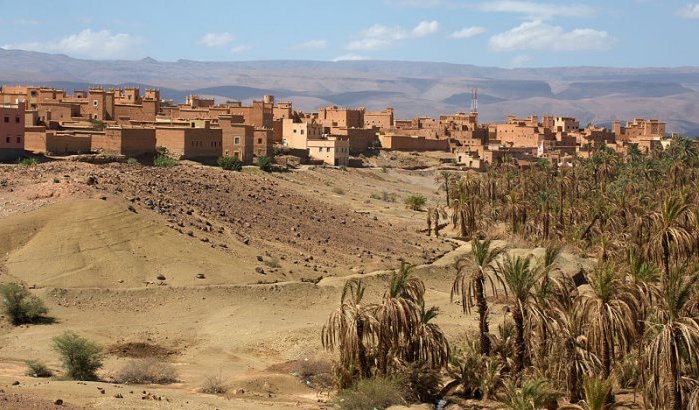
Photo of Drought in Morocco by Geographical News

Photo of US President Trump pulling out of Paris Climate Agreement, by Foreign Policy

Maurice Picow
Maurice Picowhttps://www.greenprophet.com/
Maurice Picow grew up in Oklahoma City, U.S.A., where he received a B.S. Degree in Business Administration. Following graduation, Maurice embarked on a career as a real estate broker before making the decision to move to Israel. After arriving in Israel, he came involved in the insurance agency business and later in the moving and international relocation fields. Maurice became interested in writing news and commentary articles in the late 1990’s, and now writes feature articles for the The Jerusalem Post as well as being a regular contributor to Green Prophet. He has also written a non-fiction study on Islam, a two volume adventure novel, and is completing a romance novel about a forbidden love affair. Writing topics of particular interest for Green Prophet are those dealing with global warming and climate change, as well as clean technology - particularly electric cars.
1 COMMENT

Comments are closed.

Hot this week

How Renewable Energy is Revolutionizing the Way We Power Our World

Solar has become the star of the transition thanks to modular hardware and straightforward installation. It fits dense cities and remote towns alike. Many companies are turning to rooftop arrays and carport systems - and exploring commercial solar installation as a practical way to lock in future savings.

How does one start prepping?

Faced with an extreme winter storm this year, Americans wonder how to be prepared for catastrophe. Miriam has lived through wars in the Middle East - so she's prepared on giving you a guide to prepping.

Fishermen sue tire manufacturers on behalf of the salmon

A federal trial in San Francisco has brought US tire manufacturers, fishing groups, and environmental scientists into court over a chemical most drivers have never heard of — but which scientists say may be silently reshaping aquatic ecosystems.

Listening to Water: Tarek Atoui’s Next Work for Tate Modern

Born in Beirut, Lebanon in 1980 and now living in Paris, Atoui has spent years building instruments that don’t sit comfortably in concert halls. Many of them involve water, glass, and ceramics — materials that react to sound instead of simply producing it.

Leading Through a Dual-Energy Transition: Balancing Decarbonisation with Energy Security

Experience in one area of the energy industry isn't enough to guarantee readiness across all the others. That's where a structured program like an MBA in energy can come in. Today's advanced curricula explore energy economics, finance, policy, and strategic management alongside the technical subjects. And when pursuing an energy MBA online, professionals can skill up and retrain without having to step out of the labor market -- an important perk at a time when skilled professionals are already in short supply.

Topics

How Renewable Energy is Revolutionizing the Way We Power Our World

Solar has become the star of the transition thanks to modular hardware and straightforward installation. It fits dense cities and remote towns alike. Many companies are turning to rooftop arrays and carport systems - and exploring commercial solar installation as a practical way to lock in future savings.

How does one start prepping?

Faced with an extreme winter storm this year, Americans wonder how to be prepared for catastrophe. Miriam has lived through wars in the Middle East - so she's prepared on giving you a guide to prepping.

Fishermen sue tire manufacturers on behalf of the salmon

A federal trial in San Francisco has brought US tire manufacturers, fishing groups, and environmental scientists into court over a chemical most drivers have never heard of — but which scientists say may be silently reshaping aquatic ecosystems.

Listening to Water: Tarek Atoui’s Next Work for Tate Modern

Born in Beirut, Lebanon in 1980 and now living in Paris, Atoui has spent years building instruments that don’t sit comfortably in concert halls. Many of them involve water, glass, and ceramics — materials that react to sound instead of simply producing it.

Leading Through a Dual-Energy Transition: Balancing Decarbonisation with Energy Security

Experience in one area of the energy industry isn't enough to guarantee readiness across all the others. That's where a structured program like an MBA in energy can come in. Today's advanced curricula explore energy economics, finance, policy, and strategic management alongside the technical subjects. And when pursuing an energy MBA online, professionals can skill up and retrain without having to step out of the labor market -- an important perk at a time when skilled professionals are already in short supply.

From Green Energy to Healthy Societies: Why old systems thinking is becoming relevant again

Across the Middle East and North Africa, large investments are being made in green hydrogen, renewable energy, water infrastructure and sustainability. Most of these efforts are discussed in the context of climate change, decarbonization and economic diversification. That framing is important, but it may not capture their full value.

We saw peace – an interreligious encounter deep in our eyes

They came from Israel, Palestine, Jordan, Iraq, Yemen, Morocco, Tunisia, Lebanon, Egypt… There are Sunni Muslims, Shiite Muslims, Jews (Orthodox and Reform), Orthodox Christians, Coptic Christians, Protestant Christians, Druze, Baha'is, a Scientologist.

Can biochar reduce ‘Forever Chemicals’ in food if it’s used in farms?

Biochar is produced by heating organic material in a low-oxygen environment so it does not burn. This process, known as pyrolysis, transforms plant matter into a stable, carbon-rich material.

Related Articles

Popular Categories