Mediterranean Mega Fires Burn Record Land as Climate Change Fuels Extreme Heat and Drought

Mediterranean Mega Fires Burn Record Land as Climate Change Fuels Extreme Heat and Drought
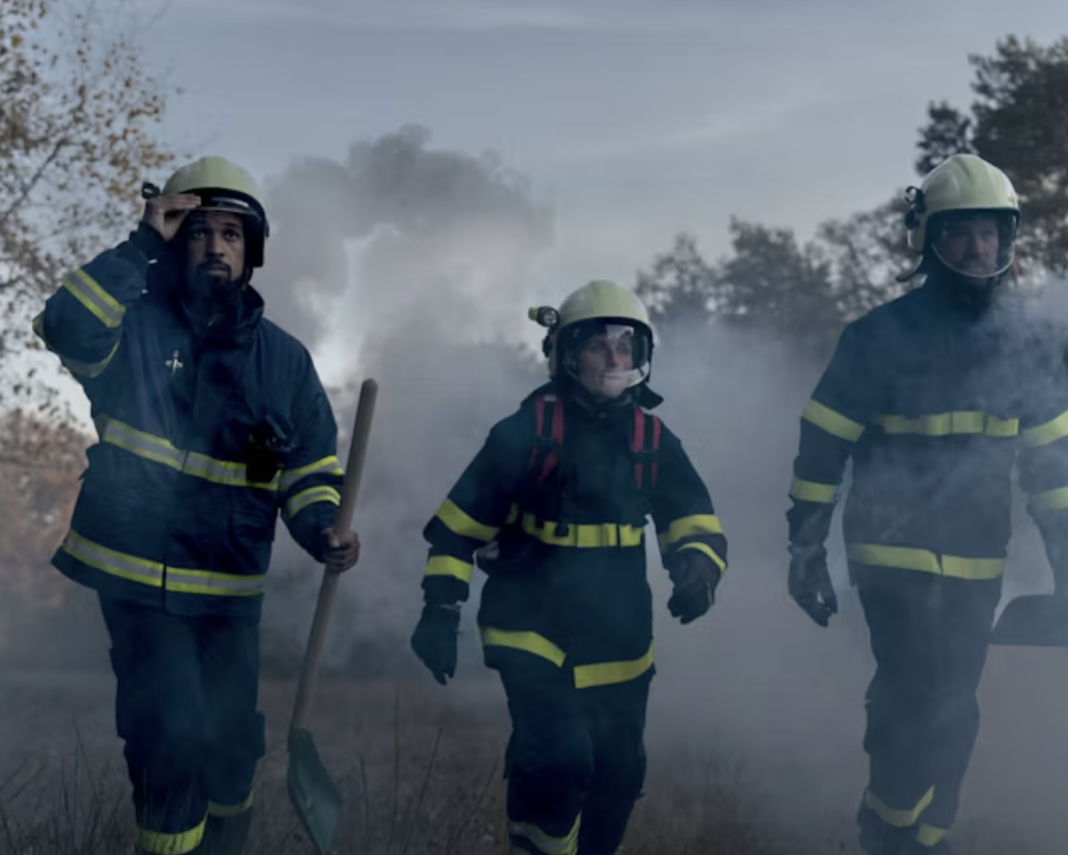
Firefighters in Europe

At the start of August, wildfires exploded across the Mediterranean basin, fueled by a wicked trio of extreme heat, drought and wind. In southern France, the Aude region around Carcassonne saw the country’s largest blaze since 1949, burning more than 16,000 hectares. In Spain, a 16-day heatwave — described by the national weather service as the most intense on record — set the stage for weeks of fire in the northwest near Zamora.

Greece endured simultaneous outbreaks around Patras, several Ionian islands, and Chios; satellites showed ~100,000 acres burned in just two days. By early September, the EU’s science hub estimated roughly one million hectares scorched across Europe in 2025 — an area bigger than Cyprus — with emissions and fire counts well above last year.

This isn’t just “bad luck.” Rapid attribution studies from World Weather Attribution find that the specific cocktail of hot, dry and windy weather that supercharged fires in Türkiye, Greece and Cyprus this summer is ~10 times more likely because of human-caused climate change. A separate WWA analysis shows extreme fire weather in Spain and Portugal is now effectively “common” in a warming world — a grim new baseline we’ll have to plan around, not a blip we can just ride out.

What it feels like on the ground

Fires today don’t behave like the fires our grandparents knew. Structures ignite faster; smoke is a toxic stew; embers leap roads like they weren’t even there. Our own reporting on smoke’s health harms — even from far-away blazes — is sobering: see how wildfire smoke damages lungs and hearts.

In Israel, we’ve documented both the on-the-line response and long-tail recovery, from front-line firefighting and evacuations to lessons from the Carmel blaze a decade ago — when, counter-intuitively, letting nature lead regrowth proved wiser than rushing in with well-meant tree plantings.

A warmer Mediterranean from climate change means longer fire seasons, drier fuels and stronger heat waves. We’ve reported on this shift for years — from early signals of Mediterranean winter drought trends to the uncomfortable truth that it’s not “just warming” but global scorching.

Add land-use change — abandoned farms, flammable plantations, dense edge housing — and fires spread faster and hit more people. Meanwhile, climate whiplash is reshaping risk across our region; the same storm systems that flood deserts are part of a new normal we covered in MENA’s flash-flood wave.

What we can do next (like, starting yesterday)

Prevention isn’t sexy, but it works. We can make homes less flammable, communities more prepared, and landscapes less primed to explode. That looks like smarter codes and materials — even bio-based ones. Our look at hemp-lime blocks found they smolder slowly and hold structure in fire tests,buying valuable minutes for firefighters  and families alike. For deeper resilience, check out Earthship-style off-grid homes that reduce dependence on fragile grids when heat waves knock power and comms offline.

We also need to treat mental resilience as climate infrastructure. Neighborhood-scale actions can ease eco-anxiety while cutting risk: placemaking to build social ties, shrinking our personal footprints, and backing projects that restore ecosystems at scale — from community-led reforestation in Iran to ambitious corporate pledges like doTERRA’s native tree plantings in Hawaii.

Policy matters too — and we’ll keep holding leaders to account (see our coverage of health-protective climate rules).

What Green Prophet readers can do

Feeling overwhelmed is normal, but it’s not the end of the story. Start where you live: create defensible space (clear brush, prune trees), swap to ember-resistant vents, and ask your city for shaded “cool corridors” and community fire drills. Learn the health basics for smoky days (N95s > cloth masks), keep HEPA purifiers on hand, and check in on elders and neighbors. Put your money and voice behind solutions: fund local ecological grazing and prescribed burns; back nature-positive jobs; and push for serious climate policy, not just slogans.

And yes, keep sharing rigorous reporting — amplify scientists, firefighters, and the communities living on the frontlines. Together, we can make the next fire season a little less brutal, and a little more survivable. Even small steps add up, promise.

Karin Kloosterman
Karin Kloostermanhttp://www.greenprophet.com
Karin Kloosterman is an award-winning journalist, innovation strategist, and founder of Green Prophet, one of the Middle East’s pioneering sustainability platforms. She has ranked in the Top 10 of Verizon innovation competitions, participated in NASA-linked challenges, and spoken worldwide on climate, food security, and future resilience. With an IoT technology patent, features in Canada’s National Post, and leadership inside teams building next-generation agricultural and planetary systems — including Mars-farming concepts — Karin operates at the intersection of storytelling, science, and systems change. She doesn’t report on the future – she helps design it. Reach out directly to [email protected]

Read More

LEAVE A REPLY

Please enter your comment!
Please enter your name here

TRENDING

Desalination experts debunk Aqua Solaire, the floating desalination barge

AI makes it easy to dream, develop, and create images of what could be world-changing ideas, until the reality sets in. A new project making the rounds is Aqua Solaire, an allged French concept for a solar-powered desalination vessel designed to bring drinking water to coastal communities facing drought, storms, and infrastructure failures.

5 projects to help kickstart your company’s sustainability journey 

True progress happens when environmental ambition meets action. Decarbonizing efficiently is possible for any business in any sector, but actually getting started can sometimes feel daunting.   The trick? It’s to start small and build momentum. Here are five potential projects to help you get started.  

Hormuz 2026 Conflict Poses an Energy and Food Security Dilemma in a Warming World

As tensions rise in one of the world’s most critical maritime chokepoints, the ripple effects go far beyond oil—touching food systems, climate pressures, and regional stability

Climate change traced in sea turtle shells

It's sea turtles which may in the end save islands in the Seychelles. They may also better help us understand climate change. Like rings on a tree, scientists have found a way to read sea turtle shells and how they are impacted by climate change tells a story. 

We’ve lived through the past 11 of the hottest years on record

Have we forgotten about global warming when the world...

How to quiet noise from construction in your office

Streets need to be resurfaced in New York but the humming and grinding noise is unsettling. Noise is environmental pollution. 

EarthX and a blueprint for sustainable investing

Trammell S. Crow, a Dallas-based businessman and father of four, is focusing his efforts on impact investing, and media that focuses on saving the planet through EarthX.

Mining Afghanistan’s Mineral Discoveries Similar to Avatar

Now that American forces in Afghanistan are commemorating the longest period of any war that America has been involved in, including the 1965-73 Vietnam War, the recent discoveries of large and extremely valuable mineral and metal deposits may finally bring to light a reason to continue the presence of US fighting forces in this war torn and backward country.

From Pilot Plant to Global Stage: How Aduro Clean Technologies’ 2026 Expansion Signals a Turning Point for Chemical Recycling Investors Like Yazan Al Homsi

The company's Next Generation Process (NGP) Pilot Plant in London, Ontario, has officially moved into initial operating campaigns, generating the kind of structured, repeatable data that separates laboratory promise from commercial viability.

Nobul’s Regan McGee on Shareholder Value: “Complacency Is the Silent Killer” 

Why the governance framework designed to protect shareholders so...

Should You Invest in the Private Market?

startustartup Unlike public stock exchanges, which offer daily trading, strict...

How to build a 100-year-company

Kongō Gumi is a Japanese construction company, purportedly founded in 578 A.D., making it the world's oldest documented company. What can we learn about building sustainable businesses from them?

How AI Helps SaaS Companies Reduce Repetitive Customer Support Work

SaaS products are designed for large numbers of users with different levels of experience, and also in renewable energy.

Popular Categories