Muslims less likely screened for cancer in this American city

Muslims and cancer screening

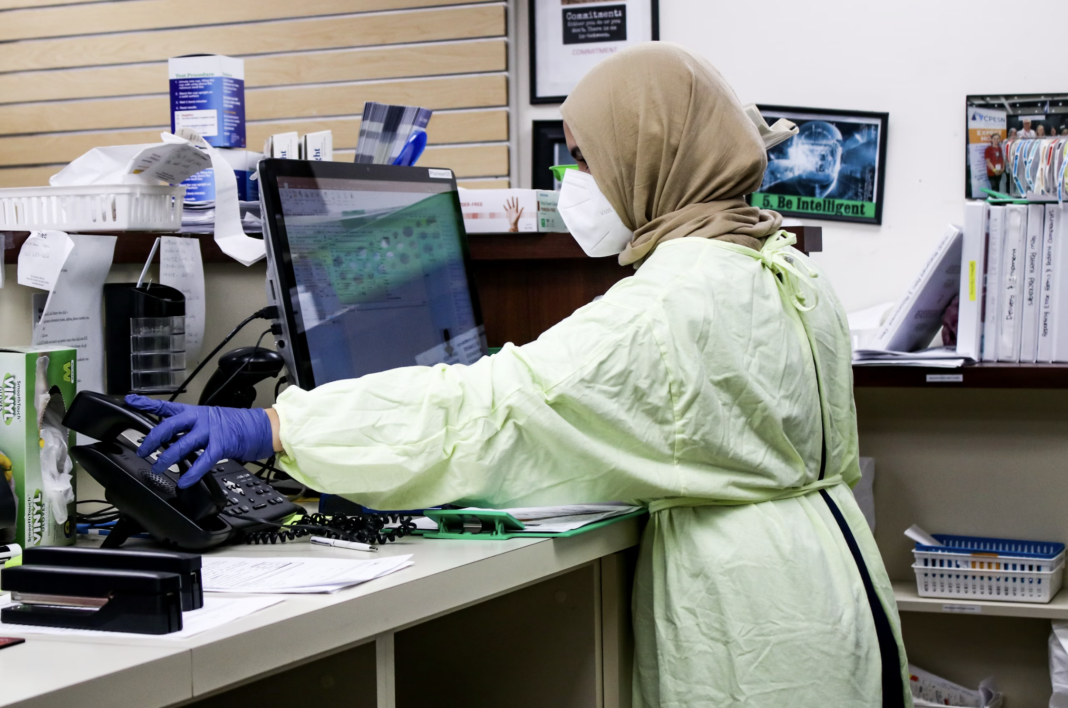
Little is known about faith groups and how they deal privately with health issues. In a new study US researchers wanted to figure out how Muslim communities deal with cancer screenings. The results show that in some areas the rates are significantly lower than the general population and that Muslim women depend more on their faith when it comes to health issues.

The study looked at screening behaviors of Muslims in the Washington, DC, area, highlighting the influence of cultural and religious beliefs on health practices. The study, conducted in collaboration with key faith leaders from four mosques in the region, underscores the need for culturally and religiously sensitive health initiatives to improve cancer screening rates among Muslims, reports the researchers in the Journal of Cancer Education.

The Washington, D.C., metropolitan area, which includes parts of Virginia and Maryland (DMV), is home to one of the largest and most diverse Muslim communities in the United States. Despite this, cancer screening behaviors within this community remain under-researched.

To address this gap, a comprehensive needs assessment was conducted with 203 participants recruited through community outreach and engagement efforts. This collaborative approach ensured that the questions posed were both religiously and culturally sensitive.

Key findings from the study include an overall lower rate of screening among the Muslim population surveyed than in the DMV:

  • Colorectal Cancer Screenings: 35% of both men and women reported receiving a screening for colorectal cancer with colonoscopy, a much lower rate than overall in the DMV area (DC: 82%; Virginia: 67.6%; and Maryland: 72.5%);
  • Mammogram Screenings: 56% of women surveyed reported receiving a mammogram screening, a much lower rate than overall in the DMV (D.C.: 80%; Virginia: 76.2%; and Maryland: 81.2%);
  • Prostate Cancer Screenings: 45% of men reported receiving a prostate cancer antigen test (a higher rate than overall in DC, but lower than in Virginia and Maryland); and
  • Cervical Cancer Screenings: 83% of women reported receiving screening for cervical cancer (comparable to the overall rate in the DMV).

The study also revealed that many participants relied on their faith to guide their cancer screening decisions. Women were more likely than men to rely on their faith when dealing with health concerns.

“Findings from our study highlight that religious and cultural beliefs may play a role in influencing health behaviors; however, to better understand those roles, we need to continue to engage with the Muslim community in the DMV area in order to create an avenue for providing health education in a religiously and culturally sensitive way,” said Aisha Choudhri, a community health educator at the Ralph Lauren Center for Cancer Prevention at Georgetown University’s Lombardi Comprehensive Cancer Center in Washington.

Participants expressed a strong interest in having health initiatives related to cancer education, screening and survivorship integrated within mosques. This preference suggests that mosques could serve as vital centers for health education and intervention, leveraging the trust and influence of faith leaders to promote better health outcomes.

Karin Kloosterman
Karin Kloostermanhttp://www.greenprophet.com
Karin Kloosterman is an award-winning journalist, innovation strategist, and founder of Green Prophet, one of the Middle East’s pioneering sustainability platforms. She has ranked in the Top 10 of Verizon innovation competitions, participated in NASA-linked challenges, and spoken worldwide on climate, food security, and future resilience. With an IoT technology patent, features in Canada’s National Post, and leadership inside teams building next-generation agricultural and planetary systems — including Mars-farming concepts — Karin operates at the intersection of storytelling, science, and systems change. She doesn’t report on the future – she helps design it. Reach out directly to [email protected]

Read More

TRENDING

Muslim potter shapes the 99 names of God into clay

In a studio in the DC Maryland Virginia area, ceramic artist Alison Kysia is working with clay in a way that feels both grounded and personal. She makes pottery and abstract Islamic sculptures, and one of her recent works focuses on the 99 Names of God in Islam.

Married People Have Lower Cancer Risk, But the Reason is Complex

According to the research, cancer risk was 68% higher in never-married men and 85% higher in never-married women.

Is artificial turf bad for your health?

Artificial turf, the green plastic stuff that is supposed to look like grass, was sold to many home-owners as a clever compromise: a green-looking surface that makes you feel homey, but which needs no mowing. It survives heavy use, and in dry places like Middle East deserts, and in California or Texas, it can replace thirsty lawns. But it is toxic.

The Next New Cosmetic: Human Fat Known as Alloclae

In this Ozempic age, a person may diet themselves...

Jujube, the sidr tree of medicine and magic

A magic holy sidr bath to deflect the evil eye? It needs 7 powdered sidr leaves stirred into a bucket of warm water. The hadith of the Prophet Muhammad allows to repeat healing prayers and verses from the Koran to increase the water’s potency. 5 grams, or 1 tablespoon of sidr powder equals 7 leaves.

How to quiet noise from construction in your office

Streets need to be resurfaced in New York but the humming and grinding noise is unsettling. Noise is environmental pollution. 

EarthX and a blueprint for sustainable investing

Trammell S. Crow, a Dallas-based businessman and father of four, is focusing his efforts on impact investing, and media that focuses on saving the planet through EarthX.

Mining Afghanistan’s Mineral Discoveries Similar to Avatar

Now that American forces in Afghanistan are commemorating the longest period of any war that America has been involved in, including the 1965-73 Vietnam War, the recent discoveries of large and extremely valuable mineral and metal deposits may finally bring to light a reason to continue the presence of US fighting forces in this war torn and backward country.

From Pilot Plant to Global Stage: How Aduro Clean Technologies’ 2026 Expansion Signals a Turning Point for Chemical Recycling Investors Like Yazan Al Homsi

The company's Next Generation Process (NGP) Pilot Plant in London, Ontario, has officially moved into initial operating campaigns, generating the kind of structured, repeatable data that separates laboratory promise from commercial viability.

Nobul’s Regan McGee on Shareholder Value: “Complacency Is the Silent Killer” 

Why the governance framework designed to protect shareholders so...

Should You Invest in the Private Market?

startustartup Unlike public stock exchanges, which offer daily trading, strict...

How to build a 100-year-company

Kongō Gumi is a Japanese construction company, purportedly founded in 578 A.D., making it the world's oldest documented company. What can we learn about building sustainable businesses from them?

How AI Helps SaaS Companies Reduce Repetitive Customer Support Work

SaaS products are designed for large numbers of users with different levels of experience, and also in renewable energy.

Popular Categories