The Sustainability And Efficiency Benefits Of Smart Building Technology

Sustainable Building
Sustainable building is the only future we can predict with climate change. Follow The Arc at the Green School in Bali.

30% of the world’s energy usage is attributable to buildings. Buildings account for a similar share of energy-related carbon emissions (28%), too. Today the world is striving to meet the goals of the Paris Agreement on climate change. Those goals include making the building sector net zero carbon. The Agreement proposes making the entire sector net zero by 2050, with all new structures after 2030 built to be net zero. Making the world’s buildings more sustainable is a tall order; right now, roughly 1% of buildings qualify as net zero carbon.

Growing public awareness of the problems of climate change puts pressure on developers, construction firms, and building managers to meet the goals of the Paris Agreement. According to research, 70% of building-owning organizations have plans to achieve net zero, near-zero, or positive carbon status in one or more of their structures within the next decade. This number is growing rapidly; it is up 7% since 2019. 

This is only the first step on the road to sustainable building, though. Technology is poised to be critical in reducing the emissions of buildings regardless of their use.

How To Reach Net Zero

Carbon offset plans can help to reduce the net carbon emissions from new construction and renovation projects. In the longer term, builders need to look at minimizing the actual emissions caused by the production of building materials, the supply chain that delivers them, and the construction process itself.
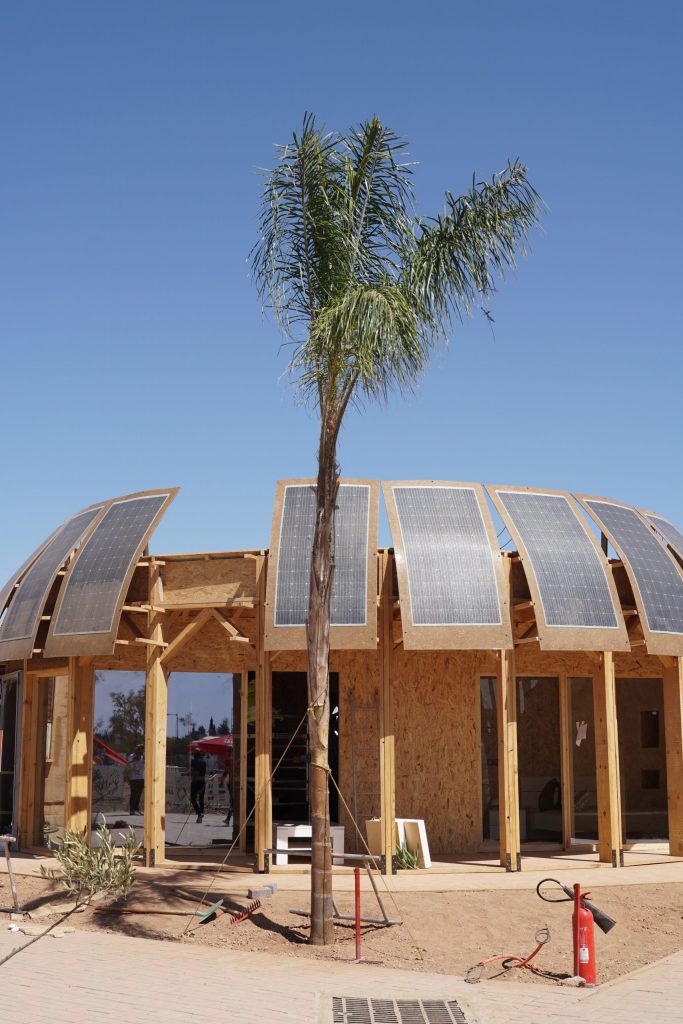
SunImplant, a solar home made from hemp in Morocco.

Carbon neutrality also applies to the day-to-day operation of buildings. Any building that aims for net zero carbon emissions should be as energy efficient as possible. This means relying on renewable energy sources (either on or off-site) and, if necessary, putting a continuous offset plan in place.

Changes In Smart Building Techniques

The first designs that tried to reduce emissions concentrated on increasing infrastructure efficiency and better facility management. Next, digital technologies were incorporated to make space utilization and building operation even more efficient.

Now, the latest smart buildings utilize an array of connectivity technology (fixed, wireless, and cellular) to enhance residents’ experiences while also minimizing their environmental impact. A modern smart building can use a great variety of smart technologies, including IoT sensors, biometric security barriers and access control point from Genetec, and smart HVAC and water systems.

The Key Purpose Of Smart Technology

floating home, energy saving
Every home should feel like an eco oasis, and it can be done by saving energy.

When it comes to maximizing building sustainability and minimizing emissions, smart technology has a vital role to play. The sensors and networks built into smart buildings provide accurate data on the ongoing consumption of energy in your buildings. Technology also helps you understand and use that data, transforming your structures and facilities into greener spaces.

Incentivizing Smart Building

Beyond its ethical and environmental appeal, going net zero makes good economic sense for a lot of builders and building owners. The business incentives don’t necessarily come from government subsidies, either. Sustainability is highly popular with modern consumers, especially young ones. 50% of Millennials and 54% of Generation Z say in surveys that they’re willing to pay prices that are 10% higher (or more) if they feel confident that the products in question are being produced sustainably. This increased sensitivity to environmental impact also affects the market for rental space: the younger generations of residential and commercial renters want to live and work in green, low-emission spaces.

Connectivity As The Fourth Utility

In the 20th century, water, gas, and power emerged as the Three Utilities: The services considered indispensable for any building. In the 21st century, connectivity joins those services as an equally-vital resource. Connectivity is particularly important for smart and green buildings. Maximizing the efficiency of a building’s use of energy and space and minimizing its carbon emissions relies utterly on reliable connectivity.

robots renewable energy

In smart spaces, sensors and objects of every sort are linked together to pass data and instructions to each other and to computing systems that can monitor and control the built environment. In the future, we believe networks will converge and integrate, producing a single unified infrastructure for the use of building managers, residents’ IT departments, and building owners.

This new infrastructure will handle every possible building management application, like Wi-Fi, cellular, environmental sensors, security systems, building automation, and more. The level of transparency and control this infrastructure offers you will make it easier to achieve your goals for sustainability and to meet net zero targets.


 

Bhok Thompson
Bhok Thompsonhttp://www.greenprophet.com
Bhok Thompson is an “eco-tinkerer” who thrives at the intersection of sustainability, business, and cutting-edge technology. With a background in mechanical engineering and a deep fascination with renewable energy, Bhok has dedicated his career to developing innovative solutions that bridge environmental consciousness with profitability. A frequent contributor to Green Prophet, Bhok writes about futuristic green tech, urban sustainability, and the latest trends in eco-friendly startups. His passion for engineering meets his love for business as he mentors young entrepreneurs looking to create scalable, impact-driven companies. Beyond his work, Bhok is an avid collector of vintage mechanical watches, believing they represent an era of precision and craftsmanship that modern technology often overlooks. Reach out: [email protected]

Read More

TRENDING

Who Owns the Farm Robot? A State of Jefferson Startup Takes on Carbon Robotics

In California's self-proclaimed State of Jefferson, a small agricultural technology company is challenging the dominant laser-weeding business model. Laudando & Associates believes farmers should own and repair their AI-powered weeding tools rather than pay ongoing subscription fees. The approach has put the company on a collision course with industry leader Carbon Robotics, sparking a patent dispute that has pushed the Jefferson startup toward overseas markets while raising broader questions about ownership, right-to-repair, and the future of farm automation.

Etihad offers free travel insurance to any visitor to the UAE

Talk about a way to woo your visitors. Etihad, the UAE's national carrier has decided to offer free travel insurance to visitors heading to the UAE.

Weston Higginbotham’s Funeral Set for June 17 as Family and Friends Honor Environmentalist

The family of environmentalist and eco-engineer in training, James "Weston" Higginbotham will gather with friends, classmates, and supporters on June 17 in Birmingham, Alabama, to celebrate the life of the Auburn University student whose death in a Kyoto forest in Japan touched people around the world.

Health Canada approves lab grown milk

Canada's approval of animal-free dairy proteins marks a milestone for precision fermentation and the growing alternative-protein industry. Will consumers embrace milk made without cows?

Before Funeral, Auburn University Creates Environmental Scholarship in Memory of Weston Higginbotham

The James "Weston" Higginbotham Endowed Scholarship will support Auburn students pursuing ecological engineering, ensuring that the work Weston cared about so deeply continues long after his passing.

Yerukim Forms a New Green Economy Where the Money is Really Green

The Yerukim members who pick up the recyclables get to keep the monetary reward, the public earns "green" bills that can be used in shops, and business owners get to be associated with environmentalism.

Choosing Riyadh over Dubai? What Investors Should Know

Saudi Arabia is deploying capital at unmatched scale to catalyze tourism and advanced industry while rewiring its power-and-water backbone. The investable frontier is widening—especially in renewables, grid storage, water efficiency/desal retrofits, and hospitality operating platforms. Prudent investors will insist on phased delivery, enforceable KPIs (energy, water, biodiversity), and RHQ/zone compliance—while pricing political-economy and reputational risks alongside growth upside.

Sell your cooking oil for biodiesel money

Want to make money on old french fry oil? Sell it.

Qatar Alternative Energy Summit Pairs Investors And Innovators

Alternative energy investors and innovators can meet n' greet in Doha, Qatar March 16 and 17.

Here’s How To Implement The Four Pillars Of Employee Engagement

If you throw a party for your work team and they are vegans, don't make it a barbecue. Know the sustainability values of your team to boost moral and retain good people.

Locals From Rishon Fight IKEA

Big Box stores are a pretty new concept in Israel, and thank God that not every Israeli city wants them in their backyard. A word from someone who has see the beautiful farmland around her hometown Newmarket, Ontario stripped and converted into vulgar strip malls of big box shops: they have no place in a healthy and sustainable town or city.

The Jewish National Fund Meets An Inconvenient Truth

According to the JNF, it has transformed thousands of acres of barren land into green forests in Israel. They state that each person emits about 23 tons of carbon per year, estimating that each tree planted can absorb one ton of carbon in its lifetime. That's a whole lot of trees you'd need to be planting. Could so many fit in Israel?

How to quiet noise from construction in your office

Streets need to be resurfaced in New York but the humming and grinding noise is unsettling. Noise is environmental pollution. 

Popular Categories