Money and energy-saving laundry tips

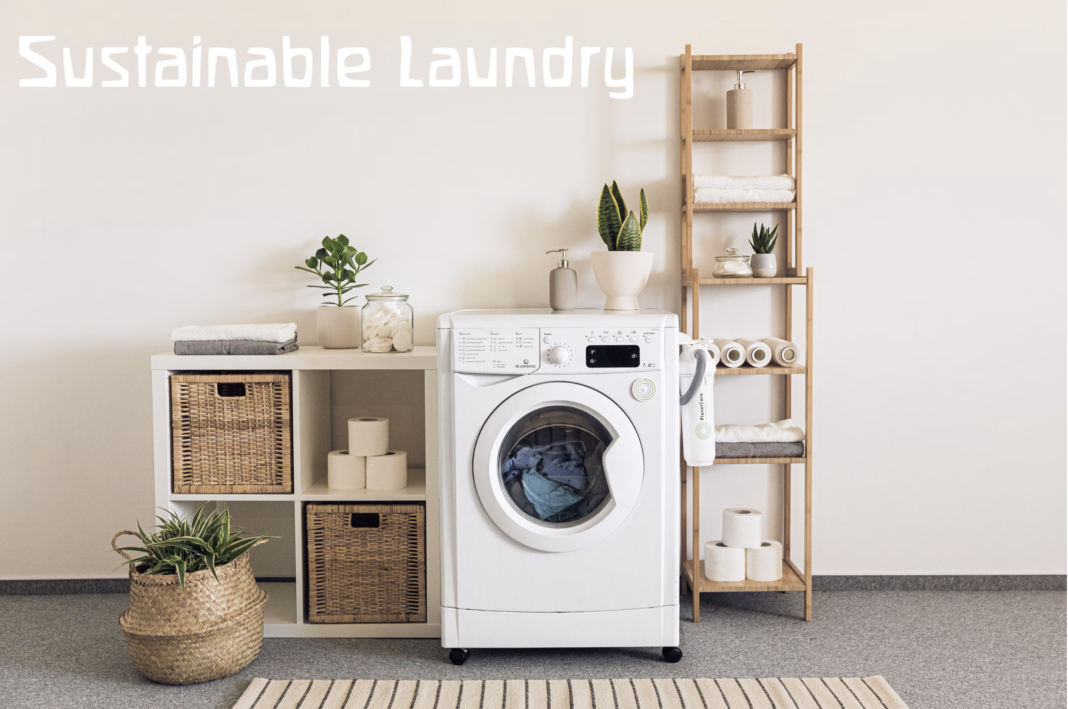
eco laundry machine wood shelves
Make an impact in the laundry room

You use paper straws, say no to plastic bags and use reusable food containers for lunch. Small changes add up. Here are some tips to doing your laundry sustainably. These tips are good for the planet and for saving money too.

Don’t wash it it if it’s not dirty. Use smocks and aprons to protect clothes. Find vintage aprons at second hand shops or made by seniors for sale at local libraries. 

havie upcycled apron
Havie creates upcycled aprons from old army tents

Always fill up the machine. Fill your front loader to the top, turning the drum to make more room. With a regular cycle (lower numbers) the machine can really be stuffed, as long as closing it doesn’t put stress on the door. Be gentle with the door as the hinges are a weak point, as are the knobs.

Have enough clothes. If you are always doing a load because you run out of socks, buy more socks (or work out a system to keep them organized). You should have enough clothes to have something to wear when you are washing, plus something extra in case of emergency.

Hand wash the things you love. They will last longer. Hang them to dry. 

Don’t have too many clothes. They tend to fall on the floor and require rewashing, and it’s harder to find what you need. So balance is key.

Have clothes you love. Wear them several times before you launder them.

Give family members or settle the idea with roommates and their partners, that each person has their own distinctive towels. They are more likely to reuse them.

beach towel

When visiting friends offer to bring your own sheets, or a sleeping bag. Take the sheets you just took off the bed for changing. This takes stress off your friends and allows you to reuse the sheets when you get home. Same goes for towels although consider if you will need to travel with it wet.

Grey water from the bath or from the air conditioner can be reused for laundry. Keep a couple of buckets in the shower and pour the used water into the machine through the opening for detergent while the water is running. I’ve noticed that my machine adds water to the first cycle in intervals. I add water until the water stops running, and try to be around for the second addition of water as well.

Use a minimum of detergent. If your laundry smells like detergent after washing, you’re probably using too much. The extra soap also clogs up your machine. My go-to favorite is Ecover and I add about 1/3 less than what they suggest and the laundry turns out just fine. I don’t use a softener, because it’s not necessary.

Overly perfumed soap and laundry softener can disrupt your endocrine system. Avoid artificial smells. My dad used to scratch his arms after my mom laundered his clothes with regular commercial detergent. Now she uses ECOS now, an ecological brand found in Walmart and hardware stores, and the bulk sized jug goes a long way. The non-eco detergents can have harmful biological compounds in them that can irritate your skin. 

Seventh Generation offers products you can find in regular shops too. 

Hang laundry to dry.

Have more tips or products you want to share for sustainable laundering?

Karin Kloosterman
Karin Kloostermanhttp://www.greenprophet.com
Karin Kloosterman is an award-winning journalist, innovation strategist, and founder of Green Prophet, one of the Middle East’s pioneering sustainability platforms. She has ranked in the Top 10 of Verizon innovation competitions, participated in NASA-linked challenges, and spoken worldwide on climate, food security, and future resilience. With an IoT technology patent, features in Canada’s National Post, and leadership inside teams building next-generation agricultural and planetary systems — including Mars-farming concepts — Karin operates at the intersection of storytelling, science, and systems change. She doesn’t report on the future – she helps design it. Reach out directly to [email protected]

Read More

TRENDING

How Torvinen Jaakko’s ugly wood can lay the foundations for green building

Canada's forests generate billions of dollars in economic value each year, yet vast amounts of irregular timber are downgraded to wood chips or biomass. A collaboration between researchers at Carleton University and Aalto University is challenging that model, demonstrating how "ugly wood" can be transformed into high-value architecture while reducing waste and storing more carbon in buildings.

Kansas City’s Second Attempt at a Conversion Therapy Ban: What the Proposed Ordinance Does and Why It’s Being Rewritten

Kansas City is attempting to revive protections against conversion therapy with a new ordinance carefully designed to withstand recent First Amendment challenges. Rather than banning conversion therapy by name, the proposal targets harmful therapeutic practices linked to increased risks of depression and self-harm, creating what supporters hope could become a legal model for other U.S. cities.

A Face Swap Tool for Training and Internal Comms

Corporate training videos often require repeated filming, travel, and production resources every time policies or personnel change. AI-powered face swap tools offer a more sustainable approach by extending the life of digital training content, reducing unnecessary reshoots, and helping organizations communicate more efficiently—provided they are used transparently with clear consent and ethical governance.

How a tick bite can lead to a life-threatening meat allergy AFG

Imagine developing a severe allergy to steak after a single tick bite. That's the reality for people with alpha-gal syndrome, a rapidly emerging condition linked to lone star ticks and other tick species. As researchers uncover how tick saliva rewires the immune system, health officials warn that hundreds of thousands of Americans may already be living with this unusual red meat allergy.

Russia’s Arctic superdeep oil drill revives debunked ‘infinite oil’ theory

Russia is reviving the controversial abiotic oil theory with plans to drill superdeep holes in the Arctic. While small amounts of abiotic methane exist deep within the Earth, most geologists reject the idea that commercial oil reserves originate from non-biological processes, raising questions about the environmental cost and scientific value of the project.

Yerukim Forms a New Green Economy Where the Money is Really Green

The Yerukim members who pick up the recyclables get to keep the monetary reward, the public earns "green" bills that can be used in shops, and business owners get to be associated with environmentalism.

Choosing Riyadh over Dubai? What Investors Should Know

Saudi Arabia is deploying capital at unmatched scale to catalyze tourism and advanced industry while rewiring its power-and-water backbone. The investable frontier is widening—especially in renewables, grid storage, water efficiency/desal retrofits, and hospitality operating platforms. Prudent investors will insist on phased delivery, enforceable KPIs (energy, water, biodiversity), and RHQ/zone compliance—while pricing political-economy and reputational risks alongside growth upside.

Sell your cooking oil for biodiesel money

Want to make money on old french fry oil? Sell it.

Qatar Alternative Energy Summit Pairs Investors And Innovators

Alternative energy investors and innovators can meet n' greet in Doha, Qatar March 16 and 17.

Here’s How To Implement The Four Pillars Of Employee Engagement

If you throw a party for your work team and they are vegans, don't make it a barbecue. Know the sustainability values of your team to boost moral and retain good people.

Locals From Rishon Fight IKEA

Big Box stores are a pretty new concept in Israel, and thank God that not every Israeli city wants them in their backyard. A word from someone who has see the beautiful farmland around her hometown Newmarket, Ontario stripped and converted into vulgar strip malls of big box shops: they have no place in a healthy and sustainable town or city.

The Jewish National Fund Meets An Inconvenient Truth

According to the JNF, it has transformed thousands of acres of barren land into green forests in Israel. They state that each person emits about 23 tons of carbon per year, estimating that each tree planted can absorb one ton of carbon in its lifetime. That's a whole lot of trees you'd need to be planting. Could so many fit in Israel?

How to quiet noise from construction in your office

Streets need to be resurfaced in New York but the humming and grinding noise is unsettling. Noise is environmental pollution. 

Popular Categories