Insect radar monitors the web of life

insect radar, Hula Valley

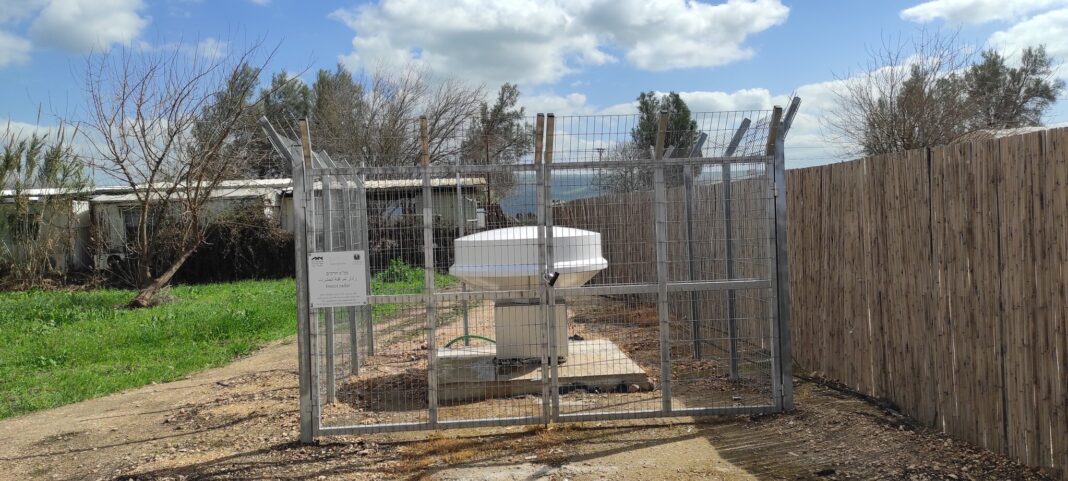
Radar entomology: The first insect radar installed in Israel near the Hula Valley

Despite your hatred for mosquitos, or the Fall Armyworm that’s eating lawns and football fields, insects are an important part in the web of life. The bodies of insects contain 10% nitrogen and 1% phosphorus and they are full of protein. Some startups like Flying Spark are even marketing insects for human consumption as part of the Alt Protein movement. Insects, of course, and their larvae, are already a nutritious food source in countries in Africa and East Asia. 

But beyond how insects can feed us humans directly, they are excellent fertilizer for plants and crops, they make nutritious meals for birds, bats, and amphibians like frogs and salamanders. Frogs and salamanders are indicator species, helping us know they health of ecosystems. Insects pollinate the food we eat.

If insects go, amphibians go. And if anyone reading this has noticed how much fewer insects stick to your windshield when driving in the country, you can maybe surmise – we have a problem.

Reasons for fewer insects? Pesticides, human development, invasive pests taking over, forestry, industrial pollution.  

To help understand insect populations, a new insect radar, the first for Israel, has been installed near the Hula Valley nature reserve. The area is a major rest stop for millions of migratory birds moving between Africa and Europe each year. 

The insect radar offers a chance to gauge the quantity of insects in Israel’s skies and was installed by the University of Haifa. The insect radar, like the bird radar installed by Prof. Yossi Leshem a couple of decades ago, will allow researchers to estimate the density, direction and speed of migration, elevation, and body size of the insects, and to assess factors influencing the insects that fly in this area.

“We will be able to identify pollinating insets that are of great importance for wild plants and agriculture, as well as other insects that cause damage to agriculture, such as various species of moths,” said Prof. Nir Sapir at the University of Haifa.

Insects mass migration larger than birds

In a previous study in which Prof. Sapir was also involved, and which was published in the journal Science, it was found that insect migration is the largest migration in terrestrial environments.

In Britain alone, some 3.5 trillion insects migrate every year, creating a biomass almost eight times greater than that of migrating birds.

Prof. Sapir anticipates that insect migration in Israel will be on an even larger scale: “In northern areas such as England, there is no insect activity in winter. In our region there are large insect populations throughout the year, including in winter. The conditions for the development of large populations are much more favorable here.

“Thanks to the radar, we will be able to calculate the quantities of insects of each given size and group that cross Israel – something that was impossible with the previous tools. We will be able to understand if between environmental temperature and other conditions, such as wind, affect the number of insects. We will be able to gauge the impact of global warming on the number of insect.

“This is importance, because insects constitute a major part in vital ecological interactions in many ecosystems,” Prof. Sapir concluded.

Monitoring invasive insects

One of the first studies undertaken by the researchers with the help of the insect radar seeks to monitor the fall armyworm, an invasive species of moth that arrived in Israel recently from South America. It was also detected in Egypt in 2021 so its spread could be rapid and devastating for countries in the Middle East already on the brink of starvation. Prof. Sapir explains that this species is one of the most harmful in the world and is known to cause damage to more than 350 species of plants.

“The crop that is worst affected by the fall armyworm larvae is maize…we have begun to use the radar in order to understand the movement of these moths, as a first step toward controlling their spread,” Prof. Sapir added.
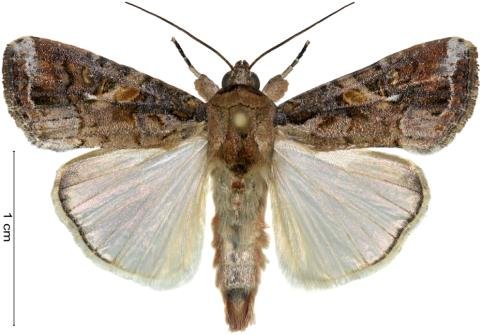
fall armyworm, 1 cm
A fall armyworm in its final, moth stage. As a larva it devastates. Fall armyworms feed on a wide range of plants, including corn, fescue, Johnsongrass, rice, ryegrass, small grain crops, sorghum, Sudangrass and timothy. In corn, caterpillars can injure foliage as well as the ears.

Using such variables as size, flight speed, wing movement pattern, and body shape obtained from the radar, the researchers plan to apply a classification tool based on “teaching” the machine to identify groups of insects and later on specific species, such as the fall armyworm, with the help of the radar.

Could it works as an early warning system against locusts and new invaders? Let’s hope countries nearby, such as Lebanon, Egypt, Jordan and Syria, will also invest in insect radars so that science can help draw links in a regional, rather than a local scale. 

radar entomology cabi biosciences
Radar Entomology, a handbook published by CABI Bioscience

CABI, an England-based agriculture NGO I used to do with research with as a graduate student in Switzerland, published a book some 20 years ago – Radar Entomology – indicating how radar can be used for insect pest management. The book deals with the applications of radar findings in the management and forecasting of both pest and beneficial insects, and is an important reference for those working in agricultural entomology and pest management.



Karin Kloosterman
Karin Kloostermanhttp://www.greenprophet.com
Karin Kloosterman is an award-winning journalist, innovation strategist, and founder of Green Prophet, one of the Middle East’s pioneering sustainability platforms. She has ranked in the Top 10 of Verizon innovation competitions, participated in NASA-linked challenges, and spoken worldwide on climate, food security, and future resilience. With an IoT technology patent, features in Canada’s National Post, and leadership inside teams building next-generation agricultural and planetary systems — including Mars-farming concepts — Karin operates at the intersection of storytelling, science, and systems change. She doesn’t report on the future – she helps design it. Reach out directly to [email protected]

Read More

TRENDING

Mona Khalil, Orange House Project founder, sea turtle protector killed in Lebanon

Mona Khalil spent decades protecting Lebanon's sea turtles and coastal ecosystems. Her death in the ongoing conflict between Israel and Hezbollah shines a light on a broader environmental tragedy unfolding across northern Israel and southern Lebanon. From damaged wetlands and disrupted bird migrations to threatened seed banks and endangered wildlife, the region's ecosystems are becoming casualties of a war with no clear end in sight.

Dan Zaslavsky’s energy tower dream is rising again in Iran and China

The Energy Tower idea never made the leap from drawings and engineering studies to full-scale construction. But nearly two decades after most people stopped talking about it, the concept is quietly evolving in two unexpected places: China and Iran. The concept let dreamers dream and doers do - figuring out more pleasing designs and engineering.

A visit to Amirim, Israel’s first all-vegetarian village in the Galilee

Just 15 kilometers from Tzfat there is a moshav that was founded in the late 50s that was ideologically influenced by organic, vegetarian and vegan principles. My hostess at Ohn-Bar, the tzimmer where I stayed, explained that the people of Amirim were among the pioneers of Israel’s strong vegetarian movement.

Israeli Hydrogen Startup H2Pro Are Trying to Solve Clean Energy’s Hardest Problem

The company has attracted backing from major investors including Breakthrough Energy Ventures, the climate fund founded by Bill Gates, along with industrial partners such as Sumitomo, ArcelorMittal, and Temasek, a multi-billion dollar company that owns Singapore airlines. H2Pro has raised more than $100 million USD and is moving from pilot projects toward commercial-scale deployments.

Desalination experts debunk Aqua Solaire, the floating desalination barge

AI makes it easy to dream, develop, and create images of what could be world-changing ideas, until the reality sets in. A new project making the rounds is Aqua Solaire, an allged French concept for a solar-powered desalination vessel designed to bring drinking water to coastal communities facing drought, storms, and infrastructure failures.

Yerukim Forms a New Green Economy Where the Money is Really Green

The Yerukim members who pick up the recyclables get to keep the monetary reward, the public earns "green" bills that can be used in shops, and business owners get to be associated with environmentalism.

Choosing Riyadh over Dubai? What Investors Should Know

Saudi Arabia is deploying capital at unmatched scale to catalyze tourism and advanced industry while rewiring its power-and-water backbone. The investable frontier is widening—especially in renewables, grid storage, water efficiency/desal retrofits, and hospitality operating platforms. Prudent investors will insist on phased delivery, enforceable KPIs (energy, water, biodiversity), and RHQ/zone compliance—while pricing political-economy and reputational risks alongside growth upside.

Sell your cooking oil for biodiesel money

Want to make money on old french fry oil? Sell it.

Qatar Alternative Energy Summit Pairs Investors And Innovators

Alternative energy investors and innovators can meet n' greet in Doha, Qatar March 16 and 17.

Here’s How To Implement The Four Pillars Of Employee Engagement

If you throw a party for your work team and they are vegans, don't make it a barbecue. Know the sustainability values of your team to boost moral and retain good people.

Locals From Rishon Fight IKEA

Big Box stores are a pretty new concept in Israel, and thank God that not every Israeli city wants them in their backyard. A word from someone who has see the beautiful farmland around her hometown Newmarket, Ontario stripped and converted into vulgar strip malls of big box shops: they have no place in a healthy and sustainable town or city.

The Jewish National Fund Meets An Inconvenient Truth

According to the JNF, it has transformed thousands of acres of barren land into green forests in Israel. They state that each person emits about 23 tons of carbon per year, estimating that each tree planted can absorb one ton of carbon in its lifetime. That's a whole lot of trees you'd need to be planting. Could so many fit in Israel?

How to quiet noise from construction in your office

Streets need to be resurfaced in New York but the humming and grinding noise is unsettling. Noise is environmental pollution. 

Popular Categories