Saudi Arabia, Kuwait, Iran, Turkey: hot spots for SO2 emissions

The Rabigh oil and gas hotspot in Saudi Arabia ranked a #2 hotspot, while the country is ranked at #3 as the most polluting for SO2 in the world: Greenpeace

Middle East Records Some of the Highest Global SO2 Emissions 

The Centre for Research on Energy and Clean Air– CREA and Greenpeace India released their report about Ranking the World’s Sulphur Dioxide Emissions Hotspots 2019-2020, which revealed the emissions of this toxic gas resulting annually from anthropogenic activities in the energy, oil, gas and  smelting sectors.
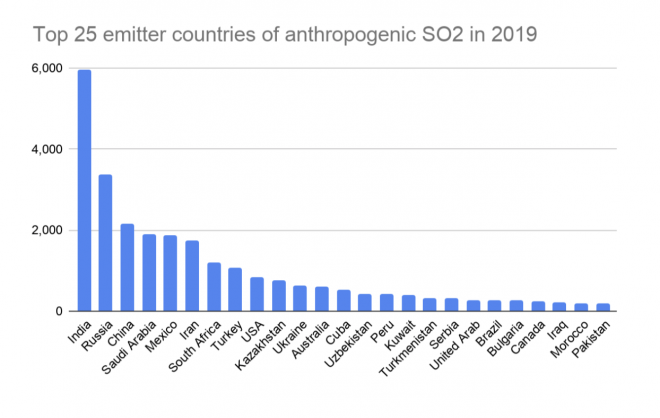
Despite the general decrease in SO2 emissions around the world, the Middle East is still one of the worst polluted regions, specifically emissions around the Gulf region which did not witness any significant change between 2018 and 2019. 

Ahmad El Droubi, Senior Campaigner – Greenpeace MENA said: ”We issue this kind of report as we believe that the measurement and tracking of air quality should be a priority. Sulfur dioxide is a colourless air pollutant that is invisible to the human eye, widespread and hazardous to human health. Breathing SO2 increases the risk of health conditions including stroke, heart disease, asthma, lung cancer and premature death.”

For this CREA/Greenpeace report, researchers used satellite data and a global catalogue of SO2 emissions sources from the United States National Aeronautics and Space Administration (NASA) to detect emissions hotspots. The data was analysed to identify source industries and emissions trends.

“Despite the global drop in emissions by 47.25% since 2005, the Middle East and North Africa region recorded a decrease of only 8.5% in the same period. And the report did not find any significant change between the years 2018 and 2019, and that the Gulf remains one of the most polluted regions with SO2 and is a major hotspot of global emissions.”
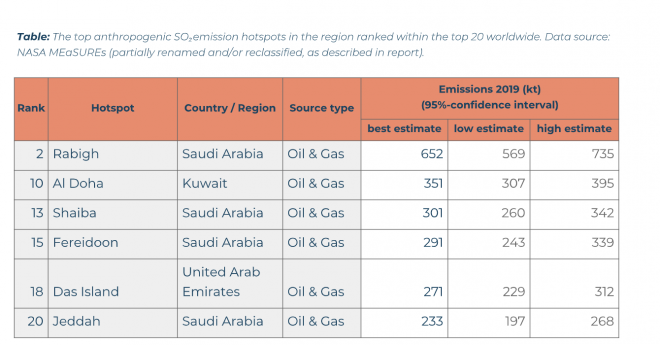
The top emissions hotspots are all concentrated in the Middle East.

The report revealed that Saudi Arabia recorded the highest levels of sulfur dioxide emissions in the Middle East and North Africa in 2019, followed by Kuwait, the UAE, Iraq and Morocco.

The UAE and Iraq witnessed a decrease in the emissions levels between the years 2018 and 2019, however this change was within the range of annual variability. The levels of emissions of this gas in Saudi Arabia and Kuwait did not record any significant change in the same period. Morocco recorded an increase of 15% in the levels of emissions of sulfur dioxide between 2018 and 2019.

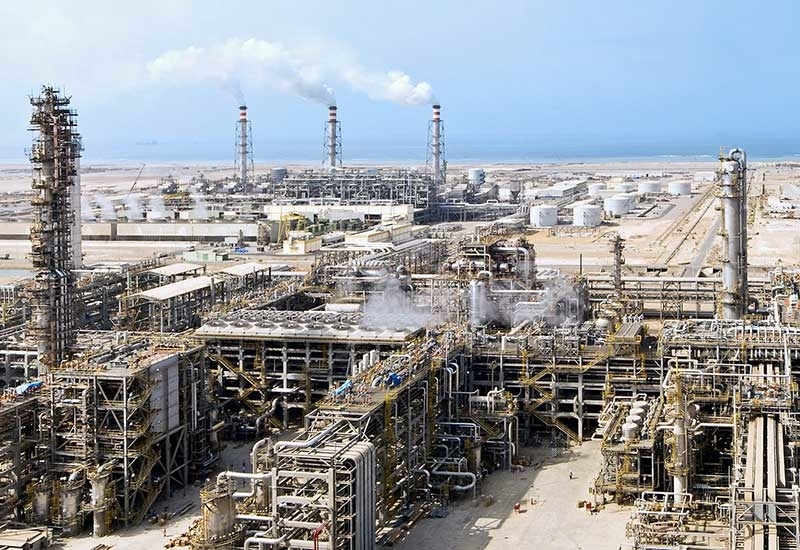
The Norilsk smelter site in Russia was the biggest source of anthropogenic SO2 emissions in the world in 2019, the Rabigh oil and gas hotspot in Saudi Arabia ranked second. It is pictured above.

Dangers of sulfur dioxide

SO2 is a toxic gas responsible for the smell of burnt matches. It is released naturally by volcanic activity and is produced as a by-product of copper extraction and the burning of fossil fuels contaminated with sulfur compounds.

Sulfur dioxide causes a range of harmful effects on the lungs, as the EPA’s most recent review of the science concluded: Wheezing, shortness of breath and chest tightness and other problems, especially during exercise or physical activity. Exposure to SO2 likely makes Covid infections worse or more dangerous.

While sulfur dioxide isn’t a direct greenhouse gas like carbon dioxide or methane, it is considered an indirect greenhouse gas. Sulfur dioxide is regarded as an indirect greenhouse gas because, when coupled with elemental carbon, it forms aerosols.

Karin Kloosterman
Karin Kloostermanhttp://www.greenprophet.com
Karin Kloosterman is an award-winning journalist, innovation strategist, and founder of Green Prophet, one of the Middle East’s pioneering sustainability platforms. She has ranked in the Top 10 of Verizon innovation competitions, participated in NASA-linked challenges, and spoken worldwide on climate, food security, and future resilience. With an IoT technology patent, features in Canada’s National Post, and leadership inside teams building next-generation agricultural and planetary systems — including Mars-farming concepts — Karin operates at the intersection of storytelling, science, and systems change. She doesn’t report on the future – she helps design it. Reach out directly to [email protected]

Read More

TRENDING

Hormuz 2026 Conflict Poses an Energy and Food Security Dilemma in a Warming World

As tensions rise in one of the world’s most critical maritime chokepoints, the ripple effects go far beyond oil—touching food systems, climate pressures, and regional stability

Shebara hotel Saudi Arabia – is it eco-luxury dream or desert illusion?

A new breed of luxury has landed on the Red Sea, mirrored pods floating above coral reefs, reflecting sky and sea like something not entirely of this Earth. Energy powered by solar powers, drinking water pulled from the sea using desalination. 

When peace returns, will we rediscover Saudi Arabia’s mud-brick soul?

When the region settles after the American war with Iran, and it will, American and European travelers will come back. Not just for spectacle or headline projects, but for places that feel real. Places that haven’t been engineered to impress and which get into your soul. We predict that visitors to Saudi Arabia will want to see places like Rijal Alma.When the region settles after the American war with Iran, and it will, American and European travelers will come back. Not just for spectacle or headline projects, but for places that feel real. Places that haven’t been engineered to impress and which get into your soul. We predict that visitors to Saudi Arabia will want to see places like Rijal Alma.

Climate change traced in sea turtle shells

It's sea turtles which may in the end save islands in the Seychelles. They may also better help us understand climate change. Like rings on a tree, scientists have found a way to read sea turtle shells and how they are impacted by climate change tells a story. 

We’ve lived through the past 11 of the hottest years on record

Have we forgotten about global warming when the world...

Mining Afghanistan’s Mineral Discoveries Similar to Avatar

Now that American forces in Afghanistan are commemorating the longest period of any war that America has been involved in, including the 1965-73 Vietnam War, the recent discoveries of large and extremely valuable mineral and metal deposits may finally bring to light a reason to continue the presence of US fighting forces in this war torn and backward country.

From Pilot Plant to Global Stage: How Aduro Clean Technologies’ 2026 Expansion Signals a Turning Point for Chemical Recycling Investors Like Yazan Al Homsi

The company's Next Generation Process (NGP) Pilot Plant in London, Ontario, has officially moved into initial operating campaigns, generating the kind of structured, repeatable data that separates laboratory promise from commercial viability.

Nobul’s Regan McGee on Shareholder Value: “Complacency Is the Silent Killer” 

Why the governance framework designed to protect shareholders so...

Should You Invest in the Private Market?

startustartup Unlike public stock exchanges, which offer daily trading, strict...

How to build a 100-year-company

Kongō Gumi is a Japanese construction company, purportedly founded in 578 A.D., making it the world's oldest documented company. What can we learn about building sustainable businesses from them?

How AI Helps SaaS Companies Reduce Repetitive Customer Support Work

SaaS products are designed for large numbers of users with different levels of experience, and also in renewable energy.

Pulling Water from the Air

Faced with water shortage in Amman, Laurie digs up...

Turning Your Energy Consultancy into an LLC: 4 Legal Steps for Founders in Texas

If you are starting a renewable energy business in Texas, learn how to start an LLC by the books.

Popular Categories