
Forests can bounce back after acid rain

acid rain forests bounce back, sweet woman in the forest
Even though 70s and 80s suffered through Acid Rain, new research shows that forest soils can bounce back. You see, there is still hope that we can solve climate change.

If you grew up in the 70s or 80s no one was talking about climate change: they were talking about nuclear war and acid rain. Acid rain made Kimberly’s hair turn green in the TV show Different Strokes; Canada’s environmental minister called it the “malaria of the biosphere” and it kept me away at night worrying.  Acid rain was the fallout of industrial chemicals and pollution into forests and lakes. As it rained toxins were picked up by the water and the toxins were rained down in close and faraway parts of the world. 

Canada suffered a massive amount of acid rain from the United States as it blew northward. The Ukraine and the rest of Europe experienced more than acid, but nuclear rain, after the Chernobyl meltdown.

So in the 60s and even into the 70s, before the American Clean Air Act of 1970 came into full effect, rainfall over the United States and Canada was full of acid. It killed lakes all over Canada and I remember canoeing in beautiful, but dead, lakes when I was a kid. We talked about it all the time. Acid rain was a thing. 

Acid rain is precipitation that mixes with gases from industrial plants, emissions from cars, and especially coal and fossil fuel pollution. That caused the water to become acidic – also called “acid rain.” Coal plants can also actually cause rain. Read this article about it

Besides the air pollution hurting plants and humans and lakes, this acid rain also hurt our soil. Even dry deposits of these acidic emissions could be hurtful to humans, plants, soil and water. Acidic soil can bind nutrients so that plants can’t get them. It can hurt the microbes in soil, as well as plants. But new research suggests that soils can bounce back. 

One odd “helpful” thing acid rain did, though, researchers had found, was to provide a few nutrients to the soil. The sulfur in the acid rain – in the form of sulfates – actually provided nutrition to plants.

However, the benefit was negligible, and the overall effects of pollution required regulation. Occasionally, cities like Los Angeles will still experience “smog.” The incidents are even more common in China and India, where little regulation is in effect. (Read this good BBC article on the bittersweet story of solving acid rain).

Jennifer Knoepp, with the US Forest Service, has been studying how the reduction of air pollution and acid rain is affecting forests in the southern Appalachian Mountains. Her interest is to see how soils are recovering as our air gets cleaner.
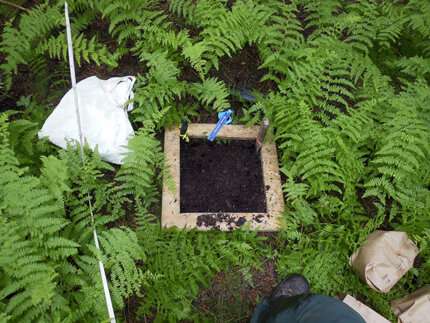
acid rain soils recovering, sampling of forest soil

How does soil fare after the Clean Air Act?

Both the 1970 Clean Air Act and 1990 Amendment regulated emissions across the United States, resulted in improved air and water quality. But what about the soil – the “skin” of the earth – that provides for food and shelter and is home to the world’s largest biodiversity?

“We have found significant movement of sulfate from the soils over time,” says Knoepp. “Sulfate is moving out of the surface soils and into the subsoil. In addition, the streams in our study site show improved water quality. However, soils and streams still exhibit chemical imbalances. This suggests recovery from decades of acid rain is a long-term process.”

forest bathing, woman hipster contemplating nature in dark green forest

To evaluate the soils and water, researchers sampled 24 high elevation spruce-fir forest sites and two watersheds in the southern Appalachians. The sites represent a region in the southeastern U.S. with high gradients in elevation and precipitation, as well as high biodiversity.

The research area includes sites within the Great Smoky Mountain National Park and the southern end of the Blue Ridge Parkway. Both are major tourist and outdoor recreation destinations. 

Recent soil collections were compared to archived soil samples from the 80s and 90s. Sample archives are essential to long-term research. They provide the ability to conduct tests not planned during an original experimental design. 
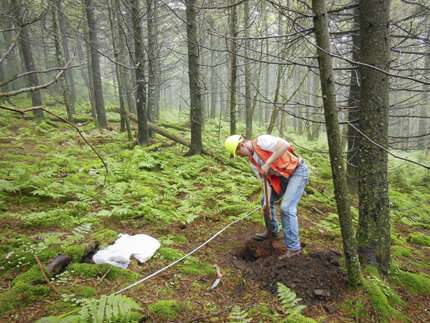
testing forest soil for acid rain

The research team analyzed both the newly collected and archived samples for “extractable sulfate.” All data were used to determine the long-term response of southern Appalachian forests to changes in sulfate deposition that occurred after the implementation of the Clean Air Act Amendment in 1990.

Data show that sulfate in precipitation and streams declined after implementation of the Clean Air Act Amendment. They also show that completely reversible sulfate has declined in surface soils. Sub-surface soils show either no change or an increase in partially reversible sulfate.

Knoepp presented her work at the November International Annual Meeting of the American Society of Agronomy, Crop Science Society of America, and Soil Science Society of America in San Antonio as the Sergei A. Wilde Distinguished Lectureship on Forest Soils. 

Karin Kloosterman
Karin Kloostermanhttp://www.greenprophet.com
Karin Kloosterman is an award-winning journalist, innovation strategist, and founder of Green Prophet, one of the Middle East’s pioneering sustainability platforms. She has ranked in the Top 10 of Verizon innovation competitions, participated in NASA-linked challenges, and spoken worldwide on climate, food security, and future resilience. With an IoT technology patent, features in Canada’s National Post, and leadership inside teams building next-generation agricultural and planetary systems — including Mars-farming concepts — Karin operates at the intersection of storytelling, science, and systems change. She doesn’t report on the future – she helps design it. Reach out directly to [email protected]

Read More

TRENDING

Stardust’s solar geoengineered $10 billion plan to blot out the sun

Israeli-American startup Stardust Solutions has raised $75 million to develop technology that could cool the Earth by reflecting sunlight. Is solar geoengineering becoming a real industry? Or could it be a new threat?

Plastic Beverage Bottles and Caps Most Prevalent Pollutants Worldwide

Plastic bottles remain one of the most stubborn forms of ocean pollution, according to new results from Ocean Conservancy’s 2025 International Coastal Cleanup, the massive volunteer effort that removes and records trash from beaches and waterways around the world.

Mongolia rangelands the center of climate change

Mongolia put the world’s overlooked rangelands on the climate agenda at UNCCD COP17, where governments and investors backed new financing for land restoration, drought resilience and pastoral communities.

Did China’s AI Boom Melt the Himalayas? Nepal’s Deadly Floods Raises Question About Data Centers and Climate

Nepal’s devastating floods reveal the growing risks of a warming Himalaya. As glaciers retreat and extreme events intensify, clean energy and climate action are increasingly urgent — and local organizations need support.

Jewish Climate Network founded so innovators don’t leave their identity at the door

Rather than retreating from climate change work, the Jewish Climate Trust organization has backed a new initiative designed to strengthen both climate action and Jewish community.

Scientists make lead-free perovskite solar cells that can weather the elements

Scientists have developed a “raincoat” for lead-free tin perovskite solar cells, helping them withstand air, moisture and heat while maintaining high efficiency.

The Essential Guide To Sustainability in Project Management

Sustainability is an approach where businesses and individuals balance the environmental, social, and economic aspects of a project such that current and future stakeholders are not overburdened with the impacts of the project in future.

Yerukim Forms a New Green Economy Where the Money is Really Green

The Yerukim members who pick up the recyclables get to keep the monetary reward, the public earns "green" bills that can be used in shops, and business owners get to be associated with environmentalism.

Choosing Riyadh over Dubai? What Investors Should Know

Saudi Arabia is deploying capital at unmatched scale to catalyze tourism and advanced industry while rewiring its power-and-water backbone. The investable frontier is widening—especially in renewables, grid storage, water efficiency/desal retrofits, and hospitality operating platforms. Prudent investors will insist on phased delivery, enforceable KPIs (energy, water, biodiversity), and RHQ/zone compliance—while pricing political-economy and reputational risks alongside growth upside.

Sell your cooking oil for biodiesel money

Want to make money on old french fry oil? Sell it.

Qatar Alternative Energy Summit Pairs Investors And Innovators

Alternative energy investors and innovators can meet n' greet in Doha, Qatar March 16 and 17.

Here’s How To Implement The Four Pillars Of Employee Engagement

If you throw a party for your work team and they are vegans, don't make it a barbecue. Know the sustainability values of your team to boost moral and retain good people.

Locals From Rishon Fight IKEA

Big Box stores are a pretty new concept in Israel, and thank God that not every Israeli city wants them in their backyard. A word from someone who has see the beautiful farmland around her hometown Newmarket, Ontario stripped and converted into vulgar strip malls of big box shops: they have no place in a healthy and sustainable town or city.

Popular Categories