
If you believe in yourself, in people and causes, then you must believe in movements because these are three major components of a movement.
In its simplest form, a movement is a group of people, small or large, working together for a common cause, be it social, political or cultural. Any one person, from the billions living on earth, can start a movement. Each one of us is unsatisfied with something within our community, society, nation or the world so each one of us might have the motive to start a movement. History has proven that from the Civil Rights Movement in the 60s to newer ones concerning equality, climate change, women’s rights and many more, movements do create change.
Studies have shown that all movements have similar elements in them. Some of these elements include:
- Vision and Frame: The vision is the goal and the frame is what centers the debate.
- Commitment: The building of power to continue for the long haul.
- Underlying and viable economic model: The growth strategy being used.
- Vision of governance: Working to shift power or policy.
- Willingness to network with other movements: The new way of organizing is building ecosystems of organizations that make change together.
With a movement, there are expected outcomes, usually 4 types:
- Change the story
- Change the policy
- Change the outcomes
- Change the power relationships
Typically, movements begin to develop as a small group of early starters. This group motivates other potential followers to join the movement to stand up for a cause, fight an issue, create awareness and help the targeted population. From this point, there is the attempt to build viral participation in order to take action. This is the peak of the movement and piques and drives the interest of the general public. Over time, through a movement, a long-term solution can be found.
These are the basics of a movement, now how do you put all this together?
Have your outcome ready: The first stage of the social movement is known as emergence. Within this stage, social movements are very preliminary with very little organization, if any. It’s usually just a small group of dissatisfied people about a certain issue, expressing their grievances. To start a movement, you need to work backwards and propose your desired outcome first. Obviously, it’s easier to get people behind you if they know what they can expect. You need to be able to explain how you plan to achieve the outcome in a clear manner with tangible results.
Be among the people: Stage two, known as coalescence, or the “popular stage,” is characterized by a more clearly defined sense of discontent. It’s no longer just about a feeling of unease, but rather a much better sense of what the unease is about and who or what is responsible. Ideally, a movement should have a leader and that leader needs to be at the forefront, not working behind the scenes. As a leader, you belong to two groups; those creating the movement and those who are going to benefit. Being among the people means to listen to those who support you and what they need and want to do.
Don’t totally depend on social media: While social media takes over anything digital, you can’t completely depend on it for changes on the ground. Your hashtags or change of statuses are not what is going to change things around. They are just extra tools provided to work with; to spark conversation, for example. The way to change minds is through face-to-face engagement.
Building the belief: The third stage is known as bureaucratization, and characterized by higher levels of organization and coalition-based strategies. In this stage, social movements often experience some success. You want everyone participating in the movement to believe in it and be an active participant. If you have a look at trvst.world you will see the many and diverse causes people believe in and are truly involved in the process, from fundraising to campaigns, and this is what needs building. Through their projects, Trvst brings together corporations, philanthropists, investors and engaged citizens to co-create new solutions through collective actions and showcasing inspiring and thought – all of which create initiatives for change. Go by the notion that most people are good by nature, and want to help each other to build up belief.
Mobilize: Movement members need encouragement to take action. This could be done through peaceful protests, petitioning, advertisements, assemblies and more. Always keep in vision the ultimate goal you want to reach. It’s also important to know that smaller, localized movements with very specific goals often have a better chance at outright success.
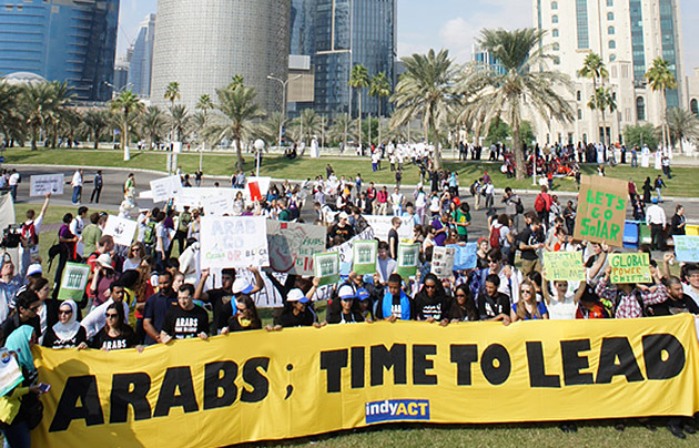
Storytelling: If you’ve ever taken a creative writing course, you’ll know about ‘show, don’t tell’. The same is true in movements; don’t just tell people about it, show them things they can see in order to create empathy and be able to relate to what is happening. Use pictures, videos, and get real life cases to talk to people on why they’re in the movement.
Make it about others: Even if you are the brainstorm of a certain movement, at one point you will have to remove yourself from the spotlight and make it about others. Any movement becomes successful when the supporter feels directly connected to those they are helping. While the vision is still there, what begins to matter more are the actions that will be taken by others in the movement to achieve results.
Keep the engagement going: Finally, the last stage in the social movement life cycle is decline, or “institutionalization.” Decline does not necessarily mean failure. Some do decline because they’ve been successful and the results have been incorporated into the mainstream. Never assume that you’ve exhausted all ideas. There are always new ways to keep people interested in the movement you began; just remind them why they wanted to be involved in the first place, while trying to recruit more new members.
Something bigger than all of us
Social movements continue to be a major force in the world. They usually start small and can end up changing an entire culture. They don’t all go through the stages as described, and some may skip stages altogether. But they need to inspire others to rally behind it and push it forward. Any element that goes into a movement should be utilized to be a tool of change. We can assume there are two ways to bring about change. One is through force that only the villains in a story want. The other is via peaceful motivation and inspiration. Remember that people want to be a part of something bigger than themselves. They want to play a role in the bigger story; that of a movement.