

Tips for getting a better night’s sleep

floating home

Good health is dependent on getting enough quality sleep. There are things you can do to ensure that you enjoy the benefits of a restful night’s sleep. Unfortunately, there are far too many people who have trouble falling asleep or staying asleep each night. Science Daily reports that an estimated one-fourth of Americans suffer from chronic insomnia.

woman sleeping in flowers

Everyone has suffered the uncomfortable effects of a poor night’s sleep, feeling grouchy and miserable throughout the day. Unfortunately, not getting adequate sleep is much more serious than simply suffering through a grueling day at work or school until you can finally go home and go to bed.

Some of the serious diseases or conditions associated with a lack of sleep are heart disease, high blood pressure, stroke, heart attack, and diabetes.

The good news is that there are practical steps you can take to solve your insomnia.

Tip #1. Stay on a regular sleep schedule. 

Mayo Clinic recommends that people make an effort to stay on a set schedule for bedtime each night, varying only by an hour at the most on weekends or for special occasions. By doing this, your body will become automatically programmed to adjust with less chance of suffering from insomnia. Schedule a minimum of seven hours of sleep each night.

Tip #2. Buy a comfortable bed.

A comfortable bed is essential for quality sleep. Be sure to select the bed firmness that suits you best. Find one that’s bamboo or made with eco friendly materials that won’t off gas.
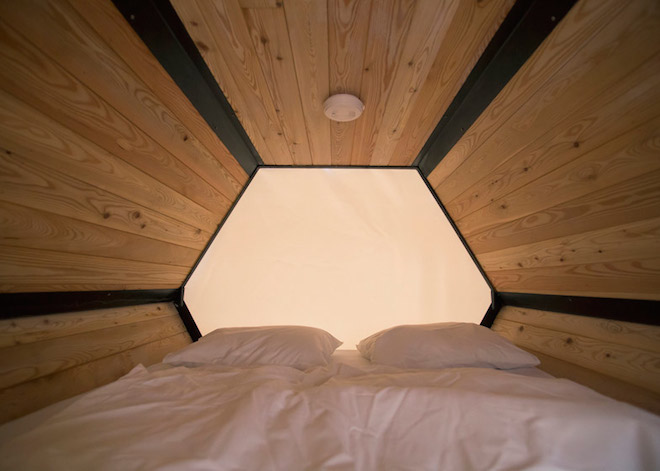
B-and-Bee, stackable sleeping cells, honeycomb shelters, belgian festivals, Barbara Vanthorre, Ron Hermans, Achilles Design, One Small Step, Compaan, Lambuer, social entrepreneurs, green design, refugee shelters, sustainable design

Tip #3. Exercise regularly during daylight hours.

Regular exercise improves your sleep quality and can improve insomnia. It also improves your restorative sleep levels, increasing the time spent in deep sleep. Even a short ten-minute walk helps.

man doing yoga and meditating, shirtless, black pants, smoke
It is important to remember to exercise in the morning or afternoon instead of in the evening. Since exercise elevates your temperature, increases your metabolism and stimulates hormones, it can actually interfere with your sleep if you do it too close to bedtime. Keep at least a three-hour gap between exercise and bedtime.

Tip #4. Get enough bright light during the day.

Your circadian rhythm is your body’s clock that tells you when to sleep and when to stay awake. Sunlight and bright light exposure during the day helps establish regular sleeping patterns so that you want to sleep at night and stay awake during the day.

During winter months or darker days, an artificial bright light source can be used instead to improve sleep.

Tip #5. Monitor what you consume for improved sleep. 

Limit your caffeine intake. While some people can drink coffee right before bed and still sleep well, others are very sensitive to this stimulate and can’t drink caffeine at all if they want to get a good night’s sleep. Avoid big meals right before bedtime.

Finish eating at least two hours before going to bed. A light snack before bed is alright. Avoid drinking alcohol or smoking cigarettes before bed. They both have a negative impact on the quality of your sleep. Some people say that CBD helps, from the medical cannabis space. Try it and let us know if it helps.

Tip #6. Buy a special technical device

For some, however, sleep may become difficult as a result of sleeping conditions such as sleep apnea, and with this, you can buy CPAP machines from brands like Respshop to ensure you’re able to sleep for your full eight hours uninterrupted.

Read More

TRENDING

Understanding Food Production: Karl Studer on the Urban-Rural Knowledge Gap

Karl Studer occupies an unusual position in American business. As President of Quanta Services, he oversees electrical infrastructure operations across the United States, Canada, and Australia, managing thousands of employees and multibillion-dollar projects.

Tigris River oil spill highlights Iraq’s environmental oversight and our addiction to oil

A fresh oil spill in the Tigris River, filmed by an Iraqi university student, has reignited concern over Iraq's polluted waterways. From ancient Mesopotamia to modern Basra, the country's dependence on oil has come at a steep environmental and human cost, with activists warning that unchecked contamination is putting ecosystems and public health at risk.

Doctor-Led Direct Hair Transplant: What Surgeon Involvement Means for Outcomes

Hair restoration technology continues to evolve, but the surgeon behind the procedure remains the most important factor. Doctor-led hair transplants emphasize careful diagnosis, conservative donor management, natural hairline design, and long-term planning rather than simply maximizing graft counts. By treating donor hair as a limited resource and tailoring each procedure to the patient's future hair loss, experienced surgeons can reduce the need for corrective surgery while delivering more natural, sustainable results.

Data centers in Space? Sophia Space and Apex plan on busing them in

Can data centers really be built in space? Pasadena-based Sophia Space is partnering with Apex to test the idea by launching modular AI computing systems into low Earth orbit in 2027. Using radiation-hardened compute TILEs cooled by passive radiative systems and mounted on scalable satellite buses, the companies aim to prove that edge computing can operate reliably in space. While challenges remain, the project represents an important step toward distributed orbital computing networks that could support everything from climate monitoring and pollution tracking to autonomous spacecraft navigation in an increasingly crowded orbital environment.

Mona Khalil, Orange House Project founder, sea turtle protector killed in Lebanon

Mona Khalil spent decades protecting Lebanon's sea turtles and coastal ecosystems. Her death in the ongoing conflict between Israel and Hezbollah shines a light on a broader environmental tragedy unfolding across northern Israel and southern Lebanon. From damaged wetlands and disrupted bird migrations to threatened seed banks and endangered wildlife, the region's ecosystems are becoming casualties of a war with no clear end in sight.

Yerukim Forms a New Green Economy Where the Money is Really Green

The Yerukim members who pick up the recyclables get to keep the monetary reward, the public earns "green" bills that can be used in shops, and business owners get to be associated with environmentalism.

Choosing Riyadh over Dubai? What Investors Should Know

Saudi Arabia is deploying capital at unmatched scale to catalyze tourism and advanced industry while rewiring its power-and-water backbone. The investable frontier is widening—especially in renewables, grid storage, water efficiency/desal retrofits, and hospitality operating platforms. Prudent investors will insist on phased delivery, enforceable KPIs (energy, water, biodiversity), and RHQ/zone compliance—while pricing political-economy and reputational risks alongside growth upside.

Sell your cooking oil for biodiesel money

Want to make money on old french fry oil? Sell it.

Qatar Alternative Energy Summit Pairs Investors And Innovators

Alternative energy investors and innovators can meet n' greet in Doha, Qatar March 16 and 17.

Here’s How To Implement The Four Pillars Of Employee Engagement

If you throw a party for your work team and they are vegans, don't make it a barbecue. Know the sustainability values of your team to boost moral and retain good people.

Locals From Rishon Fight IKEA

Big Box stores are a pretty new concept in Israel, and thank God that not every Israeli city wants them in their backyard. A word from someone who has see the beautiful farmland around her hometown Newmarket, Ontario stripped and converted into vulgar strip malls of big box shops: they have no place in a healthy and sustainable town or city.

The Jewish National Fund Meets An Inconvenient Truth

According to the JNF, it has transformed thousands of acres of barren land into green forests in Israel. They state that each person emits about 23 tons of carbon per year, estimating that each tree planted can absorb one ton of carbon in its lifetime. That's a whole lot of trees you'd need to be planting. Could so many fit in Israel?

How to quiet noise from construction in your office

Streets need to be resurfaced in New York but the humming and grinding noise is unsettling. Noise is environmental pollution. 

Popular Categories