

CropX nails precision agriculture with $9 million investment

cropx-smart-sensor

In the same space as the American agtech company flux, built on Israeli R&D to help people grow food in cities, another Israeli-founded, American-managed company is taking a stance and big investment dollars in agtech and food production.

They call it CropX.

The company announced this week that it closed its $9 million Series A financing. This is after 5 years of R&D.

The round was led by some familiar names: Finistere Ventures, Innovation Endeavors, and GreenSoil Investments, and each investor in the Series A round is dedicated to agriculture technology innovations.

Israel-based OurCrowd also participated in the round given its previous investment in the company.

“Before CropX, there was no cost-effective way to control our irrigation infrastructure,” noted Mike Mills, a Missouri farmer and CropX customer. “We are now able to accurately and easily manage our irrigation and make real-time adjustments — all from a smartphone and across multiple farms and fields. CropX’s solution allows us to lower our water and energy usage.”

With drought conditions accelerating around the globe, water management has become one of the most critical issues facing the farming sector.

Driving a new era in AgAnalytics, CropX uses advances in the Internet of Things (IoT) and big data to transform traditional farming techniques. The investment will be used to aggressively expand the CropX team and scale the company to meet the increasing need among farmers for low-cost and simplified, remote control of their irrigation, the company reports.

It will also fund new product development including controls in nutrition, plant protection, and planting and harvesting prediction.

“As a pioneer in the AgTech sector, we are always looking for promising technologies with the potential to make a meaningful difference to farmers’ profitability and sustainability,” said Arama Kukutai, co-founder and partner, Finistere Ventures. “CropX is the first retail-priced solution allowing farmers to control irrigation to minimize water use, save on farm energy, augment yield, and control fertilizer runoff, thereby improving environmental compliance.”

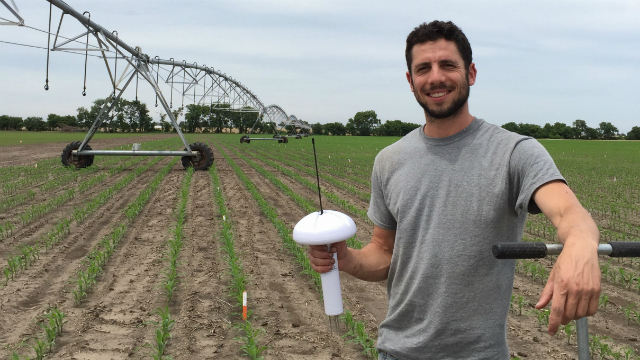
The CropX system automatically analyzes the exact water needs of different parts of each field based on topography, soil structure, and current moisture. Farmers download the mobile app and place three wireless sensors in the ground. These sensors continuously send soil readings to the cloud, where the patent-pending CropX software determines how to effectively irrigate different parts of the field based on pattern-recognition analysis and revolutionary algorithms.

It is not the first of its kind to come out of Israel. There are a number of smart water systems in the works that measure soil variables including Common Sensor.

Competitor Edyn, though promising and aiming at a consumer market for now, didn’t get the most impressive review from this savvy smart home user.

With CropX, designed for farmers, users self-install the system without expensive infrastructure or significant consulting input during the installation process.

“CropX is our first AgTech investment since the launch of the Farm2050 collective, which has grown significantly since its inception in late 2014,” stated Innovation Endeavors Managing Partner Dror Berman. “CropX is a leader in the digital agriculture space, helping farmers globally overcome rising irrigation challenges. We are excited to support such a fantastic team that is building the future ag tools.”

CropX’s product was developed by a team of scientists and technology experts in Israel, a global leader in water conservation technology, and New Zealand, and was validated on-farm over the past five years.

“The world is running out of water, and, therefore, food. The US drought is a growing problem that we must tackle head on. The farming industry is struggling to manage rising energy costs and restricted water supplies, while trying to decrease water waste and increase crop yields,” said CropX CEO Isaac Bentwich. “Our simple software service helps farmers easily grow more with less — and eliminates unnecessary water usage.”

Read More

TRENDING

Who Owns the Farm Robot? A State of Jefferson Startup Takes on Carbon Robotics

In California's self-proclaimed State of Jefferson, a small agricultural technology company is challenging the dominant laser-weeding business model. Laudando & Associates believes farmers should own and repair their AI-powered weeding tools rather than pay ongoing subscription fees. The approach has put the company on a collision course with industry leader Carbon Robotics, sparking a patent dispute that has pushed the Jefferson startup toward overseas markets while raising broader questions about ownership, right-to-repair, and the future of farm automation.

From Pasture to ROI: Implementing Autonomous Systems in Livestock and Pasture Management

The livestock and pasture management sector is currently facing...

Elon Musk to create Mars base station on the Moon

For those unaware, SpaceX has already shifted focus to building a self-growing city on the Moon, as we can potentially achieve that in less than 10 years, whereas Mars would take 20+ years.

The hidden chatter beneath our feet – how trees, mushrooms, and microbes speak

Mushrooms, microbes, and machine learning? Why does this matter? The underground networks built by fungi and bacteria are essential for healthy ecosystems—and for our ability to grow resilient crops in a changing climate. Fungi, in particular, act as “middlemen”, connecting roots across distances and helping move nutrients, water, and even chemical signals between plants.

The Satellite That Sees Earth Breathe: How NISAR Could Transform Sustainability From Space

Critically, NISAR’s data will be publicly available. That means not only scientists and governments, but also nonprofits, local planners, and startups can build tools and services using the data.

Yerukim Forms a New Green Economy Where the Money is Really Green

The Yerukim members who pick up the recyclables get to keep the monetary reward, the public earns "green" bills that can be used in shops, and business owners get to be associated with environmentalism.

Choosing Riyadh over Dubai? What Investors Should Know

Saudi Arabia is deploying capital at unmatched scale to catalyze tourism and advanced industry while rewiring its power-and-water backbone. The investable frontier is widening—especially in renewables, grid storage, water efficiency/desal retrofits, and hospitality operating platforms. Prudent investors will insist on phased delivery, enforceable KPIs (energy, water, biodiversity), and RHQ/zone compliance—while pricing political-economy and reputational risks alongside growth upside.

Sell your cooking oil for biodiesel money

Want to make money on old french fry oil? Sell it.

Qatar Alternative Energy Summit Pairs Investors And Innovators

Alternative energy investors and innovators can meet n' greet in Doha, Qatar March 16 and 17.

Here’s How To Implement The Four Pillars Of Employee Engagement

If you throw a party for your work team and they are vegans, don't make it a barbecue. Know the sustainability values of your team to boost moral and retain good people.

Locals From Rishon Fight IKEA

Big Box stores are a pretty new concept in Israel, and thank God that not every Israeli city wants them in their backyard. A word from someone who has see the beautiful farmland around her hometown Newmarket, Ontario stripped and converted into vulgar strip malls of big box shops: they have no place in a healthy and sustainable town or city.

The Jewish National Fund Meets An Inconvenient Truth

According to the JNF, it has transformed thousands of acres of barren land into green forests in Israel. They state that each person emits about 23 tons of carbon per year, estimating that each tree planted can absorb one ton of carbon in its lifetime. That's a whole lot of trees you'd need to be planting. Could so many fit in Israel?

How to quiet noise from construction in your office

Streets need to be resurfaced in New York but the humming and grinding noise is unsettling. Noise is environmental pollution. 

Popular Categories