Desmond Tutu on climate change

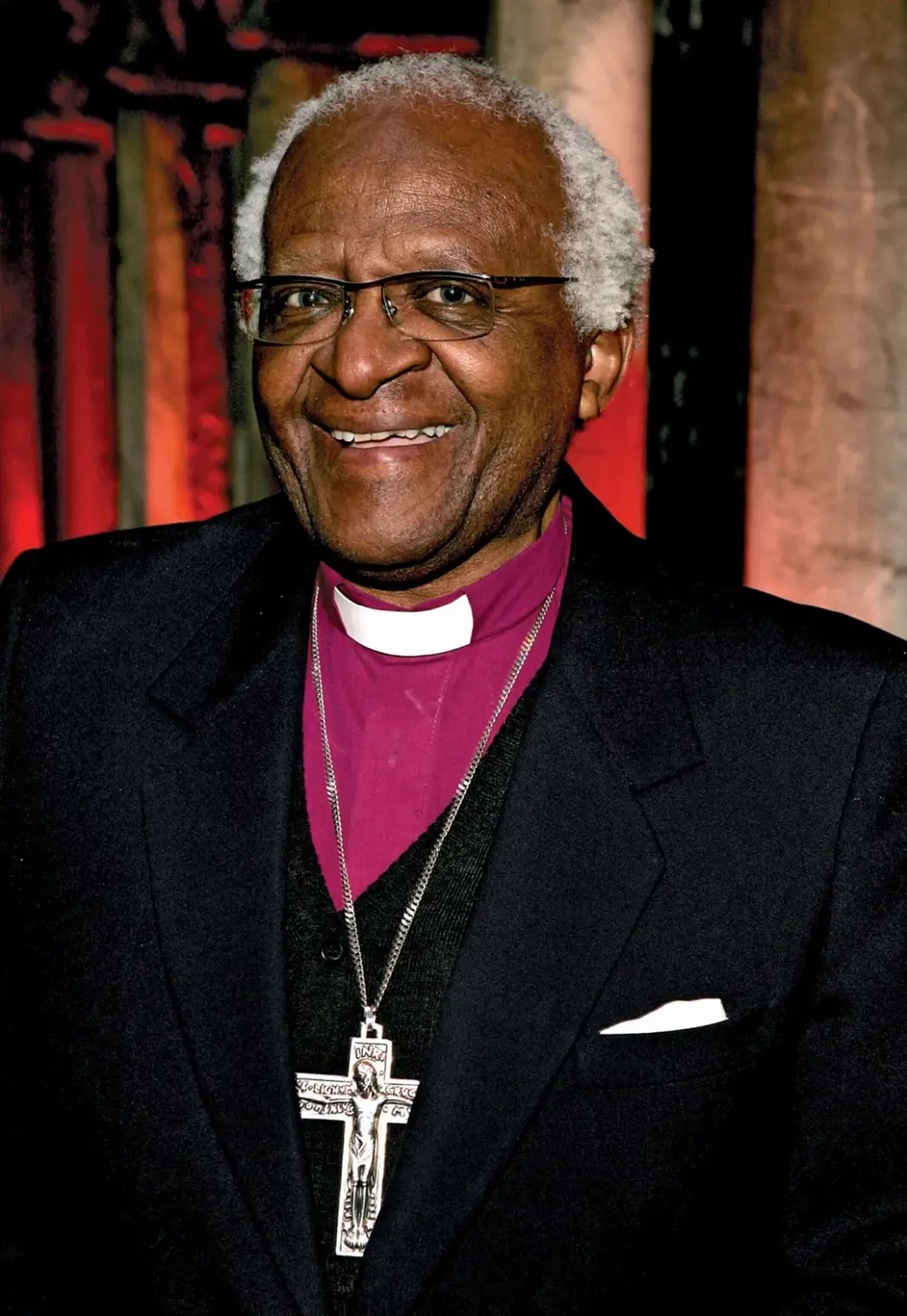
Archbishop Desmond Tutu was one of the earliest moral voices linking climate change to human rights, calling it “the apartheid of our time”—a crisis created by the wealthy but suffered most by the poor.

Nobel Prize-winning retired archbishop Desmond Tutu, long-time environmental advocate, just released a powerful video urging world leaders arriving in New York City for this year’s UN Climate Summit to “move beyond the fossil fuel era.”

In an associated editorial published in The Observer, he convincingly argues that the same boycott, divestment and sanction tactics used against firms which did business with apartheid-era South Africa must now be applied to institutions that exploit fossil fuels.

The Climate Summit 2014 kicks off tomorrow in New York City, when world leaders from government, finance, business, and civil society will meet to catalyze climate action. UN Secretary-General Ban Ki-moon has asked all invitees to bring bold action plans that will significantly reduce emissions, strengthen climate resilience, and mobilize political will for a meaningful legal agreement in 2015.

“Never before have human beings been called on to act collectively in defense of the Earth. As a species, we have endured world wars, epidemics, famine, slavery, apartheid and many other hideous consequences of religious, class, race, gender and ideological intolerance. People are extraordinarily resilient. The Earth has proven pretty resilient, too. It’s managed to absorb most of what’s been thrown at it since the industrial revolution and the invention of the internal combustion engine,” he wrote.

Until now, that is, when science clearly indicates that our environment is carbon-saturated. Tutu continued, “If we don’t limit global warming to two degrees or less we are doomed to a period of unprecedented instability, insecurity and loss of species. It is time to act.”

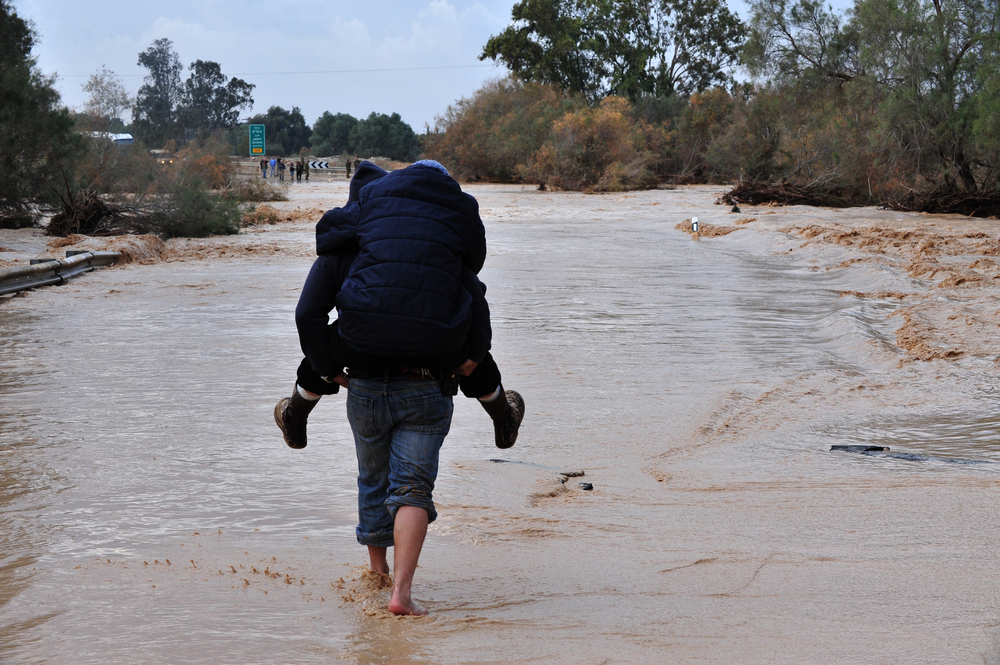
Tutu frames the issue as the premier human rights challenge, linking the most devastating effects of climate change – deadly storms, drought, rising food prices and the emergence of “climate refugees” – directly to the world’s poor. He rightly illustrates that developing states, which emit far less carbon than industrialized nations, will pay the steepest price.
Israel flash flood

He describes sensible, scalable ways we can be agents of change. “Boycott events, sports teams and media programming sponsored by fossil fuel companies; demand that their advertisements carry health warnings; organize car-free days and other platforms to build broader societal awareness; and ask our religious communities to speak out on the issue from their pulpits. We can encourage energy companies to spend more on the development of sustainable energy products, and we can reward those companies that demonstrably do so by using their products to the exclusion of others,” he stated in his editorial.

He urged swift action by nations and individuals alike, including freezing fossil fuels exploration, redirecting investments into renewable energies, encouraging governments to stop accepting lobbyist money from the industry and holding those who have damaged the environment legally liable for the harm they have caused.  No histrionics or hype, just simple strategies to start now.

We can stop climate change. Join the global movement – a moral movement – spearheaded by individuals across the spectrum of professions and culture, religions and political alliances. Climate Change is the game the whole human family can play, we are collectively responsible for immediate action. “We can no longer tinker about the edges,” he said. “We can no longer continuing treating our addiction to fossil fuels as if there were no tomorrow, or there will be no tomorrow.”


 

Read More

1 COMMENT

LEAVE A REPLY

Please enter your comment!
Please enter your name here

TRENDING

5 projects to help kickstart your company’s sustainability journey 

True progress happens when environmental ambition meets action. Decarbonizing efficiently is possible for any business in any sector, but actually getting started can sometimes feel daunting.   The trick? It’s to start small and build momentum. Here are five potential projects to help you get started.  

Hormuz 2026 Conflict Poses an Energy and Food Security Dilemma in a Warming World

As tensions rise in one of the world’s most critical maritime chokepoints, the ripple effects go far beyond oil—touching food systems, climate pressures, and regional stability

Climate change traced in sea turtle shells

It's sea turtles which may in the end save islands in the Seychelles. They may also better help us understand climate change. Like rings on a tree, scientists have found a way to read sea turtle shells and how they are impacted by climate change tells a story. 

We’ve lived through the past 11 of the hottest years on record

Have we forgotten about global warming when the world...

Huge Fish Nursery Discovered Under Freezing Arctic Seas

In 2019, an underwater robot camera exploring the seabed...

How to quiet noise from construction in your office

Streets need to be resurfaced in New York but the humming and grinding noise is unsettling. Noise is environmental pollution. 

EarthX and a blueprint for sustainable investing

Trammell S. Crow, a Dallas-based businessman and father of four, is focusing his efforts on impact investing, and media that focuses on saving the planet through EarthX.

Mining Afghanistan’s Mineral Discoveries Similar to Avatar

Now that American forces in Afghanistan are commemorating the longest period of any war that America has been involved in, including the 1965-73 Vietnam War, the recent discoveries of large and extremely valuable mineral and metal deposits may finally bring to light a reason to continue the presence of US fighting forces in this war torn and backward country.

From Pilot Plant to Global Stage: How Aduro Clean Technologies’ 2026 Expansion Signals a Turning Point for Chemical Recycling Investors Like Yazan Al Homsi

The company's Next Generation Process (NGP) Pilot Plant in London, Ontario, has officially moved into initial operating campaigns, generating the kind of structured, repeatable data that separates laboratory promise from commercial viability.

Nobul’s Regan McGee on Shareholder Value: “Complacency Is the Silent Killer” 

Why the governance framework designed to protect shareholders so...

Should You Invest in the Private Market?

startustartup Unlike public stock exchanges, which offer daily trading, strict...

How to build a 100-year-company

Kongō Gumi is a Japanese construction company, purportedly founded in 578 A.D., making it the world's oldest documented company. What can we learn about building sustainable businesses from them?

How AI Helps SaaS Companies Reduce Repetitive Customer Support Work

SaaS products are designed for large numbers of users with different levels of experience, and also in renewable energy.

Popular Categories